Ball Roundup
The Best Pickleball Balls in 2026
Indoor and outdoor balls are genuinely different products. These are my picks for each — from the tournament-standard Franklin X-40 to the softest indoor ball — with the specs and how to choose.
The short answer
Quick picks
| # | Product | Best for | Score | Price |
|---|---|---|---|---|
| 01 | Best overall (outdoor) | 4.7/5 | $9.97Amazon | |
| 02 | Best for competitive play | 4.5/5 | $21.99Amazon | |
| 03 | Best durable outdoor | 4.4/5 | $16.16Amazon | |
| 04 | Best crack-resistant | 4.3/5 | Check price → | |
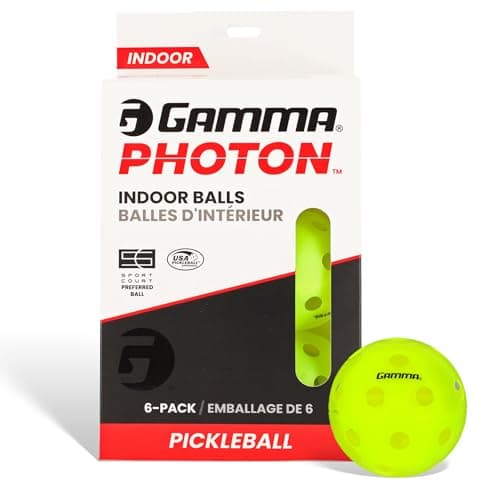
| 05 | Best indoor | 4.5/5 | $21.97Amazon | |
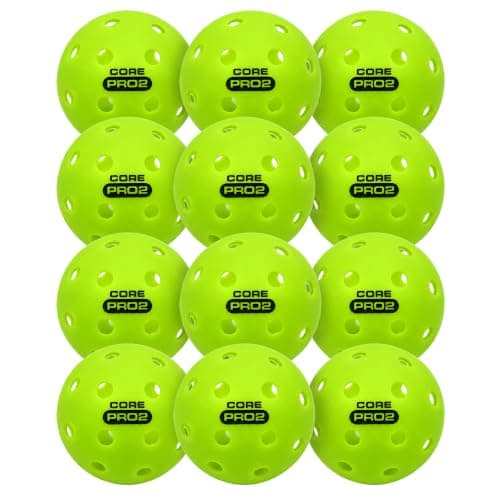
| 06 | Best value bulk | 4.2/5 | $29.99Amazon |
#ad · Live prices from Amazon as of October 20, 2026; where we have no verified live price we show none. We may earn a commission — see our affiliate disclosure.
Here's the thing most new players don't realize: an indoor pickleball and an outdoor pickleball are not the same ball with a different sticker. They're built differently on purpose — different hole counts, different weights, different plastic — and using the wrong one makes a good game feel weird. So this roundup is split the way it should be: outdoor balls that cut through wind and survive rough courts, plus the best indoor ball for gym floors. If you only remember one thing, read our indoor vs outdoor balls guide before you buy.
My overall pick is the Franklin X-40, the official ball of USA Pickleball, the APP Tour, and the US Open — if you want the ball you'll most likely play with everywhere, it's this one. Tournament regulars often prefer the livelier Dura Fast 40, and indoor players want the softer Gamma Photon. Every ball here is a genuine, widely used model — no filler. Buying for drills rather than match day? Durability, pack size and noise matter more than flight, so see our best balls for dinking and practice instead.
How we picked
Nobody pays for placement, and I don't sell balls. These are the models I actually play and see on courts constantly, judged against their published specs and USA Pickleball's equipment standards. The full method is on the how we review page.
For balls I weighed the things that actually matter: flight consistency (a true, predictable bounce), durability and crack resistance (outdoor balls in particular crack, especially in the cold), the right feel for the surface (harder and faster for outdoor wind, softer and quieter for indoor), and value if you go through balls in bulk. Tournament approval broke ties for competitive players.
Indoor vs outdoor balls: the real difference
This is the whole ballgame, so let me make it simple. Outdoor balls are harder, heavier, and have 40 smaller holes. The extra weight and tighter hole pattern help them punch through wind and hold a straight line outside — the trade-off is a harder, louder ball that can crack, especially in cold weather. Indoor balls are softer and lighter with fewer, larger holes(around 26). That makes them quieter, easier to control on a gym floor, and gentler on the arm, but they'd get pushed around by any breeze outside.
The practical rule: match the ball to where you play. An outdoor ball indoors feels harsh and skittish; an indoor ball outdoors flutters and dies in the wind. If your club plays on gym floors, get an indoor ball; if you're on outdoor hard courts, get a 40-hole outdoor ball. The full breakdown — feel, sound, durability, and how to tell them apart — is in our indoor vs outdoor balls guide.
At a glance
The full field, side by side. Specs come from each manufacturer's listing and USA Pickleball; live prices are on each buy button below and change frequently.
| Ball | Type | Holes | Best for |
|---|---|---|---|
| Franklin X-40 | Outdoor | 40 | Overall / official |
| Dura Fast 40 | Outdoor | 40 | Competitive play |
| Onix Fuse G2 | Outdoor | 40 | Durable everyday |
| Selkirk Pro S1 | Outdoor | 38 | Crack resistance |
| Gamma Photon | Indoor | ~26 | Indoor / gym floors |
| CORE Pro-40 | Outdoor | 40 | Value in bulk |
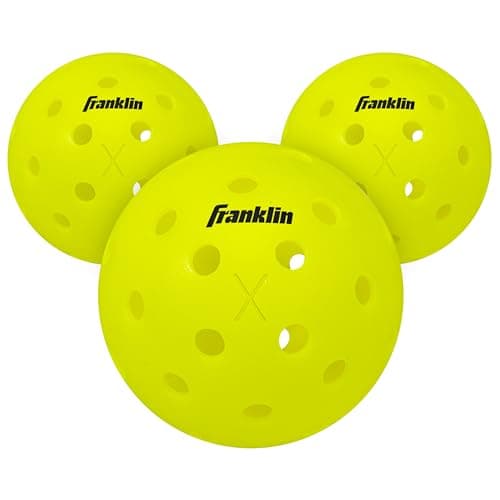
Best overall (outdoor): Franklin X-40
The X-40 is the ball you're most likely to play with, full stop. It's the official ball of USA Pickleball, the APP Tour, and the US Open, which means if you show up to organized outdoor play, this is often what's in the basket. It's a true, consistent 40-hole outdoor ball with a reliable flight — the safe default that makes sure you're practicing on the same ball you'll compete with.
| Type | Outdoor |
|---|---|
| Holes | 40 (outdoor pattern) |
| Certification | USA Pickleball approved |
| Notable | Official ball of USA Pickleball, APP Tour, US Open |
| Best for | The universal outdoor default |
What I like: it's the standard for a reason — consistent, approved, and everywhere. What gives me pause: like all outdoor balls it can crack over time, and some tournament players prefer the faster feel of the Dura Fast 40.
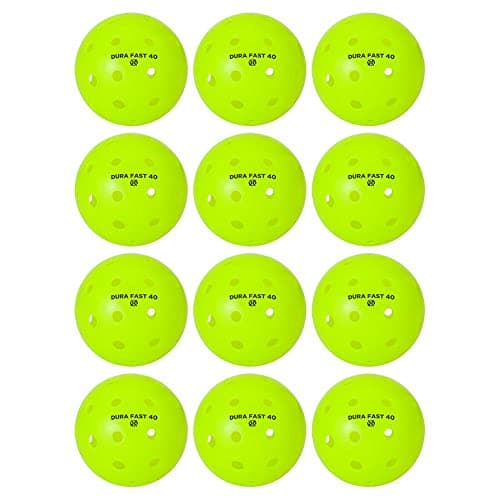
Best for competitive play: Dura Fast 40
The Dura Fast 40 is the ball a lot of serious tournament players swear by. It's fast and lively— it comes off the paddle with real pace and rewards a player who can handle it — and it's long been a tournament standard for outdoor competition. If you play hard, competitive outdoor pickleball, this is the ball to practice with.
| Type | Outdoor |
|---|---|
| Holes | 40 (outdoor pattern) |
| Character | Fast, lively, tournament standard |
| Note | Can crack in cold weather |
| Best for | Competitive / tournament outdoor players |
What I like: the lively pace and tournament pedigree make it a favorite of advanced players. What gives me pause: that same firmness means it can crack more readily in the cold, and the fast flight is less forgiving for beginners — newer players may prefer the balanced Onix Fuse G2 or a softer feel.
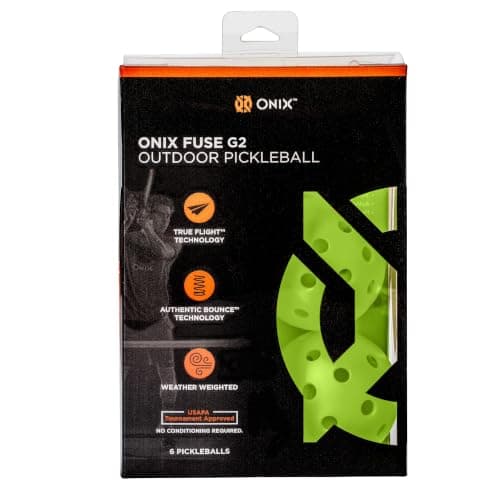
Best durable outdoor: Onix Fuse G2
The Onix Fuse G2 is the sensible everyday outdoor ball. It's USA Pickleball approved with a balanced, consistent flightand a reputation for holding up better than some livelier balls. If you want a 40-hole outdoor ball for regular rec play that won't crack the first cold morning, this is a smart pick.
| Type | Outdoor |
|---|---|
| Holes | 40 (outdoor pattern) |
| Character | Balanced, consistent flight |
| Certification | USA Pickleball approved |
| Best for | Durable everyday outdoor rec play |
What I like: a well-rounded, approved ball that balances liveliness with durability. What gives me pause: it's a touch less "fast" than the Dura for players who chase that pace — but that's exactly why rec players like it.
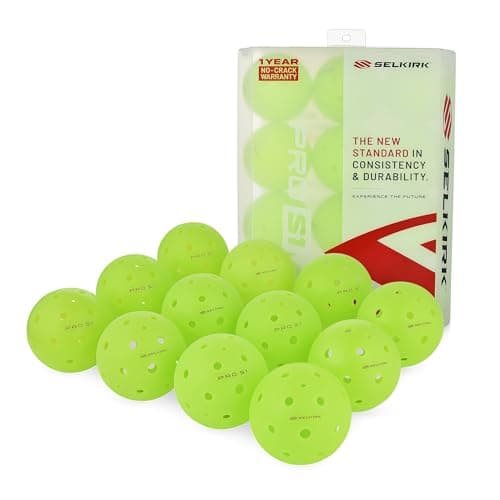
Best crack-resistant: Selkirk Pro S1
If your balls keep cracking — especially if you play in the cold — the Selkirk Pro S1 is built for you. It uses a 38-hole pattern with advanced aerodynamics and is engineered specifically for crack resistanceand a longer life, so you replace balls less often. It's the outdoor ball I'd point cold-climate players toward.
| Type | Outdoor |
|---|---|
| Holes | 38 (aerodynamic pattern) |
| Feature | Crack-resistant, advanced aerodynamics |
| Durability | Engineered for a longer life |
| Best for | Cold weather and crack resistance |
What I like: it directly solves the biggest outdoor-ball frustration — cracking. What gives me pause: the 38-hole flight feels slightly different from the 40-hole standard, so if your group plays the X-40 you may want to match it.
Best indoor: Gamma Photon
For gym-floor pickleball, the Gamma Photon is my pick. It's a proper indoor ball — softer and lighter with fewer, larger holes— so it's quieter, easier to control, and gentler on the arm than any outdoor ball. It's also high-visibility and well-balanced, which matters under gym lighting. If your club plays indoors, this is the ball to get.
| Type | Indoor |
|---|---|
| Holes | ~26 (larger indoor holes) |
| Feel | Softer, quieter, easy to control |
| Visibility | High-visibility, ultra-balanced |
| Best for | Indoor / gym-floor play |
What I like: it does the indoor job right — soft, controllable, and easy to see. What gives me pause: like every indoor ball, it's the wrong tool outdoors, where the wind will toss it around. Not sure which you need? Our indoor vs outdoor guide settles it.
Best value in bulk: CORE Pro-40 (12-pack)
Balls are consumable — you crack them, lose them, and step on them — so buying in bulk saves real money. The CORE Pro-40 is a USA Pickleball approved 40-hole outdoor ball sold in a 12-pack with a durable build, which makes it the easy choice for a group, a coach, or anyone who just wants a full basket on hand.
| Type | Outdoor |
|---|---|
| Holes | 40 (outdoor pattern) |
| Pack | 12-pack (bulk value) |
| Certification | USA Pickleball approved |
| Best for | Groups, coaches, and high-volume players |
What I like: a proper approved outdoor ball at a per-ball price that's hard to beat when bought by the dozen. What gives me pause: it doesn't carry the tour pedigree of the X-40 or Dura, so if you specifically train for tournaments, match the ball your events use.
How to choose a pickleball ball
Match the ball to the surface first.Outdoor 40-hole balls for outdoor hard courts and wind; softer indoor balls for gym floors. Getting this right matters more than the brand — details in our indoor vs outdoor balls guide.
Match your group and your events. If you play organized outdoor pickleball, the Franklin X-40 is the most universal choice; if you compete, use the ball your tournaments use so your practice transfers.
Play in the cold? Prioritize crack resistance. Outdoor balls get brittle and crack in low temperatures, so a crack-resistant model like the Selkirk Pro S1pays for itself in balls you don't replace.
Buy in bulk if you play a lot. Balls are consumables. A 12-pack like the CORE Pro-40 lowers the per-ball cost. New to the sport? A starter set often bundles balls with paddles to get you going.
The bottom line
For most outdoor players, the Franklin X-40is the safe, universal pick — it's the official ball almost everywhere. Competitive players often prefer the livelier Dura Fast 40; cold-climate players should grab the crack-resistant Selkirk Pro S1; and rec players who want durability can't go wrong with the Onix Fuse G2 or a bulk box of CORE Pro-40. Playing indoors? The Gamma Photon, every time. Round out your kit with the right court shoes and a bag from the court gear hub.
Want to cross-check before you buy? Post & Paddle's best pickleball ballsroundup ranks the same field independently. And if you want the legal numbers behind all of this — the permitted weight band, diameter, hole count, bounce and hardness — how much does a pickleball weigh? lays out the full specification.
However good the ball, it is a consumable. How long pickleball balls last gives realistic lifespans indoors and out, the three tests for a dead ball, and why cold weather shortens everything.
Frequently asked questions
What's the difference between indoor and outdoor pickleball balls?
Outdoor balls are harder and heavier with 40 smaller holes, which helps them cut through wind and hold a straight line on outdoor hard courts — the trade-off is a harder, louder ball that can crack in cold weather. Indoor balls are softer and lighter with fewer, larger holes (around 26), making them quieter and easier to control on gym floors but too light to fight the wind outside. Match the ball to where you play.
Can I use an outdoor ball indoors, or vice versa?
You can, but it won't play right. An outdoor ball indoors feels harsh, fast, and skittish, while an indoor ball outdoors flutters and dies in any breeze. For the best game, use an outdoor 40-hole ball outdoors and a softer indoor ball on gym floors.
Why do outdoor pickleballs crack, and how do I prevent it?
Outdoor balls are made of a harder plastic that becomes brittle in cold temperatures, so they crack more easily in winter or early-morning play. To reduce cracking, let balls warm up before playing in the cold, rotate them, and choose a crack-resistant model like the Selkirk Pro S1 if you play in cool climates.
Which pickleball ball is used in tournaments?
It varies by event, but the Franklin X-40 is the official ball of USA Pickleball, the APP Tour, and the US Open, and the Dura Fast 40 is a long-standing tournament favorite for outdoor competition. If you compete, practice with the specific ball your tournaments use so your feel transfers over.
Sources
Keep reading
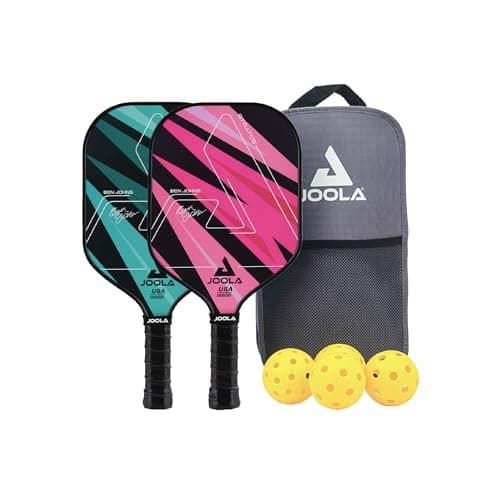
Upgrading your paddle or gearing up to play?
See how we pick, then dig into the paddle roundups and buying guides — honest picks from someone who actually plays, with no inventory to move.