Buying Guide
Indoor vs Outdoor Pickleball Balls: What's the Difference?
They look almost identical in the bin, but indoor and outdoor pickleballs are built for different worlds. Grab the wrong one and it plays badly and wears out fast.
The short version: outdoor pickleballs are harder and heavier with 40 small holes to cut through wind, while indoor pickleballs are softer and lighter with about 26 larger holes for better control on smooth gym floors. They are not interchangeable — using an outdoor ball in a gym or an indoor ball in the wind makes the game play worse and wears the ball out faster. This guide breaks down every difference so you buy the right one the first time.
Both are hollow, one-piece plastic balls with holes (technically a wiffle-style perforated design), and to a beginner they look the same. But the two are engineered around opposite problems: outdoor balls fight the elements, and indoor balls maximize control and comfort on a hard, smooth surface. Once you know what each is solving for, the choice is obvious.
Indoor vs outdoor at a glance
Here is the head-to-head. Every row is a real, feelable difference on court.
| Attribute | Outdoor ball | Indoor ball |
|---|---|---|
| Holes | 40 holes, smaller | About 26 holes, larger |
| Weight | Heavier | Lighter |
| Plastic / hardness | Harder, denser, more rigid | Softer, more flexible |
| Surface & feel | Smooth and firm; livelier, louder | Softer touch; quieter, more muted |
| Bounce & pace | Faster, higher, more energetic | Slower, lower, more controlled |
| Best for | Outdoor courts, wind, rough surfaces | Gyms and smooth indoor floors |
| Durability quirk | Very durable, but can crack in cold | Softer, can soften or crack over time |
Outdoor balls, explained
Outdoor pickleballs are built to survive the elements and the abrasive surface of an outdoor court. They use a harder, denser plastic and are heavier, which gives them the mass to punch through a breeze instead of getting knocked off line. Their defining feature is 40 smaller holes— the smaller openings and extra weight keep the ball on a truer flight path when the wind picks up.
On court, all of that adds up to a faster, livelier, harder-hitting ball. It bounces higher, comes off the paddle with more pop, and makes the sharp "clack" you hear at outdoor courts. The trade-offs: the hard plastic is louder, it can feel harsh on the arm compared to an indoor ball, and in genuinely cold weather the rigid plastic gets brittle and can crack — a well-known quirk of the fast tournament balls. The upside is durability against rough concrete and asphalt, where a softer indoor ball would scuff and wear out quickly.
Indoor balls, explained
Indoor pickleballs are optimized for a smooth wood or sport-court gym floor, where wind is a non-issue and control is everything. They use a softer, more flexible plastic, are lighter, and have fewer, larger holes— typically around 26. That combination produces a slower, lower-bouncing ball that is easier to control for longer, more strategic rallies.
Because the plastic is softer, indoor balls have a more muted, comfortable feel off the paddle and are noticeably quieter— a real consideration in a shared gym or a noise-sensitive facility. The softer material also tends to grip the smooth floor better than a hard outdoor ball would. The downside is longevity: the softer plastic can soften, go out-of-round, or split with heavy use faster than a dense outdoor ball, and indoor balls do not hold up well if you drag them onto a rough outdoor court.
Which should you buy?
Match the ball to where you actually play. If you play on outdoor courts — or anywhere the wind can reach the ball — buy an outdoor ball. If you play in a gym, rec center, or any smooth indoor floor, buy an indoor ball. If you split your time, it is worth owning both and keeping them separate; they are inexpensive and the right ball makes a real difference in how the game feels.
A couple of practical notes. Outdoor is the more common "default" because most organized and tournament play happens outdoors on the fast 40-hole balls, so if you are buying one ball to grow into competitive play, outdoor is the safer bet. And whatever you buy, check your local courts or league — many specify an exact approved ball. For our current picks in each category, see the best pickleball balls roundup.
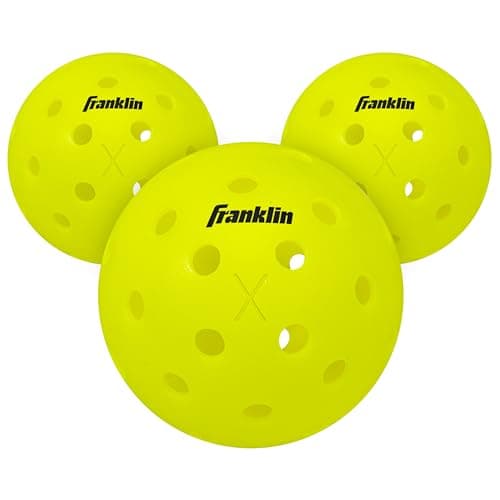
For outdoor play, the Franklin X-40 is a safe, widely used 40-hole ball and the official ball of USA Pickleball, the APP Tour, and the US Open. For the gym, the Gamma Photon is a high-visibility 26-hole indoor ball with a softer, balanced feel. Either is a dependable starting point; the full best pickleball balls guide compares more options for both environments.
A note on standards & approval
Both types are covered by the same equipment rules. USA Pickleball sets standards for a legal ball's diameter, weight (roughly 0.78 to 0.935 ounces), hardness, and bounce, and maintains a list of approved balls for sanctioned play — which includes both indoor and outdoor models. The hole count itself is not what makes a ball legal; the ball simply has to meet those measured specs. If you play in leagues or tournaments, look for a USA Pickleball approved ball and confirm which specific model your event uses. For casual and rec play, the indoor-versus-outdoor match to your court matters far more than approval status. The complete legal specification — weight, diameter, hole count, bounce and hardness, with the exact numbers — is set out in how much does a pickleball weigh?
The two types also fail differently — outdoor balls crack, indoor balls go soft. How long pickleball balls last covers both, with the tests that tell you a ball is finished.
Frequently asked questions
What is the difference between indoor and outdoor pickleball balls?
Outdoor balls are harder and heavier with 40 smaller holes, which helps them cut through wind and survive rough court surfaces. Indoor balls are softer and lighter with about 26 larger holes, giving a slower, more controlled, quieter game suited to smooth gym floors. They are engineered for opposite environments and are not interchangeable.
Can I use an outdoor pickleball ball indoors?
You can, but it will not play well. An outdoor ball is heavier and harder, so indoors it plays fast, bounces high, and feels harsh and loud on a surface it was not designed for. For the best indoor experience, use a softer, lighter indoor ball made for smooth gym floors.
How many holes does a pickleball have?
It depends on the type. Outdoor pickleballs have 40 smaller holes to help them cut through wind, while indoor pickleballs typically have around 26 larger holes for more control at slower speeds. The different hole patterns are one of the easiest ways to tell the two apart.
Are outdoor pickleballs harder than indoor ones?
Yes. Outdoor balls use a harder, denser, more rigid plastic so they hold up against abrasive concrete and asphalt and resist the wind, which also makes them louder and livelier. Indoor balls use a softer, more flexible plastic for a quieter, more controlled, more comfortable feel on smooth floors.
Which pickleball ball should a beginner buy?
Buy the ball that matches where you play: outdoor balls for outdoor courts and any windy setting, indoor balls for gyms and smooth indoor floors. If you are unsure or expect to move toward organized play, an outdoor 40-hole ball is the more common default. Balls are inexpensive, so many players keep both types on hand.
Sources
Keep reading
Upgrading your paddle or gearing up to play?
See how we pick, then dig into the paddle roundups and buying guides — honest picks from someone who actually plays, with no inventory to move.