Paddle Roundup
The Best Pickleball Paddles for Control in 2026
Control is what wins the soft game — calm resets, low dinks, and blocks that die at the net. These are the five paddles I trust when I want the ball to go exactly where I aim it, at every budget.
The short answer
Quick picks
| # | Product | Best for | Score | Price |
|---|---|---|---|---|
| 01 | Best overall control | 4.7/5 | $99.99Amazon | |
| 02 | Best all-court control | 4.4/5 | $106.95Amazon | |
| 03 | Best forgiving widebody | 4.3/5 | $99.99Amazon | |
| 04 | Best solid-core feel | 4.2/5 | $134.99Amazon | |
| 05 | Best budget control | 4.1/5 | Check price → |
#ad · Live prices from Amazon as of October 20, 2026; where we have no verified live price we show none. We may earn a commission — see our affiliate disclosure.
Power gets the highlight reel, but control wins the match. Almost every rally in pickleball is decided in the soft game — the dinks, the resets off a hard drive, the block that dies at the net instead of popping up for a putaway. A control paddle is the one that lets you take the pace off the ball and place it exactly where you want, and once you have that, you stop giving away free points. These five are the paddles I reach for when I want the ball on a string, and I've sorted them so there's a genuine answer at every budget. You can also browse the full paddles hub if you want the wider picture.
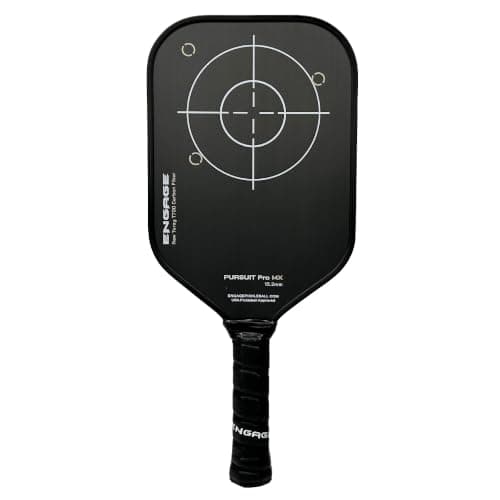
My overall pick is the Engage Pursuit Pro MX 6.0: a raw-carbon face on a soft 16mm Control Pro core with a vibration-damping edge, so it feels planted and quiet in hand. If you want most of that feel for a lot less, the Selkirk SLK Evo Controlis the value answer I hand to most players — and if shanking off-center balls is your real problem, the widebody Selkirk SLK Geo is the most forgiving face here.
How we picked
I don't sell paddles, and nobody buys a spot on this list. Every paddle here is one I've either played with directly or evaluated against its verified manufacturer specs alongside a lot of court time on the same models — and I say which is which in each write-up. My full process is on the how we review page.
For control specifically, I weighed three things: how soft and predictable the paddle feels when you take pace off the ball (a plush core swallows speed instead of springing it back), how big and stable the sweet spot is (a forgiving face turns near-misses into playable balls), and how quiet it stays on off-center hits (dampening keeps a mishit from launching). A paddle that resets a bang cleanly and dinks with zero drama earned its place. Price-to-performance broke the ties.
What actually creates control
Two paddles can both be sold as "control" and feel nothing alike on court. Here's what genuinely moves the needle, so you can judge any paddle — not just the ones on this list.
Core thickness is most of it.A thicker core — 16mm is the control standard — flexes more on contact, deadens the ball, and gives you a longer split-second of dwell to steer your reset. Thinner 14mm and 12.7mm cores pop the ball off faster, which is great for power but harder to feather softly. If you live at the kitchen line, start at 16mm.
Shape and sweet spot do the rest.A widebody ("Max") shape spreads the face wider so the sweet spot is larger and more centered, which is exactly what you want when you're blocking hard drives and can't always hit clean. Elongated control paddles trade a little of that forgiveness for reach. Weight and swing balance matter too: a slightly head-light, well-dampened paddle is easier to maneuver in fast hands battles — our paddle weight guide breaks down how that feel changes.
At a glance
The full field, side by side. Specs are from each manufacturer's listing; live prices are on each buy button below and change frequently.
| Paddle | Face | Core | Shape | Best for |
|---|---|---|---|---|
| Engage Pursuit Pro MX 6.0 | Raw carbon fiber | 16mm Control Pro | Elongated | Overall control |
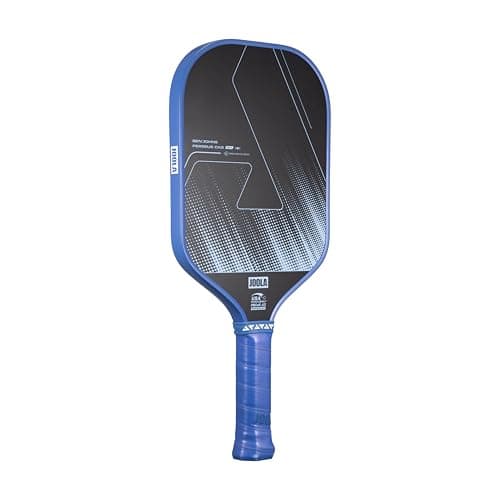
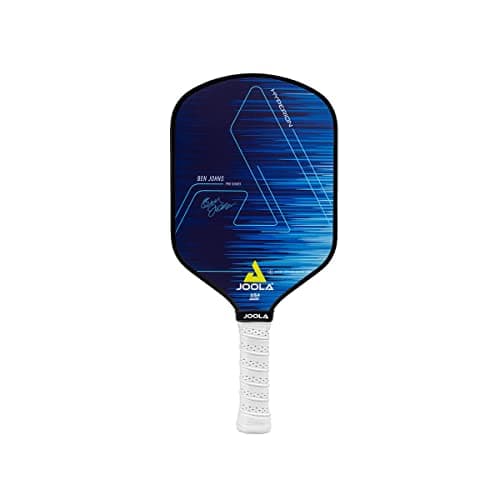
| JOOLA Perseus 16mm | Charged carbon (CAS) | 16mm honeycomb | Hybrid | All-court control |
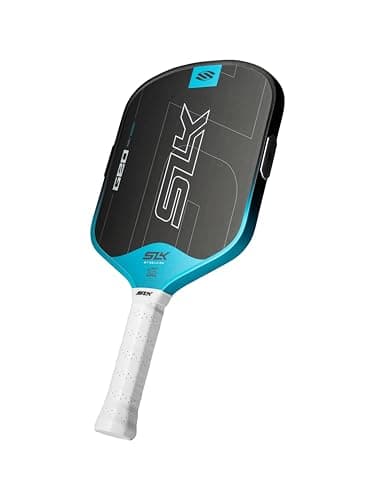
| Selkirk SLK Geo | T700-grade raw carbon | Rev-Pro polymer | Widebody | Forgiveness |
| Gearbox GX6 Control | Carbon fiber | Solid-core, edgeless | Standard | Solid, damped feel |
| Selkirk SLK Evo Control | Carbon fiber | Control core | Widebody (Max) | Budget control |
Best overall control: Engage Pursuit Pro MX 6.0
Engage is a made-in-USA brand with a reputation for tight quality control, and the Pursuit Pro MX 6.0 is the one I keep coming back to for the soft game. It pairs a raw carbon-fiber facewith a plush 16mm Control Pro core, and the standout is the Vortex Barrier edge, which noticeably damps vibration — the paddle feels calm and planted, so blocks and resets come off the face without a harsh, jumpy rebound. It's light enough to maneuver in hands battles but stable enough to hold a line on a hard drive.
| Surface | Raw carbon fiber (textured) |
|---|---|
| Core | 16mm Control Pro polymer |
| Shape | Elongated |
| Feature | Vortex Barrier edge (vibration damping) |
| Best for | Players who want a quiet, planted control feel |
What I like: the damped, quiet feel makes soft touch shots feel effortless, and the raw face still grips enough to shape a slice. What gives me pause: it's a premium-tier paddle, so you pay for that build, and the elongated shape has a slightly tighter sweet spot than a widebody — not the first paddle I'd hand a raw beginner. If you want the same calm feel in a bigger, more forgiving head, look at the SLK Geo below or our best beginner paddles. Nearly every paddle on this page runs a 16mm core, and our best 16mm pickleball paddles roundup ranks that thickness across control and power builds alike.
Best all-court control: JOOLA Perseus 16mm
The Perseus name usually lives in the pro tier, but this 16mm version brings the Aero Curve hybrid shape and a grippy charged carbon (CAS) surface to a far friendlier price. What makes it my all-court control pick is the balance: the 16mm core is soft enough to reset and dink with real touch, but the hybrid shape and grippy face still let you drive and shape spin when the rally opens up. If you don't want to choose between control and a little offense, this is the paddle.
| Surface | Charged carbon (CAS), grippy |
|---|---|
| Core | 16mm polypropylene honeycomb |
| Shape | Hybrid / Aero Curve |
| Grip | Feel-Tec Pure grip |
| Best for | All-court players who want control plus some pop |
What I like: a genuinely versatile paddle that dinks softly and still competes when you speed it up, at a very fair price. What gives me pause: it isn't the same thermoformed construction as the flagship Perseus, so it won't feel identical to the tour paddle — judge it on its own (very good) merits. See the JOOLA Perseus review and, if spin is your priority, our best spin paddles list.
Best forgiving widebody: Selkirk SLK Geo
Not every control problem is a tuning problem — sometimes you just keep catching the ball off-center. The SLK Geo is the answer to that. Selkirk builds it around an MOI Tuning System that shifts mass out to the perimeter, which is the mechanical reason a paddle forgives off-center contact instead of twisting in your hand, and in the widebody outline it gives you the most stable face in this roundup. The face is T700-grade raw carbon over a Rev-Pro polymer honeycomb core.
| Surface | T700-grade raw carbon fiber |
|---|---|
| Core | Rev-Pro polymer honeycomb |
| Shape | Widebody (elongated also offered) |
| Feature | MOI Tuning System — perimeter weighting |
| Line | Selkirk SLK (value tier) |
What I like: the perimeter weighting does real work — blocks off the edge of the face stay in play rather than spraying wide, which is exactly the failure mode that costs you points at the net. What gives me pause, and it's the honest reason it sits here rather than higher: Selkirk tunes the Geo for a balanceof power and control, not for control outright. It won't deaden a hard drive the way the Engage MX does. Buy it for forgiveness; buy the Engage or the Evo if a soft, damped feel is the priority.
Best solid-core feel: Gearbox GX6 Control
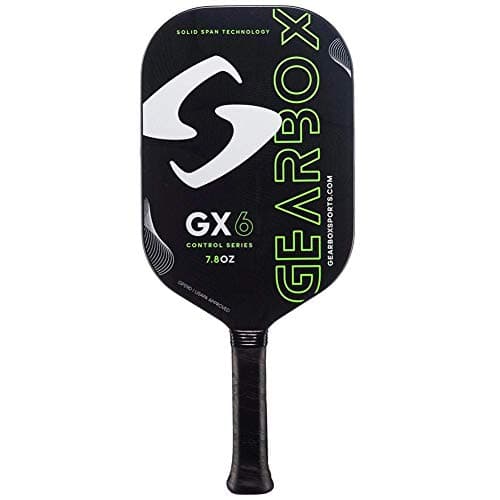
Gearbox does something different from almost everyone else: its GX line uses a solid, edgeless-style construction rather than the usual honeycomb-plus-edge-guard build. The result is a paddle with an unusually connected, damped feel— there's less of that hollow "ping" and more of a solid thud, which a lot of touch players fall in love with for resets and blocks. At 7.8 oz it stays quick in the hand, so you get that planted feel without the swing weight that usually comes with it.
| Surface | Carbon fiber |
|---|---|
| Construction | Solid-core, edgeless carbon frame |
| Weight | 7.8 oz |
| Grip circumference | 3 5/8 in |
| Best for | Players who want a solid, low-vibration feel |
What I like: the muted, solid feel is genuinely unique and superb for feathering resets, and the edgeless build means more usable face out toward the edges. What gives me pause: the stiff, solid-core feel isn't for everyone — it transmits less feedback than a honeycomb paddle, and at 7.8 oz you give up some of the plow-through a heavier control paddle gives you against pace. Weight is exactly the kind of thing to think through in our paddle weight guide.
Best budget control: Selkirk SLK Evo Control
If you want a real carbon-fiber control paddle without spending three figures, the SLK Evo Control is the one. It's the entry model in the SLK line, offered in the forgiving Max (widebody) shapeas well as a longer XL, with a carbon face on a control-tuned core. For a newer player who's ready to move past a starter paddle but doesn't want to overspend before their game settles, it's a smart, low-risk step up — and it comes from a brand you can trust.
| Surface | Carbon fiber |
|---|---|
| Core | Control-tuned polymer |
| Shape | Widebody (Max) |
| Line | Selkirk SLK (sub-$100 tier) |
| Best for | Budget shoppers wanting a forgiving carbon control paddle |
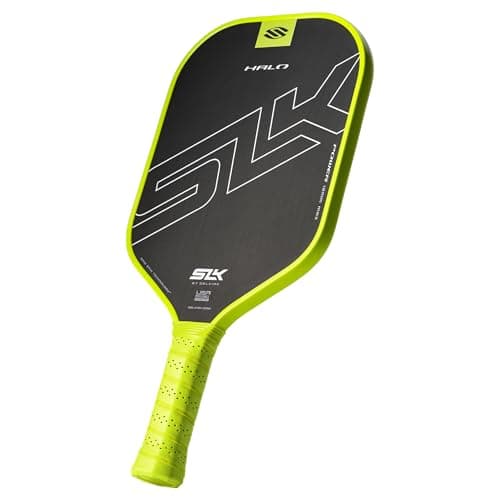
What I like: carbon-face control and a big sweet spot at a budget price — a lot of paddle for the money. What gives me pause: it doesn't have the premium dampening or the tuned feel of the Engage MX, so it's a value pick rather than an endgame paddle. It's also a natural fit alongside our best paddles under $100roundup. If you want the same SLK value proposition in a widebody control shape, the run-out SLK Halo Control Max is worth a look while stock lasts.
How to choose a control paddle
Start with a thicker core.Sixteen millimeters is the control default — it flexes on contact, deadens the ball, and gives you more dwell time to steer a reset. If a "control" paddle has a thin 12.7–13mm core, it's really a power paddle wearing a control label.
Favor a bigger sweet spot when you're developing.A widebody (Max) shape is more forgiving on off-center hits than an elongated one. If you're still building clean contact, that forgiveness is worth more than a couple inches of reach — see our best beginner paddles.
Pay attention to dampening.A quiet, low-vibration paddle (like the Engage MX or the solid-core Gearbox) is easier to feather softly, because the face isn't springing the ball back at you. If you have any arm or elbow sensitivity, a well-damped paddle matters even more.
Match the weight to your hands.A slightly head-light, maneuverable paddle wins fast exchanges at the net; a heavier, planted one adds stability against pace. Neither is "better" — our paddle weight guide helps you find your fit, and the full paddles hub covers every category.
The bottom line
For most players who want to win the soft game, the Engage Pursuit Pro MX 6.0 is the calm, planted, high-ceiling pick, and the Selkirk SLK Evo Control is the value answer I recommend most often. Want control that can still open up and attack? The Perseus 16mm. Keep catching the ball off-center? The widebody SLK Geo. Chasing a unique, solid feel? The Gearbox GX6. Any of them will keep the ball lower and calmer than a stiff starter paddle the first time you take pace off a reset.
If the Gearbox entry above interests you, our full Gearbox GX6 Control review goes deeper on the solid-core build, the edgeless frame, and the weight-and-grip matrix that lets you order the paddle to fit your hand.
Two related pages worth a look: if your control problem is specifically losing fast exchanges at the kitchen, see best pickleball paddles for doubles; and if sore hands are the reason you want a softer paddle, see best pickleball paddles for arthritis.
Frequently asked questions
What makes a pickleball paddle good for control?
Control comes mostly from a thicker core (16mm is the standard), which flexes on contact to deaden the ball and give you more dwell time to steer soft shots. A large, centered sweet spot — usually from a widebody shape — and good vibration dampening also help, because they make off-center hits more predictable. Every paddle in this guide leans on those traits.
Is a 16mm paddle better for control than a 14mm?
Generally yes. A thicker 16mm core flexes more and pops the ball less, so it's easier to reset and dink softly. A 14mm core adds more power and a faster launch, which feels great on drives but is harder to feather at the net. If control is your priority, start at 16mm.
Do control paddles have less power?
A little, and that's the trade-off by design. A soft, thick control core absorbs pace instead of springing it back, so put-aways take a bit more of your own swing. Most control paddles here still drive well enough for all-court play — the JOOLA Perseus 16mm in particular balances both. If you want maximum pop, see our best power paddles roundup.
Are these control paddles legal for tournaments?
These models use USA Pickleball (USAPA/UPA-A) approved constructions, which keep the surface and dimensions within the legal limit. Because brands sometimes sell approved and non-approved variants of the same line, always confirm the exact model is on the current approved list before you compete.
Sources
Keep reading
- Best pickleball paddles for spin →
- Best pickleball paddles for beginners →
- Best pickleball paddles under $100 →
- Pickleball paddle weight guide →Rally & Dink
- Selkirk SLK Evo Control review →Rally & Dink
- Selkirk SLK Halo line review: Control vs Power vs Pro →
- Best all-court pickleball paddles →
- Best pickleball paddles for tennis elbow →
- Best Paddletek pickleball paddles →
- Gearbox GX6 Control review →
Upgrading your paddle or gearing up to play?
See how we pick, then dig into the paddle roundups and buying guides — honest picks from someone who actually plays, with no inventory to move.