Paddle Roundup
The Best Pickleball Paddles Under $100 in 2026
You do not have to spend $200 to get a genuinely good paddle anymore. These six deliver raw-carbon faces, real spin, and modern construction for under $100 — with honest notes on where each one gives something up.
The short answer
Quick picks
| # | Product | Best for | Score | Price |
|---|---|---|---|---|
| 01 | Best overall under $100 | 4.7/5 | $99.99Amazon | |
| 02 | Best modern construction | 4.4/5 | $79.99Amazon | |
| 03 | Best all-court | 4.3/5 | $106.95Amazon | |
| 04 | Best for control | 4.2/5 | Check price → | |
| 05 | Best from a big brand | 4.2/5 | $124.95Amazon | |
| 06 | Best under $50 | 4.0/5 | $63.46Amazon |
#ad · Live prices from Amazon as of October 19, 2026; where we have no verified live price we show none. We may earn a commission — see our affiliate disclosure.
A few years ago, "under $100" meant a fiberglass paddle with a smooth face and not much spin. That is no longer true. The value tier has caught up hard: you can now buy a raw T700 carbon face, foam-injected walls, and even a thermoformed unibody build without crossing three figures. The paddles below are the ones I'd actually put in a friend's hand when they ask for "something good but not crazy expensive" — and I've organized them so there's a right answer whether you want spin, control, or the lowest possible price.
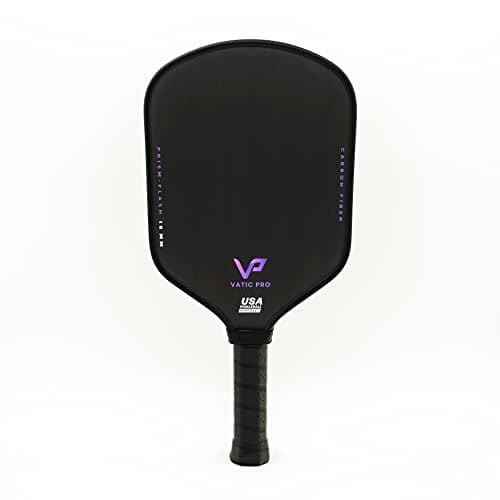
My overall pick is the Vatic Pro Prism Flash: it uses the same class of raw carbon face as paddles costing twice as much, grips the ball genuinely well, and is the paddle I recommend more than any other to players leaving a starter behind. If you value forgiveness and touch over pop, the Selkirk SLK Evo Control is the control answer, and the sub-$50 Franklin Signature Pro proves you can start well for very little. On an even tighter budget, see our best pickleball paddles under $75.
How we picked
I don't sell paddles, and no brand pays for a spot on this list. Every paddle here is one I've either played with directly or evaluated against its verified manufacturer specs and a lot of court time on the same models — and I say which is which in each write-up. The full process lives on the how we review page.
For a sub-$100 list specifically, I weighed three things. First, the face material: a raw or textured carbon face that actually grips the ball, not a smooth painted composite. Second, the build: a stable, forgiving construction — foam-injected walls or a thermoformed unibody — that gives you a real sweet spot instead of a dead, tinny feel. Third, honest value: every paddle here holds up against models costing far more, and each one is USA Pickleball approved so you can compete with it. Price-to-performance broke the ties.
What you can expect under $100
The gap between a $90 paddle and a $220 flagship is smaller than it has ever been, but it is not zero. Here is where your money still goes when you spend more — so you know exactly what, if anything, you're giving up down here.
You get the important stuff. Under $100, a good paddle now gives you a real carbon or raw-carbon face (the thing that creates spin), a 16mm polypropylene honeycomb core (the forgiving, control-friendly default), and USA Pickleball approval. That combination was a $150-plus feature not long ago. The Vatic Prism Flash and Ronbus Nova both clear that bar comfortably.
What you pay up for.Flagship paddles refine the edges: tighter quality-control tolerances, edge foam and unibody thermoforming for a bigger sweet spot, hand-selected grip and handle systems, and pro-team names on the throat. Those refinements are real, but they are refinements — not the difference between a paddle that plays well and one that doesn't. If you compete at a high level you may eventually want a flagship; most players are better served keeping the money and reading our how to choose a paddle guide to spend it on the right shape instead.
At a glance
The full field, side by side. Specs are from each manufacturer's listing; live prices are on each buy button below and change frequently.
| Paddle | Face | Core | Shape | Best for |
|---|---|---|---|---|
| Vatic Pro Prism Flash | T700 raw carbon | 16mm, foam walls | Elongated | Overall value |
| Ronbus R1.16 Nova | Raw Toray T700 carbon | 16mm, thermoformed | Elongated | Modern build |
| JOOLA Perseus 16mm | Charged carbon (CAS) | 16mm honeycomb | Hybrid | All-court |
| Selkirk SLK Evo Control | Carbon fiber | Polymer, control tuning | Max or XL | Control |
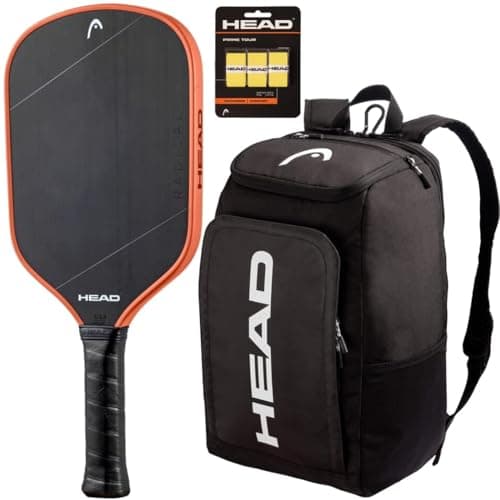
| HEAD Radical Tour EX Raw | Raw carbon fiber | 15mm, 8.1 oz | Standard | Big-brand value |
| Franklin Signature Pro 16mm | MaxGrit surface | 16mm PP honeycomb | Standard | Under $50 |
Best overall under $100: Vatic Pro Prism Flash 16mm
The Prism Flash is the paddle I recommend more than any other to players ready to leave a starter behind, and it is the easy pick for the top of this list. It uses a raw T700 carbon-fiber face— the same material class as paddles costing twice as much — with foam-injected walls for a bigger sweet spot, and it grips the ball impressively for the money. Elongated shape, 16mm core, and it ships with a cover.
| Surface | Raw T700 carbon fiber (textured) |
|---|---|
| Core | 16mm with foam-injected walls |
| Shape | Elongated |
| Extras | Includes paddle cover |
| Best for | Value-focused players leveling up |
What I like: the spin and pop punch well above the price, and the foam walls make it more forgiving than most budget elongated paddles. What gives me pause: it's a direct-to-consumer brand, so it can sell out, and the raw face needs the occasional clean to keep its bite. It also tops our best paddles for spin value pick. Full details in the Vatic Pro Prism Flash review.
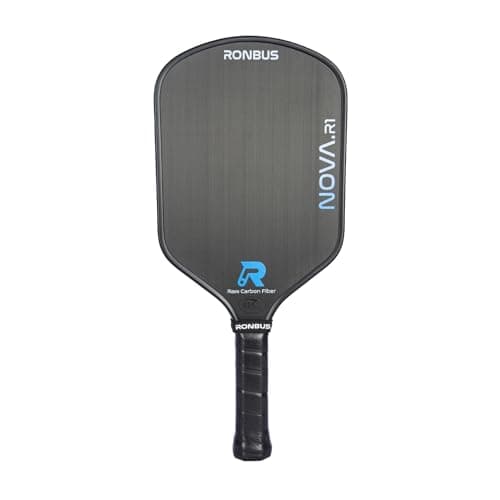
Best modern construction: Ronbus R1.16 Nova
Thermoforming — molding the paddle as one unibody piece with a foam-filled perimeter — used to be a pro-tier feature. The Ronbus R1.16 Nova brings it under $100 with a raw Toray T700 carbon faceand an edge grid for stability. For a player who wants that modern "pops off the face, holds spin" feel without a flagship price, it punches hard.
| Surface | Raw Toray T700 carbon fiber |
|---|---|
| Core | 16mm polypropylene honeycomb, thermoformed |
| Shape | Elongated with edge grid |
| Certification | USA Pickleball approved |
| Best for | Budget shoppers who want modern construction |
What I like: thermoformed feel and real spin for the money — it plays firmer and more powerful than its price suggests. What gives me pause: like Vatic, it's DTC, and thermoformed elongated paddles run a touch head-heavy, which some players love and others don't. Full write-up in the Ronbus R1.16 Nova review.
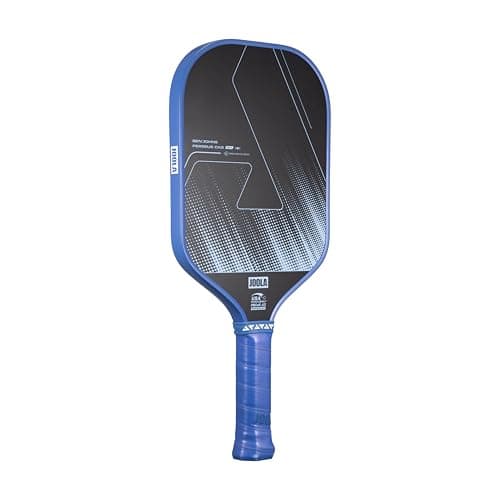
Best all-court: JOOLA Perseus 16mm
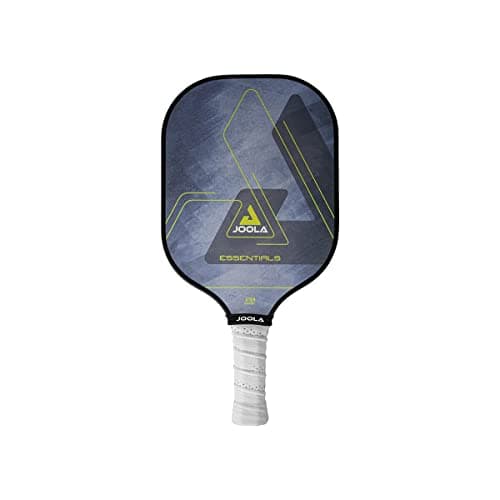
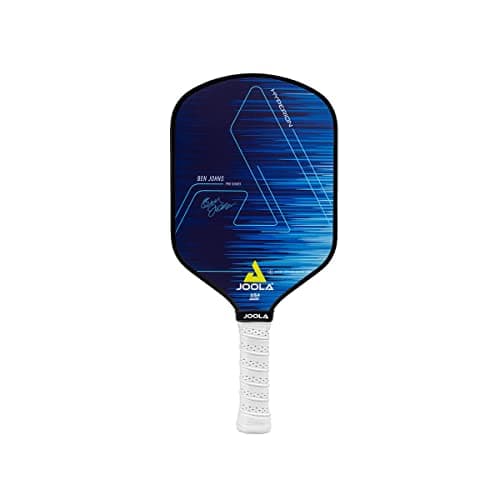
The Perseus name usually lives in the $200-plus pro tier, but this 16mm carbon version brings the Aero Curve shape and a grippy charged carbon surface under $100. It spins well, but what I like most is the balance: it's a genuine all-court paddle that can hang at the kitchen and still drive, which makes it a smart pick if you don't want to choose between spin and control.
| Surface | Charged carbon (CAS), grippy |
|---|---|
| Core | 16mm polypropylene honeycomb |
| Shape | Hybrid / Aero Curve |
| Grip | Feel-Tec Pure grip |
| Best for | All-court players who want spin + control |
What I like: a lot of paddle for the money, a forgiving hybrid shape, and the JOOLA name on a budget. What gives me pause: it isn't the thermoformed pro Perseus, so it won't feel identical to the tour paddle — judge it on its own (very good) merits. See the JOOLA Perseus review and our best spin paddles list.
Best control under $100: Selkirk SLK Evo Control
If your game is built on soft hands — dinks, resets, blocks — the SLK Evo Control is the sub-$100 paddle I'd steer you toward. It pairs a carbon-fiber face with a control tuningthat absorbs incoming pace instead of springing it back, and it's sold in both a widebody Max and a longer XLoutline — take the Max if you want the more forgiving sweet spot. SLK is Selkirk's value line, so you get the brand's warranty and distribution at an accessible price.
| Surface | Carbon fiber |
|---|---|
| Core | Polymer, control-tuned |
| Shape | Max (widebody) or XL (elongated) |
| Line | Selkirk SLK — the brand's value tier |
| Best for | Control players who want forgiveness |
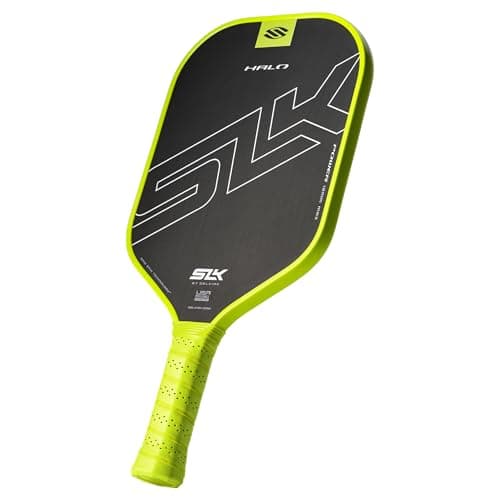
What I like: real carbon and a genuinely control-oriented feel from a major brand for well under $100 — blocks stay down and drops land short. What gives me pause: value-line construction means no foam perimeter, so the sweet spot is smaller than the thermoformed paddles above it on this list, and it isn't a paddle for players who need free power. See the full Selkirk SLK Evo Control review and our best control paddlesguide. Selkirk's other sub-$100 carbon family, the SLK Halo, is now run-out stock and often cheaper still — we compare all six models in our SLK Halo line review.
Best from a big brand: HEAD Radical Tour EX Raw
If you want a household racquet-sports name and the reassurance of a wide retail presence, the HEAD Radical Tour EX Raw is the value pick from a major brand. It carries a raw carbon-fiber face for grip on a proven tournament frame and weighs in at 8.1 oz on a 15mm core. One caveat on price: this is the single pick here that lists above$100 at full retail. It earns its place on this list when it's discounted, which a big-brand model with wide distribution frequently is — so check the live price on the button below before you buy, and take one of the paddles above it if the HEAD isn't on sale that day.
| Surface | Raw carbon fiber (textured) |
|---|---|
| Weight | About 8.1 oz |
| Grip | 4 1/8 in |
| Certification | USA Pickleball approved |
| Best for | Buyers who want a big-brand paddle on a budget |
What I like: a dependable, widely available tournament frame from a brand you already know, with a real raw face and easy returns. What gives me pause: the DTC value paddles here arguably squeeze more raw performance out of the same dollar, so buy this for the brand and availability as much as the spec sheet. We go deeper on the frame, the grip and the discount pattern in our full HEAD Radical Tour EX Raw review, and you can compare it against the field in our best power paddles and best spin paddles guides.
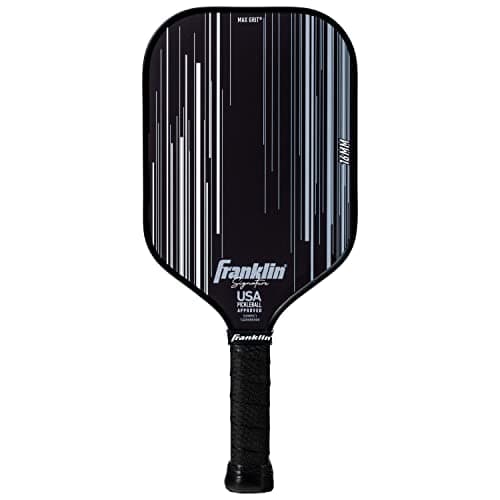
Best under $50: Franklin Signature Pro 16mm
When the budget is truly tight, the Franklin Signature Pro is the paddle I'd hand a new player without hesitation. It uses Franklin's MaxGrit surfaceover a 16mm polypropylene honeycomb core and is USA Pickleball tournament approved — a real, legal, playable paddle for well under $50. Franklin is the official ball supplier to USA Pickleball, so this isn't a no-name toy.
| Surface | MaxGrit textured surface |
|---|---|
| Core | 16mm polypropylene honeycomb |
| Certification | USA Pickleball tournament approved |
| Best for | Newer players on the tightest budget |
What I like: it's legitimately tournament-legal, forgiving, and about as affordable as a real paddle gets. What gives me pause: the MaxGrit surface won't bite like a raw T700 carbon face, and you'll feel more of the gap to the carbon paddles above as your game develops. If you're brand new, also look at our best beginner paddles and best-value paddles.
How to choose a paddle under $100
Prioritize a carbon face.Under $100 you can now get a real raw-carbon or carbon-fiber face, and that's the single biggest upgrade over an entry fiberglass paddle — it's where spin and a lively response come from. Treat a smooth painted composite face at this price as a step down.
Match the shape to your game.Elongated paddles (Vatic, Ronbus) add reach and leverage for spin and drives but shrink the sweet spot; a widebody or hybrid (SLK Evo in the Max shape, Perseus) is more forgiving. If you're still grooving clean contact, lean widebody — see our best beginner paddles.
Don't overthink 14 vs 16mm. Thickness mostly changes power vs. control feel, not spin. Sixteen millimeters is the more forgiving, control-friendly default; 14mm adds pop. Our paddle weight guide covers how weight changes the feel, and the full how to choose a paddle guide ties it together.
Keep a raw face clean.Grit wears smooth with play and with dirt filling the texture. A ten-second wipe with a carbon eraser between sessions keeps the bite — details in paddle care and cleaning.
The bottom line
For most players, the Vatic Pro Prism Flashis the sub-$100 paddle to beat — a raw-carbon face and forgiving build for a price that feels like a mistake in your favor. Want touch and forgiveness over pop? The Selkirk SLK Evo Control. Chasing the most modern feel? The Ronbus Nova. Want all-court balance and a brand name? The JOOLA Perseus. And on the tightest budget, the sub-$50 Franklin Signature Pro is a real, legal paddle you can grow with. None of them will make you wish you'd spent double — and several of them anchor our best paddles for intermediate players roundup, so they hold up well past the beginner stage. If you can stretch the budget, the best paddles under $200is where thermoformed construction and tournament certification become standard — and it is honest about which players will actually feel the difference.
Two of the brands on this page are the direct-to-consumer names that reset what $100 buys. Our Vatic Pro vs Ronbus comparison puts them head to head on construction, shape range and the honest trade-offs of buying value.
Frequently asked questions
Is a pickleball paddle under $100 actually good enough?
Yes. Under $100 you can now get a raw or textured carbon face, a 16mm polypropylene honeycomb core, and USA Pickleball approval — a combination that cost $150 or more a few years ago. Flagship paddles refine tolerances, edge foam and grip systems, but those are refinements, not the difference between a paddle that plays well and one that doesn't. Most players are well served in this tier.
What's the difference between a $90 paddle and a $220 flagship?
Mostly refinement. Flagships tend to have tighter quality-control tolerances, unibody thermoforming and edge foam for a larger sweet spot, hand-selected grips and handle systems, and pro-team branding. The core performance ingredients — a carbon face and a forgiving core — are available under $100. Competitive players may eventually want a flagship; recreational and improving players usually shouldn't overspend.
Are cheaper paddles legal for tournaments?
Legality has nothing to do with price. Every paddle in this roundup is USA Pickleball (USAPA/UPA-A) approved, meaning its surface roughness and dimensions are within the legal limits. A $45 Franklin and a $220 flagship are held to the same standard, so you can compete with any approved paddle here.
Should a beginner buy a paddle from this list or a starter set?
If you're brand new and want the most forgiveness and value, a widebody paddle like the Selkirk SLK Evo Control in the Max shape or a beginner-focused set is a great start — see our best beginner paddles and best-value paddles pages. If you already play a bit and want to level up, the Vatic Prism Flash gives you a carbon face you won't outgrow quickly.
Sources
Keep reading
- Best pickleball paddles for beginners →
- Best pickleball paddles for spin →
- Best pickleball paddles for control →
- Best-value pickleball paddles →
- How to choose a pickleball paddle →Rally & Dink
- Selkirk SLK Evo Control review →Rally & Dink
- Selkirk SLK Halo line review: Control vs Power vs Pro →
- HEAD Radical Tour EX Raw review →
- Best all-court pickleball paddles →
- Vatic Pro vs Ronbus →Rally & Dink
- How much does a pickleball paddle cost? →Rally & Dink
Upgrading your paddle or gearing up to play?
See how we pick, then dig into the paddle roundups and buying guides — honest picks from someone who actually plays, with no inventory to move.