Buying Guide
How to Choose a Pickleball Paddle
The paddle touches every shot you hit, and the market now has thousands of them. This guide walks through the six variables that actually decide fit — in the order that matters most.
The paddle is the one piece of gear that touches every ball you hit, and the market has exploded into thousands of options spread across a huge price range. That can make the first purchase feel like a gamble. The good news: once you understand six variables, you can pick up almost any paddle and know within seconds whether it suits your game. This guide walks through those six in the order that actually matters — from the specs that change how a paddle feels in your hand to the ones that barely move the needle.
There is no single "best" paddle. There is a best paddle for your swing, your body, and your budget, and the goal here is to help you describe that paddle precisely enough that the roundups do the rest. If you only remember one thing, remember this: weight and face material change your game far more than brand name or price.
1. Start with weight
Weight is the single most important spec because it dictates the fundamental trade-off in the sport: power and stability versus maneuverability and comfort.A heavier paddle carries more mass into the ball, so it delivers more effortless power and holds steady when you block a hard drive. A lighter paddle is quicker to the ball at the net, easier on your arm, and lets you flick your wrist for touch and spin — but you have to supply more of the power yourself.
Paddles fall into three loose bands: lightweight (under 7.8 oz), midweight (7.8–8.3 oz), and heavy(over 8.3 oz). Midweight is where most players land because it balances the two extremes, and it is the safest place to start if you are unsure. If you have any history of tennis elbow or forearm pain, bias lighter — the repeated shock of a heavy paddle is a common aggravator. If you came from tennis and want to bang drives, a heavier paddle will feel more natural. Weight matters enough that we gave it its own deep dive; read the pickleball paddle weight guide before you commit.
2. Core thickness: 14mm vs 16mm
Nearly every modern paddle uses a polymer honeycomb core, and the thickness of that core is usually either 14mm or 16mm. This is the second dial you turn, and it is mostly a power-versus-control decision.
A 16mm coreis thicker, so it flexes less and absorbs more energy on contact. That gives you a softer, more "planted" feel, a larger and more forgiving sweet spot, and better touch on soft shots at the net — at the cost of a little raw power. A 14mm coreis thinner and firmer, so the ball springs off faster for more pop and a lower, quicker launch. The trade-off is a slightly smaller sweet spot and less margin on off-center hits. If you are not sure, 16mm is the more forgiving default and the one most control-oriented and all-court players prefer; players who like to end points with a bang lean 14mm. Neither thickness meaningfully changes how much spin you can generate — that is the face's job.
3. Face material & spin
The face is the surface that touches the ball, and its material decides how much the ball grips (spin) and how it comes off the paddle (power and feel). Three materials dominate the market, and the difference between them is real and easy to feel.
| Face material | Feel & power | Spin grip | Durability | Best for |
|---|---|---|---|---|
| Raw carbon fiber | Muted, controlled, soft touch | Highest — gritty texture bites the ball | Grit wears smoother over time; clean it to restore bite | Spin, control & touch players |
| Fiberglass | Poppy, powerful, more flex | Lower — smoother, slicker face | Very durable face | Power seekers & value beginners |
| Graphite | Light, stiff, consistent | Moderate | Long-lasting, stable | Classic all-court & starter paddles |
Raw (unpainted) carbon fiber is the modern standard for spin because spin is simply friction between the ball and a textured surface. A gritty T700 raw-carbon face grabs the ball so topspin drives dip and slices skid low; it also tends to feel muted and controlled, which is why touch players love it. The catch is that the grit slowly wears smoother with play, so an occasional clean keeps its bite. If spin is your priority, start with the best paddles for spin, or compare the best carbon fiber paddles head to head.
Fiberglass(sometimes called composite) is more flexible and springy, so it delivers more raw pop off the face — but it is smoother, so it grips the ball less and spins less. It is common on excellent budget and beginner paddles because it is forgiving and powerful for the money. Graphite is thin, stiff, and light, giving a crisp, consistent response; it powered the classic all-court paddles and still shows up in dependable starter models. A word of caution: face texture is regulated. If you plan to play sanctioned tournaments, only use a USA Pickleball approved paddle, because some ultra-gritty faces spin more but are not legal for competition.
4. Shape & grip size
Two paddles can weigh the same and use the same face yet play completely differently because of their shape. Since USA Pickleball caps the combined length plus width at 24 inches, brands trade one dimension for the other.
- Widebody (standard) paddles are shorter and wider (around 16 x 8 in), which puts the sweet spot in the middle of the face and makes them the most forgiving and maneuverable. This is the friendliest shape for newer players.
- Elongatedpaddles are longer and narrower (around 16.5 x 7.5 in), trading a bit of sweet-spot size for extra reach and leverage — more power and spin on drives and serves, but they reward clean contact. They also tend to carry the longest handles, which is why they suit tennis players who want a two-handed backhand.
- Hybrid shapes split the difference and are a smart middle ground if you want some reach without shrinking the sweet spot too far.
Grip sizeis the other half of this step and is quietly important for both performance and comfort. A grip that is too big limits the wrist snap you need for spin and can strain your forearm; too small and the handle twists on off-center hits and you squeeze harder to hang on, which also tires the arm. Most players fit a 4 to 4.5 inch circumference. A quick test: hold the paddle and slide the index finger of your other hand into the gap between your fingertips and palm — it should fit snugly. When in doubt, size down, because you can always build a grip up with an overgrip but you cannot shrink one.
5. Match it to your skill level
The right paddle changes as your game does, so be honest about where you are.
Beginnersshould prioritize forgiveness over specialization: a midweight, 16mm, widebody or hybrid paddle with a carbon or fiberglass face gives a large sweet spot and predictable response while you groove your strokes. Do not spend big here — start with the best beginner paddles, and if you want to keep costs down, the best paddles under $100 now include genuine raw-carbon options.
Intermediate playersusually know whether they want to lean into spin, control, or power, and can start specializing — an elongated raw-carbon paddle for spin and reach, or a plush 16mm for the soft game. Our best paddles for intermediate players roundup collects the paddles worth upgrading to. If you live at the kitchen line and win with placement, the best control paddles are your shortlist. Advanced players largely play by feel and personal preference, fine-tuning weight and balance with lead tape rather than switching categories.
6. Set a realistic budget
Price and performance are more loosely connected than the marketing suggests. Direct-to- consumer brands have pushed real raw-carbon, thermoformed construction down into the sub-$100 range, so you no longer need to spend $200 to get a paddle that grips and pops with the flagships. Above roughly $150, you are mostly paying for marginal refinements — slightly better dampening, a pro player's name, a cleaner finish — and the returns diminish quickly.
A sensible approach: if you are new, cap your first paddle at around $80–$120 and upgrade once you know your style. If you play several times a week and know what you want, the $130–$180 tier is the sweet spot for durable, high-performance paddles without paying the flagship tax.
The bottom line
Work the six dials in order and the field narrows fast. Pick a weight (midweight unless you have a reason not to), choose a core thickness (16mm for control, 14mm for pop), match the face material to whether you value spin, power, or a classic feel, dial in a forgiving or reaching shape with a grip you can snap your wrist behind, and set a budget that matches how much you play. Do that and almost any well-reviewed paddle in your category will serve you well — the "perfect" paddle is just the one that fits those six answers. From here, jump to the roundup that matches your priority: spin, control, power, beginners, all-court, or value under $100. If you would rather see the whole field in one ranked list, our best pickleball rackets roundup puts a single pick behind each of those jobs. Two more ways to narrow it: by format, in best paddles for doubles, or by manufacturer, in best pickleball paddle brands.
Want to go deeper on any one dial? Each has its own guide: paddle weight, 14mm vs 16mm cores, carbon fiber vs fiberglass faces, paddle shapes, and grip size.
Two more things worth reading before you buy. If your question is really about budget rather than spec, how much a pickleball paddle costs maps what each price band actually gets you. And if any of the vocabulary above was new, the pickleball terms glossarydefines it in one place — including the gear jargon manufacturers never explain. Buying for someone with smaller hands? Start with best paddles for women, which is really a guide to grip circumference and swing weight.
Still not convinced the paddle is worth the attention? Do pickleball paddles make a difference works through how much of the difference is the equipment and how much is you.
Frequently asked questions
Does a more expensive paddle make a difference?
Up to a point. Moving from a cheap fiberglass starter paddle to a real raw-carbon paddle is a noticeable upgrade in spin, control, and feel. But direct-to-consumer brands now sell genuine raw-carbon, thermoformed paddles under $100, so you no longer need to spend $200+ to play well. Above roughly $150 the gains are marginal refinements, not game-changers, so spend based on how often you play rather than assuming pricier is automatically better.
What size grip do I need for a pickleball paddle?
Most players fit a grip circumference between 4 and 4.5 inches. A quick test: hold the paddle in your hitting hand, then slide the index finger of your other hand into the gap between your fingertips and your palm — it should fit snugly with little extra room. When you are between sizes, choose the smaller grip, because you can always build it up with an overgrip but you cannot make a grip smaller.
Carbon fiber vs fiberglass — which paddle face is better?
They serve different goals. Raw carbon fiber has a gritty texture that grips the ball for more spin and offers a muted, controlled feel, which is why it is the modern standard for spin and touch players. Fiberglass is more flexible and springy, so it delivers more raw power and pop but grips the ball less and spins less. Carbon is the better all-around performer for spin and control; fiberglass is a great value choice for power-focused and beginner players.
Is a 14mm or 16mm paddle better?
Neither is better outright — it is a power-versus-control choice. A 16mm core is thicker, softer, and more forgiving with a larger sweet spot and better touch, making it the popular pick for control and all-court players. A 14mm core is thinner and firmer, so the ball pops off faster for more power at the cost of a slightly smaller sweet spot. If unsure, 16mm is the more forgiving default.
What weight pickleball paddle should a beginner use?
A midweight paddle, roughly 7.8 to 8.3 ounces, is the best starting point for most beginners because it balances power, control, and maneuverability without over-committing to any one trait. If you have any history of tennis elbow or arm pain, lean toward the lighter end of that range or just under it, since a heavier paddle transmits more shock to the forearm.
Does a bigger or grittier paddle spin more?
Spin comes from the face texture and how fast you swing, not from the paddle's size or core thickness. A raw, unpainted, or abrasion-treated carbon face grips the ball for far more spin than a smooth painted composite face. Elongated shapes add a little leverage that can help, but the texture is the main driver. If you compete, make sure the paddle is USA Pickleball approved, because surface roughness is capped for legal play.
Sources
Keep reading
- Best pickleball rackets (paddles), ranked →
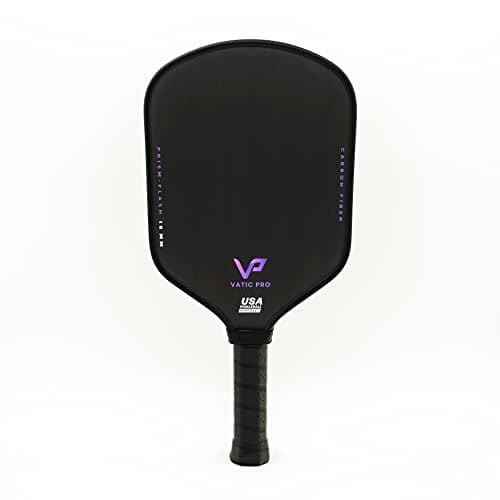
- Pickleball paddle weight guide →Rally & Dink
- Best pickleball paddles for beginners →
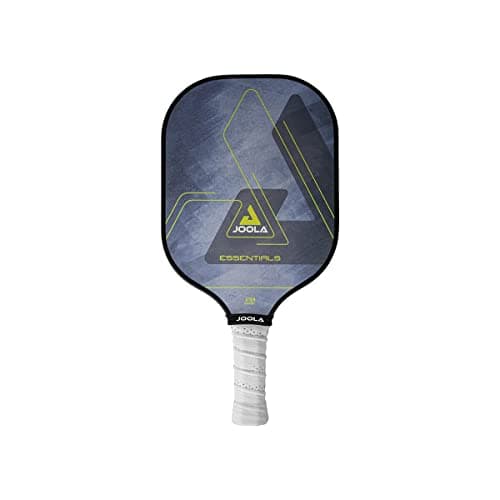
- Best pickleball paddles under $100 →
- Best pickleball paddles for spin →
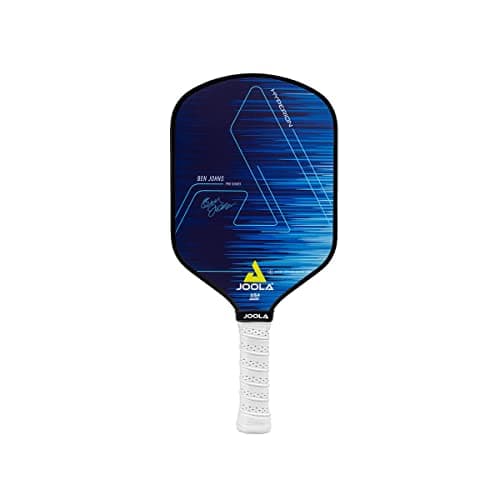
- Best pickleball paddles for control →
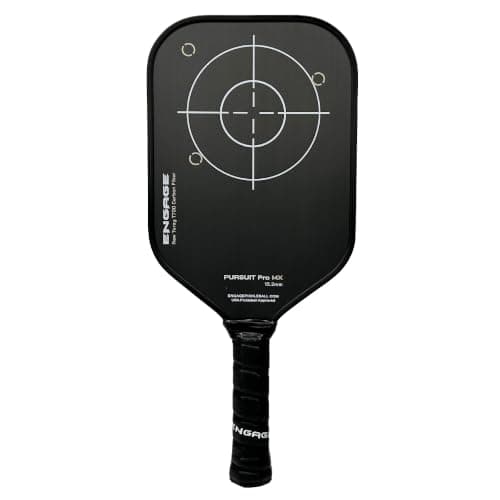
- Best pickleball paddles for tennis players →
- Pickleball paddle grip size guide →Rally & Dink
- Pickleball paddle shapes explained →Rally & Dink
- 14mm vs 16mm pickleball paddles →Rally & Dink
- Carbon fiber vs fiberglass paddles →Rally & Dink
- How much does a pickleball paddle cost? →Rally & Dink
- Thermoformed vs cold-pressed paddles →Rally & Dink
- Are pickleball paddles USA Pickleball approved? →Rally & Dink
Upgrading your paddle or gearing up to play?
See how we pick, then dig into the paddle roundups and buying guides — honest picks from someone who actually plays, with no inventory to move.