Blog
What Shoes Not to Wear for Pickleball
The most common gear mistake in pickleball isn't the paddle — it's the shoes. Running shoes are built for a straight line, and pickleball is played sideways. Here's why the wrong footwear rolls ankles, and what to wear instead.
Ask an experienced player or a physical therapist what causes the most avoidable pickleball injuries and you'll hear the same answer over and over: people wearing running shoes on the court. It feels harmless — running shoes are comfy and you already own a pair — but it's the single biggest footwear mistake in the sport, and it's behind a lot of rolled ankles and worse. The reason is simple once you see it: running shoes are engineered for one direction, and pickleball is played in all of them.
The one rule: no running shoes
If you take nothing else from this article, take this: do not play pickleball in running shoes.Not jogging shoes, not "dad shoes," not the max-cushion trainers designed for marathon recovery. They are the wrong tool for a sport built on quick lateral movement, and the mismatch is exactly where ankles get rolled.
Pickleball looks gentle, but it demands constant side-to-side shuffling, sudden stops, split steps, and quick pushes off the outside of your foot to cover the kitchen line. That is a lateral sport, and it needs a shoe built to move sideways safely. If you're shopping, skip straight to our best pickleball shoes guide — every pick there is chosen for court movement, not running.
Why running shoes are dangerous on a court
This isn't marketing — it comes down to how the two kinds of shoes are designed. Running shoes solve a completely different movement problem than court shoes, and the features that make them great for running are the same ones that make them risky for pickleball.
They're built for forward motion only.A running shoe is optimized to roll heel-to-toe in a straight line. It has little to no reinforcement on the sides, because a runner never loads the shoe sideways. The moment you push off laterally to chase a wide ball, there's nothing supporting that motion — your foot slides toward the edge of the footbed and the shoe offers no wall to stop it.
Tall, soft heels create a tipping point.Modern running shoes stack a lot of soft foam under the heel to cushion impact. That raises your foot off the ground and puts you on an unstable platform. When you plant hard and cut sideways, that tall, squishy sole compresses unevenly and can roll — taking your ankle with it. The higher and softer the heel, the bigger the lever working against you.
Soft outsoles catch instead of slide.On a hard court, a running-shoe outsole tends to grab and stick during a lateral cut rather than allowing the small, controlled slide a court shoe is designed for. When the shoe grips but your momentum keeps going, the force has to go somewhere — usually your ankle or knee. This grab-and-roll is a classic way people sprain an ankle without any contact at all.
Other footwear to avoid
Running shoes are the worst offender, but they're not the only footwear that doesn't belong on a pickleball court:
Walking and casual sneakers.Like running shoes, they're built for forward comfort, not lateral stability, and usually lack any side support. Comfortable for a stroll, unsafe for a cut.
Minimalist or barefoot-style shoes.These strip away support entirely. They're fine for some training but leave your ankle and forefoot exposed to exactly the quick lateral loads pickleball produces.
Worn-out shoes of any kind.A court shoe with a smooth, bald outsole can't grip predictably and becomes a slip hazard, especially outdoors. If you can't see the tread pattern anymore, retire them.
The wrong surface's shoe.Running shoes and many gym shoes also leave scuff marks that get you kicked off indoor courts. And any shoe with a soft outsole meant for the gym will wear through fast on abrasive outdoor asphalt — more on that below.
What to wear instead: court shoes
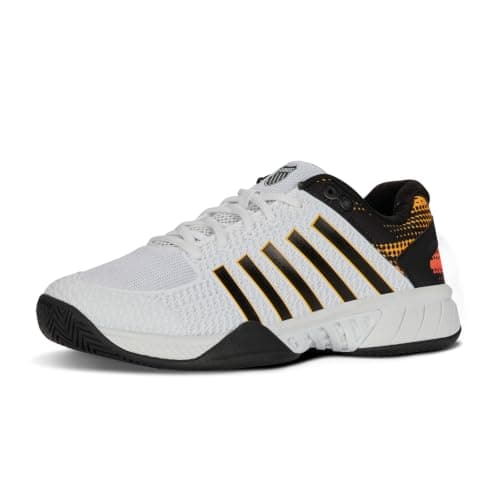
The right shoe for pickleball is a court shoe— the category that includes tennis shoes and purpose-built pickleball shoes. They're engineered for the exact movements that break running shoes, and switching to them is the biggest safety upgrade most players can make. Look for three things:
Lateral support. A court shoe has a reinforced upper and a supportive midsole that hold your foot over the footbed during a hard sideways push, plus a lower, firmer heel that keeps you stable instead of perched on soft foam. This is the feature that protects your ankle.
A non-marking, court-appropriate outsole.Court outsoles are firmer and use a herringbone or similar pattern that grips for stops but allows a small controlled slide on a cut, instead of catching. "Non-marking" means it won't streak an indoor floor, which is often required to play indoors at all.
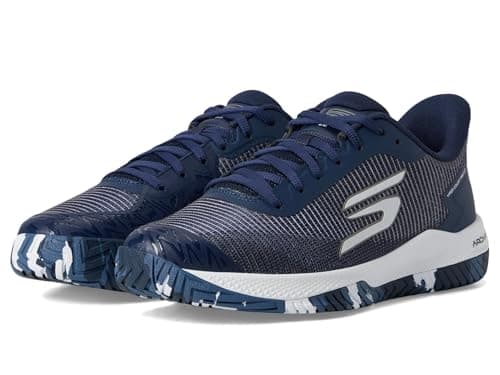
A low, stable platform. You want to feel close to the ground, not stacked up on cushioning. Lower is more stable and far less likely to roll. A good example of the category is a dedicated model like the Skechers Viper Court Pro, and you can compare several across budgets in our best pickleball shoes guide. Tennis shoes work well too, since tennis demands the same lateral movement.
Indoor vs. outdoor court shoes
Where you play changes what outsole you want — and getting this wrong mostly costs you in durability and grip, not safety.
Indoor (gym / hardwood). On a wood or sport-court gym floor you need a non-markingoutsole, usually with a gum or softer rubber compound tuned for grip on a smooth, clean surface. Many venues won't let you on the floor without non-marking soles. Indoor courts are less abrasive, so a softer outsole is fine and gives you excellent traction.
Outdoor (asphalt / concrete).Outdoor courts are rough and will chew through a soft indoor outsole quickly. Look for a shoe built for outdoor or "all-court" use with a tougher, more durable outsole compound. Many are sold with an outdoor durability guarantee for exactly this reason. The extra durability is the main difference — you still want the same lateral support and low platform.
If you play both, an all-court shoe with a durable non-marking outsole is the versatile choice. Our shoe guide flags which picks lean indoor, outdoor, or both.
The bottom line
Pickleball is a lateral sport, so wear a lateral shoe. Leave the running shoes, walking shoes, and worn-out sneakers at home — their tall, soft, forward-only design is the most common avoidable cause of rolled ankles on the court. Put on a proper court or tennis shoe with real side support, a low stable platform, and a non-marking outsole (durable rubber if you play outdoors), and you remove one of the biggest injury risks in the game. Start with our best pickleball shoes guide, and see the Skechers Viper Court Pro reviewfor a popular, affordable place to begin. If you already own tennis shoes and are wondering whether they count, they do — pickleball shoes vs tennis shoes goes through the four real differences and who should pay for them.
Shoes are the part that can injure you, but the rest of the kit has a short list of rules too: what to wear to play pickleball covers pockets, layers and cold-weather play.
Frequently asked questions
Can I wear running shoes to play pickleball?
You shouldn't. Running shoes are built for straight-line forward motion with a tall, soft heel and no lateral support, while pickleball demands constant side-to-side movement. That mismatch is the most common avoidable cause of rolled ankles in the sport. Wear a court or tennis shoe with lateral support and a low, stable platform instead.
What kind of shoes should you wear for pickleball?
A court shoe — either a purpose-built pickleball shoe or a tennis shoe. Look for lateral support to hold your foot during sideways cuts, a low and stable (not tall and cushioned) platform, and a non-marking court outsole. For outdoor play, choose a tougher, more durable outsole compound so rough asphalt doesn't wear it out.
What is the difference between indoor and outdoor pickleball shoes?
Mostly the outsole. Indoor shoes use a softer, non-marking rubber tuned for grip on smooth gym floors, and non-marking soles are often required indoors. Outdoor shoes use a tougher, more durable compound that survives abrasive asphalt and concrete. Both should share the same lateral support and low platform; the durability of the sole is the key difference.
Are tennis shoes okay for pickleball?
Yes. Tennis demands the same quick lateral movement, so tennis shoes are built with the side support, firm low platform, and court outsole that pickleball needs. They're a great choice, and for outdoor courts you'll want a tennis or all-court shoe with a durable outsole. Just don't confuse tennis shoes with running or casual sneakers.
Sources
- USA Pickleball — official rules & how the game is played (movement demands)
- General sports-medicine understanding of lateral-movement footwear and ankle-sprain mechanics (widely established biomechanics)
- Skechers — Viper Court Pro pickleball shoe specifications
- ASICS — court shoe outsole and stability technology overview
Keep reading
- Best pickleball shoes →
- Skechers Viper Court Pro review →
- How to choose a pickleball paddle →Rally & Dink
- Do expensive paddles play better? →Rally & Dink
- Paddle care and cleaning →Rally & Dink
- How to choose pickleball shoes →Rally & Dink
- Best women's pickleball shoes →
- Best budget pickleball shoes →Rally & Dink
Upgrading your paddle or gearing up to play?
See how we pick, then dig into the paddle roundups and buying guides — honest picks from someone who actually plays, with no inventory to move.