Net Roundup
The Best Portable Pickleball Nets in 2026
A regulation net turns any driveway, gym, or empty court into a place to play. These are the six I recommend — from the do-it-all Franklin to a versatile 2-in-1 and a tournament-grade club net — with what actually matters and the honest trade-offs.
The short answer
Quick picks
| # | Product | Best for | Score | Price |
|---|---|---|---|---|
| 01 | Best overall | 4.7/5 | $179.99Amazon | |
| 02 | Best value & most versatile | 4.6/5 | $71.99Amazon | |
| 03 | Best for clubs & tournaments | 4.5/5 | $179.99Amazon | |
| 04 | Best budget | 4.3/5 | $62.99Amazon | |
| 05 | Best for kids & tight spaces | 4.2/5 | $44.40Amazon | |
| 06 | Best premium / permanent | 4.1/5 | $499.99Amazon |
#ad · Live prices from Amazon as of October 19, 2026; where we have no verified live price we show none. We may earn a commission — see our affiliate disclosure.
A portable net is the piece of gear that decides whereyou get to play. Once you own one, a driveway, a cul-de-sac, an empty tennis court, or a gym floor all become pickleball courts — no waiting for a public net to free up. The good news is that a regulation net is cheap relative to how much it gets used; the trap is that the market is full of flimsy nets that sag in the middle by the third game. These six all hold up, and I've organized them so there's a right answer whether you want a set-and-forget driveway net, a featherweight travel option, or a club-grade net that survives daily open play.
My overall pick is the Franklin Sports Portable Net: it's official 22-foot regulation size, sets up in a few minutes, rolls on built-in wheels, and comes from the brand that also makes the official ball of USA Pickleball. If you want to spend less, the BAGAIL 2-in-1 gives you a full net andan 11-foot half-court mode for well under half the price, which is why it's the one I hand most new players.
How we picked
We don't sell nets, and nobody paid for a place on this list. I evaluated each net against the things that actually decide whether you keep using it: whether it holds regulation height without sagging, how quickly and painlessly it sets up and packs down, how portable it is once folded, how it handles wind outdoors, and how the build quality holds up to repeated setup. Price-to-durability broke the ties — a $60 net that survives a season of driveway play is a better buy than a $180 one you baby. Where I haven't personally used a specific model, I say so and lean on its verified specifications and a strong ownership track record rather than implying hands-on time I haven't had. Our full approach is on the how we review page.
What actually matters in a net
A pickleball net is simpler than a paddle, but a few details separate the ones worth owning from the ones you'll replace.
Regulation size and height. A full-size net is 22 feet wide and sits 36 inches at the posts and 34 inches at the center, per USA Pickleball. If you want to play real games or practice for them, buy a regulation net. Half-court and "driveway" nets are shorter and are for kids, warm-ups, or genuinely tight spaces.
Anti-sag center.The number-one failure of cheap nets is a center that droops below regulation the moment you tension it. Better nets fight this with a sturdier frame, a center support bar, or a hand-crank winch that pulls the top rail tight. If a net doesn't mention how it stays taut in the middle, be suspicious.
Setup time and portability.The whole point is convenience, so a net that takes fifteen minutes and three people is a net you'll leave in the garage. Look for a tool-free, snap-together frame and a carry bag; built-in wheels are a genuine luxury for a heavier full-size net you move often.
Frame material and wind.Steel frames are the norm and are plenty sturdy; aluminum is lighter and rust-proof but costs more. Outdoors, wind is the enemy — a heavier base and a taut top rail matter more than they do in a gym.
At a glance
The full field, side by side. Sizes are the manufacturer's figures; live prices are on each buy button below and change frequently.
| Net | Size | Frame | Portability | Best for |
|---|---|---|---|---|
| Franklin Sports Portable | 22 ft regulation | Steel | Wheels + carry bag | Do-it-all driveway net |
| BAGAIL 2-in-1 | 22 ft + 11 ft half-court | Steel | Wheels + carry bag | Value & versatility |
| A11N Pro | 22 ft regulation | Steel, hand winch | Wheels + carry bag | Clubs & tournaments |
| BAGAIL Portable | 22 ft regulation | Steel | Carry bag | Budget |
| Franklin Half-Court | 10 ft half-court | Steel | Carry bag | Kids & tight spaces |
| A11N Aluminum | 22 ft regulation | Aluminum, tension lock | Wheels | Permanent / premium |
Best overall: Franklin Sports Portable Net
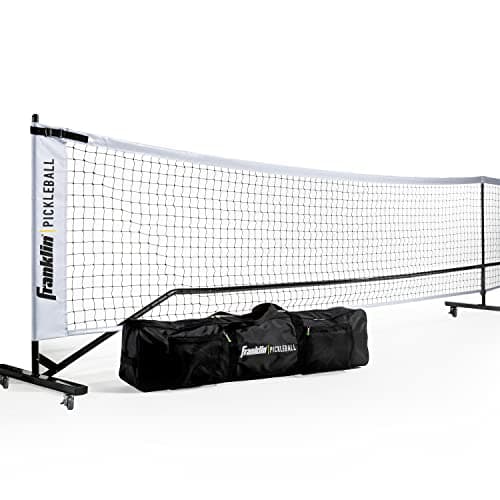
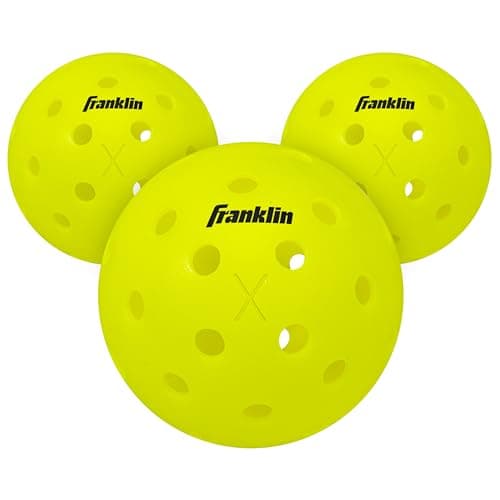
The Franklin is the net I'd point most people toward first because it gets the fundamentals right and comes from a brand with a deep pickleball pedigree — Franklin makes the official X-40 outdoor ball of USA Pickleball. It is full 22-foot regulation size, sets up quickly with a snap-together steel frame, holds tension well across the middle, and — the detail that matters when you move it — rides on built-in wheels so you can roll it out of the garage rather than carry it.
| Size | 22 ft, official regulation |
|---|---|
| Height | 36 in posts / 34 in center |
| Frame | Steel, tool-free assembly |
| Portability | Built-in wheels + carry bag |
| Best for | A durable everyday driveway net |
What I like: it's a genuine regulation net that's sturdy enough for daily play, the wheels make moving it painless, and the brand backing means parts and support are easy to find. The honest downsides: at full size it's the priciest of the mainstream picks here, and like any portable net it will still bow slightly in strong wind, so weight the base if you're on an exposed driveway. If you want the same convenience for less, keep reading.
Best value & most versatile: BAGAIL 2-in-1 Net
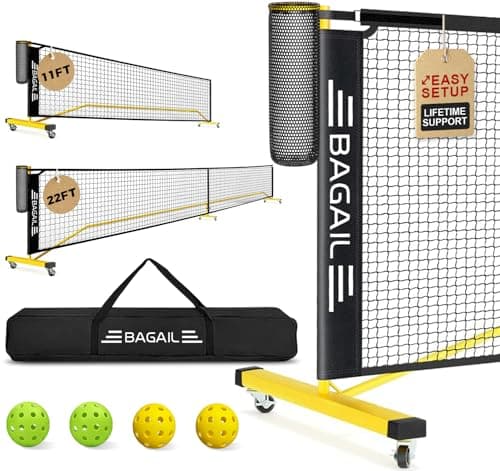
The BAGAIL 2-in-1 is the net I recommend most often, because it does something the others don't: it sets up as a full 22-foot regulation net or an 11-foot half-court netfrom the same box, and it costs a fraction of the full-size premium nets. Add built-in wheels, a ball caddy, and a carry bag, and you have a genuinely flexible setup — regulation for real games, half-court for solo drills or a quick game in a smaller driveway.
| Size | 22 ft full or 11 ft half-court |
|---|---|
| Frame | Steel, tool-free snap-together |
| Portability | Wheels + ball collector + carry bag |
| Extras | Two configurations from one net |
| Best for | Value shoppers who want flexibility |
What I like: the value is outstanding, the half-court mode is genuinely useful for solo practice and small spaces, and the wheels and caddy are features you normally pay more for. What gives me pause: the lighter build isn't as rock-solid in gusty wind as a heavier club net, and the two-mode design has a few more parts to keep track of at setup. For most home players, it's the smartest money on this list.
Best for clubs & tournaments: A11N Pro Net
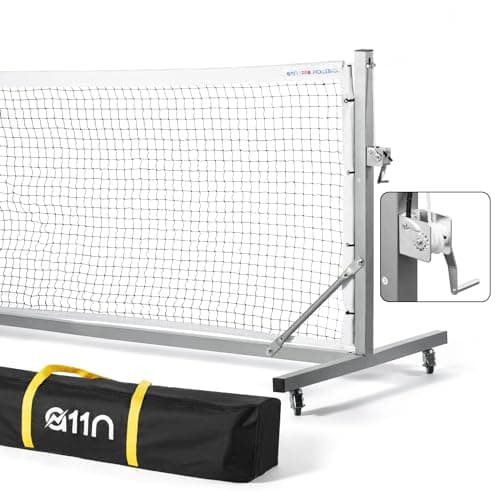
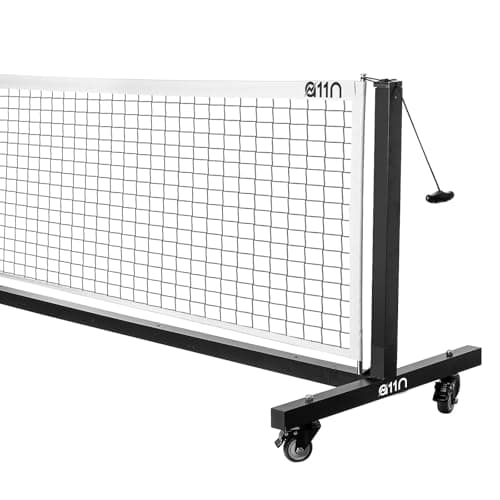
If a net is going to see heavy, repeated open play — a club, a rec center, a group that plays daily — the A11N Pro is built for it. It's tournament regulation size with a heavier-duty steel frame and, crucially, a hand winch that cranks the top rail properly taut and an anti-sag design that keeps the center at legal height game after game. It rolls on wheels and packs into a carry bag, so it's still portable despite the sturdier build.
| Size | 22 ft, tournament regulation |
|---|---|
| Frame | Heavy-duty steel with hand winch |
| Anti-sag | Winch-tensioned top rail |
| Portability | Built-in wheels + carry bag |
| Best for | Clubs, rec centers, daily play |
What I like: the hand winch is the difference-maker — it holds a taut, regulation center longer than snap-tension nets, which is exactly what heavy use demands. The downsides: it's heavier to move than a lightweight travel net (the wheels help), and the winch adds a step to setup. For a single household it may be more net than you need; for a group, it's worth it.
Best budget: BAGAIL Portable Net
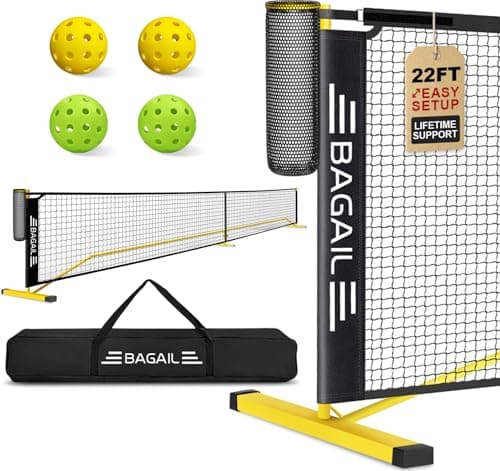
When you want a real regulation net for the least money, the standard BAGAIL Portable is the pick. It's full 22-foot regulation sizewith a lightweight steel frame, a tool-free setup, and a carry bag — the essentials, done competently, without the wheels and half-court trickery of its pricier sibling. For a driveway you play on a few times a week, it's plenty of net.
| Size | 22 ft, regulation |
|---|---|
| Frame | Lightweight steel, tool-free |
| Portability | Folds into a carry bag |
| Best for | Budget buyers who just want to play |
What I like: it's genuinely inexpensive, quick to set up, and light to carry to the court. The downsides: without wheels you carry rather than roll it, the lighter frame is more wind-sensitive, and it lacks the winch tensioning of the club nets, so check the center height before a serious game. As a first net, it removes every excuse not to play.
Best for kids & tight spaces: Franklin Half-Court Net
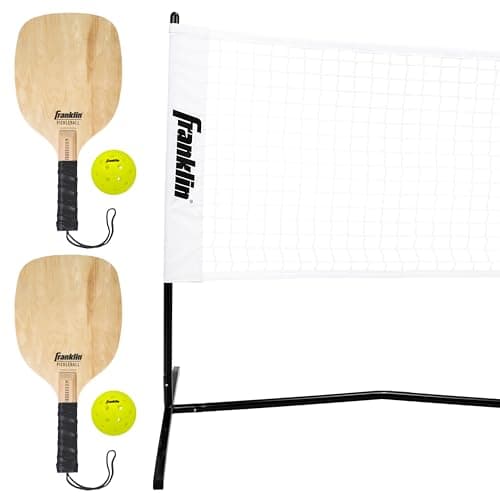
Not every setup needs a full 22-foot court. For kids, for a narrow driveway, or for warm-up rallies, the Franklin Half-Court net is a smart, compact option — and it doubles as an instant starter kit, because it ships with two paddles and two X-40 balls. It's a 10-foot half-courtnet, so it's not for regulation games, but it's the fastest way to get younger players rallying or to squeeze a game into a small space.
| Size | 10 ft, half-court |
|---|---|
| Includes | Net + 2 paddles + 2 X-40 balls |
| Frame | Steel, quick setup |
| Best for | Kids, warm-ups, tight driveways |
What I like: it's inexpensive, sets up in a minute, and the included paddles and official Franklin balls make it a complete grab-and-go kit. The honest downside: it's explicitly not regulation size, so it's a supplement, not your main net — if you want real games, pair it with (or skip it for) one of the full-size picks above. If you're fully outfitting beginners, our best beginner sets guide covers the paddle side.
Best premium / permanent: A11N Aluminum Tournament Net
For a facility, a serious home court, or anyone who wants a net that essentially never sags, the A11N Aluminum is the upgrade. Its aluminum frame is lighter than steel and rust-proof for a net that lives outdoors, and its tension-lock systempulls the top rail bar-tight and holds it, so the center stays at regulation height through all-day play. It's built to IFP regulation and rides on built-in wheels.
| Size | 22 ft, IFP regulation |
|---|---|
| Frame | Aluminum, rust-proof |
| Anti-sag | Tension-lock system |
| Portability | Built-in wheels |
| Best for | Facilities & permanent home courts |
What I like: it's the sturdiest, most sag-resistant net here, and aluminum shrugs off the weather that eventually rusts steel. The obvious downside is price — it costs several times what the mainstream nets do, so it only makes sense if you play constantly or are outfitting a court others will use. For a typical household, the Franklin or BAGAIL will serve you just as well for far less.
How to choose a pickleball net
Buy regulation size unless you have a specific reason not to.A full 22-foot, 34-inch-center net lets you play and practice for real games. Only drop to a half-court net for kids, warm-ups, or a genuinely small space — and know you're trading away regulation play to do it.
Prioritize the anti-sag mechanism. The center height is where cheap nets fail. A hand winch or tension-lock (the A11N nets) holds a taut center best; a good snap-tension steel frame (the Franklin, BAGAIL) is fine for household use. Whatever you buy, check the center with a tape measure before a competitive game.
Match portability to how often you'll move it. If the net lives in one spot, wheels matter less; if you haul it to a park or court, built-in wheels and a real carry bag are worth paying for. A lighter frame is easier to carry but more wind-sensitive outdoors.
Then round out the kit. A net is one piece of the puzzle. Pair it with the right pickleball balls for where you play, a paddle from our best beginner paddles or best paddles under $100 roundups, and a bag to carry it all. New to the sport entirely? Start with our complete beginner gear guide.
The bottom line
For most players, the Franklin Sports Portable Netis the safest all-around buy — regulation size, sturdy, and easy to roll out whenever you want to play. Want the same convenience for less, plus a half-court mode? The BAGAIL 2-in-1 is the value champion and the one I hand most new players. Running a club or playing daily? The A11N Pro's winch tensioning earns its keep. On the tightest budget, the standard BAGAIL removes every excuse; for kids or tiny spaces, the Franklin half-court kit; and for a permanent court, the aluminum A11N. Any of them turns an empty driveway into a place to play — which is the whole point.
Working to a hard price ceiling? Our best cheap pickleball nets page narrows this list to the sub-$100 band and is specific about which corners a budget net cuts.
Once it arrives, the order you assemble it in decides whether the center sags: how to set up a portable pickleball net covers regulation height and width and the tensioning sequence.
Frequently asked questions
What size is a regulation pickleball net?
A regulation pickleball net is 22 feet wide and stands 36 inches high at the posts and 34 inches at the center, per USA Pickleball. Most of the full-size nets in this guide (the Franklin, both BAGAILs, and the A11N nets) meet that standard; the Franklin half-court net is a shorter 10-foot option for kids and tight spaces, not regulation play.
Why does my portable net sag in the middle?
Center sag is the most common flaw in cheap nets — when you tension the top rail, the middle droops below the legal 34-inch height. Nets with a hand winch or tension-lock system (like the A11N models) or a sturdier snap-tension steel frame hold the center better. Whatever you own, check the center with a tape measure and re-tension before a competitive game.
Can I use a portable net for real games, or just practice?
Yes — a regulation 22-foot net at 34 inches in the center is perfectly fine for real games, and many rec groups and driveways run on portable nets. The key is buying a full-size regulation net (not a half-court kids' net) and keeping the center taut. For heavy daily or club use, a winch-tensioned net like the A11N Pro holds height longer.
How long does a portable pickleball net take to set up?
The tool-free, snap-together nets in this guide typically go up in a few minutes once you're familiar with them. Nets with a hand winch or a two-in-one configuration add a step or two. Built-in wheels don't speed assembly but make moving a full-size net far easier, which is a bigger deal in practice than shaving a minute off setup.
Sources
Keep reading
Upgrading your paddle or gearing up to play?
See how we pick, then dig into the paddle roundups and buying guides — honest picks from someone who actually plays, with no inventory to move.