Paddle Roundup
The Best Pickleball Paddles for Tennis Players in 2026
If you came from tennis, you want reach, a handle long enough for two hands, and a face that takes your topspin. These five paddles bridge the gap — and I'm honest about what each one costs you at the kitchen line.
The short answer
Quick picks
| # | Product | Best for | Score | Price |
|---|---|---|---|---|
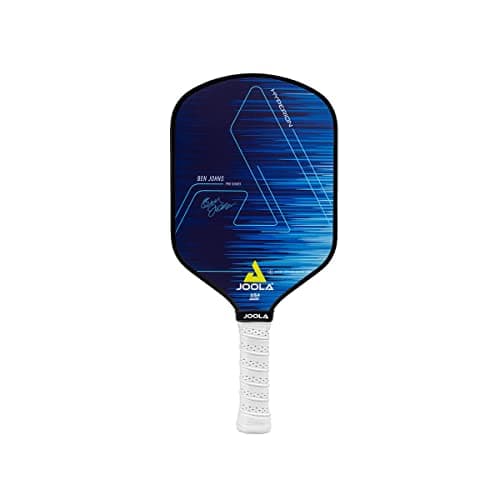
| 01 | JOOLA Ben Johns Hyperion CAS 16 5.5" handle, elongated, and the heftiest plow-through here — the closest thing to a racquet. | Best overall for tennis players | 4.7/5 | $99.99Amazon |
| 02 | 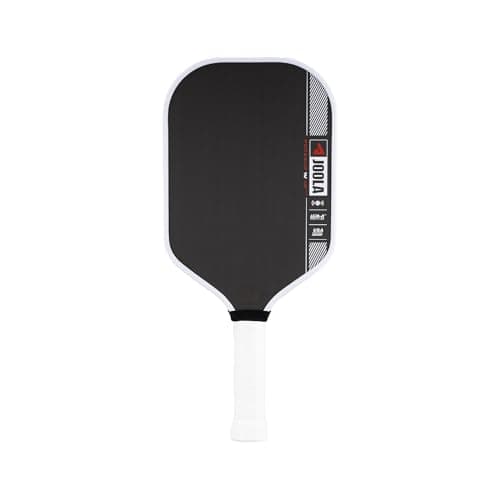 JOOLA Perseus Pro IV 16mm Foam-walled 16mm core with a huge sweet spot — if the budget is genuinely open. | Best premium upgrade | 4.5/5 | $149.95Amazon |
| 03 | 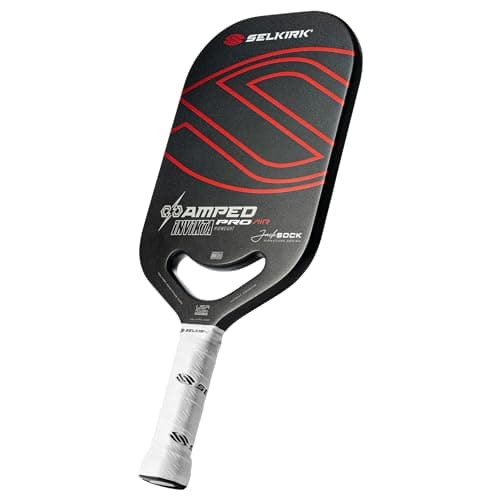 Selkirk Amped Pro Air Invikta The classic Invikta shape and a 5.25" handle for the least money on this list. | Best value elongated | 4.4/5 | $99.99Amazon |
| 04 | 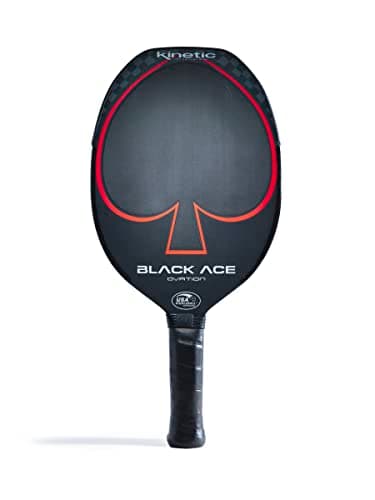 ProKennex Black Ace Ovation Kinetic tungsten-bead damping in the head and handle — the arm-friendly pick. | Best for tennis elbow | 4.3/5 | $104.99Amazon |
| 05 | 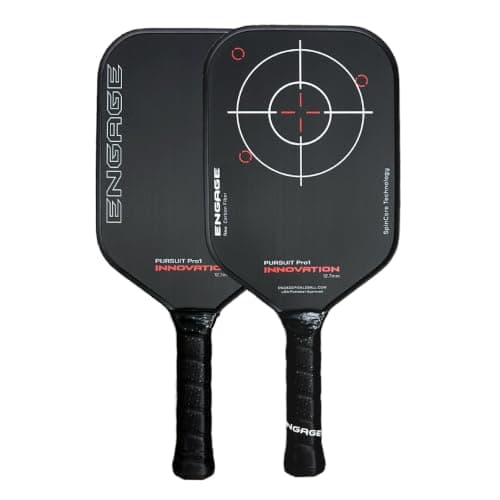 Engage Pursuit Pro1 Innovation 12.7mm A 6" handle — the longest here — with a raw carbon face built for drives. | Best for a two-handed backhand | 4.2/5 | $99.99Amazon |
#ad · Live prices from Amazon as of October 19, 2026; where we have no verified live price we show none. We may earn a commission — see our affiliate disclosure.
Almost everyone I've introduced to pickleball who played tennis first says the same thing in the first ten minutes: this paddle feels like a toy. It's short, it's light, there's no throat to choke up on, and your two-handed backhand — the shot you spent years grooving — suddenly has nowhere to put the second hand. That's not you being fussy. Most pickleball paddles are built for players who never swung a racquet, and they genuinely don't fit a tennis swing.
The fix isn't a "tennis paddle" — no such category exists. It's three specs: an elongated shape for reach, a handle long enough for two hands (5.25" is the realistic floor, 5.5"+ is comfortable), and enough swingweight that the paddle plows through the ball instead of getting pushed around. My overall pick is the JOOLA Ben Johns Hyperion CAS 16: a 5.5" handle, an elongated 16.5" body, and the most substantial feel of anything here. If your budget is tighter, the Selkirk Amped Pro Air Invikta gets you the same shape category for meaningfully less.
How we picked
I don't sell paddles and nobody pays for a spot on this list. Every paddle here is one I've either played with directly or evaluated against its verified manufacturer specs plus a lot of court time on the same shape class — and I say which is which in each write-up. My full process is on the how we review page.
For tennis players specifically, I weighted four things, in this order. First, handle length — this is the one spec that decides whether your two-handed backhand survives the switch, and it's the spec most roundups ignore entirely. Second, shape: elongated paddles put mass and reach out at the tip where a tennis player expects it. Third, face texture, because a converting tennis player arrives with topspin already built and needs a face that will actually bite the ball. Fourth, arm comfort — a real concern for anyone who brought tennis elbow across with them. Price-to-performance broke the ties.
Every spec below is from the manufacturer's published data (sources at the bottom), not from memory or a guess. Where a paddle's weakness matters for this specific reader, I say so rather than burying it.
What actually changes from tennis
Before the picks, the honest framing — because the right paddle only solves half of this, and any guide that tells you a paddle will make you a pickleball player is selling something.
Your groundstrokes transfer. Your swing length doesn't. Topspin, footwork, racquet-head speed, the instinct to hit through the ball — those are real advantages and they show up immediately. What doesn't transfer is amplitude: a full tennis backswing sends a pickleball long every time, because the ball is slow, light, and the court is a third of the size. The paddles here reward that fast, brushing swing while asking you to shorten it. Nobody's paddle choice fixes that part — court time does.
The kitchen is where converts lose, and it's where these paddles cost you. Elongated shapes buy reach and leverage by moving mass toward the tip, and the trade is a narrower, higher sweet spot and slightly slower hands in a fast exchange at the net. That is a genuine downside of every recommendation on this page. If you find yourself losing points at the non-volley line rather than off the ground, a widebody from our best control paddles roundup will serve you better than anything here — and learning what a dink actually is will serve you better still.
Heavier feels right, but don't chase it. Tennis players almost always gravitate to the heaviest paddle on the rack because it feels closest to a racquet. Be careful. A tennis racquet spreads load over a long lever with strings that absorb shock; a pickleball paddle is a rigid, short lever with no string bed, and the impact goes straight up your arm at a much higher shot count. The paddles here sit in a sane 7.9–8.5 oz band. Our paddle weight guide covers the full picture.
At a glance
The full field, side by side, sorted by the spec that matters most here — handle length. All figures are manufacturer-published; live prices are on each buy button below and change frequently.
| Paddle | Handle | Length | Core | Face | Best for |
|---|---|---|---|---|---|
| Engage Pursuit Pro1 Innovation | 6.0" | 16.6" | 12.7mm MachPro | Raw carbon | Two-handed backhand |
| JOOLA Hyperion CAS 16 | 5.5" | 16.5" | 16mm Response Polymer | Carbon Abrasion Surface | Overall |
| JOOLA Perseus Pro IV 16mm | 5.5" | 16.5" | 16mm Propulsion + foam wall | Textured carbon | Premium upgrade |
| ProKennex Black Ace Ovation | 5.4" | 16.1" | 11mm honeycomb | Toray carbon | Tennis elbow |
| Selkirk Amped Pro Air Invikta | 5.25" | 16.5" | 16mm X5+ / FlexFoam | FiberFlex+ fiberglass | Value |
Best overall for tennis players: JOOLA Ben Johns Hyperion CAS 16
The Hyperion is the paddle I hand every tennis player who asks, and the reason is the handle. At 5.5" it's long enough to get a genuine second hand on the backhand without your bottom hand hanging off the butt cap, and JOOLA's own spec sheet pitches that length for exactly this — double-handed shots and extension on groundstrokes. Pair it with the elongated 16.5" body and the leverage at contact feels more like a racquet than anything else on this list.
The Carbon Abrasion Surface is the other half. It's one of the grippiest legal faces in the game, so the topspin you already own translates on day one: drives dip inside the baseline instead of sailing, and slice returns skid low. At 8.3 oz average it's also the most substantial paddle here, which is exactly the plow-through a tennis player is unconsciously looking for.
| Handle length | 5.5" (fits a two-handed backhand) |
|---|---|
| Dimensions | 16.5" long x 7.5" wide, elongated |
| Weight | 8.3 oz average (8.1-8.5 oz range) |
| Face | Hybrid-ply with Carbon Abrasion Surface (high grit) |
| Core | 16mm Response Polymer |
| Grip | 4 1/4" medium, Sure-Grip |
Handle length is the spec to shop on here, and our handle length guide explains the ranges and what each one costs you in face area.
What I like: the handle length is the real thing, not a marketing number; the spin ceiling is high; the extra ounce of heft makes drives feel authoritative. What gives me pause: 8.3 oz is genuinely heavy, and if you brought tennis elbow with you this is the wrong paddle — skip to the ProKennex below. The elongated shape also shrinks the sweet spot, so mishits punish you more than a widebody would, and it's slower in a hands battle at the kitchen. Full details in the JOOLA Hyperion review, and it leads our best paddles for spin roundup too.
Best premium upgrade: JOOLA Perseus Pro IV 16mm
If the budget is genuinely open, the Perseus Pro IV is the most complete paddle here. Same tennis-friendly geometry as the Hyperion — 5.5" handle, elongated 16.5" body — but with JOOLA's Tech Flex construction, which puts foam outside the frame and under the edge guard to widen the sweet spot around a 16mm Propulsion core. For a tennis player, the practical effect is forgiveness: the mishits that die on a standard elongated paddle still come off this one with pace.
It's also a touch lighter than the Hyperion at 8.1 oz average, which some converts prefer once they realize how many more balls per hour pickleball asks them to hit.
| Handle length | 5.5" (fits a two-handed backhand) |
|---|---|
| Dimensions | 16.5" long x 7.5" wide, elongated |
| Weight | 8.1 oz average (7.9-8.3 oz range) |
| Face | Textured carbon fiber |
| Core | 16mm Honeycomb Propulsion, Hyper-Foam edge wall |
| Certification | USAP and UPA-A certified |
What I like: the biggest usable sweet spot of any elongated paddle on this list, and a power ceiling that rewards a real swing. What gives me pause: it is by some distance the most expensive pick here, and I won't pretend the gap over the Hyperion is proportional to the gap in price — it isn't. It's also a lot of paddle for someone still learning to shorten their backswing; the power that helps a controlled swing turns overhitting into a habit. If you're six weeks into the sport, buy the Invikta below, spend the difference on court time, and upgrade when your swing has settled.
Best value: Selkirk Amped Pro Air Invikta
Invikta is Selkirk's elongated shape and it has been the quiet default for tennis converts for years. The Amped Pro Air version brings it in at the lowest price on this list while keeping the geometry that matters: a 16.5" elongated body and a 5.25" handle — the realistic floor for a two-handed backhand, and enough for most players who only put the second hand on for backhand drives rather than every ball.
The construction is the classic Selkirk recipe: a FiberFlex+ fiberglass face over an X5+ honeycomb core with FlexFoam, 16mm at the perimeter, 8.0 oz average. Fiberglass is springier than carbon, so this paddle gives up less pop than you'd expect for the money.
| Handle length | 5.25" (workable for two hands) |
|---|---|
| Dimensions | 16.5" long x 7.45" wide, elongated |
| Weight | 8.0 oz average (7.8-8.2 oz range) |
| Face | FiberFlex+ fiberglass |
| Core | X5+ honeycomb with FlexFoam, 16mm perimeter |
What I like: the right shape and a long-enough handle for the least money here; a big, friendly sweet spot; Selkirk's build quality and warranty are dependable. What gives me pause: the fiberglass face does not bite the ball the way the raw and abrasion-treated carbon faces above do — if the spin you brought from tennis is the thing you most want to keep, you will feel that difference, and the spin roundup is the better shopping list. The 5.25" handle is also the shortest here; if you two-hand every backhand, go longer.
Best for tennis elbow: ProKennex Black Ace Ovation
If you arrived from tennis with a sore elbow — and a lot of people do — this is the paddle to look at first, and I'd rank it above everything else here for that reader. ProKennex's Kinetic system embeds micro-tungsten beads in the paddle's perimeter to absorb impact vibration before it travels into your arm, and on the Black Ace an additional kinetic module sits in the handle for a second layer of filtering. It is the only genuinely engineered answer to arm pain in this field rather than a marketing adjective.
The geometry still works for a tennis player: a 5.4" handle takes a second hand, and the Toray carbon face has real grip for topspin. At 16.1" long and 7.75" wide it's a shorter, broader paddle than the JOOLAs — a little less reach, a little more face.
| Handle length | 5.4" (fits a two-handed backhand) |
|---|---|
| Dimensions | 16.1" long x 7.75" wide |
| Weight | 7.94 oz average (7.9-8.0 oz range) |
| Face | Toray carbon fiber |
| Core | 11mm polypropylene honeycomb |
| Arm comfort | Kinetic tungsten-bead damping in head + handle |
| Grip | 4" (small) Comfort Pro |
What I like: the vibration damping is real and it is the difference between playing four days a week and playing two if your elbow is unhappy. What gives me pause: the 11mm core is the thinnest here, which means a firm, fast, less forgiving feel — it pops, but touch shots demand more from you, not less. The 4" grip is also small for most tennis hands; budget for an overgrip or two to build it up, which slightly raises the swingweight. And note the honest tension: a thin, poppy core is not the obvious choice for an arm you're protecting — the Kinetic system is doing the heavy lifting, so if your elbow is badly flared, a thicker, softer 16mm paddle plus rest beats any purchase.
Best for a two-handed backhand: Engage Pursuit Pro1 Innovation
If the two-handed backhand is the shot you refuse to give up, this is the paddle with the most room for it. The Pursuit Pro1 Innovation runs a 6.0" handle — the longest on this list by half an inch — on a 16.6" elongated body with a raw carbon face over Engage's MachPro core. Two hands fit with space to spare, and the raw face grips well enough to shape a proper topspin drive.
Engage is a US brand with a strong reputation for quality control, and the 12.7mm core gives a low, explosive launch that suits a player whose instinct is to end the point off the ground.
| Handle length | 6.0" (the longest here) |
|---|---|
| Dimensions | 16.6" long x 7.4" wide, elongated |
| Weight | 8.0 oz average (7.8-8.2 oz range) |
| Face | Raw carbon fiber (high grit) |
| Core | 12.7mm MachPro |
| Grip | 4 1/4" high-tack perforated cushion |
What I like: nothing else here gives a two-hander this much room, and the drive is genuinely fun. What gives me pause: a 6" handle has to come from somewhere, and it comes out of the face — this is a narrow 7.4" paddle with a correspondingly small sweet spot, and the 12.7mm core is unforgiving on soft shots at the kitchen. Engage also lists this as an advanced-level paddle and I agree; it is not a first pickleball paddle. Stock on this colorway has run thin at times, so if it's unavailable, the Hyperion is the safer buy. It also appears in our best power paddles guide.
How to choose as a tennis player
Start with handle length, not brand. If you two-hand your backhand, 5.25" is the floor, 5.5" is comfortable, and 6" is luxurious. This single number will determine more about how the paddle feels to you than the face material will. Every handle length in this guide is manufacturer-published — if a listing doesn't state one, that usually means it's short.
Take elongated, but know the bill. Elongated shapes give you the reach and leverage your swing expects, and charge you a smaller sweet spot and slower hands at the net. That's a fair trade for a groundstroke player and a bad one for someone who wants to win dink rallies. Our how to choose a paddle guide walks through shape in full.
Insist on a gritty carbon face if spin is your game. Raw or abrasion-treated carbon bites the ball; smooth or fiberglass faces slide more. Your topspin is the biggest advantage you carry over from tennis — buy a face that keeps it.
Respect your elbow. Pickleball is a higher-repetition, higher-vibration sport than its reputation suggests, and there are no strings to soak up shock. If you have any history of tennis elbow, start with damping (the ProKennex) and a thicker core, not with the heaviest paddle you can swing.
Don't buy at the top of your budget first. Your preferences will move measurably in the first three months as your swing shortens. A mid-priced elongated paddle now plus a considered upgrade later beats a flagship bought in week one — the same logic behind our best paddles under $100 roundup.
The bottom line
For most tennis players making the switch, the JOOLA Hyperion CAS 16 is the pick: a 5.5" handle, elongated reach, a grippy face for the topspin you already have, and enough weight to feel like a real implement. Want the most forgiving version of that and have the budget? The Perseus Pro IV. Watching the money? The Selkirk Invikta. Sore elbow? The ProKennex Black Ace Ovation, without hesitation. Two-hand everything? The Engage Pursuit Pro1 and its 6" handle.
And the free advice that outperforms all five: spend your first month shortening your backswing and learning the kitchen. The paddle closes the gap between tennis and pickleball — you close the rest. If you are also starting from scratch on shoes and a bag, the best pickleball gear for menroundup builds a full kit around the Hyperion's 5.5" handle.
Frequently asked questions
What pickleball paddle is best for tennis players?
Look for an elongated paddle with a handle of at least 5.25 inches so a two-handed backhand fits, plus a textured carbon face to carry over your topspin. The JOOLA Ben Johns Hyperion CAS 16 is our overall pick: a 5.5-inch handle, a 16.5-inch elongated body, a high-grit Carbon Abrasion Surface, and an 8.3 oz average weight that gives the plow-through a tennis player expects.
Can you use a two-handed backhand in pickleball?
Yes, and plenty of strong players do — but it requires a long enough handle. Most pickleball paddles have handles around 4.5 to 5 inches, which leaves no room for the bottom hand. Paddles with 5.25-inch handles and up (the Selkirk Invikta at 5.25 inches, the JOOLA Hyperion and Perseus Pro IV at 5.5 inches, the Engage Pursuit Pro1 at 6 inches) accommodate two hands properly.
Should a tennis player use a heavy pickleball paddle?
Not as heavy as instinct suggests. A heavier paddle feels more racquet-like and plows through the ball, but a pickleball paddle is a rigid, short lever with no string bed to absorb shock, and you hit far more balls per hour than in tennis. Most paddles suited to tennis converts sit around 7.9 to 8.5 oz. If you have any history of tennis elbow, prioritize vibration damping over weight.
Do tennis players have an advantage in pickleball?
In the first few months, yes — hand-eye coordination, footwork, topspin, and racquet-head speed all transfer directly, and tennis converts usually win early points off the ground. The advantage stops at the kitchen line: the soft dinking game rewards touch and patience rather than power, and a full tennis backswing sends the ball long. Most converts plateau until they shorten the swing and learn the soft game.
Is an elongated paddle harder to play with?
It's less forgiving, not harder to swing. Moving mass toward the tip buys reach and leverage but narrows the sweet spot and slows your hands slightly in fast net exchanges. For a groundstroke-driven tennis player that's usually a good trade; for someone who wants maximum forgiveness, a widebody or hybrid shape is friendlier.
Sources
- JOOLA — Ben Johns Hyperion CAS 16 specifications
- JOOLA — Perseus Pro IV 16mm specifications
- Selkirk — AMPED Pro Air Invikta specifications
- ProKennex — Black Ace Ovation specifications & Kinetic system
- Engage Pickleball — Pursuit Pro1 Power Series specifications
- USA Pickleball — equipment standards & approved paddle list
Keep reading
- Best pickleball gear for men (complete kit) →
- Best pickleball paddles for spin →
- Best pickleball paddles for power →
- Best pickleball paddles for control →
- How to choose a pickleball paddle →Rally & Dink
- Pickleball paddle weight guide →Rally & Dink
- JOOLA Ben Johns Hyperion review →
- Best elongated pickleball paddles →
- Pickleball paddle shapes explained →Rally & Dink
Upgrading your paddle or gearing up to play?
See how we pick, then dig into the paddle roundups and buying guides — honest picks from someone who actually plays, with no inventory to move.