Equipment Roundup
The Best Pickleball Ball Machines in 2026
A ball machine is the only way to hit two hundred identical third-shot drops in an hour. It's also the most expensive thing in pickleball. Here's what your money buys at each tier — and when a $200 launcher is genuinely enough.
The short answer
Quick picks
| # | Product | Best for | Score | Price |
|---|---|---|---|---|
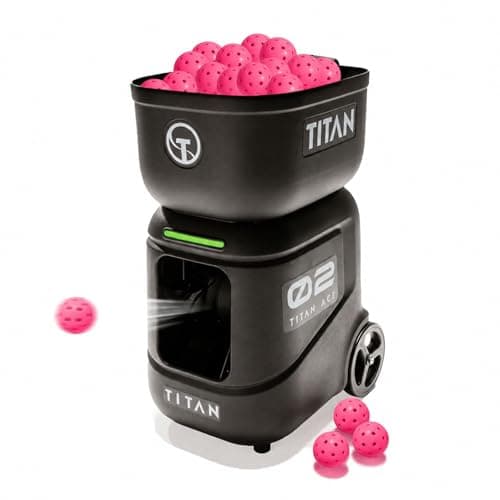
| 01 | Titan ACE Pickleball Machine 110-ball capacity, internal oscillation, app control and a 39 lb carry weight. | Best overall | 4.7/5 | $2,099.00Amazon |
| 02 | 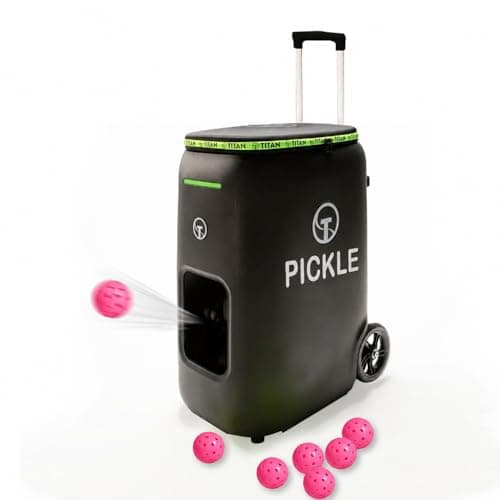 Titan ONE Pickleball Machine Up to 240-ball capacity with a trolley — built for back-to-back lessons. | Best for clubs and coaches | 4.6/5 | $2,199.00Amazon |
| 03 | 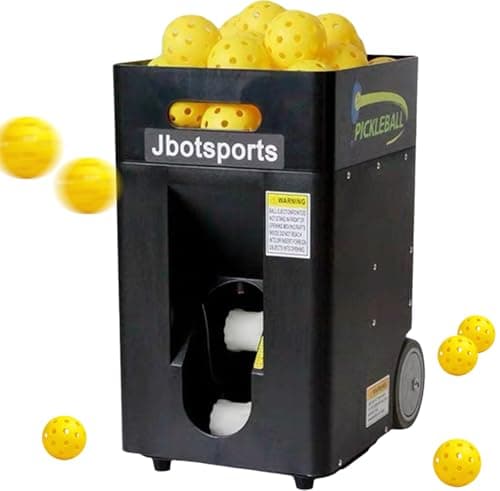 JP02 Portable Pickleball Machine Spin and multiple serve modes with adjustable speed, elevation and frequency. | Best mid-price | 4.3/5 | $589.99Amazon |
| 04 | 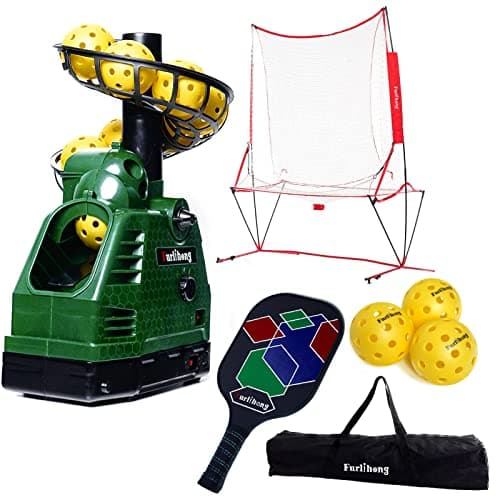 Furlihong 680PBH Starter Kit A launcher plus recycling net, paddle and balls — solo practice for a tenth of the price. | Best budget | 4.0/5 | $219.99Amazon |
#ad · Live prices from Amazon as of October 20, 2026; where we have no verified live price we show none. We may earn a commission — see our affiliate disclosure.
Improvement in pickleball comes from repetition, and open play is terrible at supplying it. In two hours of games you might hit fifteen third-shot drops, half of them from awkward positions, none of them consecutively. A ball machine gives you two hundred of the same ball in an hour, which is how a shot actually gets built.
It is also, by a distance, the most expensive purchase in the sport — the machines here run from around $200 to well over $2,000. So the first half of this page is about whether you need one at all, and which tier fits your situation. My overall pick is the Titan ACE; if the price is not survivable, the Furlihong 680PBH does more than its price suggests.
Who actually needs a ball machine
Coaches and clubs. Obvious case. A machine that runs back-to-back lessons without refilling pays for itself in weeks.
Players with court access and no reliable partner. The most common real reason. If you have a court fifteen minutes away and nobody free at 7am, a machine is the difference between practicing and not.
Players rebuilding a specific shot.If your third-shot drop has collapsed, nothing fixes it like fifty in a row from the same spot. That is a job a machine does and a partner mostly doesn't.
Not: players who need reps of anything reactive.A machine cannot show you disguise, it cannot vary pace intelligently, and it cannot put a ball where you didn't expect. Hands battles, dink patterns and shot selection need a human. Practice those in partner drills.
The specs that matter
Ball capacity.This decides how often you stop. Around 100 balls is roughly six to eight minutes of continuous feeding at a normal rate — fine for solo practice, annoying for a lesson. Club machines hold 200+ for that reason.
Oscillation. Whether the machine moves the ball around the court. Internal oscillation (the head moves inside the housing) is smoother and more discreet than external. Without it you get the same ball to the same spot forever, which is useful for grooving a stroke and useless for footwork.
Spin. Topspin and backspin change how the ball bounces, and practicing against a flat feed only prepares you for flat balls. Mid-tier machines and up offer it.
Weight and transport. The spec people underestimate. A machine you have to wrestle into a car boot gets used half as often. Under about 40 lb is genuinely portable; heavier machines need a trolley.
Battery life and control.App control matters more than it sounds — walking back to the machine to change a setting breaks up practice badly. Check whether the app is free.
At a glance
Specs come from each manufacturer's published listing. Live prices are on the buttons.
| Machine | Capacity | Oscillation | Control | Best for |
|---|---|---|---|---|
| Titan ACE | 110 balls | Internal | Free app | Serious solo practice |
| Titan ONE | 85–240 balls | Internal | Free app | Coaches and clubs |
| JP02 Portable | Per listing | Multiple serve modes | On-unit controls | Mid-price all-rounder |
| Furlihong 680PBH | Launcher kit | Fixed feed | On-unit controls | Budget solo practice |
Best overall: Titan ACE Pickleball Machine
The ACE is the machine I would buy for my own practice. It holds 110 balls in an invertible hopper, has internal oscillation so it can move you around, and is controlled by a free appfrom your phone — so you change speed, spin and placement from where you are standing rather than walking back to the baseline every two minutes. At 39 lb it is genuinely liftable.
| Capacity | 110 balls |
|---|---|
| Hopper | Invertible |
| Oscillation | Internal |
| Control | Free mobile app |
| Weight | 39 lb |
What I like: the combination of app control and a carryable weight is what makes a machine get used rather than sit in a garage. What gives me pause: it is a serious financial commitment, and 110 balls means a refill roughly every seven minutes of continuous feeding.
Best for clubs and coaches: Titan ONE
The ONE is the same idea scaled up for people who feed balls professionally. Capacity runs from 85 up to 240 balls depending on configuration, it has internal oscillation and free app control, and it ships with a trolley because at this capacity you are not carrying it.
| Capacity | 85 to 240 balls |
|---|---|
| Oscillation | Internal |
| Control | Free mobile app |
| Transport | Portable with trolley |
| Best for | Coaches, clubs, group sessions |
What I like: 240 balls is close to half an hour of uninterrupted feeding, which is what a real lesson needs. What gives me pause: it is overkill for individual use, and the trolley is a reminder that this is equipment rather than a gadget.
Best mid-price: JP02 Portable Pickleball Machine
The JP02 sits in the gap between hobby launchers and club machines. It offers swing and spin with multiple serve modes, and adjustable speed, elevation and frequency— the three settings that actually shape a drill. It is a portable unit intended for individual practice rather than continuous lesson feeding.
| Modes | Multiple serve modes, swing and spin |
|---|---|
| Adjustable | Speed, elevation, frequency |
| Type | Portable ball thrower |
| Control | On-unit controls |
| Best for | Solo practice at a mid price |
What I like: spin is the feature that separates useful practice from flat-feed practice, and this is the cheapest machine here that offers it properly. What gives me pause: no app control means walking back to change settings, which interrupts a drill more than you expect.
Best budget: Furlihong 680PBH Starter Kit
The 680PBH is not a club machine and does not pretend to be. It is a launcher bundled with a ball recycling net, a paddle, three pickleballs and a carrying bag— a complete solo-practice setup for roughly a tenth of what the Titan machines cost. The recycling net is the clever part: it catches your returns so you are not chasing balls after every eight shots.
| Type | Launch machine starter kit |
|---|---|
| Included | Launcher, recycling net, paddle, 3 balls, bag |
| Feed | Fixed placement |
| Control | On-unit |
| Best for | Grooving one shot on a budget |
What I like: for someone who wants fifty consecutive drops without a partner, this does the job for a survivable amount of money. What gives me pause: no oscillation and limited feed variety — it is a stroke-grooving tool, not a movement trainer. Pair it with a rebounder for reactive practice.
What to actually practice with it
Third-shot drops, from the baseline. The highest-value machine drill in the sport. Set a medium-pace feed to a fixed spot and hit fifty. The consistency of the feed is precisely what lets you feel what your paddle face is doing.
Resets from the transition zone. Set a faster feed and stand mid-court. The goal is a soft ball landing in the kitchen, not a winner. This is the shot that separates levels, and it is almost impossible to practice in games.
Topspin drives.Use a slower feed and work on brushing up the back of the ball. Check your paddle's face grit is intact first — a worn face flattens your spin and misleads you about your technique. See paddle care and cleaning.
Return depth. Set the machine to serve and practice hitting deep returns to a target. Depth on returns wins more points than pace does.
One equipment note: machines are hard on balls, and cracked balls feed badly. Buy a bulk pack of durable outdoor balls specifically for machine work — our best pickleball balls roundup covers the value bulk options.
The bottom line
For a committed player with court access, the Titan ACE is the right machine: app-controlled, oscillating, and light enough to actually take places. Coaching or running a club? The Titan ONE. Want spin without four figures? The JP02. Just want reps without a partner? The Furlihong 680PBH — or a rebounder for less again.
Frequently asked questions
Is a pickleball ball machine worth it?
It depends on your access and your goal. If you have a court nearby and no reliable practice partner, a machine is the difference between practicing and not — and repetition is what builds shots like the third-shot drop. If you play only social games or want to work on reactive skills like hands battles and shot selection, a machine can't help; a partner or a cheaper rebounder covers more of what you need.
How many balls should a pickleball machine hold?
Around 100 balls gives roughly six to eight minutes of continuous feeding, which is fine for solo practice — you'll pause to collect balls anyway. Coaches and clubs want 200 or more so a lesson isn't interrupted. Bigger hoppers mean heavier machines, so weigh capacity against how easily you can transport it.
Does a pickleball machine need oscillation?
For footwork, yes. Without oscillation the machine feeds the same ball to the same spot forever, which is excellent for grooving a stroke and useless for movement. Internal oscillation — where the head moves inside the housing — is smoother and quieter than external. If you're only rebuilding one shot, a fixed feed is genuinely enough.
What's a cheaper alternative to a pickleball ball machine?
A rebounder net gives you unlimited solo repetitions for well under $100, though only for shots you can hit back into it. A wall and a bucket of balls covers dink and reset practice for the cost of the balls. Neither replaces a machine's consistent, adjustable feed, but between them they handle a lot of what people buy machines for.
What balls should I use in a ball machine?
Durable outdoor balls, bought in bulk specifically for machine work. Machines are hard on balls and cracked ones feed badly, jam mechanisms and bounce unpredictably. Buying a 12-pack of a crack-resistant outdoor ball and keeping it separate from your game balls is the sensible approach.
Sources
- Titan — ACE and ONE pickleball machine specifications
- Manufacturer product listings for JP02 and Furlihong 680PBH (specs as published)
- USA Pickleball — what is pickleball & equipment overview
Keep reading
Upgrading your paddle or gearing up to play?
See how we pick, then dig into the paddle roundups and buying guides — honest picks from someone who actually plays, with no inventory to move.