Technique Guide
The Best Pickleball Dinking Drills
Dinking is the shot most players practice least and lose most points on. These nine drills fix specific problems — each one names the fault it's for and how to tell when it's solved.
Almost every recreational point is decided in the same way: someone dinks a ball a little too high, someone else attacks it, and the rally ends. The player who hits fewer of those balls wins more games, and the gap between a 3.0 and a 4.0 is largely made of that.
The trouble is that dinking is boring to practice and easy to do badly without noticing. These drills are structured to fix that: each one targets a specific fault and gives you a standard so you know whether you actually did it. If you're not sure what a dink is meant to accomplish in the first place, start with what is a dink.
Before you start: what a good dink is
A good dink has four properties, and every drill below is about one of them:
1. It lands in the kitchen.A ball that bounces past the non-volley zone line can be volleyed and attacked. Landing short of that line is what makes a dink safe — see what the kitchen is for why.
2. It stays low over the net.Not just low when it lands — low as it crosses. A ball that peaks high and then drops into the kitchen still gives your opponent a ball above net height to hit.
3. It arrives at your opponent's feet or wide. A dink to the middle of their body at a comfortable height is a gift. Placement is what forces the error.
4. It leaves you balanced. If hitting your dink puts you off balance, the next ball beats you regardless of how good this one was.
Five partner drills
1. Cross-court continuous.Both players at the kitchen line, diagonally opposite, dinking cross-court continuously. Cross-court is the safest dink in a real game because the net is lower at the center and the court is longer diagonally — so it is the one to groove first. Standard: 50 in a row without one going above your partner's shoulder.
2. Straight-ahead continuous. Same thing down the line. Harder, because the net is higher at the sidelines and the distance is shorter. Most players are noticeably worse at this and never find out because they only ever drill cross-court. Standard: 30 in a row.
3. Figure-eight.Two players per side. One pair dinks cross-court, the other straight ahead, continuously, so the ball traces a figure-eight. It forces you to move, reset, and dink from wherever you end up — which is what actually happens in a game. Standard: two minutes without a break.
4. Target dinking. Put a towel or a ball tube in a corner of the kitchen and aim at it. Precision, not survival. Standard: 5 hits out of 20 attempts. It is harder than it sounds.
5. Dink-and-attack. Dink cross-court until one player deliberately feeds a ball above net height, at which point the other attacks it and the point is played out. This is the drill that teaches you to recognize the attackable ball, which is the skill that converts patience into points. Standard: attacking the right balls and only the right balls.
Three solo drills
6. Wall dinking.Find a wall, mark a line at net height with tape or chalk, stand seven feet back and dink continuously above the line. A wall returns the ball faster than a person, so this is harder than partner dinking — which makes it excellent practice. Standard: 100 consecutive above the line.
7. Rebounder dinking. A rebounder nettilted back returns the ball softly and at a realistic height, which a flat wall doesn't. It is the closest solo equivalent to a real dink rally. Standard: 100 in a row without one rising above your chest.
8. Paddle bounce control. No net, no wall. Bounce the ball off your paddle face, keeping it below eye level, alternating forehand and backhand faces. Trivial-looking, and genuinely useful for developing the soft hands a dink depends on. Standard: 50 alternating without losing control.
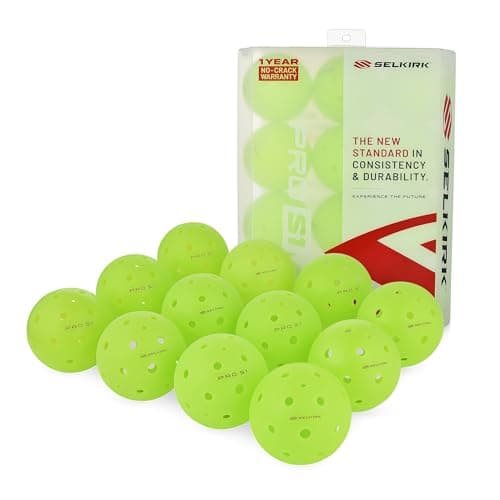
A note on equipment for all three: if you are doing wall work at home, a foam quiet ball keeps the noise at roughly conversation level so you can actually practice without complaints. We cover those, and the durable bulk packs worth buying for partner drilling, in best balls for dinking and practice.
One pressure drill
9. Dink to eleven. Play a full game to 11 where every ball must be a dink— no drives, no speed-ups, no attacks. If a ball goes above net height on your side, you lose the rally.
This is the drill that exposes what your soft game does under pressure rather than in practice. Everyone can dink fifty in a row when nothing is at stake. Doing it when you are 9-9 is a different skill, and it is the one that shows up in matches.
How to structure a session
| Block | Time | Purpose |
|---|---|---|
| Warm-up dinking, cross-court | 5 min | Feel and rhythm, no standards |
| One technical drill (2, 3 or 4) | 10 min | Fix a specific fault |
| Dink-and-attack | 10 min | Recognition and decision-making |
| Dink to eleven | 10 min | Pressure transfer |
Thirty-five focused minutes beats two hours of aimless hitting.The difference is that each block has a purpose and a standard. If you can't say what a drill is fixing, you are just moving.
Frequency beats duration. Twenty minutes three times a week produces more improvement than an hour on a Sunday, because soft-hand skills are built by repetition and decay quickly. If you have a net at home, this is the single best use of it.
Common faults and their fixes
Your dinks keep floating high.Almost always contact point — you're hitting the ball too close to your body or too late. Move your contact further in front and get lower with your knees rather than reaching down with your arm.
You're hitting the net.Usually the opposite over-correction, or a paddle face that's too closed. Open the face slightly and think about lifting the ball rather than pushing it forward.
Your dinks are too short and sit up.A dink that lands right at the net gives your opponent an easy angle. Aim deeper in the kitchen — near the kitchen line rather than near the net — while keeping the trajectory low.
You get tired and it collapses.You're dinking from a standing position and using your arm. A proper dinking stance is knees bent, weight forward, paddle up. It is more tiring at first and far more sustainable once your legs adapt.
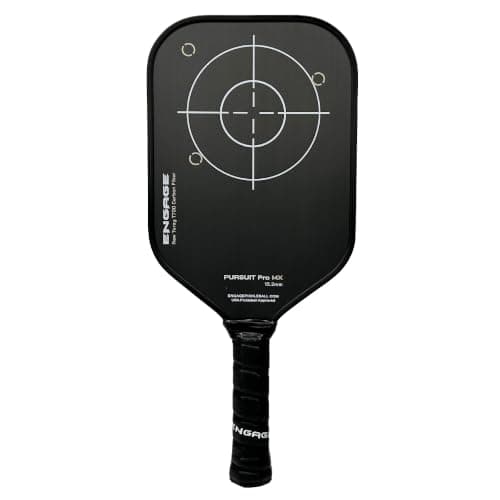
You're gripping too hard.The most common invisible fault. A tight hand cannot feel the ball. If you can't hold the paddle loosely, the grip may be undersized — see grip size— or the paddle may be too poppy, in which case a control paddle with a 16mm core will do half the work for you. For the pressure numbers shot by shot, and the hand position to hold between dinks, see how to hold a pickleball paddle.
Frequently asked questions
How do you practice dinking in pickleball alone?
A wall is the simplest option: mark a line at net height, stand about seven feet back and dink continuously above it. A wall returns the ball faster than a person, which makes it harder and therefore good practice. A rebounder net tilted back is closer to a real dink rally because it returns the ball softly at a realistic height.
What makes a good dink in pickleball?
Four things: it lands inside the kitchen so it can't be volleyed, it stays low as it crosses the net rather than peaking high, it lands at your opponent's feet or wide rather than comfortably in front of them, and it leaves you balanced for the next ball. A dink that satisfies three of the four is still attackable.
How long should I practice dinking for?
Twenty to thirty-five focused minutes, three times a week, beats a single long session. Soft-hand skills are built by repetition and decay quickly without it. Structure the time into blocks with a specific purpose and a standard — if you can't say what a drill is fixing, you're just moving the ball around.
Why do my dinks keep popping up?
Usually your contact point. Hitting the ball too close to your body or too late causes the paddle face to open more than intended and lifts the ball. Move contact further in front, and get low by bending your knees rather than reaching down with your arm. A too-tight grip and an overly poppy paddle both make it worse.
Should you dink cross-court or straight ahead?
Cross-court is safer and should be your default: the net is lower at the center and the diagonal gives you more court to land in. Straight-ahead dinks are higher risk because the net is taller at the sidelines and the distance is shorter — which is exactly why they're worth drilling, since most players only ever practice cross-court.
Sources
Keep reading
- What is a dink in pickleball? →Rally & Dink
- Best balls for dinking and practice →
- What is the kitchen in pickleball? →Rally & Dink
- Best pickleball paddles for control →
- Best pickleball rebounders →Rally & Dink
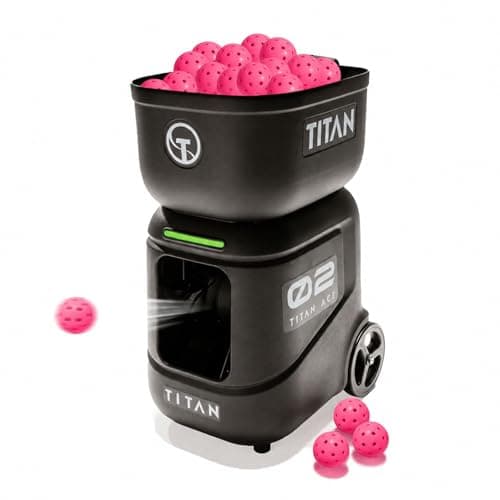
- Best pickleball ball machines →
- Pickleball paddle grip size guide →Rally & Dink
- The third shot drop, explained →Rally & Dink
Upgrading your paddle or gearing up to play?
See how we pick, then dig into the paddle roundups and buying guides — honest picks from someone who actually plays, with no inventory to move.