Paddle Roundup
The Best Pickleball Paddles Under $75 in 2026
You do not need $100 to get a genuinely good paddle. These six sit comfortably under $75 - a modern thermoformed carbon build, a classic widebody, and trusted-brand value picks - with honest notes on what each one gives up to hit the price.
The short answer
Quick picks
| # | Product | Best for | Score | Price |
|---|---|---|---|---|
| 01 | Best overall under $75 | 4.6/5 | $49.99Amazon | |
| 02 | Best big sweet spot | 4.4/5 | $66.31Amazon | |
| 03 | Best tournament-legal value | 4.2/5 | $63.46Amazon | |
| 04 | Best for power | 4.1/5 | $57.00Amazon | |
| 05 | Best for brand-new players | 4.0/5 | $44.95Amazon | |
| 06 | Best lightweight | 3.9/5 | Check price → |
#ad · Live prices from Amazon as of October 21, 2026; where we have no verified live price we show none. We may earn a commission — see our affiliate disclosure.
Seventy-five dollars is a real line in the sand. It is the point where a paddle stops feeling like a toy and starts feeling like equipment — but it is also low enough that a lot of what gets sold down here is genuinely not worth buying. The good news is that the value tier has moved fast: you can now get a thermoformed carbon face, a proven graphite widebody, or a tournament-legal paddle from a name you trust, all without crossing $75. The paddles below are the ones I'd actually hand a friend who says "keep it under seventy-five" — sorted so there's a right answer whether you want spin, forgiveness, pop, or just the lowest sensible price.
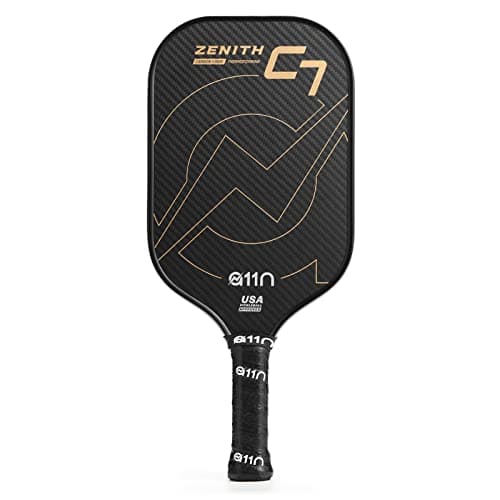
My overall pick is the A11N Zenith C7: it brings a real T700 carbon face and a thermoformed, foam-walled build to around fifty dollars, which is a spec sheet that cost twice as much a couple of years ago. If forgiveness matters more than spin, the classic Onix Graphite Z5 still has one of the biggest, friendliest sweet spots in the game, and the tournament-approved Franklin Signature Pro proves you can play sanctioned pickleball for well under $50. If your ceiling is a little higher, our best paddles under $100 roundup opens up more raw carbon options.
How we picked
I don't sell paddles, and no brand pays for a place on this list. Every paddle here is one I've either played with directly or evaluated against its verified manufacturer specs and a lot of court time on the same models and their close siblings — and I say which is which in each write-up. The full process lives on the how we review page, and there's more about me on about.
For a strict sub-$75 list, I weighed three things. First, the price has to genuinely stay under $75 at its normal street price — not a fleeting sale on a $120 paddle, but a paddle that lives in this tier. Second, the face and core have to be honestly good for the money: a textured carbon or graphite face that does something, and a real polymer or Nomex core, not a hollow, tinny build. Third, every paddle here is USA Pickleball approved, so you can take any of them into sanctioned play. Where two paddles were close, price-to-feel broke the tie.
What you get under $75 (and what you give up)
The gap between a $65 paddle and a $150 one is smaller than it has ever been, but it is not nothing. Here is where the money actually goes, so you know exactly what — if anything — you're trading away down here.
What you get. Under $75 you can now buy a genuine carbon-fiber face (the thing that creates spin), a forgiving widebody shape, or a legacy design that has taught a million people to play. The A11N Zenith C7 and Wilson Fierce Pro both put a textured carbon face in your hand at this price, and every paddle on this page is legal for tournaments. That combination was a $120-plus proposition not long ago.
What you pay up for.Spend more and you refine the edges: premium thermoformed unibody builds with edge foam for a bigger, more stable sweet spot; the highest-grade raw carbon faces that hold their grit longer; tighter quality control; and pro-team names. Those refinements are real, but they are refinements — not the line between a paddle that plays well and one that doesn't. If you know you want raw carbon, read our best carbon fiber paddles guide before you stretch the budget.
At a glance
The full field, side by side. Specs are from each manufacturer's listing; live prices sit on each buy button below and change frequently.
| Paddle | Face | Core | Shape | Best for |
|---|---|---|---|---|
| A11N Zenith C7 | T700 carbon (thermoformed) | 16mm, foam walls | Elongated | Overall value |
| Onix Graphite Z5 | Graphite (textured) | Nomex honeycomb | Widebody | Big sweet spot |
| Franklin Signature Pro | MaxGrit fiberglass | 16mm polypropylene | Standard | Tournament value |
| Wilson Fierce Pro 13mm | Textured carbon | 13mm polypropylene | Standard | Power / pop |
| HEAD Radical Elite | Fiberglass (smooth) | Polymer honeycomb | Standard | New players |
| JOOLA Journey | Fiberglass composite | Thin polymer (~10mm) | Widebody | Lightweight |
Best overall under $75: A11N Zenith C7 16mm
The Zenith C7 is the paddle that makes this whole list possible. For around fifty dollars it gives you a Toray T700 carbon-fiber faceon a thermoformed unibody build with foam-injected perimeter walls — the kind of modern construction that used to be a flagship-only feature. It plays firmer and more lively than its price suggests, grips the ball for real spin, and is USA Pickleball approved. If you want the most paddle for the least money under $75, this is it.
| Surface | T700 carbon fiber (textured, thermoformed) |
|---|---|
| Core | 16mm polymer honeycomb, foam-injected walls |
| Shape | Elongated |
| Weight | About 8.0-8.4 oz |
| Certification | USA Pickleball approved |
| Best for | Players who want a modern carbon build cheaply |
What I like: a genuine thermoformed carbon paddle at a fiberglass-paddle price, with the spin and pop to match. What gives me pause: the elongated shape trades a little sweet-spot forgiveness for reach, it runs on the heavier end of the range so quick hands at the net take adjustment, and as a budget thermoformed paddle the long-term durability of the grit and foam edge is the open question. If spin is your priority, see how it compares in our best spin paddles and best carbon fiber paddles guides.
Best sweet spot: Onix Graphite Z5
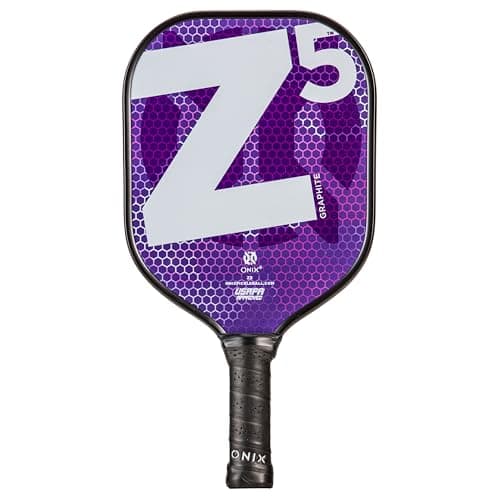
The Z5 has introduced more people to pickleball than almost any other paddle, and it still earns its place on a budget list. A graphite face over a Nomex honeycomb core in a widebody shape gives you an enormous, low, forgiving sweet spot, and the cushioned comfort grip is genuinely comfortable through long sessions. It is a control-first, all-court paddle that simply makes the game feel easier.
| Surface | Graphite (textured) |
|---|---|
| Core | Nomex honeycomb |
| Shape | Widebody (large sweet spot) |
| Grip | Cushioned comfort grip, ~4 1/4 in |
| Certification | USA Pickleball approved |
| Best for | Control players who want maximum forgiveness |
What I like: about as forgiving as paddles get, and a proven, well-loved design. What gives me pause: the Nomex core feels firmer and louder than modern polypropylene, and the graphite face makes far less spin than the carbon paddles here — this is a touch-and-control paddle, not a spin weapon. It also anchors our best beginner paddles and best-value paddles lists.
Best tournament-legal value: Franklin Signature Pro 16mm
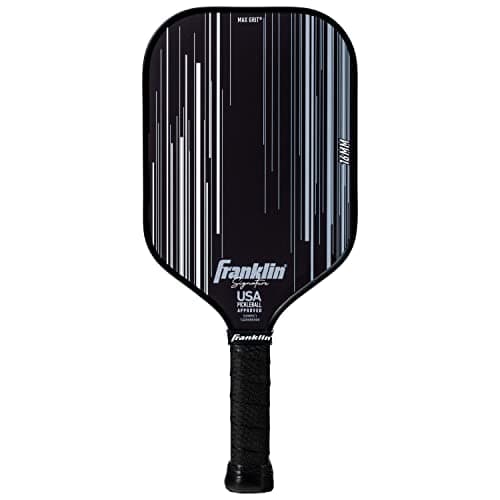
It is rare to find a genuinely tournament-legal paddle for under $50, but Franklin's Signature Pro is exactly that. It uses a textured MaxGrit surfaceover a 16mm polypropylene honeycomb core, and it is USA Pickleball tournament approved. Franklin is the official ball supplier to USA Pickleball, so this is no no-name paddle — it is a real, legal, playable option for very little money.
| Surface | MaxGrit textured surface (fiberglass) |
|---|---|
| Core | 16mm polypropylene honeycomb |
| Shape | Standard |
| Grip | ~4 1/2 in (large) |
| Certification | USA Pickleball tournament approved |
| Best for | Budget players who want approval and grip |
What I like: a grippier surface than a plain fiberglass beginner paddle, a 16mm control core, and tournament approval so you will not have to rebuy for leagues. What gives me pause: the MaxGrit surface bites less than a raw carbon face and wears smoother over time, and the 4 1/2 inch grip runs large — smaller hands may want an option it doesn't offer. It is also the sub-$50 pick in our best paddles under $100 and best-value paddles roundups.
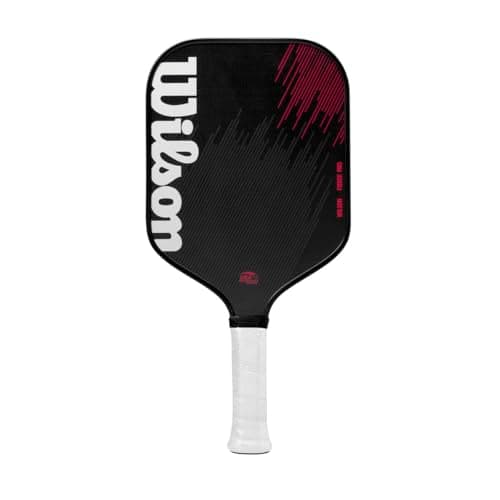
Best for power: Wilson Fierce Pro 13mm
If you want pop and a big-brand name without leaving the budget tier, the Wilson Fierce Pro is the pick. It pairs a textured carbon-fiber facewith a thinner 13mm polypropylene core — and a thinner core means a livelier, more powerful response off the face. It is a standard-shape paddle that swings quick and hits with more pop than most 16mm paddles at this price, from a racquet-sports brand you already know.
| Surface | Textured carbon fiber (max grit) |
|---|---|
| Core | 13mm polypropylene honeycomb |
| Shape | Standard |
| Weight | About 7.8 oz |
| Certification | USA Pickleball approved |
| Best for | Players who want pop from a trusted brand |
What I like: real pop and a carbon face for grip, in a maneuverable standard shape from a major brand. What gives me pause: the thin 13mm core buys that power with a smaller sweet spot and a bit more vibration than a 16mm paddle, and it is a traditional cold-pressed build without the foam edge of a thermoformed paddle, so it feels less plush than the A11N. If pure power is your game, compare it in our best power paddles guide.
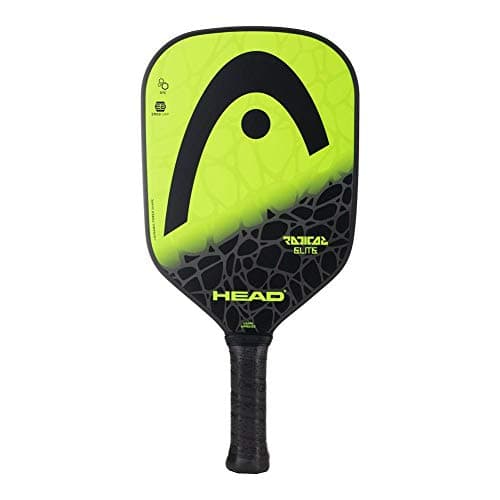
Best for brand-new players: HEAD Radical Elite
HEAD is a legacy racquet-sports brand, and the Radical Elite is their dependable entry paddle. It pairs a smooth fiberglass facewith a polymer honeycomb core and a comfortable grip in HEAD's wider "Dynamic Power Shape" — a straightforward, forgiving combination that is easy to swing and easy to control. It is frequently priced very low, which makes it the pick when you want a trusted name for the smallest sensible outlay.
| Surface | Fiberglass (smooth) |
|---|---|
| Core | Polymer honeycomb |
| Shape | Standard (Dynamic Power Shape) |
| Grip | Comfort grip, ~4 1/4 in |
| Certification | USA Pickleball approved |
| Best for | New players who want a trusted paddle cheaply |
What I like: a dependable brand, a comfortable feel, and often one of the lowest prices on this page. What gives me pause: it is a basic paddle — the smooth fiberglass face makes little spin, and the build feels poppier and less refined than the carbon paddles here, so plan to upgrade if you stick with the sport. It is also the value pick in our best beginner paddles roundup.
Best lightweight: JOOLA Journey
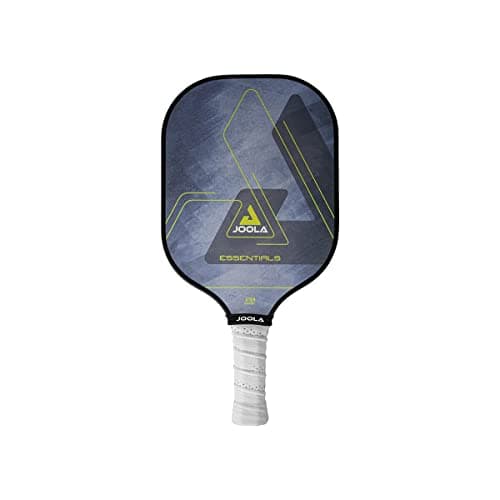
The Journey is how JOOLA — one of the biggest names in the pro game — brings its build quality to an entry price. It uses a smooth fiberglass composite face over a thin, lightweight polymer core in a widebody shape, and at about 7.8 oz with a slim grip it is one of the most maneuverable paddles here. If you have quick hands, smaller hands, or you are coming from a lighter racquet, it is easy to swing all day.
| Surface | Fiberglass composite |
|---|---|
| Core | Thin polymer honeycomb (~10mm) |
| Shape | Widebody |
| Weight | About 7.8 oz |
| Grip | ~4 in (thin) |
| Certification | USA Pickleball approved |
| Best for | Lightweight, maneuverable play |
What I like: light, quick, and forgiving to swing, with a trusted brand behind it. What gives me pause: the thin core is firmer with a smaller effective sweet spot and a little more vibration than a 16mm paddle, the smooth fiberglass makes limited spin, and the slim 4-inch grip can feel too small for larger hands without an overgrip. It is squarely an entry paddle — see how weight changes the feel in our paddle weight guide, and the forgiving JOOLA Essentials in our best beginner paddles list.
How to choose a paddle under $75
Carbon for spin, fiberglass or graphite for forgiveness.Under $75 the single biggest choice is the face. A textured carbon face (A11N, Wilson) grips the ball and rewards spin; a graphite or fiberglass face (Onix, Franklin, HEAD, JOOLA) is smoother and more control-friendly but spins less. Neither is "better" — it depends on your game.
Match the shape to your consistency.Elongated paddles (A11N) add reach and leverage but shrink the sweet spot; widebody and standard shapes (Onix, JOOLA, HEAD) are more forgiving. If your contact isn't dialed in yet, lean widebody — see our best beginner paddles.
Think about core thickness, not just price. A 16mm core (A11N, Franklin) is the forgiving, control-friendly default; a thinner 13mm core (Wilson) adds pop at the cost of some sweet spot. Our paddle weight guide and the full how to choose a paddle guide tie the trade-offs together.
Keep a textured face clean.Grit wears smooth with play and with dirt filling the texture, which matters most on budget carbon and MaxGrit faces. A quick wipe between sessions keeps the bite — details in our paddle care and cleaning guide.
The bottom line
For most players chasing the best paddle under $75, the A11N Zenith C7is the one to beat — a real carbon, thermoformed build for a price that feels like a mistake in your favor. Want the biggest, friendliest sweet spot instead? The Onix Graphite Z5. Need tournament approval on the tightest budget? The Franklin Signature Pro. Chasing pop from a big brand? The Wilson Fierce Pro. Brand new to the game or buying light? The HEAD Radical Elite and JOOLA Journey are safe, forgiving places to start. And when you are ready to spend a little more, several raw-carbon options open up in our best paddles under $100 roundup.
Shopping even tighter than this? Carbon faces and thermoformed cores now reach below fifty dollars, and best pickleball paddles under $50 ranks what is genuinely good in that band.
Frequently asked questions
Can you get a good pickleball paddle for under $75?
Yes. Under $75 you can now buy a textured carbon-fiber face (for spin), a proven graphite widebody (for a big sweet spot), or a tournament-legal fiberglass paddle from a trusted brand. Every paddle in this roundup is USA Pickleball approved, so any of them is legal for sanctioned play. What you pay up for above $75 is refinement — premium thermoformed builds, edge foam, and higher-grade carbon — not the difference between a paddle that plays well and one that doesn't.
Is a carbon fiber pickleball paddle worth it under $75?
It can be. The A11N Zenith C7 and Wilson Fierce Pro both put a textured carbon face in your hand under $75, and carbon grips the ball for more spin than a smooth graphite or fiberglass face. The trade-off is that budget carbon faces and their grit can wear faster than premium ones, so they need the occasional clean. If spin matters most to you, carbon is worth it; if you value a big forgiving sweet spot over spin, a graphite widebody like the Onix Z5 may suit you better.
Are cheap pickleball paddles legal for tournaments?
Legality has nothing to do with price. Every paddle in this roundup is USA Pickleball (USAPA/UPA-A) approved, meaning its surface roughness and dimensions are within the legal limits. A $45 Franklin Signature Pro is held to the same standard as a $250 flagship, so you can compete with any approved paddle here. Always check that the specific paddle you buy is on the current USA Pickleball approved list if you plan to play sanctioned events.
What's the difference between a paddle under $75 and one under $100?
Mostly the amount of raw carbon and how modern the build is. Under $100 you find more full raw-carbon faces and thermoformed constructions across the board; under $75 you get one or two carbon options (like the A11N Zenith C7) alongside excellent graphite and fiberglass paddles. For most recreational and improving players the sub-$75 tier is plenty — see our best paddles under $100 guide if you want to compare the next tier up.
Sources
- USA Pickleball - approved paddle list & equipment standards
- A11N Sports - Zenith paddle specifications
- Onix - Graphite Z5 specifications
- Franklin Sports - Signature Pro Series specifications
- Wilson - Fierce Pro pickleball paddle specifications
- JOOLA - Journey specifications
- HEAD - Radical Elite specifications
Keep reading
- Best pickleball paddles under $100 →
- Best pickleball paddles for beginners →
- Best-value pickleball paddles →
- Best carbon fiber pickleball paddles →
- How to choose a pickleball paddle →Rally & Dink
- Franklin Signature Pro review →
- Onix Graphite Z5 review →
- Osmo Elite Spin review →Rally & Dink
- How much does a pickleball paddle cost? →Rally & Dink
Upgrading your paddle or gearing up to play?
See how we pick, then dig into the paddle roundups and buying guides — honest picks from someone who actually plays, with no inventory to move.