Paddle Review
Onix Graphite Z5 Review
The Z5 has probably introduced more people to pickleball than any other paddle. It is also a design from a different era of the sport. Here is what it still does well — and what it can't do any more.
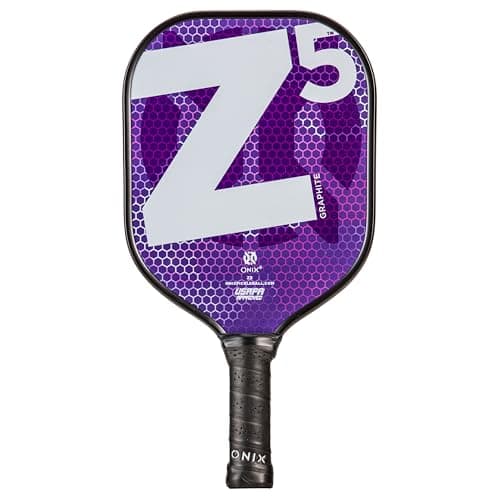
Still one of the friendliest paddles a new player can hold — a wide sweet spot and a comfortable grip — but a graphite face and Nomex core can't produce modern spin.
- Best for
- Beginners and casual players who value forgiveness over spin
- Price context
- Entry to mid tier
If you learned pickleball at a rec center any time in the last decade, there is a good chance the paddle in the loaner bin was an Onix Graphite Z5. It is a widebody paddle with a graphite face, a Nomex honeycomb core and a cushioned 4 1/4 inch grip, and it has been in production essentially unchanged for years. This is a research-plus-play review; specifications are verified against Onix's published listing.
Why this paddle matters
The Z5 predates the current arms race. It was designed when the important questions were "is the sweet spot big enough" and "is it comfortable to hold," not "how many revolutions per second can the face generate." It answered both questions very well, which is why clubs bought them by the crate and why people who bought one in 2018 are often still using it.
That history is worth stating plainly, because a review that treats the Z5 as a current competitor to a thermoformed raw-carbon paddle would be both unfair and useless. The right question is narrower: who, in 2026, is still best served by this paddle?
Nomex and graphite: what they mean
Nomex core.Nomex is a resin-treated aramid honeycomb — the original paddle core material, and considerably harder than the polypropylene that replaced it. A Nomex core is firm, lively and loud. It generates good pop for the weight, and it absorbs less of the ball's energy than polypropylene does, which makes soft resets harder.
Graphite face.Graphite is a form of carbon, but it is not the same as the raw T700-class carbon weave on modern paddles. Graphite faces are typically smoother and lighter, which is excellent for control and feel and poor for spin — there is simply less texture to grip the ball with. Our face material guide covers the differences.
How it plays on court
Forgiveness.The Z5's best quality, and it is genuinely good. A widebody outline puts the sweet spot exactly where a beginner's contact tends to land, and mishits stay in play far more often than they would on a narrow elongated paddle.
Hand speed. Excellent. It is light and quick, so it gets around in fast exchanges without effort. Newer players benefit from this more than they realize.
Pop. Better than the price suggests, courtesy of the Nomex core. Drives come off crisply.
Spin. The clear weakness. A smooth graphite face cannot generate the spin a textured raw carbon face does, and spin has become central to how the sport is played at every level above pure recreational. If you are trying to learn a topspin roll or a shaped third-shot drive, this paddle will hold you back.
Soft game. Middling. The firm Nomex core returns more energy than a modern 16mm polypropylene core, so drops and resets take more precision.
Does it still make sense in 2026?
Honestly: for some people, yes. The Z5 remains one of the easiest paddles to hit the ball with, and for a social player who plays once a week and has no interest in adding spin to their game, forgiveness plus comfort is a completely rational set of priorities.
But the price argument has weakened. Sub-$100 paddles now offer thermoformed construction and raw carbon faces — more spin and a comparable sweet spot. If the Z5 and a Ronbus R1.16 Nova are within $30 of each other, the newer paddle is the better buy for almost anyone who intends to improve. Our best paddles under $75 roundup makes the comparison directly.
Who it's for (and who should skip it)
Buy it if you are brand new, you want the friendliest possible introduction, you have a smaller budget, or you need a reliable spare or loaner paddle for guests. It is a genuinely good paddle to learn the basic strokes on, and the comfort grip means you can hand it to anyone.
Skip it ifyou are playing more than once a week, you want to learn spin, or you already know the sport has hooked you. Go straight to a raw carbon face — best paddles for beginners has the current shortlist.
How it compares
| Paddle | Face | Core | Where it wins |
|---|---|---|---|
| Onix Graphite Z5 | Graphite | Nomex honeycomb | Forgiveness, comfort, price |
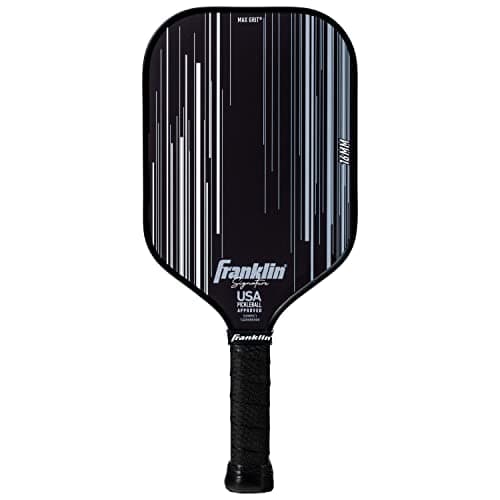
| Franklin Signature Pro 16mm | MaxGrit | 16mm polypropylene | Spin at a similar price |
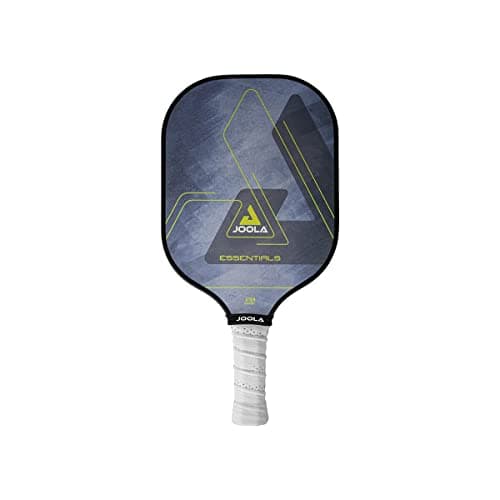
| JOOLA Essentials Performance | Reinforced fiberglass | Polypropylene honeycomb | Softer, quieter feel |
| Ronbus R1.16 Nova | Raw T700 carbon | 16mm, thermoformed | Modern construction and spin |
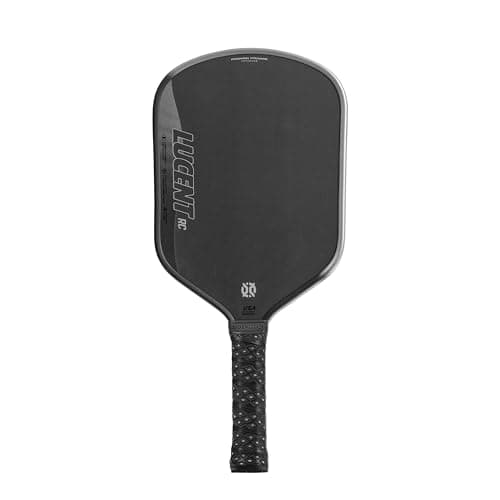
Against the Franklin Signature Pro, the Franklin adds a textured face for real spin at a similar price. Against the JOOLA Essentials, the Z5 is firmer and louder but more forgiving. Against anything with raw carbon, the Z5 loses on spin and wins on nothing except habit. Everything in context in best value pickleball paddles. If it is the brand rather than this model you are set on, the best Onix paddles roundupcovers the rest of the range — including the raw carbon Lucent RC, which is the modern paddle the Z5 is not.
Verdict
The Onix Graphite Z5 earned its reputation honestly: wide sweet spot, comfortable grip, light in the hand, hard to hate. It is still a fine paddle to learn on and a great one to keep in the bag for a friend who wants to try the sport. What it can no longer do is compete with modern faces on spin, and spin is now most of what separates paddles. Buy it as a first or spare paddle with clear eyes; don't buy it expecting it to grow with your game. Our how to choose a paddle guide will steer you to the right next step.
What we liked
- Widebody shape gives a genuinely large, forgiving sweet spot
- Cushioned 4 1/4 comfort grip suits most hands out of the box
- Light and quick — very easy to handle at the net
- Long track record and wide availability at a low price
What gave us pause
- Graphite face generates far less spin than modern raw carbon
- Nomex core is louder and firmer than polypropylene
- Out-classed on every performance metric by current sub-$100 paddles
Frequently asked questions
Is the Onix Graphite Z5 still a good paddle?
It's still a genuinely forgiving, comfortable paddle to learn on — the widebody shape gives a large sweet spot and the cushioned grip suits most hands. What it can't do is generate modern spin, because a smooth graphite face has far less texture to grip the ball than a raw carbon weave. As a first or spare paddle it holds up; as a paddle to improve with, it doesn't.
What is a Nomex core?
Nomex is a resin-treated aramid honeycomb and the original pickleball paddle core material. It's harder, livelier and considerably louder than the polypropylene that replaced it in most modern paddles. That gives good pop for the weight but absorbs less pace, which makes soft resets and drops harder to execute.
Is the Onix Z5 good for beginners?
Yes, with a caveat. The wide sweet spot, light weight and comfortable 4 1/4 grip make it one of the easiest paddles to make contact with, which is exactly what a new player needs. But if you already know you'll play regularly, a sub-$100 raw carbon paddle offers similar forgiveness plus the spin you'll want within a few months.
Is graphite the same as carbon fiber on a paddle?
Not in practice. Graphite is a form of carbon, but paddle 'graphite' faces are typically smooth and light, tuned for control and feel. Modern 'raw carbon' faces use a textured T700-class weave left unpainted specifically so the surface grips the ball. The difference in spin generation between the two is substantial.
Sources
Keep reading
Upgrading your paddle or gearing up to play?
See how we pick, then dig into the paddle roundups and buying guides — honest picks from someone who actually plays, with no inventory to move.