Brand Roundup
The Best Onix Pickleball Paddles in 2026
Onix has been in this sport since long before the boom, and the catalog shows it — a 12mm Nomex widebody from the sport's first decade sits on the same shelf as a 14mm raw carbon elongated. Here is which era to buy from, and which paddle fits your game.
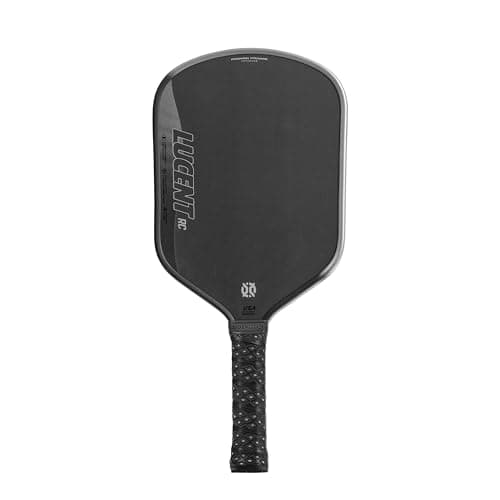
The short answer
Quick picks
| # | Product | Best for | Score | Price |
|---|---|---|---|---|
| 01 | Onix Lucent RC Onix's raw carbon face on a 14mm elongated chassis — the modern paddle in the lineup. | Best overall Onix | 4.5/5 | $119.99Amazon |
| 02 | 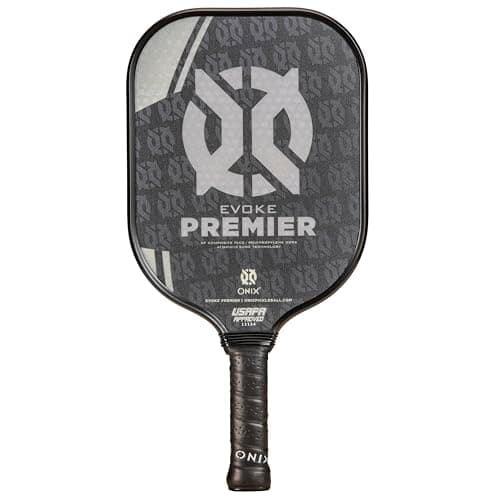 Onix Evoke Premier A fiberglass-faced tournament paddle with a big face and a forgiving, poppy feel. | Best for the soft game | 4.3/5 | $77.97Amazon |
| 03 | 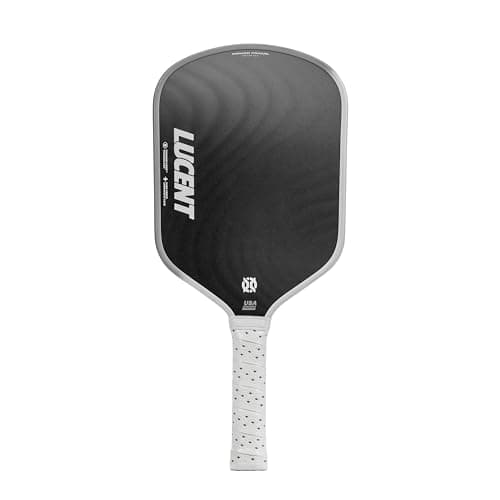 Onix Lucent The same 14mm Hexcell chassis as the RC with a composite face instead of raw carbon. | Best value in the current line | 4.2/5 | $89.99Amazon |
| 04 | 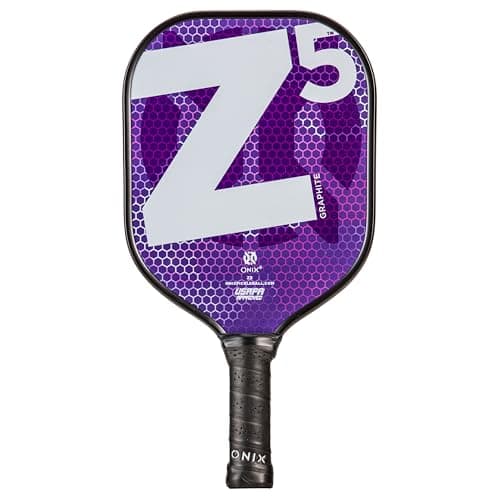 Onix Graphite Z5 The widebody that taught a generation to play — huge sweet spot, dated face. | Best classic and cheapest real Onix | 4.1/5 | $66.31Amazon |
| 05 | 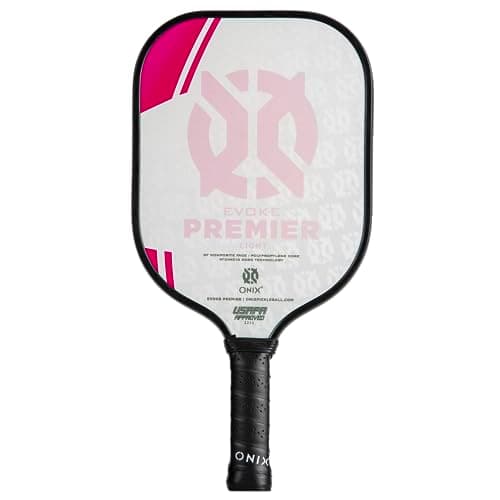 Onix Graphite Evoke Tear Drop Around seven ounces with an unusually large grip — built for hand speed. | Best featherweight | 3.9/5 | $59.92Amazon |
| 06 | 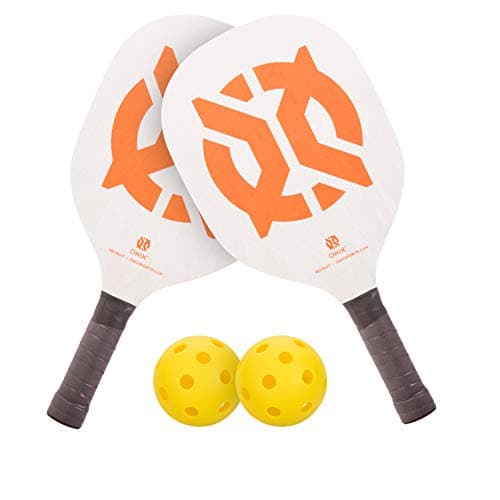 Recruit by Onix Starter Set Two wood paddles and two balls — a stopgap, and honest about being one. | Cheapest way to get two people playing | 3.6/5 | $29.99Amazon |
#ad · Live prices from Amazon as of October 19, 2026; where we have no verified live price we show none. We may earn a commission — see our affiliate disclosure.
Onix is one of the few paddle brands that was here before the boom. Its parent company, Escalade Sports, describes Onix as a key player in the sport "since before its popularity began to soar"— and the same parent owns DURA, whose Fast 40 is the ball a lot of us play outdoors. That history is both the best and the most confusing thing about buying an Onix paddle in 2026.
The catalog spans two completely different eras of paddle design, sold side by side at overlapping prices. One half is 12mm Nomex-core graphite widebodies from the sport's first decade. The other half is the current Lucent line: 14mm polypropylene, elongated, with a raw carbon option. Nothing on the packaging tells you which one you are looking at, so this guide starts there, then makes six picks across the range.
The short version: the Lucent RC is the Onix to buy if you want a paddle that plays like a modern one, the Graphite Z5 is still a genuinely good cheap first paddle, and there is one duplicate spec sheet in the lineup that can cost you money if you buy the wrong side of it.
Onix's lineup, decoded
Lucent and Lucent RC — the current line.Same chassis, different face. Onix publishes both as elongated paddles measuring 16.5 inches long by 7.5 inches wide, with a 5.7-inch handle, a 4.125-inch grip circumference, a 14mm Hexcell polypropylene core and a 7.75–8.25 oz weight range. The plain Lucent uses a composite face and Onix's patented "ThermoFused" construction; the RC swaps in what Onix calls a Dual Action Raw Carbon Fiber face and lists for more. Both are USA Pickleball approved.
Evoke — the tournament family.The Evoke Premier is Onix's long-running composite competition paddle: a DF Composite (fiberglass) face over a 14mm polypropylene core in a 16 x 8-inch shape Onix calls "Impact", with a 5-inch handle and the slim Atomic13 edge guard. It is sold in light, standard and heavy builds that change both the weight and the grip size. The older Evoke Tear Drop is a different animal entirely — a graphite-faced featherweight with an unusually large grip.
Z5 and Mod Z5 — the classics.Graphite face, 12mm Nomex core, 15.5 x 8.125-inch widebody outline, 5-inch handle, 4-inch grip, 7.5–8.2 oz. This is the paddle that introduced an enormous number of people to pickleball, and it is still on sale, largely unchanged. Read the full Z5 review if it is the one you are circling.
Recruit — the entry shelf. Wood paddles and balls, sold as a set to get two people on court for about the price of a couple of coffees.
How we picked
It had to be buyable today.Legacy brands accumulate zombie listings, and Onix has more than most. Every paddle below was checked before it went on this page and returned a live price on an in-stock listing. Several well-known Onix models — the Malice, the Summit C1, the Evoke Premier CT-16 — were down to one to three units when I checked and were left off for that reason, not because they are bad paddles.
Published specs only.Every face, core, thickness, shape, handle and weight figure on this page comes from Onix's own product specifications or from the retailer listing, and each is sourced at the bottom. I have not invented a spec, a rating or a lab test, and I am not going to pretend I played a season on all six.
Era-honest. A 12mm Nomex graphite widebody is not a spin paddle, and no amount of 2026 marketing changes that. Where a paddle is a period piece, it is ranked and described as one.
Buy the cheaper identical paddle.Onix sells more than one paddle with the same published spec sheet, and the street prices are not the same. That is a buyer's problem, so it gets its own callout below rather than being quietly ignored.
At a glance
Specs are Onix's published figures, or the retailer listing where Onix no longer publishes the model. Live prices are on the buttons and refreshed daily — nothing on this page quotes a price from memory.
| Paddle | Face | Core | Shape | Best for |
|---|---|---|---|---|
| Onix Lucent RC | Raw carbon fiber | 14mm Hexcell polypropylene | Elongated, 16.5 x 7.5 in | Spin and modern feel |
| Onix Evoke Premier | DF Composite (fiberglass) | 14mm polypropylene | Impact, 16 x 8 in | Touch and the soft game |
| Onix Lucent | Composite | 14mm Hexcell polypropylene | Elongated, 16.5 x 7.5 in | Value in the current line |
| Onix Graphite Z5 | Graphite | 12mm Nomex honeycomb | Widebody, 15.5 x 8.125 in | A big, forgiving first paddle |
| Onix Evoke Tear Drop | Graphite | Polypropylene honeycomb | Teardrop, approx 15.6 x 8.1 in | Hand speed and large grips |
| Recruit by Onix set | Wood | Solid wood | Two-paddle starter set | Getting two people on court |
Best overall Onix: Lucent RC
This is the paddle I would point almost any Onix shopper at. The RC is the only one in the range with a raw carbon fiber face, which is the single spec that decides whether a paddle can bite the ball hard enough to shape it. Onix pairs it with a 14mm Hexcell polypropylene corein an elongated 16.5 x 7.5-inch outline with a long 5.7-inch handle — the layout most current paddles have converged on, and a completely different design philosophy from the Z5 sitting a few rows down this page.
| Face | Dual Action raw carbon fiber |
|---|---|
| Core | Hexcell polypropylene, 14mm |
| Shape | Elongated, 16.5 in long x 7.5 in wide |
| Handle | 5.7 in, 4.125 in grip circumference |
| Weight | 7.75-8.25 oz |
| USA Pickleball | Approved |
What I like: the combination is coherent. Raw carbon gives you a face that grips, 14mm is the quicker and livelier of the two standard core thicknesses (the 14mm vs 16mm guide covers that trade-off), and the long handle leaves room for a two-handed backhand. It is also the only Onix I would hand to a player coming off a modern carbon fiber paddle without an apology.
What gives me pause: elongated plus 14mm is the least forgiving pairing in this lineup. The sweet spot sits higher and narrower than on a widebody, and off-center balls tell you about it — if you are still learning where the middle of the face is, the Evoke Premier or the Z5will be kinder. Raw carbon faces also polish smooth with use and lose grit over a season or two, which is true of every raw carbon paddle and worth knowing before you spend. And at this price Onix is fighting the thermoformed value paddles head on, where it does not hold a spec advantage — compare against the best paddles under $100.
Best for the soft game: Evoke Premier
The Evoke Premier is Onix's long-running competition paddle and the one with the most court time behind it. It uses a DF Composite fiberglass face over a 14mm polypropylene core in a 16 x 8-inch shape Onix calls Impact, wrapped in the slim Atomic13edge guard. That is a big, stable face with a soft, springy response — a dinking and resetting paddle rather than a spin weapon.
| Face | DF Composite (fiberglass) |
|---|---|
| Core | Polypropylene, 14mm |
| Shape | Impact, 16 in long x 8 in wide |
| Handle | 5 in; grip 4 in (light build) or 4.125 in (standard/heavy) |
| Weight | 7.5-8.5 oz depending on build |
| USA Pickleball | Approved |
What I like: fiberglass is genuinely nicer than carbon for touch. The ball sits on the face a fraction longer, drops land softer, and the extra width over the Lucent buys back the forgiveness an elongated shape gives away. Onix lists it well above what it usually sells for, so it is often the best value in the lineup on any given day. If most of your game happens at the kitchen line, this is the Onix for you — and the control paddle roundup shows what else lives in that lane.
What gives me pause: fiberglass does not spin like raw carbon, full stop. If you are shopping for topspin, buy the RC instead, or look at the spin roundup. The 5-inch handle is short for a real two-handed backhand. And because the Premier ships in three weight builds with two different grip sizes, the listing variant matters more than usual — check which build you are adding to the cart, because the light and heavy versions feel like different paddles.
Best value in the current line: Onix Lucent
The plain Lucent is the RC with the carbon swapped for a composite face. Everything else on the spec sheet is identical: the 14mm Hexcell polypropylene core, the elongated 16.5 x 7.5-inch outline, the 5.7-inch handle, the 4.125-inch grip, the 7.75–8.25 oz weight range, the USA Pickleball approval. Onix positions it for players stepping up from an entry-level paddle and builds it with the same patented ThermoFused process.
| Face | Composite (ThermoFused construction) |
|---|---|
| Core | Hexcell polypropylene, 14mm |
| Shape | Elongated, 16.5 in long x 7.5 in wide |
| Handle | 5.7 in, 4.125 in grip circumference |
| Weight | 7.75-8.25 oz |
| USA Pickleball | Approved |
What I like: it is the cheapest way into the modern Onix chassis — long handle, elongated head, polypropylene core — and a composite face is more forgiving on mis-hits than raw carbon, which suits the upgrader Onix aims it at. If you are moving off a wood paddle or a bargain-bin composite, this is a real step up that does not ask you to relearn your hands.
What gives me pause: the gap between this and the RC narrows fast once discounts land, and the face is the one thing you cannot upgrade later — if the two are close on the day, buy the carbon. There is also nothing here for a power player. This is a conventional cold-pressed build, not one of the thermoformed, foam-perimeter designs the power crowd chases; the thermoformed vs cold-pressed guide explains what you are giving up.
The classic, and the cheapest real Onix: Graphite Z5
The Z5 is a period piece and I mean that affectionately. A graphite face over a 12mm Nomex honeycomb core in a 15.5 x 8.125-inch widebodyoutline gives you one of the largest, friendliest hitting faces in the sport, on a paddle that has been in continuous production since the early days of the modern game. As a first paddle that will not punish a beginner for missing the middle it still works — which is why it is also a pick on the beginner roundup.
| Face | Graphite |
|---|---|
| Core | Nomex honeycomb, 12mm |
| Shape | Widebody, 15.5 in long x 8.125 in wide |
| Handle | 5 in; 4 in grip (the linked listing states 4 1/4 in) |
| Weight | 7.5-8.2 oz |
| USA Pickleball | Approved |
What I like: the sweet spot. Nothing in the current Onix range is this forgiving, and nothing in the range is this cheap. It is light in the hand, quick at the net, and the cushioned grip suits most hands straight out of the box.
What gives me pause: a graphite face generates far less spin than raw carbon, and a Nomex core is firm and loud — noticeably so if you play anywhere with noise restrictions. On raw performance a modern sub-$100 paddle beats it comfortably. Buy the Z5 because it is forgiving and inexpensive, not because you expect it to keep up with the paddles in the Gen 3 roundup.
Best featherweight: Graphite Evoke Tear Drop
This one is a specialist. Retailer listings put the Evoke Tear Drop at roughly 6.8 to 7.3 ounces— genuinely light, well under most of the market — with a graphite face, a polypropylene honeycomb core, a teardrop outline of about 15.6 x 8.1 inches, a longer 5.5-inch handle and an unusually large 4.5-inch grip circumference. Onix keeps the edge guard overlapping only about an eighth of an inch of the face, which is a real detail if you catch balls near the rim.
| Face | Graphite |
|---|---|
| Core | Polypropylene honeycomb |
| Shape | Teardrop, approx 15.6 in x 8.1 in |
| Handle | 5.5 in; grip approx 4.5 in (large) |
| Weight | Approx 6.8-7.3 oz (retailer listings vary slightly) |
| Note | The linked listing is the pink colorway |
What I like: two specific players should look hard at this. Anyone chasing hand speed in fast exchanges, because a light paddle is simply quicker to reposition; and anyone with large hands, because a 4.5-inch grip is rare off the shelf and building a small handle up with an overgrip is always a compromise. It is also easy on the arm, which matters if you are managing tennis elbow.
What gives me pause: light paddles give away plow-through, so drives and overheads take more work from you. The graphite face is the least spin-friendly of the three materials here. Colorways come and go, and the listing linked above is the pink build because that is what was in stock at a sensible price. I also could not find a USA Pickleball approval statement on the listings I checked for this model, so if you play sanctioned tournaments, confirm it against the current list first — the USA Pickleball approval guide explains how.
Cheapest way to get two people playing: Recruit by Onix set
The Recruit set is two wood paddles and two balls, and it exists for exactly one job: getting a second person on court without a second real purchase. Retailer listings put the paddles at around 7.6 to 8.1 ounces. It is the cheapest thing with the Onix name on it, and it is the only pick here I would tell you to plan on replacing.
| Contents | Two wood paddles, two balls |
|---|---|
| Face and core | Solid wood |
| Weight | Approx 7.6-8.1 oz per paddle (retailer listing) |
| Best for | Spare paddles, guests, a first afternoon on court |
What I like: it removes the excuse. A wood paddle hits a pickleball, and for a driveway afternoon or a pair of loaners in the car that is the entire requirement. Nobody needs a carbon paddle to find out whether they enjoy the sport.
What gives me pause: wood is dead, heavy for its balance and harsh through the arm, and it gives you no spin at all. If you already know you will play weekly, skip it — a composite beginner set costs a little more and lasts a season instead of a fortnight, and the best-value paddles page covers single paddles that punch above their price.
Onix vs the rest of the market
Onix's real advantages are availability and stability. These paddles are stocked everywhere, they sit behind a large parent company rather than a two-year-old direct-to-consumer brand, and the Z5 in particular has been buyable at a low price for longer than most current paddle brands have existed. If you want a paddle you can replace identically in three years, that counts for something.
The gap is at the top. Onix has not put a thermoformed, foam-perimeter power paddle into its widely-stocked lineup the way JOOLA, CRBN and the value brands have, so if raw pop is what you are shopping for, the honest answer is that the field is ahead here — compare against the JOOLA range, Selkirk and Paddletek, or go straight to the power roundup. Where Onix competes cleanly is in the middle: the Evoke Premier is a better soft-game paddle than most fiberglass competition paddles at its street price, and the Lucent RC is a sane, well-specified raw carbon paddle without a premium badge attached.
One more piece of Onix trivia worth knowing: DURA, the brand behind the Dura Fast 40, sits under the same Escalade umbrella. If you play outdoors in most of the country there is a good chance you are already using its ball — the ball roundup covers where it wins and where the Franklin X-40 does.
The bottom line
Buy the Lucent RC if you want the best paddle Onix currently sells and you care about spin. Buy the Evoke Premier if your game lives at the kitchen line and you want a big, soft, forgiving face. Buy the Lucentif the RC is out of budget — but check the gap first, because it narrows often. Buy the Graphite Z5 if you want the most forgiving face in the lineup for the least money and you are clear-eyed about the spin you are giving up; and if you are looking at the Mod Z5, buy whichever of the two is cheaper, because Onix publishes the same specs for both.
The Evoke Tear Drop is for hand speed and large grips specifically, and the Recruit set is for getting a second player on court this weekend. If you are cross-shopping brands rather than models, the how to choose a paddle guide is the place to start, and the paddles hub sorts every roundup by playstyle, level and budget.
Frequently asked questions
Are Onix pickleball paddles any good?
Yes, with a caveat. Onix is one of the oldest brands in the sport and part of Escalade Sports, and its current Lucent line is a conventional, well-specified modern paddle: a 14mm Hexcell polypropylene core, an elongated 16.5 by 7.5 inch shape, and a raw carbon face on the RC version. What Onix does not have in its widely-stocked lineup is a thermoformed, foam-perimeter power paddle of the kind JOOLA, CRBN and the value brands now sell, so players shopping purely for raw power will find stronger options elsewhere. For control, forgiveness and value, Onix competes fine.
What is the difference between the Onix Lucent and the Lucent RC?
The face. Onix publishes the same chassis for both: a 14mm Hexcell polypropylene core, a 16.5 inch by 7.5 inch elongated shape, a 5.7 inch handle, a 4.125 inch grip circumference and a 7.75 to 8.25 ounce weight range, both USA Pickleball approved. The plain Lucent uses a composite face built with Onix's ThermoFused process; the RC uses what Onix calls a Dual Action Raw Carbon Fiber face and carries a higher list price. Raw carbon grips the ball harder, so the RC is the one to buy if spin matters to you.
What is the difference between the Onix Z5 and the Mod Z5?
On Onix's own published specifications, nothing that affects how they play. Both list a graphite face, a 12mm Nomex core, a 15.5 by 8.125 inch widebody outline, a 5 inch handle, a 4 inch grip circumference, a 7.5 to 8.2 ounce weight range and the same list price. The Mod Z5 is a different graphics series. Street prices differ, sometimes by a lot, so check both listings and buy whichever is cheaper at the time.
Is the Onix Graphite Z5 still worth buying in 2026?
As a cheap, forgiving first paddle, yes. Its widebody shape gives one of the largest sweet spots available and it is usually one of the least expensive paddles from an established brand. As a performance paddle, no: a graphite face generates far less spin than the raw carbon faces on current paddles, and its Nomex core is firmer and louder than polypropylene. Buy it for forgiveness and price, not for spin or power.
Which Onix paddle is best for spin?
The Lucent RC, because it is the only paddle in the range with a raw carbon fiber face. Face material is what generates spin: raw carbon has the grit to bite the ball, while the graphite faces on the Z5 and the Evoke Tear Drop are smoother, and the fiberglass DF Composite face on the Evoke Premier is built for touch rather than grab. If spin is your single highest priority, it is worth comparing the RC against the wider spin roundup before buying.
Are Onix paddles USA Pickleball approved?
The current models on this page are: Onix lists the Lucent, the Lucent RC, the Evoke Premier, the Z5 and the Mod Z5 as approved for recreational and tournament play. Approval is model-specific rather than brand-wide, though, and I could not find an approval statement on the listings for the older Evoke Tear Drop. If you play sanctioned tournaments, check the specific model against the current USA Pickleball equipment list before you buy.
Sources
- Onix Pickleball - Lucent RC paddle specifications
- Onix Pickleball - Lucent paddle specifications
- Onix Pickleball - Lucent and Lucent Raw Carbon overview
- Onix Pickleball - Evoke Premier specifications
- Onix Pickleball - Graphite Z5 specifications
- Onix Pickleball - Graphite Mod Z5 specifications
- Pickleball Galaxy - Onix Evoke Graphite Teardrop specifications
- S&S Worldwide - Onix Recruit Pickleball Starter Set listing
- Escalade Inc. - pickleball brands (Onix and DURA)
- USA Pickleball - equipment standards
Keep reading
Upgrading your paddle or gearing up to play?
See how we pick, then dig into the paddle roundups and buying guides — honest picks from someone who actually plays, with no inventory to move.