Paddle Roundup
The Best Gen 3 Pickleball Paddles in 2026
Gen 3 is the industry's shorthand for foam-loaded, thermoformed paddles — bigger sweet spots, more stored power, and a genuinely different feel. Here's what it buys you, what it costs, and the five worth your money.
The short answer
Quick picks
| # | Product | Best for | Score | Price |
|---|---|---|---|---|
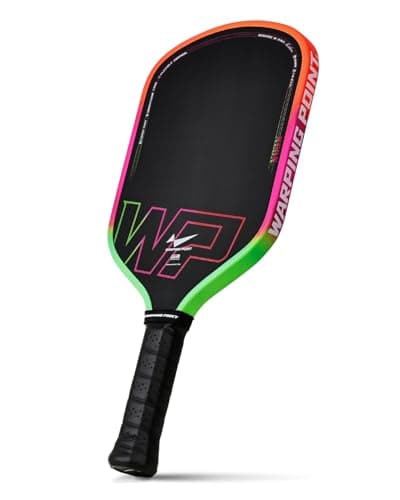
| 01 | Warping Point Neon Gen 3 Triple-layer T700 carbon and a 16mm EdgeFusion core near $100. | Best value Gen 3 | 4.4/5 | $99.99Amazon |
| 02 | 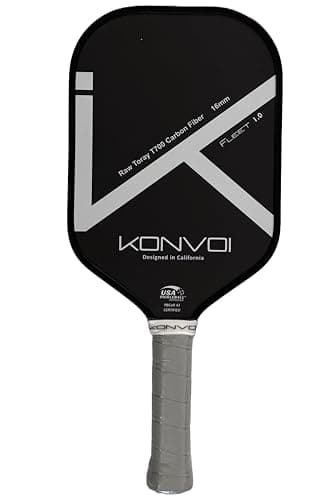 Konvoi Fleet 1.0 Gen 3 Foam and EVA injected around a 16mm honeycomb core; case included. | Best all-round Gen 3 | 4.4/5 | $49.99Amazon |
| 03 | 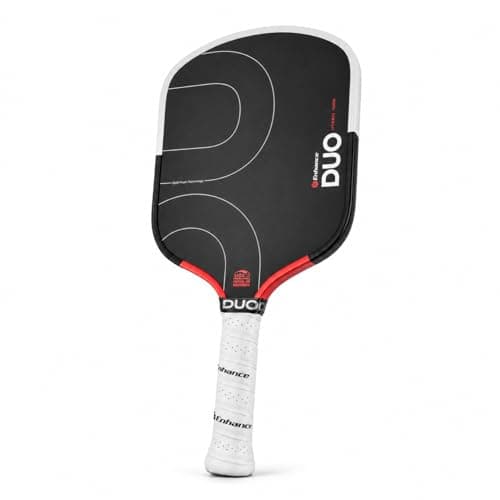 Enhance Duo Raw T700 face over a 16mm thermoformed foam core, USAPA approved. | Best foam-core feel | 4.3/5 | $174.99Amazon |
| 04 | 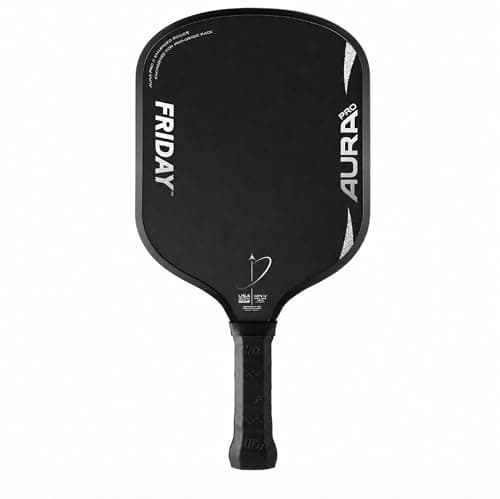 FRIDAY Aura Pro Double-thermoformed with a Gen IV foam build — the biggest pop here. | Best for power | 4.3/5 | Check price → |
| 05 | 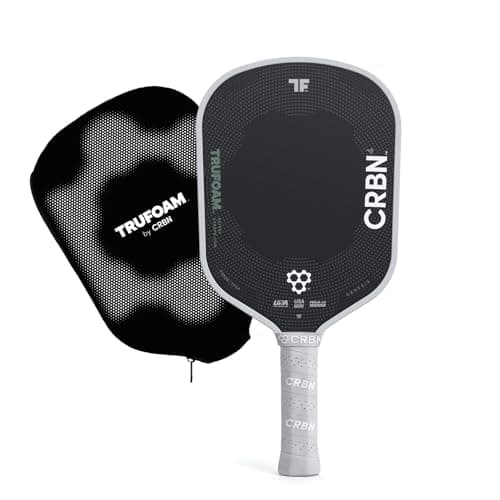 CRBN TruFoam Genesis A 100% foam core — the reference point for the whole category. | Best premium | 4.8/5 | $229.99Amazon |
#ad · Live prices from Amazon as of October 20, 2026; where we have no verified live price we show none. We may earn a commission — see our affiliate disclosure.
"Gen 3" is not an official standard. No governing body defines it and no manufacturer owns it. It is the term the paddle world settled on for the third wave of construction: after glued honeycomb sandwiches (Gen 1) and thermoformed unibody paddles with foam-filled perimeter walls (Gen 2), Gen 3 paddles push foam into or through the core itself. Some inject it around a honeycomb center; the most aggressive designs drop honeycomb entirely.
The reason anyone cares is that it changes the two things players notice most: the size of the usable sweet spot and how much energy comes back without a bigger swing. It also changes the price, the feel, and — honestly — the durability conversation. My value pick is the Warping Point Neon Gen 3; the CRBN TruFoam Genesis is the reference version if budget is not the constraint.
What Gen 3 actually means
Thermoforming came first. Instead of gluing a carbon face onto a core and clamping an edge guard around it, a thermoformed paddle is molded as one piece with foam packed into the perimeter. That stiffens the frame, stops the face flexing independently at the edges, and widens the area where contact still feels solid. Our Ronbus R1.16 Nova review covers this generation in detail.
Gen 3 pushes foam inward.The newer builds either inject foam and EVA between and around the honeycomb cells, or replace the honeycomb with a molded foam block. Foam compresses and rebounds differently from a hollow polymer cell: it holds the ball fractionally longer on soft shots and returns more energy on hard ones. That is the whole pitch — a wider range between your softest and hardest ball.
Raw carbon is now table stakes. Every paddle here uses a raw or textured T700-class carbon face. The face is what makes spin; the core is what makes feel. Gen 3 is a core story, not a face story. If you want the face comparison instead, read carbon fiber vs fiberglass.
| Generation | Construction | What you notice |
|---|---|---|
| Gen 1 | Face glued to honeycomb core, edge guard | Light, forgiving, cheap; small sweet spot |
| Gen 2 | Thermoformed unibody, foam-filled perimeter | Stiffer frame, bigger sweet spot, more pop |
| Gen 3 | Foam injected into or replacing the core | Widest sweet spot, most stored energy, firmer feel |
The downsides nobody advertises
They are firmer than they sound."Foam" suggests softness. In a paddle it usually means the opposite: a stiffer overall structure with more feedback through the handle. Players coming from a soft polymer paddle often describe their first Gen 3 session as harsh. It normally settles within a couple of sessions, but if you have any elbow history, take it seriously — see best paddles for tennis elbow.
More power is not automatically more points.A paddle that returns more energy also makes it easier to send a reset long. If most of your errors are already "too much ball," Gen 3 will amplify the problem, not solve it. That is a real argument for a control-first paddle from our control roundup instead.
Durability is the open question.Highly-loaded composite structures have a finite fatigue life, and the category has a public history of faces separating from cores — delamination — which changes how a paddle plays and can make it illegal. We cover the symptoms in paddle delamination explained. Buy from brands that stand behind a warranty.
At a glance
Specs come from each manufacturer's published listing. Live prices are on the buttons below.
| Paddle | Core | Face | Certification | Best for |
|---|---|---|---|---|
| Warping Point Neon Gen 3 | 16mm EdgeFusion, thermoformed | Triple-layer T700 raw carbon | UPA-A approved | Value |
| Konvoi Fleet 1.0 Gen 3 | 16mm PP honeycomb, foam + EVA injected | Thermoformed T700 carbon | Per listing | All-round |
| Enhance Duo | 16mm thermoformed foam core | Raw T700 carbon | USAPA approved | Foam feel |
| FRIDAY Aura Pro | Gen IV foam, double-thermoformed | Carbon | Per listing | Power |
| CRBN TruFoam Genesis | 100% foam | Carbon fiber | Per listing | Premium |
Best value Gen 3: Warping Point Neon
The Neon is the cheapest way into genuine Gen 3 construction rather than a marketing badge. It uses a triple-layer T700 raw carbon fiber face over a 16mm EdgeFusion core in a thermoformed frame, and it is UPA-A approved for sanctioned play. Around the $100 mark that is a lot of structure for the money.
| Face | Triple-layer T700 raw carbon fiber |
|---|---|
| Core | 16mm EdgeFusion |
| Frame | Thermoformed |
| Certification | UPA-A approved |
| Best for | First Gen 3 paddle without flagship spend |
What I like: it gets you the wider sweet spot and firmer response that define the category at a price where a mistake doesn't hurt. What gives me pause: it is a smaller brand, so resale and warranty support are less certain than with a major label. If you want a known quantity at similar money, the under $100 roundup has the Gen 2 options.
Best all-round Gen 3: Konvoi Fleet 1.0
The Fleet 1.0 takes the middle path, and it is the one I would recommend to most players moving up: a 16mm polypropylene honeycomb core with foam and EVA injected around it, under a thermoformed T700 carbon face. Keeping some honeycomb keeps some of the softness, so it is a less jarring switch than a full-foam paddle. A case is included.
| Face | Thermoformed T700 carbon fiber |
|---|---|
| Core | 16mm PP honeycomb, foam + EVA injected |
| Benefit | Enlarged sweet spot and stability |
| Included | Paddle case |
| Best for | Players moving up from a Gen 2 paddle |
What I like: the hybrid core is the most sensible version of this technology for a player who still values a forgiving soft game. What gives me pause: it is not the biggest jump in power — if raw pop is the goal, the FRIDAY Aura Pro is the bigger swing.
Best foam-core feel: Enhance Duo
The Duo runs a 16mm thermoformed foam core under a raw T700 carbon face and is USAPA approved. It sits between the injected-hybrid builds and a full-foam flagship, and the practical effect is a large, consistent response area — balls struck toward the edge of the face behave much more like center contact than they would on a honeycomb paddle.
| Face | Raw T700 carbon fiber |
|---|---|
| Core | 16mm thermoformed foam core |
| Certification | USAPA approved |
| Character | Large, even response area |
| Best for | Players who mishit under pressure |
What I like: forgiveness is where foam pays off first, and this is the clearest example of it under flagship money. What gives me pause: it is firm, and the price sits above the value picks without the brand recognition of the premium ones.
Best for power: FRIDAY Aura Pro
The Aura Pro is the most aggressive build here: a Gen IV foam core in a double-thermoformedframe with a spin-oriented carbon face. Everything about it is tuned toward stored energy — drives leave fast, overheads leave faster, and the sweet spot is enormous. This is the paddle for a player whose winning shot is a ball nobody gets back.
| Core | Gen IV foam |
|---|---|
| Frame | Double-thermoformed |
| Face | Spin-oriented carbon |
| Character | Maximum power and pop |
| Best for | Aggressive drivers and finishers |
What I like: it delivers exactly what the category promises at its most extreme. What gives me pause: the more energy a paddle returns, the harder it is to take pace off — resets need real technique here. Pair it with the drills in dinking drills or buy calmer, from the control roundup.
Best premium: CRBN TruFoam Genesis
The Genesis is the paddle most people mean when they say Gen 3 — a 100% foam core with a carbon face in a hybrid AeroCurve outline. There is no honeycomb in it at all, and the result is the widest gap on this list between how soft your softest ball can be and how hard your hardest one is. It is a flagship price for a genuinely flagship structure.
| Core | 100% foam |
|---|---|
| Surface | Carbon fiber |
| Shape | Hybrid AeroCurve |
| Tier | Premium flagship |
| Best for | 4.5+ players who shape shots deliberately |
What I like: it is the clearest demonstration of what foam does for range. What gives me pause: the price, and the fact that a 3.0 player will not reach anything close to its ceiling. It also appears in our best paddles for advanced players roundup.
Should you buy Gen 3 at all?
Yes, ifyou already make clean contact most of the time, your errors are more often "not enough" than "too much," and you want a wider usable face. Gen 3 rewards a player who can already control pace and wants more of it available.
No, if you are new, if your elbow or shoulder complains after long sessions, or if your losses come from popping balls up. In that case a 16mm polymer control paddle will make you better faster and cost less. Start with best paddles for beginners or the balanced picks in best all-court paddles.
The bottom line
Getting in cheap: the Warping Point Neon Gen 3. The most sensible all-round version: the Konvoi Fleet 1.0. The most forgiving: Enhance Duo. The biggest hitter: FRIDAY Aura Pro. The reference: CRBN TruFoam Genesis. And if this all sounds like a lot of money for a feel you haven't tried, read do expensive pickleball paddles play better before you spend.
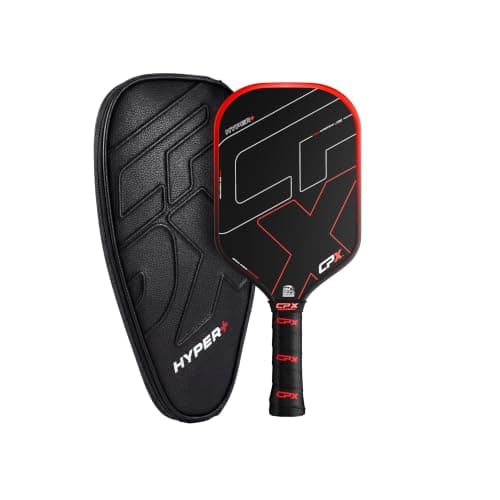
For a closer look at where this category is heading, our CPX Hyper+ full foam review covers a true full-foam 16mm core sold below flagship money, and thermoformed vs cold-pressed explains the construction sequence that produced all of it. Gen 3 is a subset of a larger category, so if you want the whole field rather than just the foam-loaded end, start at best thermoformed pickleball paddles— and for the brand that shipped the first 100% foam core, see best CRBN paddles.
Frequently asked questions
What is a Gen 3 pickleball paddle?
Gen 3 is an informal industry term, not an official standard. It describes paddles that push foam into or through the core itself — injected around a honeycomb center, or replacing honeycomb entirely — usually inside a thermoformed unibody frame with a raw carbon face. Compared with earlier constructions it produces a wider usable sweet spot and returns more energy to the ball.
Is a Gen 3 paddle worth the money?
It depends on the errors you make. If you already control pace well and want more range and forgiveness, foam-loaded construction delivers something a cheaper paddle can't. If your points are lost by popping balls up or hitting resets long, more stored energy makes that worse — a 16mm polymer control paddle is the better buy and costs less.
Do Gen 3 paddles break more easily?
Highly-loaded composite structures have a finite fatigue life, and this category has a public history of faces separating from cores (delamination), which changes how a paddle plays and can make it illegal for sanctioned play. It is not universal, but it is a real risk factor — buy from brands that publish a warranty, and learn the symptoms before you need to.
Are Gen 3 paddles legal for tournaments?
Many are, but you must check the specific model and thickness against the approved list for the body sanctioning your event. Some paddles in this category carry UPA-A certification, some carry USA Pickleball approval, and some carry both. Certification for one product line does not automatically extend to every variant in it.
Do foam-core paddles feel soft?
No — most players find the opposite. Foam stiffens the overall structure and transmits more feedback through the handle than a hollow polymer honeycomb does, so the first session often feels harsh. It typically settles within a couple of outings, but if you have elbow or forearm history, treat that firmness as a genuine consideration rather than a break-in period.
Sources
- USA Pickleball — equipment standards & approved paddle list
- CRBN — TruFoam Genesis specifications
- Manufacturer product listings for Warping Point, Konvoi, Enhance and FRIDAY (specs as published)
Keep reading
- Best pickleball paddles for advanced players →
- Best all-court pickleball paddles →
- Best carbon fiber pickleball paddles →
- Pickleball paddle delamination explained →Rally & Dink
- Carbon fiber vs fiberglass paddles →Rally & Dink
- 14mm vs 16mm pickleball paddles →Rally & Dink
- CPX Hyper+ full foam review →
- Thermoformed vs cold-pressed paddles →Rally & Dink
Upgrading your paddle or gearing up to play?
See how we pick, then dig into the paddle roundups and buying guides — honest picks from someone who actually plays, with no inventory to move.