Brand Roundup
The Best Paddletek Pickleball Paddles in 2026
Paddletek is the quiet one. No pro-signature circus, no yearly reinvention - just paddles built in Niles, Michigan that keep showing up in serious players' bags. Here's which of them is right for your game.
The short answer
Quick picks
| # | Product | Best for | Score | Price |
|---|---|---|---|---|
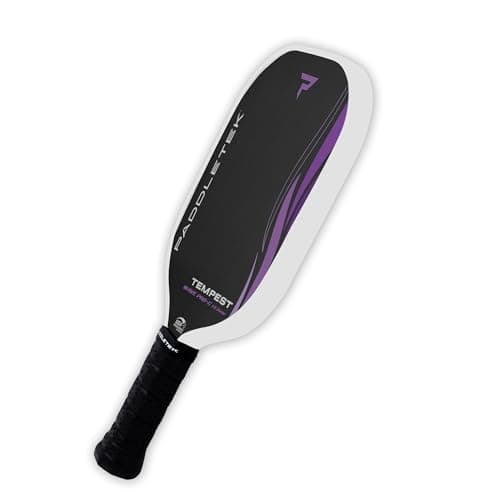
| 01 | Paddletek Tempest Wave PRO-C PT-700 unidirectional carbon over a 14.3mm polymer core - the Paddletek control paddle. | Best overall | 4.7/5 | $149.99Amazon |
| 02 | 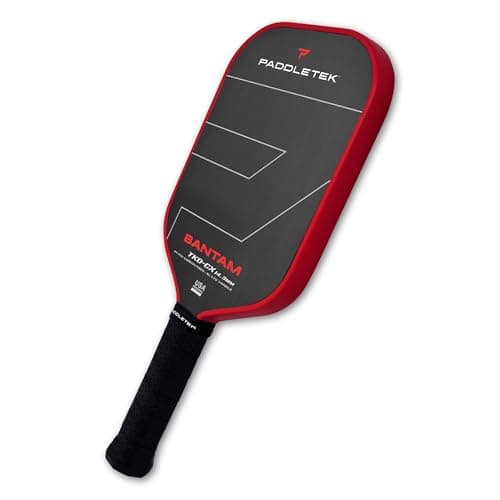 Paddletek Bantam TKO-CX 14.3mm The Bantam power line with torsional weighting and a long 5.75in handle. | Best for power | 4.6/5 | Check price → |
| 03 | 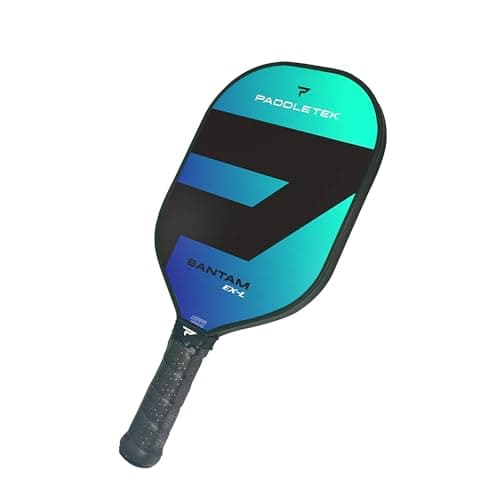 Paddletek Bantam EX-L The long-running Bantam PolyCore workhorse - forgiving, cheap, still legal. | Best value | 4.4/5 | $89.99Amazon |
| 04 | 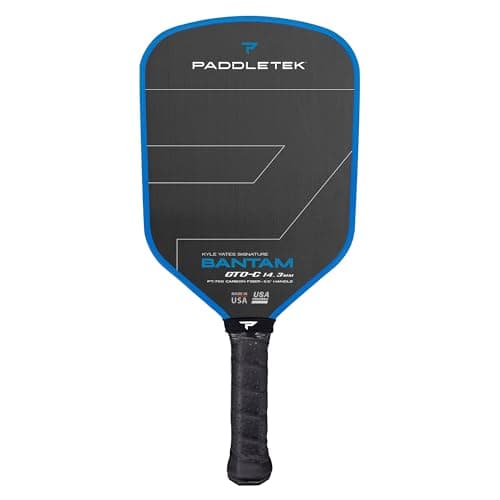 Paddletek Bantam GTO-C 14.3mm Raw carbon on an aerodynamic tapered hybrid - reach without an elongated sweet spot. | Best hybrid shape | 4.5/5 | $199.99Amazon |
| 05 | 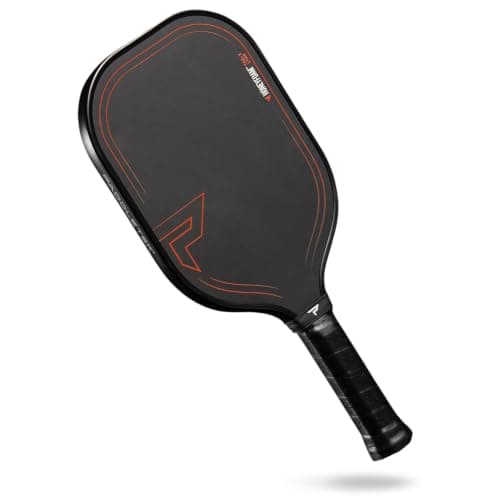 Paddletek Honeyfoam TKO-X 16mm Multi-foam core, raw PT-700 face, elongated - Paddletek's answer to foam-core flagships. | Best premium | 4.5/5 | $99.99Amazon |
| 06 | 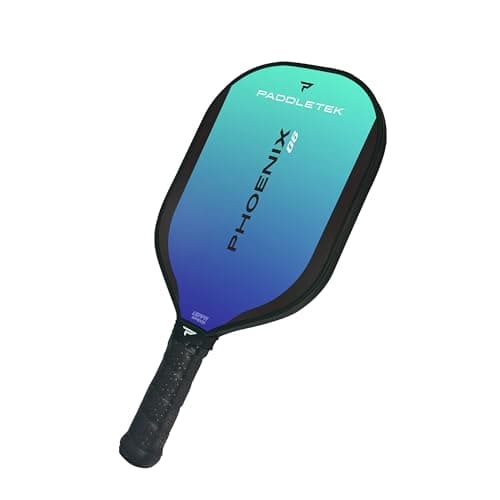 Paddletek Phoenix G6 Graphite PolyCore, soft and quiet - the easiest Paddletek to learn on. | Best for new players | 4.1/5 | $67.99Amazon |
#ad · Live prices from Amazon as of October 20, 2026; where we have no verified live price we show none. We may earn a commission — see our affiliate disclosure.
Paddletek does not behave like the rest of the paddle industry. There is no annual reinvention, no arms race of signature models, and until recently no foam-core flagship at all. What there is instead is a company that has made paddles in Niles, Michigan since 2010, two product families that have barely changed names in a decade, and a reputation among control players for building the most predictable paddle faces in the sport. If you have played long enough to be tired of chasing pop, Paddletek is usually where you end up.
The catch is that the range is genuinely confusing from the outside. Bantam and Tempest are two different core philosophies, not two price tiers, and the suffixes (EX-L, TKO-CX, PRO-C, GTO-C, TKO-X) tell you almost nothing until someone explains them. That is what this page is for. My pick for most players is the Tempest Wave PRO-C; if you win points by hitting the ball hard, go straight to the Bantam TKO-CX.
What Paddletek actually does differently
Three things, and they are worth understanding before you spend the money.
They build their own cores.Bantam PolyCore and the Tempest core are Paddletek's own polymer honeycomb formulations rather than a generic supplier cell. That is the practical reason Paddletek paddles feel muted and consistent shot to shot — the plush, slightly dead feel that control players describe as "quiet" is the core absorbing energy instead of returning it.
PT-700 carbon, unidirectional.The premium faces here are PT-700 carbon fiber laid unidirectionally rather than woven. Manufacturer claims about weave direction get overstated across the industry, but the observable result on Paddletek's carbon paddles is a stiff, uniform face that does not go soft at the edges — which is what makes off-center contact behave predictably.
Torsional weighting. On the current CX and PRO-C paddles, weight is distributed toward the perimeter rather than the throat. That raises twist resistance, so a ball caught out toward the edge rotates the paddle less in your hand. It is the least marketable feature on this page and probably the one you will feel most.
How we picked
I don't sell paddles and no brand pays for a place on this list. These six are the Paddletek models that are genuinely available on the earning rail right now, evaluated against Paddletek's published specifications and a lot of court time on Bantam and Tempest paddles — I say in each write-up which is which. The full process is on the how we review page.
Ranking weighted three things: whether the paddle does the job its line name promises, whether the price is defensible against what the rest of the market charges for the same construction, and whether an ordinary recreational player would actually be happier with it than with a cheaper paddle. That last test is why the $250 flagship is not the number one pick.
At a glance
The field side by side. Specs are from Paddletek's listings; live prices sit on each buy button below and move often.
| Paddle | Face | Core | Shape / handle | Best for |
|---|---|---|---|---|
| Tempest Wave PRO-C | PT-700 unidirectional carbon | 14.3mm Tempest polymer | Standard | Control & touch |
| Bantam TKO-CX | Unidirectional carbon | 14.3mm Bantam PolyCore | 5.75in handle | Power & two-handed backhands |
| Bantam GTO-C | Raw carbon fiber | 14.3mm polymer | Tapered hybrid, 5.5in handle | Reach with forgiveness |
| Honeyfoam TKO-X | PT-700 raw carbon | 16mm multi-foam | Elongated | Modern foam-core feel |
| Bantam EX-L | Polycarbonate | Bantam PolyCore honeycomb | Standard | Value & forgiveness |
| Phoenix G6 | Polycarbonate | Graphite PolyCore honeycomb | Standard | Brand-new players |
Best overall: Paddletek Tempest Wave PRO-C 14.3mm
The Tempest Wave is the paddle that built Paddletek's reputation, and the PRO-C is its current carbon expression. A PT-700 unidirectional carbon facesits over a 14.3mm Tempest polymer core, with torsional weighting and Paddletek's High Tack Performance grip. The character is unmistakable: soft, quiet, and unusually easy to place. Balls sit on the face for a beat longer than they do on a thermoformed paddle, which is exactly what you want when the point is being decided at the kitchen line.
| Surface | PT-700 unidirectional carbon fiber |
|---|---|
| Core | 14.3mm polymer honeycomb (Tempest) |
| Shape | Standard |
| Notable | Torsional weighting; High Tack Performance grip |
| Certification | USA Pickleball approved |
| Best for | Control players who live in the soft game |
What I like: it is the most predictable face on this page, and the 14.3mm core hits a real sweet spot between the plushness of a 16mm paddle and the responsiveness of a thinner one. What gives me pause: it will not out-hit a thermoformed power paddle, and if your game is built on driving from the baseline you will find it polite. Compare it against the wider field in our best control paddles roundup.
Best for power: Paddletek Bantam TKO-CX 14.3mm
Bantam is the power line, and the TKO-CX is where it currently peaks. Same 14.3mm thickness as the Tempest, but on Bantam PolyCore— a firmer, livelier core that gives the ball back rather than swallowing it. Add a unidirectional carbon face, torsional weighting, and a long 5.75-inch handle, and you have a paddle built for players who drive, roll and finish. That handle length is the detail to notice: it is one of the longest on any standard-shape paddle, which makes it a genuine option for two-handed backhands without moving to a full elongated shape.
| Surface | Unidirectional carbon fiber |
|---|---|
| Core | 14.3mm Bantam PolyCore honeycomb |
| Handle | 5.75 in |
| Notable | Torsional weighting; High Tack Performance grip |
| Certification | USA Pickleball approved |
| Best for | Drivers, two-handed backhands, put-away players |
What I like: real pace without the harshness of a solid-core paddle, and the handle solves a problem most standard-shape paddles ignore. What gives me pause: a firmer core transmits more to the arm than the Tempest does, and the extra handle length costs you a little face area up top. If pace is the priority, see how it sits against the market in our best power paddles guide.
Best hybrid shape: Paddletek Bantam GTO-C 14.3mm
The GTO-C is the most interesting paddle Paddletek currently sells, because it refuses the usual shape trade-off. At 16.25 x 7.75 incheswith an aerodynamic tapered profile and a 5.5-inch handle, it is longer than a standard paddle without being a narrow elongated one — so you gain reach and leverage while keeping more usable width than a true elongated build gives you. The face is raw carbon fiber over a 14.3mm polymer core, and it is one of the few paddles at this price carrying both UPA-A approval and a published PBCoR .43 rating.
| Surface | Raw carbon fiber |
|---|---|
| Core | 14.3mm polymer |
| Dimensions | 16.25 x 7.75 in, aerodynamic tapered shape |
| Handle | 5.5 in |
| Certification | UPA-A approved; PBCoR .43 certified |
| Best for | Players who want reach without losing the sweet spot |
What I like: a genuinely thought-through hybrid shape, a raw carbon face that grips, and certification paperwork that competitive players actually need. What gives me pause: it costs flagship money, the tapered head takes a session or two to trust, and the raw face will need cleaning to keep its bite. If you are weighing shapes generally, read our paddle shapes guide and best elongated paddles first.
Best premium: Paddletek Honeyfoam TKO-X 16mm
This is Paddletek finally answering the foam-core wave. The Honeyfoam TKO-X pairs a multi-foam corewith a raw PT-700 carbon face in a 16mm elongated build, plus a shock-arrestor edge guard. Foam changes what a paddle does at the edges — it stiffens the perimeter so off-center hits keep more of their speed — which is the whole reason the category exists. Coming from a company whose identity is control, the result is less brutal than most foam paddles: powerful, but not a cannon.
| Surface | PT-700 raw carbon fiber |
|---|---|
| Core | 16mm multi-foam |
| Shape | Elongated |
| Notable | Shock arrestor edge guard |
| Best for | Experienced players who want modern power with Paddletek feel |
What I like: a foam-core paddle that still behaves like a Paddletek, with a big stable perimeter and real spin from the raw face. What gives me pause: it is the most expensive paddle here by a wide margin, elongated shapes shrink the sweet spot, and the foam-core category as a whole is still young enough that long-term durability is an open question. See the category in full in our best Gen 3 paddles roundup.
Best value: Paddletek Bantam EX-L
The EX-L has been in the range for years and it earns its keep. A polycarbonate faceover Bantam PolyCore, in a standard shape with the same High Tack grip as the expensive paddles. It is not a spin weapon — polycarbonate is smoother than carbon and does less to the ball — but it is forgiving, comfortable, USA Pickleball approved, and considerably cheaper than the carbon models. For a club player who wants the Paddletek feel without flagship money, this is the honest answer.
| Surface | Polycarbonate |
|---|---|
| Core | Bantam PolyCore polymer honeycomb |
| Shape | Standard |
| Grip | High Tack Performance grip |
| Certification | USA Pickleball approved |
| Best for | Value buyers who want Paddletek build quality |
What I like: durable, comfortable, and priced like a paddle you can replace without wincing. What gives me pause: the polycarbonate face generates noticeably less spin than any carbon paddle on this page, so if spin is the reason you are shopping, spend up or look at our best carbon fiber paddles. Also compare it with the wider value field in best paddles under $100.
Best for new players: Paddletek Phoenix G6
The Phoenix line is Paddletek's softest, and the G6 is the entry point. It uses a Graphite PolyCorehoneycomb under a polycarbonate face — a combination tuned for touch rather than pace. It is quiet, easy to control, and the cheapest way into the brand. If someone is two months into pickleball and keeps hitting dinks long, this paddle will help more than a $200 one will.
| Surface | Polycarbonate |
|---|---|
| Core | Graphite PolyCore honeycomb |
| Shape | Standard |
| Grip | High Tack Performance grip |
| Certification | USA Pickleball approved |
| Best for | New players learning the soft game |
What I like: genuinely forgiving, genuinely quiet, and priced so a beginner is not gambling. What gives me pause: you will outgrow it — it makes very little spin and gives up pace against modern carbon paddles, so treat it as a first paddle rather than a keeper. Other starting points are in best beginner paddles.
Bantam or Tempest? Read this first
Nearly every Paddletek buying mistake comes from picking the wrong family. The names are not a price ladder — they are two different intentions.
Tempest is the control family. Softer core response, longer dwell, quieter impact. Choose it if your points are won at the kitchen with resets, dinks and placement, and if you would rather add pace with your swing than have the paddle supply it.
Bantam is the power family. Firmer core, faster ball off the face, more reward for a full swing. Choose it if you drive third shots, hit two-handed backhands, or finish points from mid-court.
Phoenix sits below both as the soft entry line, and Honeyfoam is the new foam-core family sitting above them. Thickness then fine-tunes the choice: the 14.3mm paddles here are livelier than a 16mm paddle would be — the trade-off is laid out in our 14mm vs 16mm guide, and the face materials in carbon fiber vs fiberglass.
The bottom line
For most players buying their first serious Paddletek, the Tempest Wave PRO-C is the paddle the brand is famous for and the one that will make your soft game look better. If you win points with pace, take the Bantam TKO-CX and use that long handle. Want reach without a narrow head? The Bantam GTO-C. Chasing the modern foam-core feel from a company that still cares about touch? The Honeyfoam TKO-X. And if you just want the build quality without the flagship price, the Bantam EX-L and Phoenix G6 are honest, durable paddles. Cross-shopping brands? Our best Selkirk paddles and best JOOLA paddles roundups cover the other two names you are probably weighing, and JOOLA vs Paddletekputs the two head to head. For the closest comparison of all — two American-made control brands with lifetime warranties — read Selkirk vs Paddletek, which also covers the 14-day registration window on Paddletek's guarantee.
Frequently asked questions
Is Paddletek a good pickleball paddle brand?
Yes, particularly for control players. Paddletek has manufactured in Niles, Michigan since 2010, builds its own polymer cores rather than buying generic honeycomb, and has a long-standing reputation for quiet, predictable paddle faces. It is less flashy than the pro-signature brands and updates its range less often, which is exactly why long-time players trust it. Where it is less competitive is raw power per dollar at the very top of the market.
What's the difference between Paddletek Bantam and Tempest?
They are two different core philosophies, not two price tiers. Tempest is the control family: a softer core response, longer dwell time and a quieter impact, suited to players who win at the kitchen line. Bantam is the power family: a firmer Bantam PolyCore that returns more energy to the ball, suited to drivers and put-away players. Phoenix sits below both as the soft entry line, and Honeyfoam is the newer foam-core family above them.
Which Paddletek paddle is best for beginners?
The Phoenix G6. Its Graphite PolyCore and polycarbonate face are tuned for touch rather than pace, so it is forgiving and easy to control while you are learning to keep dinks in the kitchen. The Bantam EX-L is the step up if you want more durability and a slightly livelier feel. Neither generates much spin, so plan on moving to a carbon-faced paddle once your contact is consistent.
Are Paddletek paddles USA Pickleball approved?
Every paddle in this roundup is USA Pickleball approved and legal for sanctioned play. The newest models, such as the Bantam GTO-C, additionally carry UPA-A approval and a published PBCoR .43 rating — the power ceiling used by the pro tour. If you play sanctioned tournaments, always confirm the specific model and year on the current USA Pickleball approved paddle list before you compete.
Is the Paddletek Honeyfoam TKO-X worth the extra money?
Only if you already play at a level where perimeter stability changes outcomes. Its multi-foam core stiffens the edges of the paddle so off-center balls keep more speed, which is a real advantage in fast hands battles. For a recreational player who mostly needs a predictable face and a forgiving sweet spot, the Tempest Wave PRO-C at roughly half the price is the better buy.
Sources
Keep reading
- Best Selkirk pickleball paddles →Rally & Dink
- Best JOOLA pickleball paddles →
- JOOLA vs Paddletek: which brand suits your game? →Rally & Dink
- Best pickleball paddles for control →
- Best pickleball paddles for power →
- 14mm vs 16mm pickleball paddles →Rally & Dink
- How to choose a pickleball paddle →Rally & Dink
Upgrading your paddle or gearing up to play?
See how we pick, then dig into the paddle roundups and buying guides — honest picks from someone who actually plays, with no inventory to move.