Buying Guide
Pickleball Paddle Shapes Explained
Every paddle is governed by one rule: length plus width can't exceed 24 inches. Everything manufacturers do with shape is a trade inside that budget — and it changes how a paddle feels more than the brand on it does.
Paddle marketing talks endlessly about faces and cores. Shape gets a passing mention, usually as a word you are expected to already understand — Invikta, Epic, elongated, Max. Yet shape is the variable that most reliably determines whether a paddle feels right in your hand, and it is decided by one line in the rulebook.
The rule that creates the shapes
Under USA Pickleball's equipment standards, a paddle's combined length and width may not exceed 24 inches, and length alone may not exceed 17 inches. There is no separate limit on width — the combined figure does the work.
That single constraint is why paddle shapes exist as a spectrum rather than a free-for-all. Every inch a manufacturer adds to length must come out of width. There is no shape that is simply "bigger"; there are only different distributions of the same budget.
The three shapes
| Shape | Rough dimensions | Gains | Costs |
|---|---|---|---|
| Widebody / standard | ~15.5-16 in long, ~8 in wide | Widest sweet spot, fastest rotation | Least reach and leverage |
| Hybrid | ~16-16.3 in long, ~7.8 in wide | Balance of both | Best at neither |
| Elongated | ~16.5 in long, ~7.5 in wide | Reach, leverage, serve and drive power | Narrower sweet spot, slower hands |
Widebody (also called standard or classic). The original shape and still the most forgiving. The face is wide where amateur contact actually happens, and because less mass sits far from your hand, the paddle rotates quickly. Most beginner paddles use it for exactly these reasons.
Elongated.Trades width for length. The extra reach is genuinely useful on stretch dinks and low balls in transition, and the longer lever multiplies your swing into more head speed — which is why serves and drives come off harder. Our best elongated paddles roundup covers the field.
Hybrid.Sits between the two, and has become the most common shape at the premium end because it gives up the least in either direction. If you don't know which way your game leans, this is the sensible default — most picks in our all-court roundup are hybrids or standards.
What shape does to the sweet spot
The sweet spot is not a fixed circle drawn on the face; it is the region where contact produces good ball speed and minimal twisting. Two things determine its size: the geometry of the face and the stiffness of the structure behind it.
Geometry.A wider face has more area at the same distance from the paddle's long axis, so off-center contact produces less rotational force. A narrower elongated face punishes the same miss harder.
Structure.This is why modern elongated paddles are more forgiving than old ones. Thermoformed unibody frames with foam-filled perimeters stiffen the edges of the face, so the outer regions behave more like the center. It doesn't eliminate the geometric penalty — it reduces it. Our Gen 3 paddles roundup covers how far that has gone.
The practical upshot: an expensive elongated paddle can be more forgiving than a cheap widebody, but at the same construction quality, wider is always more forgiving.
Shape and hand speed
Hand speed — how quickly you can get the paddle face to the ball in a fast exchange — is decided by how far the paddle's mass sits from your grip. Physically this is swing weight rather than static weight, and shape is the main input.
An elongated paddle places more mass further from your hand. It swings heavier than the scale says and is slower to rotate. In practice that means being fractionally late on a speed-up at the kitchen line — which, in a firefight, is the whole point.
A widebody keeps mass closer in and gets around faster. If you play a lot of doubles at the net against players who like to attack, that responsiveness is worth more than reach. Our paddle weight guide explains swing weight in more depth.
Which shape do you need?
Here is a test that beats any spec sheet. Over your next two sessions, note the points you lose, and sort them into two buckets:
Bucket A: you couldn't reach the ball.Stretched wide and came up short, got passed down the line, couldn't get low enough on a ball at your feet.
Bucket B: you got handcuffed.The ball was hit at you fast and you were late, you got jammed at your hip, you couldn't get the paddle around in a hands battle.
If Bucket A is bigger, buy elongated. If Bucket B is bigger, buy widebody. If they're similar, buy hybrid. This matters more than which shape your favorite pro uses, because pros have hands fast enough to absorb the cost of elongated and you may not.
Decoding brand shape names
Every manufacturer names its shapes differently, which is the main reason shape confuses people. The translation:
| Brand | Widebody | Hybrid | Elongated |
|---|---|---|---|
| Selkirk | Max, S2 | Epic | Invikta, XL |
| JOOLA | Standard | Aero Curve, Agassi | Elongated (Perseus, Scorpeus, Hyperion) |
| CRBN | Standard | Hybrid AeroCurve | Elongated |
| Generic listings | Standard, classic, widebody | Hybrid | Elongated, XL |
If a listing gives you dimensions instead of a name, use them: anything at or above roughly 16.5 inches long is elongated; around 15.5 to 16 inches with a face near 8 inches wide is a widebody; in between is hybrid. Our Selkirk and JOOLA brand guides decode each range in full.
Shape, torque and your elbow
One consequence of shape that rarely gets mentioned: a longer paddle is a longer lever, and a longer lever transmits more torque to your wrist and elbow when you catch a ball off-center. For a healthy arm this is irrelevant. For an arm already managing an overuse injury, it is not.
If you are dealing with elbow pain, a widebody shape is one of several changes worth making — alongside a thicker core, a correctly-sized grip and vibration damping. Our best paddles for tennis elbow roundup covers the full set, and grip size is the cheapest place to start.
Once you have shape settled, the other two decisions that shape a paddle's character are core thickness and face material— and the whole framework lives in how to choose a pickleball paddle.
Shape is also what decides how big the forgiving part of the face is and where it sits. If that is the part you care about, read the pickleball paddle sweet spot, explained — it includes a five-minute bounce test for locating yours.
Frequently asked questions
What's the difference between an elongated and a widebody pickleball paddle?
Paddle rules cap combined length plus width at 24 inches, so length can only be bought with width. An elongated paddle is roughly 16.5 inches long and correspondingly narrow, giving more reach and leverage but a smaller sweet spot and slower rotation. A widebody is shorter and wider, with the largest sweet spot and the fastest hands, at the cost of reach.
Which pickleball paddle shape is best for beginners?
Widebody or hybrid. A new player's contact point is still inconsistent, and a wider face keeps mishits in play — which matters far more at that stage than the extra half-inch of reach an elongated paddle offers. Elongated shapes also make it easier to hit long, since the extra leverage adds pace you may not want yet.
What is a hybrid pickleball paddle shape?
A hybrid sits between elongated and widebody, typically around 16 to 16.3 inches long. It gives up less reach than a widebody and less sweet spot than an elongated paddle, which is why it has become the most common shape at the premium end. If you don't know which way your game leans, hybrid is the sensible default.
Does paddle shape affect the sweet spot?
Yes, in two ways. Geometrically, a wider face produces less twisting on off-center contact, so its sweet spot is larger. Structurally, thermoformed frames with foam-filled perimeters stiffen the edges of the face so outer contact behaves more like center contact. That's why a premium elongated paddle can out-forgive a cheap widebody — but at equal construction, wider always wins.
How do I know which paddle shape suits me?
Track the points you lose over two sessions. If you more often couldn't reach the ball — stretched wide, passed down the line, couldn't get low enough — buy elongated. If you more often got handcuffed by a fast ball or jammed at the net, buy widebody. If it's roughly even, buy hybrid. Tennis converts are the exception: elongated usually suits them immediately.
Sources
Keep reading
- How to choose a pickleball paddle →Rally & Dink
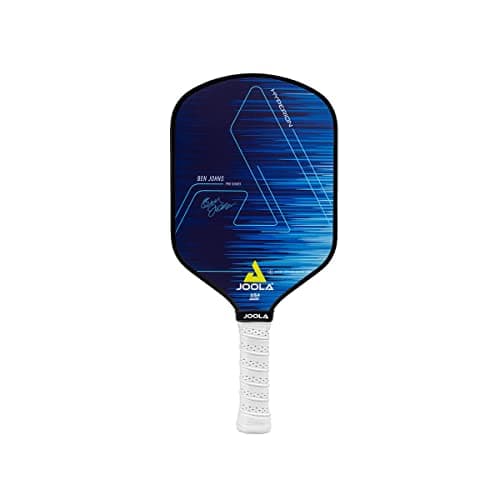
- Best elongated pickleball paddles →
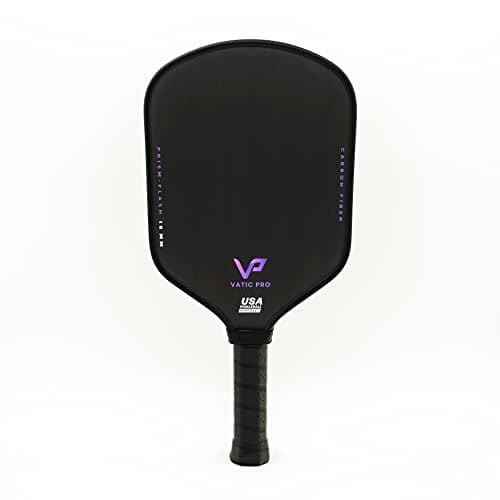
- Best all-court pickleball paddles →
- 14mm vs 16mm pickleball paddles →Rally & Dink
- Pickleball paddle grip size guide →Rally & Dink
- Pickleball paddle weight guide →Rally & Dink
- Best widebody pickleball paddles →Rally & Dink
- Pickleball terms: the glossary →Rally & Dink
Upgrading your paddle or gearing up to play?
See how we pick, then dig into the paddle roundups and buying guides — honest picks from someone who actually plays, with no inventory to move.