Buying Guide
Pickleball Paddle Grip Size: How to Get It Right
Grip size is the spec most players never check and the one that quietly decides how much control they have, how tightly they squeeze, and whether their forearm aches the next morning.
Ask most players what grip size their paddle is and you will get a blank look. Ask them why their forearm burns after two hours, why the paddle turns in their hand on off-center hits, or why their dinks pop up under pressure, and the answer is often the same number they never checked.
Grip size is the point where paddle meets player, and unlike weight or core thickness it is not a matter of playstyle preference — there is a right answer for your hand. This guide covers how to find it, what to do about a paddle you already own, and the one rule that makes the whole decision safer.
Why grip size matters
It sets how hard you squeeze.This is the big one. If a handle feels like it might rotate in your hand, you grip harder without deciding to. Sustained grip tension does two bad things: it deadens your touch, because a tight hand can't feel the ball, and it loads the forearm extensor tendons that attach at your elbow.
It changes wrist mobility. A larger grip restricts wrist snap, which stabilizes the paddle face and reduces spin generation. A smaller grip frees the wrist, adding spin and hand speed at the cost of stability. That is a real trade, and it is the reason some good players deliberately size slightly down.
It affects control on off-center contact.A paddle that twists on a mishit sends the ball somewhere you didn't intend. A properly-sized grip resists that twist without you having to clamp down.
The sizes you'll see
Pickleball grip size is a circumference measurement, in inches, taken around the handle. The usable range is narrow:
| Size | Typical hand | Character |
|---|---|---|
| 4 in | Small hands, juniors | Maximum wrist action; least stable |
| 4 1/8 in | Small to medium hands | Common on paddles aimed at spin |
| 4 1/4 in | Medium hands — the default | The most common size in the sport |
| 4 3/8 in | Medium to large hands | More stable, less wrist snap |
| 4 1/2 in | Large hands | Rare in pickleball; borrowed from tennis sizing |
Most paddles ship at 4 1/8 or 4 1/4. If a listing doesn't state a grip size, assume it is around 4 1/4 — and note that adding an overgrip changes it, which is the whole point of the section below.
Two ways to measure
Method one: the ruler measurement.Open your dominant hand, palm up, fingers straight and together. Find the lowest of the three horizontal creases running across your palm — the one closest to your wrist. Measure from that crease to the tip of your ring finger, along the line of the finger. The distance in inches is your approximate grip circumference. Most adults land between 4 and 4 1/2 inches.
Method two: the finger test.Hold a paddle in a normal forehand grip. Slide the index finger of your other hand into the gap between your fingertips and the base of your thumb. If it fits snugly, the grip is right. If there is room to spare, the grip is too large. If the finger won't fit, the grip is too small.
Why too small is worse than too big
Both errors cost you something, but they are not equally bad.
A grip that's too large restricts your wrist, reduces spin and makes quick hands battles slightly harder. It is uncomfortable and it costs performance. It does not usually hurt you.
A grip that's too smallmakes you squeeze constantly to keep the paddle from turning. That constant tension is one of the recognized contributors to lateral epicondylitis — tennis elbow — and it also robs you of the loose hand the soft game depends on. This is the error that turns into an injury.
There is also an asymmetry in fixability: a grip that is too small can be built up with overgrips in ninety seconds. A grip that is too large requires stripping the handle and replacing the base grip, which is a bigger job and not always possible. If you are between sizes, buy the smaller one and build it up.
If your elbow is already complaining, grip size is one of several equipment factors worth checking — our best paddles for tennis elbow roundup covers the rest, including core thickness and vibration damping.
Adjusting a paddle you own
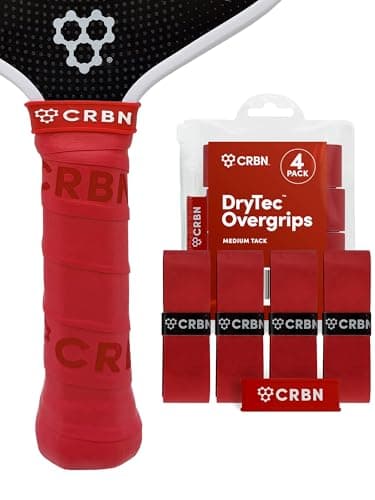
To go up: add an overgrip. Each wrap adds roughly 1/16 of an inch of circumference. One overgrip takes a 4 1/8 handle to roughly 4 3/16; two take it to about 4 1/4. Overgrips also refresh the tackiness of a worn handle, which is worth doing regardless. Our best overgrips roundup covers tacky, dry and cushioned options and how to wrap one.
Two wraps is the sensible ceiling.If you need three, the paddle's base grip is genuinely too small for you. At that point, either strip and fit a thicker replacement grip, or accept that the next paddle should ship in a larger size.
To go down: strip and replace. Remove the factory base grip and fit a thinner replacement grip. This is the only real way to reduce circumference, it is fiddly, and on some handles it is limited by the shape of the underlying handle core.
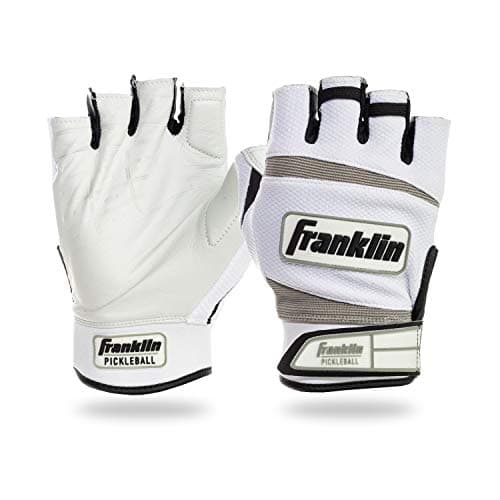
Remember gloves count.Playing gloved effectively thickens the handle in the same way an overgrip does. If you use a glove, size the grip with the glove on — see best pickleball gloves.
Handle length is a separate question
Grip size is circumference. Grip length is how far the handle extends, and it is a completely different decision that listings often bundle together confusingly.
Longer handles— typically 5 1/2 inches and up — are what you need for a two-handed backhand, which is why they appear on paddles marketed to tennis converts. Long handles are almost always found on elongated paddles, since the length has to come from somewhere.
Shorter handlesleave more of the paddle's length as face, which enlarges the sweet spot. If you play one-handed on both wings, a shorter handle is a free upgrade in forgiveness.
If you came from tennis and hit a two-handed backhand, prioritize handle length — our best paddles for tennis players roundup filters for it, as does our best pickleball paddles for men list, which ranks on handle length and grip circumference specifically. Our full handle length guide covers the ranges, the face area a long handle costs you, and why this is the one paddle spec no overgrip can fix later.
Common mistakes
Assuming your tennis grip size transfers.It doesn't directly. Pickleball paddles are lighter and swung differently, and most players use a slightly smaller grip than their tennis racquet.
Buying large "to be safe." Backwards. Large is the harder error to fix. Buy small and build up.
Ignoring a worn grip.A glazed, slick handle behaves like an undersized one, because you compensate by squeezing. Replace overgrips when they stop absorbing — every four to eight sessions for most players. If the base grip under them has gone hard or started peeling, that is a bigger job: how to replace a pickleball paddle grip covers it step by step.
Treating it as a comfort preference.It isn't. Grip size changes control, spin and injury risk. It deserves the same attention as paddle weight and core thickness, and it is covered in our full how to choose a paddle framework.
Frequently asked questions
How do I measure my pickleball grip size?
Open your dominant hand palm up with fingers straight, find the lowest horizontal crease across your palm, and measure from that crease to the tip of your ring finger. The distance in inches approximates your grip circumference — most adults fall between 4 and 4 1/2 inches. Confirm it with the finger test: your other hand's index finger should just fit snugly between your fingertips and the base of your thumb when gripping the paddle.
Is it better to have a pickleball grip too big or too small?
Too big, if you must choose. An oversized grip restricts your wrist and costs you spin and hand speed, but it's mostly a performance issue. An undersized grip makes you squeeze constantly to stop the paddle turning, which kills touch and is a recognized contributor to tennis elbow. A too-small grip is also far easier to fix — you can build it up with overgrips.
How much does an overgrip add to grip size?
Roughly 1/16 of an inch of circumference per wrap. One overgrip takes a 4 1/8 inch handle to about 4 3/16; two take it to roughly 4 1/4. Two wraps is a sensible ceiling — if you need three, the paddle's base grip is genuinely too small for you and you should fit a thicker replacement grip instead.
What's the most common pickleball grip size?
4 1/4 inches, with 4 1/8 close behind — most paddles ship in one of the two. Sizes below 4 inches are for juniors and very small hands, and anything above 4 3/8 is rare in pickleball, largely because paddles are lighter than tennis racquets and swung with more wrist.
Is grip length the same as grip size?
No, and listings often confuse them. Grip size is the circumference around the handle, which is about hand fit. Grip length is how far the handle extends from the paddle face, which determines whether you can hit a two-handed backhand. Longer handles suit tennis converts; shorter handles leave more of the paddle as face, which enlarges the sweet spot.
Sources
Keep reading
- How to choose a pickleball paddle →Rally & Dink
- Pickleball paddle weight guide →Rally & Dink
- Best pickleball overgrips →
- Best pickleball paddles for tennis elbow →
- Best pickleball gloves →
- Pickleball paddle shapes explained →Rally & Dink
- HEAD Radical Tour EX Raw review (4 1/8 in grip) →
- Best pickleball paddles for women →Rally & Dink
- How to add lead tape to a pickleball paddle →Rally & Dink
Upgrading your paddle or gearing up to play?
See how we pick, then dig into the paddle roundups and buying guides — honest picks from someone who actually plays, with no inventory to move.