How-To Guide
How to Replace a Pickleball Paddle Grip
A ten-minute job that most players pay a shop to do or avoid entirely. Here is when the base grip actually needs replacing rather than covering, and exactly how to do it without ruining the handle.
First: which job are you doing?
Most players who search for this do not need to do it. There are two different jobs and they are not interchangeable.
A replacement gripis the thicker base layer that ships on the paddle, fixed to the handle at the butt cap. Replacing it means stripping the old one off and fitting a new one — a ten-minute job you do once or twice in a paddle's life.
An overgrip is a thin wrap applied on topof that base without removing anything. It costs a couple of dollars, takes two minutes, and is the normal way to manage feel, tack and size. Most players should be changing an overgrip every few weeks and never touching the base grip — our best pickleball overgrips page covers that wrap and which style suits which hand.
| Overgrip | Replacement grip | |
|---|---|---|
| What it is | Thin wrap over the existing base | The base layer itself |
| How often | Every few weeks of regular play | Once or twice in a paddle's life |
| Time | About two minutes | About ten minutes |
| Typical cost | A couple of dollars per wrap | The price of a full grip |
| Removes anything? | No - goes on top | Yes - the old grip comes off |
When the base grip has to go
Four situations where an overgrip will not fix it:
The base layer has gone hard or shiny. A worn base grip is slick and compressed, and an overgrip wrapped over a hard base feels thin and dead no matter how good the overgrip is. If you can see the base layer polished smooth where your palm sits, replace it.
It is unravelling or lifting at the edges. Once the base grip is peeling, an overgrip just traps the problem. The adhesive strip underneath has usually failed.
It smells. Base grips absorb sweat for a season or two and then stop being pleasant to hold. Nothing cleans this out.
You need a materially different grip, not a thicker one. If you want the cushioning and vibration damping of a different grip material, or your hands are so damp that absorbency has to come from the base layer rather than a wrap, that is a replacement-grip decision.
What you need
A replacement grip, scissors or a utility knife, and finishing tape — which usually ships with the grip. Optionally a hair dryer on low (to soften stubborn adhesive) and a cloth with a little isopropyl alcohol to clean the handle. That is the whole list; no vice, no clamp, no shop.
The eight steps
1. Note the direction. Before you remove anything, look at how the existing grip is wound. For a right-handed player it winds clockwise going up the handle when viewed from the butt cap; left-handed, counter-clockwise. Getting this backwards means the overlaps peel open against your palm instead of closing under it.
2. Peel the finishing tape and unwind.Lift the tape at the top of the grip and unwind the old grip from the top down. Go slowly where it was glued at the butt cap — there is often a staple or a strong adhesive patch there, and that is the one place you can damage the handle.
3. Clean the handle. Remove the old adhesive residue with a cloth and a little isopropyl alcohol, then let it dry completely. A new grip will not bond to a tacky, dusty handle, and it will slip under load if you skip this.
4. Start at the butt cap.Peel the backing from the first inch of the new grip, line its tapered end up flush with the bottom of the handle, and press it on. Most grips have a cut angle at the start — that angle sits parallel to the butt cap, not across the handle.
5. Wrap upward with firm, even tension.Pull lightly as you go, and overlap each turn by about an eighth of an inch — just enough that no handle shows through. Tension is the whole skill: too loose and the grip twists in play, too tight and it stretches thin and will split. Rotate the paddle rather than passing the grip hand over hand.
6. Keep the overlap consistent. If a turn goes crooked, unwind that turn and redo it. One misaligned turn makes a ridge you will feel on every shot. Overlaps should run in even, parallel bands up the handle.
7. Finish below the paddle face. Stop about a quarter of an inch short of where the handle meets the face, and cut the grip at an angle so the end lies flat rather than leaving a step. Press the cut edge down.
8. Tape it, then test it.Wrap the finishing tape over the cut edge, two turns is plenty. Then hold the paddle in a real grip and check for ridges, loose turns and whether the circumference still suits your hand — the test is that you can hold it with a relaxed hand without the paddle turning.
What each layer does to grip size
Grip circumference is the spec players worry about most and tune least, and the numbers are small enough to be worth knowing before you wrap anything.
| Layer | Roughly adds | Reversible? |
|---|---|---|
| A replacement (base) grip | Comes in one thickness - you cannot tune it | Only by replacing it again |
| One overgrip | About 1/16 in to circumference | Yes - unwrap it |
| Two overgrips | About 1/8 in | Yes |
| Heat-shrink sleeve under the grip | Varies by sleeve - a build-up option | No, practically speaking |
The practical consequence: a paddle whose grip is a sixteenth of an inch too small is fixed with one overgrip, so grip size should almost never rule a paddle out at purchase. A paddle whose grip is too large cannot be reduced, which is the asymmetry worth remembering when you buy. Handle length is the spec you genuinely cannot change — see paddle handle length.
What to fit
#ad· The buy buttons in this section are affiliate links, and every price they show comes from our live price feed with the date it was captured.
One replacement grip, and three overgrips — because for most people reading this, an overgrip is the right answer and the cheaper one. All four are already recommended on this site.
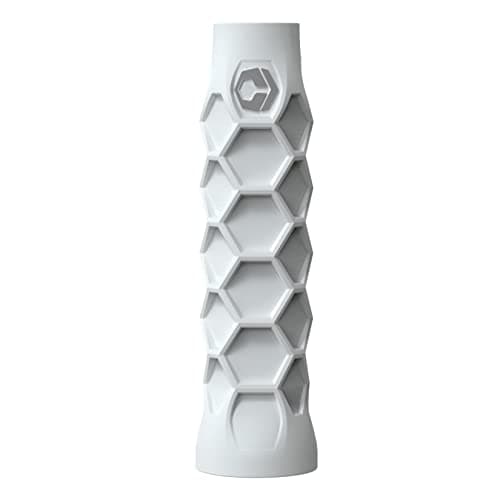
Hesacore Pickleball Paddle Grip — the replacement grip to fit.A cushioned, high-friction base grip with real vibration damping, which is the main reason to strip a handle rather than wrap over it. It lets you hold the paddle loosely instead of clamping, and that matters for your forearm as much as for your grip — see how to prevent pickleball injuries.
| Type | Replacement (base) grip |
|---|---|
| Character | Cushioned, high-friction, vibration-damping |
| Fits | Pickleball paddles (also used for padel and tennis) |
| Fitting time | About ten minutes |
| Best for | A worn, hard or unravelling base grip |
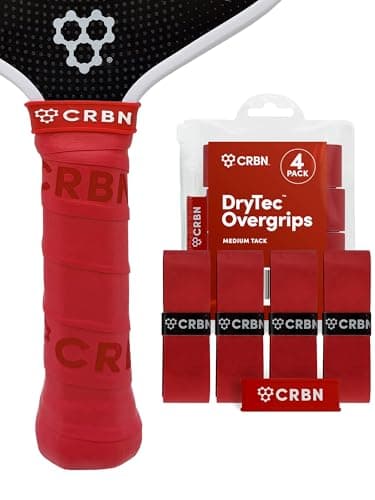
CRBN Drytec Overgrip (4-pack) — the default if your hands get damp. It absorbs moisture and shock rather than relying on tack, which keeps the handle secure through a long session instead of turning greasy an hour in. A four-pack lasts most of a season.
| Type | Dry / absorbent |
|---|---|
| Pack | 4-pack |
| Benefits | Absorbs moisture and shock |
| Adds to grip size | About 1/16 in per wrap |
| Best for | Most players, most conditions |
Tourna Mega Tac (10-pack) — if you want a genuinely sticky handle. Extra-tacky, and the best value per wrap of anything we carry. Best in dry hands and cool conditions; in heat and humidity a tacky grip can go slick, which is what the Drytec above is for.
| Type | Extra tacky |
|---|---|
| Pack | 10-pack |
| Adds to grip size | About 1/16 in per wrap |
| Best for | Dry hands, cool conditions, value per wrap |
GAMMA Supreme — the cheapest way to find out what you like. A balanced tacky overgrip in a small pack, so you can try a grip style without committing to ten of them. If you have never wrapped an overgrip before, practise on this one.
| Type | Balanced tacky |
|---|---|
| Pack | 3-count |
| Sports | Tennis, pickleball, squash, badminton, racquetball |
| Best for | Trying a grip style cheaply |
Four mistakes to avoid
Wrapping the wrong way round. Clockwise up the handle for a right-handed player, counter-clockwise for a left-hander. Wrapped the wrong way, the overlapping edges peel open under your palm every time you squeeze.
Skipping the clean-up. New adhesive will not bond to old residue. A grip fitted over a tacky handle rotates in play, which feels exactly like a grip that is too small.
Pulling too hard. Stretching the grip thin to get it tight makes it split within weeks and reduces the cushioning you paid for. Firm and even beats tight.
Replacing the base grip when you wanted a size change. Overgrips adjust circumference in sixteenth-inch steps and cost a couple of dollars. Strip the handle only when the base layer itself is the problem.
The bottom line
Replacing a base grip is a ten-minute job: note the winding direction, unwind from the top, clean the handle, start flush at the butt cap, wrap upward with firm even tension and an eighth-inch overlap, finish below the face, tape it. But check first whether you actually need to — if the base layer is intact, an overgrip is cheaper, faster and the thing most players should be changing every few weeks. Strip the handle when the base grip has gone hard, started peeling, or when you want a different grip material under your hand.
Frequently asked questions
How do you replace a pickleball paddle grip?
Note which way the existing grip winds (clockwise up the handle for a right-handed player), peel the finishing tape and unwind from the top down, clean the adhesive residue off the handle with isopropyl alcohol and let it dry, then start the new grip flush with the butt cap and wrap upward with firm, even tension, overlapping each turn by about an eighth of an inch. Stop a quarter inch below the paddle face, cut at an angle, and secure it with finishing tape. It takes about ten minutes.
What is the difference between an overgrip and a replacement grip?
A replacement grip is the thicker base layer that ships on the paddle; you strip the old one off and fit a new one. An overgrip is a thin wrap applied on top of that base without removing anything. Overgrips are cheaper, take two minutes, and are the normal way to manage grip feel and size - save replacement grips for when the base layer itself is worn out, hard, peeling or you want a different material under your hand.
How often should I replace my pickleball paddle grip?
The base grip once or twice in a paddle's life, when it goes hard and shiny, starts lifting at the edges, or stops being pleasant to hold. The overgrip on top of it every few weeks of regular play - that is the layer doing the work and the one that cheaply restores a handle that has started slipping.
How much does an overgrip add to grip size?
About a sixteenth of an inch of circumference per wrap, so two wraps add roughly an eighth. That is the reason grip size should almost never rule a paddle out when you buy: a handle a touch too small is fixed with one overgrip. A handle that is too large cannot be reduced, which is the asymmetry to remember when choosing between grip sizes.
Which way do you wrap a pickleball grip?
Clockwise as you work up the handle, viewed from the butt cap, if you are right-handed; counter-clockwise if you are left-handed. Wrapped the correct way the overlapping edges close under your palm as you squeeze; wrapped the wrong way they peel open, which is the usual reason a new grip feels like it is rolling in the hand.
Do I need to clean the handle before fitting a new grip?
Yes, and it is the step people skip. Old adhesive residue stops the new grip bonding, and a grip that is not bonded rotates under load - which feels exactly like a grip that is too small. Wipe the bare handle with a cloth and a little isopropyl alcohol and let it dry completely before you start wrapping.
Sources
Keep reading
Upgrading your paddle or gearing up to play?
See how we pick, then dig into the paddle roundups and buying guides — honest picks from someone who actually plays, with no inventory to move.