Player Guide
How to Prevent Pickleball Injuries
The published research points at one thing above all others: falls, and the lower leg. Here is what that means for how you warm up, how you move, and the four pieces of gear that actually change your risk.
What the research actually says
Start with the honest version, because this topic is full of confident numbers that do not survive a check.
A 2026 review in Cureus found that sprains, strains and fractures were the most common injury types in pickleball, with Achilles tendon rupture notable among them, and identified falls as the leading mechanism of injury— followed by running or lunging, and by ankle inversion. It recommends structured prevention: dynamic warm-ups and proprioceptive (balance) training. A frequently cited analysis of US emergency department data by Forrester, using the NEISS dataset for 2001–2017, found the lower extremity — and the ankle in particular — was the most-injured body region.
So the picture is consistent on the thing that matters: this is a lower-leg and falling sport. The widely shared ranking that puts tennis elbow first at around 38% of injuries comes from a guide that labels its own figures approximate, and we could not verify its source — it also contradicts the emergency-department finding, so we are not repeating it as fact. And on eye injuries, which every gear site recommends eyewear for, we could find no peer-reviewed incidence data at all; the case for eye protection rests on mechanism and consequence, not on measured frequency.
Four habits that prevent most of it
1. Warm up dynamically, not by stretching. The Cureus review specifically recommends dynamic warm-ups, which means moving through the ranges you are about to use: side-steps, gentle lunges, ankle circles, shadow split-steps, a few easy dinks before anyone serves. Standing still and pulling on a calf does not prepare an Achilles for a sudden lunge, and arriving cold is how the most serious pickleball injuries happen.
2. Stop backpedalling. Running backwards for an overhead is the single most common way players fall, and falls are the leading mechanism of injury in the literature. Turn and shuffle sideways, or let the ball go. A lob you concede costs one point; a backward fall onto an outstretched wrist can cost a season.
3. Train balance on purpose. Proprioceptive training is the other thing the review recommends, and it needs no equipment: stand on one leg while you brush your teeth, then try it with your eyes closed. Ankle inversion injuries happen when the foot arrives somewhere the player did not plan, and balance training is what shortens the reaction time that prevents that.
4. Replace your shoes on a schedule.A worn outsole is the cheapest possible cause of a slip, and court shoes wear out at the pivot points first — how long pickleball shoes last covers the intervals and the four wear signs. This is the one gear habit with a direct line to the injury the research flags most.
What to look for in protective gear
Four categories do real work, and they map onto the mechanisms above rather than onto a generic “safety” idea.
| Risk | Mechanism | What actually helps |
|---|---|---|
| Ankle sprain, slip, fall | Foot arrives where you did not plan, or loses grip | A court shoe with a stable lateral platform and unworn outsole |
| Eye injury | Close-range ball or paddle at the kitchen line | Lensed eyewear with front and side coverage |
| Elbow and wrist pain | Repeated shock and load through the arm | A lighter, softer paddle and a cushioned grip |
| Blisters, grip slip | Sweat, and squeezing a grip that is too small | A tacky or cushioned overgrip, sized correctly |
Two things are worth saying about what is noton that list. Braces and compression sleeves can be useful, but they are a clinical decision about a specific joint rather than a general-purpose purchase, so we do not carry blanket recommendations for them. And nothing in any category substitutes for the four habits above — gear lowers the odds, movement decides them.
The gear that genuinely reduces risk
#ad· The buy buttons in this section are affiliate links, and every price they show comes from our live price feed with the date it was captured.
Four products, one per risk category, all already recommended elsewhere on this site. These are ordered by how directly they connect to what the research identifies.
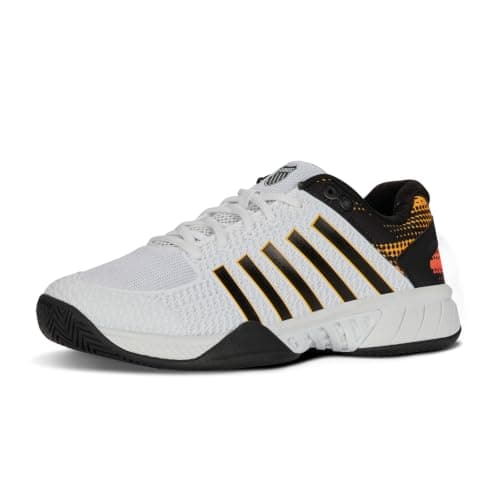
K-Swiss Express Light — the one purchase that matters most.A pickleball-specific court shoe with a stable lateral support platform and a reinforced toe drag guard. Lateral support is the whole point: it is what keeps the foot over the sole during the sideways push that causes ankle inversion. Running shoes do the opposite — soft, tall midsoles with no lateral structure — which is why what shoes not to wear exists as its own page.
| Type | Pickleball-specific court shoe |
|---|---|
| Support | Stable lateral support platform |
| Durability | Reinforced toe drag guard |
| Upper | Lightweight, breathable |
| Risk it addresses | Slips, ankle inversion, falls |
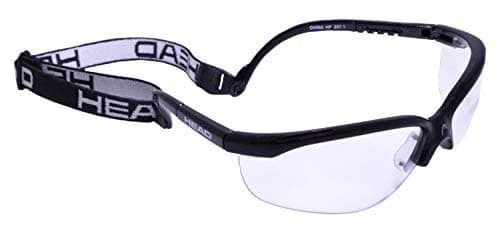
Python Xtreme View Racquetball Eyeguard — cheap insurance for an unquantified risk.A lensed eyeguard with front and side coverage and an unusually wide viewing aperture, which is the spec that decides whether you actually wear it. We cannot point you at incidence data, because none exists — but at the kitchen line a ball arrives from six feet away at speed, and an eye does not heal the way an ankle does. More options in best pickleball eyewear.
| Type | Racquetball eyeguard (lensed) |
|---|---|
| Design focus | Wide viewing aperture |
| Coverage | Front and side |
| Included | Protective case |
| Risk it addresses | Close-range ball and paddle strikes |
Selkirk Amped Control (Epic Lightweight) — the arm-friendly paddle. Pickleball asks for far more shots per hour than tennis does, so paddle mass and stiffness compound across a session. A lightweight build with a control-tuned polymer core is the opposite of the thin, rigid power paddles that load an elbow hardest. If your arm already hurts, go straight to best paddles for tennis elbow instead.
| Surface | Carbon hybrid face |
|---|---|
| Core | Control-tuned polymer |
| Shape | Epic (Selkirk's classic head) |
| Build | Lightweight |
| Risk it addresses | Cumulative load on elbow, wrist and shoulder |
Hesacore Pickleball Paddle Grip — stop squeezing.A grip that is too thin makes you clamp down to keep the paddle from turning, and that sustained clamping is a load path straight into the forearm. A cushioned, high-friction grip lets you hold the paddle loosely, which is both better technique and less strain. Sizing matters more than product here — see pickleball grip size.
| Type | Replacement paddle grip |
|---|---|
| Character | Cushioned, high-friction, vibration-damping |
| Fits | Pickleball paddles (also used for padel and tennis) |
| Why it helps | Lets you hold the paddle loosely instead of clamping |
| Risk it addresses | Forearm and wrist strain, grip slip, blisters |
Three things that do not help
Static stretching before you play. The research recommendation is a dynamic warm-up. Holding a long static stretch on a cold muscle is not the same intervention and is not what the prevention literature points at.
A heavier paddle “for stability” when your arm hurts.More mass through more swings is more load on the elbow and shoulder. Stability on off-centre contact is worth having, but the way to get it without adding arm load is width and perimeter mass rather than total weight — see paddle twist weight.
Playing through a sharp calf or heel pain.Achilles rupture is specifically flagged in the literature, and the warning sign is often a tight or painful calf in the sessions beforehand. This is the one place where “finish the game” is a genuinely bad instinct.
The bottom line
The published evidence points at falls and the lower leg, not at the arm. So the ranked answer is: warm up dynamically, stop backpedalling for lobs, train your balance for two minutes a day, and keep an unworn court shoe with real lateral support on your feet. Add eyewear because the downside is permanent even though the frequency is unmeasured, and manage arm load with a lighter paddle and a grip you do not have to squeeze. If you buy one thing off this page, buy the shoes — best pickleball shoes has the full field.
Frequently asked questions
What is the most common pickleball injury?
The published evidence points at the lower extremity. A 2026 review in Cureus found sprains, strains and fractures were the most common injury types - with Achilles rupture notable - and identified falls as the leading mechanism, followed by running or lunging and ankle inversion. Forrester's analysis of US emergency department data for 2001-2017 found the lower extremity, especially the ankle, was the most-injured body region. Rankings that put tennis elbow first come from sources that label their own numbers approximate.
How do I avoid falling on a pickleball court?
Stop running backwards. Backpedalling for an overhead is the most common way players go down, and falls are the leading injury mechanism in the literature. Turn and shuffle sideways instead, or concede the lob. After that: keep an unworn outsole under you, warm up dynamically before the first serve, and spend two minutes a day on single-leg balance work, which is the proprioceptive training the research recommends.
Do I need protective eyewear for pickleball?
We recommend it, with an honest caveat: we could find no peer-reviewed incidence data for pickleball eye injuries, so the case rests on mechanism and consequence rather than measured frequency. At the kitchen line a ball arrives from a few feet away at speed, and eye damage does not heal the way a sprain does. A lensed eyeguard with front and side coverage costs about the price of a tube of balls.
Can a different paddle prevent tennis elbow?
It can reduce the load, not prevent the condition. Pickleball asks for far more shots per hour than tennis does, so paddle mass, core stiffness and how hard you squeeze the grip all compound across a session - a lighter paddle with a softer core and a cushioned, correctly sized grip is less demanding on an arm. If your elbow already hurts, that is a clinical question, and a purchase is not a treatment.
Does a warm-up actually reduce pickleball injuries?
The prevention literature recommends it specifically, and it recommends a dynamic warm-up rather than static stretching - moving through the ranges you are about to use with side-steps, gentle lunges, ankle circles and a few easy dinks. The most serious injuries in this sport happen on sudden lunges and changes of direction, which is exactly what a cold Achilles and cold calf are least ready for.
Are ankle braces worth it for pickleball?
Possibly, but it is a decision about your specific ankle rather than a general recommendation, which is why we do not carry a blanket pick for them. If you have had repeated sprains, that is a conversation with a physical therapist. For players without a history, the evidence-aligned spending order is a court shoe with a stable lateral platform first, replaced before the outsole goes smooth, and balance training second.
Sources
- Cureus (2026) - review of pickleball injury types, mechanisms and prevention recommendations
- Journal of Foot & Ankle (SAGE) - pickleball foot and ankle injuries, Achilles rupture prevention education
- UT Southwestern Medical Center - pickleball injuries and prevention
- Baylor Scott & White Health - common pickleball injuries and prevention tips
- USA Pickleball - equipment standards
Keep reading
Upgrading your paddle or gearing up to play?
See how we pick, then dig into the paddle roundups and buying guides — honest picks from someone who actually plays, with no inventory to move.