Court Gear Roundup
The Best Pickleball Eyewear in 2026
Eye protection is the cheapest insurance in the sport and almost nobody wears it. Here's what the eye doctors actually recommend, why the lens-free frames flooding the market don't do the job, and six options that do.
The short answer
Quick picks
| # | Product | Best for | Score | Price |
|---|---|---|---|---|
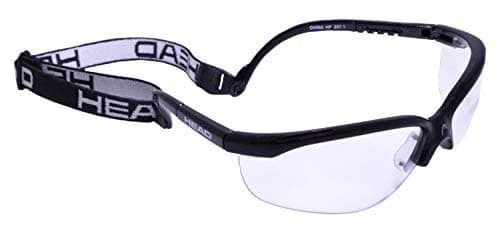
| 01 | HEAD Pro Elite Racquetball Goggles A proven lensed racquet-sport eyeguard with anti-fog, scratch-resistant, UV-blocking lenses. | Best overall | 4.5/5 | $19.95Amazon |
| 02 | 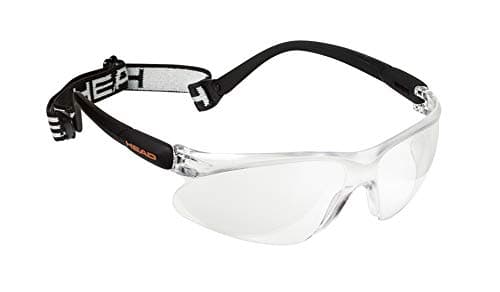 HEAD Impulse Racquetball & Squash Goggles The cheapest real eyeguard from an established racquet-sport brand. | Best budget | 4.2/5 | $12.99Amazon |
| 03 | 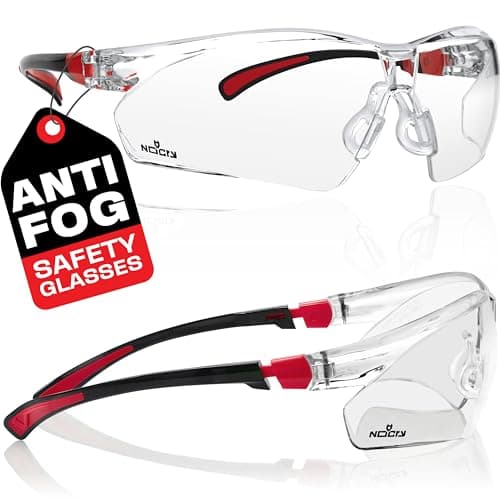 NoCry Clear Safety Glasses ANSI Z87 certified, wraparound, anti-fog - the standard on the label, not implied. | Best certified protection | 4.4/5 | $13.99Amazon |
| 04 | 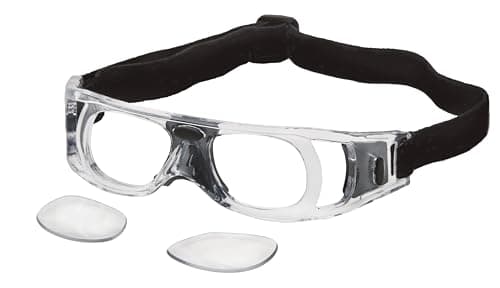 Unique Sports Rx Specs Pickleball Eyeguards Polycarbonate court eyeguards your optometrist can fit with your prescription. | Best if you wear glasses | 4.3/5 | $16.95Amazon |
| 05 | 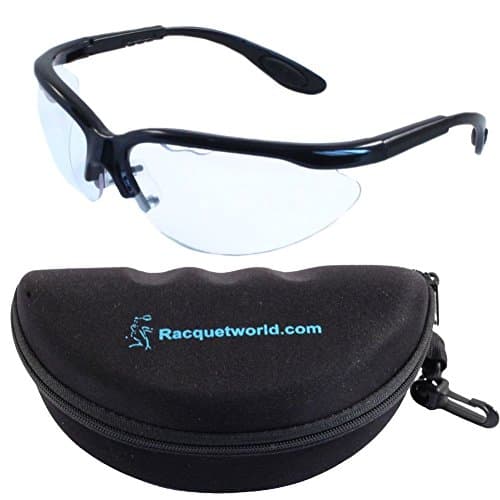 Python Xtreme View Racquetball Eyeguard A wide-view racquet-sport eyeguard that ships with a hard case. | Best field of view | 4.1/5 | $24.99Amazon |
| 06 | 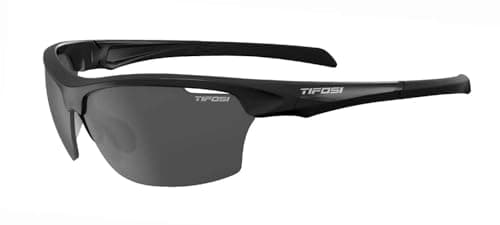 Tifosi Intense Sunglasses Sport-wrap shades for glare - a different job from impact protection, done well. | Best for outdoor sun and glare | 4.0/5 | $29.95Amazon |
#ad · Live prices from Amazon as of October 19, 2026; where we have no verified live price we show none. We may earn a commission — see our affiliate disclosure.
Every piece of gear on this site is about playing better. This one is about still being able to see. Pickleball puts four people inside a small box, hands them paddles, and encourages them to hit a hard plastic ball at each other from seven feet apart — and almost nobody on the court is wearing anything over their eyes.
I am not going to pretend I wore all six of these for a season. What I can tell you is which ones match what ophthalmologists actually say to buy, which ones are honest about what they do, and which category of "pickleball glasses" currently selling extremely well offers essentially no protection at all. My pick for most players is the HEAD Pro Elite, a racquetball eyeguard that costs about the same as a tube of decent balls. If you want the standard printed on the label, the NoCry Z87 is the pick.
Why this matters more than it sounds
The American Academy of Ophthalmology has been vocal about this sport specifically. Their guidance notes that a pickleball "can travel up to 40 miles per hour during a serve and takes less than half a second to travel from one paddle to another"— which is the whole problem in one sentence. That is faster than a blink. The Academy's own summary of the risk is blunt: "A ball directed to the eye can come faster than you have time to reflexively react to, causing significant vision impairment."
The injuries they list from pickleball impacts are not bruises. They include corneal abrasion, Berlin's edema (damage to the outer retina), and retinal tear or detachment. The Academy has also called on USA Pickleball to adopt standardized protective-eyewear guidelines for the sport.
And the risk is concentrated exactly where most of us play. The Academy points out that doubles carries higher injury risk, because players stand closer to the net with less time to react. If your pickleball is mostly open-play doublesspent at the kitchen line trading fast hands, you are in the highest-exposure situation the sport offers. Add your partner's paddle swinging through the same small space and the ball is not even the only hazard.
None of that means the sport is dangerous. It means a $15 purchase removes the one injury in pickleball you cannot rehab your way out of. Everything else on this site is about a few percent of performance. This is the only page where the downside is permanent.
The lens-free frames, honestly
Search "pickleball glasses" on any marketplace and the top results are increasingly lens-free frames— an empty rim, no lens, sold as "pickleball eyewear" and often priced between $25 and $85. They are light, they never fog, and they look the part. Several are genuinely popular.
Here is the part the listings do not lead with: an empty frame cannot stop a ball. The Academy's recommendation is specific about this — they say "the ideal protection would be polycarbonate safety goggles, which have front and side coverage", and that wraparound goggles provide maximum protection. A lens-free frame has, by definition, no front coverage. A pickleball is 74mm across and an eye socket opening is smaller than the aperture in most of these frames.
The same caution applies in the other direction to sunglasses. Ordinary shades are better than nothing — the Academy notes even regular glasses beat bare eyes — but a fashion frame with a thin lens is not impact eyewear either. That is why the one pair of sunglasses on this list is filed under sun and glare, not under protection.
What to look for
A lens. Polycarbonate, specifically. This is the whole ballgame. Polycarbonate is the material sports eyewear is built from because it is impact resistant and lighter than standard lens plastics. If a product does not tell you what the lens is made of, or does not have one, keep moving.
Front and side coverage.Straight from the Academy's guidance. A ball can arrive from your partner's side of the court as easily as from across the net, and a flat lens with open temples leaves that angle wide open. Wraparound shapes and racquet-sport eyeguards with side rails both solve it.
A stated standard, if you can get one. ANSI Z87.1 is the US impact standard for protective eyewear, and safety-glass makers print it on the box because they have to. Racquet-sport eyeguards from HEAD and Python are built for exactly this threat and have been for decades, but the listings talk about the sport rather than the standard. If you want the certification in writing, buy the safety-rated pick.
Anti-fog treatment. The most underrated spec here, because fogging is why eyewear ends up on top of your head instead of over your eyes. Every lensed pick on this page states anti-fog treatment. Protection you take off is worth nothing.
Retention. Eyewear that slides down your nose during a fast-hands exchange will be pushed up and forgotten. A head strap or grippy temples matter more than they sound.
Clear lenses for indoor play. Indoor courts are usually dimmer than you think and a tinted lens makes a fast ball harder to pick up. Buy clear for indoors and save the tint for outdoor sun.
At a glance
Specs come from each manufacturer's published listing. Live prices are on the buttons — every pick below was verified in stock with a current price before it went on this page.
| Eyewear | Type | Lens | Best for |
|---|---|---|---|
| HEAD Pro Elite | Racquet-sport eyeguard | Anti-fog, scratch-resistant, UV | Most players |
| HEAD Impulse | Racquet-sport eyeguard | Anti-fog, scratch-resistant | Spending the least |
| NoCry Z87 | Safety glasses | Wraparound, anti-fog, ANSI Z87 | A certified standard |
| Unique Rx Specs | Court eyeguard | Polycarbonate, prescription-ready | Glasses wearers |
| Python Xtreme View | Racquet-sport eyeguard | Wide-view, with case | Field of view |
| Tifosi Intense | Sport sunglasses | Mirrored smoke | Outdoor sun and glare |
Best overall: HEAD Pro Elite Racquetball Goggles
HEAD has been making racquet-sport eye protection for as long as the category has existed, and the Pro Elite is the version that gets the balance right for pickleball. It is a proper lensed eyeguard— front coverage, side coverage, wraparound shape — with the lens treated for both anti-fog and scratch resistance and carrying UV protection for outdoor sessions. It costs roughly what a decent tube of outdoor balls costs.
| Type | Racquetball and squash eyeguard (lensed) |
|---|---|
| Lens treatment | Anti-fog and scratch resistant |
| UV | UV protection |
| Coverage | Wraparound with front and side coverage |
| Best for | Most players, indoors or out |
What I like: it does the thing the Academy asks for, from a brand with an actual track record in the category, at a price that removes every excuse. Anti-fog plus scratch resistance is the combination that decides whether eyewear stays on your face past week three. What gives me pause: it is a racquetball goggle and it looks like one — there is a visible frame in your peripheral vision that takes a few sessions to stop noticing, and nobody has ever called these stylish. If the look is what would stop you wearing them, the NoCry reads much more like ordinary glasses.
Best budget: HEAD Impulse Racquetball & Squash Goggles
The Impulse is the same idea as the Pro Elite with less of everything, and it is the cheapest product on this page that I would call real eye protection. It is a lensed racquetball and squash goggle with an anti-fog, scratch-resistant lens, from the same brand, usually for a few dollars less than a three-pack of overgrips.
| Type | Racquetball and squash goggle (lensed) |
|---|---|
| Lens treatment | Anti-fog and scratch resistant |
| Coverage | Front and side |
| Price bracket | Entry level |
| Best for | Spending as little as possible on real protection |
What I like: at this price the decision stops being a decision. Buy two, leave one in the bagpermanently, and you will never skip protection because you forgot them. What gives me pause: it is the entry model, so the frame is plainer, the fit is less refined than the Pro Elite's, and there is less UV story for long outdoor sessions. If you play outdoors most of the time, spend the extra few dollars on the Pro Elite.
Best certified protection: NoCry Clear Safety Glasses
This is the pick for anyone who wants the standard in writing rather than implied. The NoCry listing states ANSI Z87 certification outright, along with wraparound lenses, anti-fog and scratch-resistant treatment, 100% UV shielding, and adjustable temples and nose pads. That last detail is the sleeper feature: adjustability is how a single pair fits a range of faces without sliding.
| Type | Safety glasses |
|---|---|
| Standard | ANSI Z87 certified (per manufacturer listing) |
| Lens | Clear, wraparound, anti-fog and scratch resistant |
| UV | 100% UV shielding |
| Fit | Adjustable temples and nose pads |
What I like: it is the only pick here that names a certification, the wraparound shape matches the front-and-side-coverage guidance exactly, and a clear lens is the right call for indoor courts. It also looks far more like normal eyewear than a racquetball goggle, which matters if self-consciousness is the real barrier. What gives me pause: these are general safety glasses, not court-specific — there is no head strap, so retention depends entirely on the temple fit, and a hard shot to the frame is more likely to knock them off than a strapped eyeguard.
Best if you wear glasses: Unique Sports Rx Specs Pickleball Eyeguards
If you play in your everyday glasses, you are in the group with the most to lose — a street frame is not impact rated, and a lens driven into the eye is worse than no lens at all. Rx Specs solve this properly. They are polycarbonate court eyeguards designed so your optometrist can remove the factory lenses and fit your prescription, and the frame and lenses are impact-resistant polycarbonate with anti-fog treatment. Unique lists them for pickleball, racquetball, squash, badminton and tennis.
| Type | Prescription-ready court eyeguard |
|---|---|
| Material | Impact-resistant polycarbonate frame and lenses |
| Prescription | Optometrist swaps the factory lenses for your Rx |
| Lens treatment | Anti-fog treated |
| Best for | Players who currently play in street glasses |
What I like: it is the only genuinely correct answer for glasses wearers, and it works out of the box with the factory lenses if you play in contacts some days. Polycarbonate through the whole build is exactly the material the eye doctors point at. What gives me pause: the prescription route costs real money on top of the frame and means a trip to your optometrist, so the true price is well above the listed one. If you wear contacts on court anyway, the HEAD Pro Elite is cheaper and simpler.
Best field of view: Python Xtreme View Racquetball Eyeguard
Python builds inexpensive racquet-sport gear and the Xtreme View is their answer to the main complaint about eyeguards: frame in the way. The shape is built around a wider viewing aperture, which is worth something in a sport where the ball arrives from a sharp angle at the kitchen line. It also ships with a hard case, which sounds trivial until you have scratched a lens by throwing it loose into a bag.
| Type | Racquetball eyeguard (lensed) |
|---|---|
| Design focus | Wide viewing aperture |
| Included | Protective case |
| Coverage | Front and side |
| Best for | Players bothered by frame in their peripheral vision |
What I like: the wide-view shape addresses the genuine reason players reject eyeguards, and bundling a case meaningfully extends how long the lens stays clear. What gives me pause: it is the most expensive of the four eyeguards here and Python is a value brand rather than a premium one, so you are paying up mainly for the aperture and the case rather than better materials. The Pro Elite is cheaper and, to my eye, the safer default.
Best for outdoor sun and glare: Tifosi Intense
Different job, and I want to be precise about it: this is a sunglass, not impact eyewear. Outdoor pickleball has a real glare problem — overhead sun on a lob, low sun across the court in the evening, light bouncing off a bright surface — and losing the ball in the sun costs you points and occasionally your face. Tifosi is a dedicated sport-eyewear brand and the Intense is a sport-wrap frame with mirrored smoke lenses, which is the right shape for a court sport because it stays put and covers the angles.
| Type | Sport sunglasses |
|---|---|
| Frame | Gloss black sport wrap |
| Lens | Silver mirror smoke |
| Use case | Outdoor glare, not impact protection |
| Best for | Bright outdoor sessions |
What I like: it is a real sport frame from a brand that only makes sport frames, it stays on during lateral movement, and mirrored smoke is genuinely effective in hard sun. What gives me pause — and this is the important one — it does not replace anything else on this page. It is a sunglass, the darkest lens here, and it is the wrong choice indoors where a smoke tint makes a fast ball harder to track. If you only buy one thing from this list and you play indoors at all, buy an eyeguard instead.
Fogging, fit, and actually wearing them
Fogging is the reason people quit.Not discomfort, not looks — fog. Every lensed pick here states anti-fog treatment, but treatment is a coating, and coatings wear. Do not wipe the inside of the lens with a dry shirt, which is what strips it; rinse with water and let it air dry.
Give it three sessions. The frame edge sitting in your peripheral vision is genuinely distracting on day one and genuinely invisible by the third time out. Almost everyone who abandons eyewear does it in the first week, before that adjustment happens.
Clear indoors, tinted outdoors. Worth repeating, because it is the mistake that makes people decide eyewear hurts their game. A smoke lens on a dim indoor court makes the ball harder to pick up, which is a real cost, and it is entirely avoidable.
Keep them in the bag, permanently. The pair you own but left at home protects nothing. At these prices the honest move is to buy a pair that lives in your pickleball bag next to your spare balls and never comes out.
Contacts change the math.If you wear contacts on court, any of the eyeguards here work as-is. If you wear glasses, do not simply play in them — either switch to contacts under an eyeguard or go the Rx Specs route.
The bottom line
Buy the HEAD Pro Elite if you want one recommendation and no further thought. Buy the NoCry Z87 if you want a printed certification and something that looks like normal glasses. Buy the HEAD Impulse if you want to spend as little as possible and still own real protection, the Unique Rx Specs if you wear glasses, and the Python Xtreme View if frame-in-vision is what would put you off. The Tifosi Intense is for sun, and only for sun.
What I would not buy is a lens-free frame in the belief it is protecting anything. There is more small kit that quietly matters in the shoes and court gear hub— and if you are still assembling a first setup, the beginner gear guide covers what to buy in what order. For where eye protection honestly ranks against the other risks in this sport — and what the published research actually says — read how to prevent pickleball injuries.
Frequently asked questions
Do you need eye protection for pickleball?
It is not required by USA Pickleball, but the American Academy of Ophthalmology recommends protective eyewear for the sport and has called for standardized guidelines. Their reasoning is that a pickleball can travel up to 40 miles per hour on a serve and takes less than half a second to cross between paddles, which is faster than you can reflexively react. Documented pickleball eye injuries include corneal abrasion, Berlin's edema and retinal tear or detachment. Doubles play carries the higher risk because players stand closer to the net with less reaction time.
Do lens-free pickleball glasses actually protect your eyes?
No — not from impact. A lens-free frame is an empty rim, and the American Academy of Ophthalmology's guidance is that the ideal protection is polycarbonate safety goggles with front and side coverage. A frame with no lens has no front coverage at all. Lens-free frames do reduce glare from the rim, block some wind and dust, keep sweat out, and never fog, which is why they sell well. Buy them for those reasons if you want, but not as eye protection.
Can I use racquetball goggles for pickleball?
Yes, and they are among the best options available. Racquetball and squash have required eye protection in sanctioned play for decades against a smaller, faster ball in an enclosed court, so their eyeguards are mature, inexpensive and widely stocked. Four of the six picks on this page come from that category. There is no meaningful benefit to paying more for the word 'pickleball' on the packaging.
What should I look for in pickleball eyewear?
A polycarbonate lens first — it is impact resistant and lighter than standard lens plastics. Then front and side coverage, since a ball can arrive from your partner's side of the court as easily as from across the net. An ANSI Z87.1 marking gives you the US impact standard in writing. Anti-fog treatment matters more than it sounds, because fogging is the main reason eyewear ends up on top of someone's head. Choose clear lenses for indoor play and save tints for outdoor sun.
Can I just wear my regular glasses or sunglasses to play pickleball?
They are better than bare eyes, but they are not impact eyewear. Everyday frames and lenses are not impact rated, and a lens driven into the eye can be worse than no lens. If you wear prescription glasses, the better answer is a polycarbonate court eyeguard your optometrist can fit with your prescription, or contacts worn under a standard eyeguard.
How do I stop pickleball glasses from fogging up?
Start with a lens that states anti-fog treatment — every lensed pick on this page does. Then protect the coating: never wipe the inside of the lens with a dry shirt, which strips it. Rinse with water and let it air dry instead. Better ventilation across the top of the frame helps, as does not pushing the eyewear tight against your brow, which traps heat.
Sources
- American Academy of Ophthalmology — Wear Eye Protection When Playing Pickleball
- American Academy of Ophthalmology — study on pickleball injury risk and eye protection use
- HEAD — racquetball eyewear product information
- Python — racquetball eyeguard product information
- Unique Sports — Rx Specs prescription court eyewear information
- Tifosi Optics — sport eyewear product information
- USA Pickleball — equipment standards
Keep reading
Upgrading your paddle or gearing up to play?
See how we pick, then dig into the paddle roundups and buying guides — honest picks from someone who actually plays, with no inventory to move.