Gear Guide
How Long Do Pickleball Shoes Last?
Court shoes do not fail the way running shoes do. They fail at the outsole, in the specific places pickleball grinds them - and the answer to how long yours will last depends mostly on how many times a week you play and whether you play outdoors.
The short answer
Plan on replacing court shoes once a year if you play weekly, every four to six months if you play twice a week, and every two to three months if you play three to five times a week.Those are K-Swiss's own figures, as reported by Selkirk, and they match what club players actually experience. If you play outdoors on concrete, take the low end of each range.
The number nobody can give you honestly is an hour count. You will see figures like “40–80 hours on outdoor concrete, 200–300 hours on indoor wood” circulating, and while the ratio between them is about right, we could not find a named source for the numbers themselves — so treat them as a shape, not a measurement. Count sessions per week and check the four wear signs below instead.
| How often you play | Expect to replace | If you play outdoors |
|---|---|---|
| Once a week | About once a year | Sooner - take the low end |
| Twice a week | Every 4 to 6 months | Closer to 4 months |
| Three to five times a week | Every 2 to 3 months | Closer to 2 months |
What actually fails first
A running shoe usually dies in the midsole: the foam compresses, stops returning energy, and the shoe goes flat long before the tread wears out. A court shoe usually dies at the outsole, and specifically in two places.
The pivot zones.Pickleball is a game of split-steps, lateral pushes and sudden stops in a twenty-by-forty-four-foot box. Every one of those loads the forefoot and the outside edge of the sole, and that is where you will watch the tread pattern go smooth first — usually under the ball of the foot and along the lateral edge.
The toe drag.If you drag your toe on serves or on reaching volleys — and a lot of players do without knowing it — you will wear a hole through the toe cap long before anything else fails. This is why good court shoes have a reinforced toe drag guard, and why a shoe without one can die in weeks.
The midsole still matters, and it is the reason a shoe with perfectly adequate tread can still need replacing: compressed foam stops absorbing landings, and the load goes into your knees and heels instead. But if you are watching only one part of the shoe, watch the outsole.
The four signs it is time
1. The tread is smooth where you pivot.Put the shoes on a table and look across the sole at eye level. If the pattern under the ball of the foot or along the outside edge has gone shiny and flat while the rest still has texture, the shoe has lost its grip exactly where you need it most. Pro player Travis Rettenamaier's rule, reported by The Dink, is blunt and correct: replace them when the tread is substantially worn, and certainly before wear turns into holes.
2. You are slipping on a clean court.If you have started shortening your split-step or you feel the foot skate on a hard lateral push, that is not the court — it is the shoe. This is the sign that matters most, because it is also an ankle-injury risk rather than a comfort issue.
3. The midsole creases and does not spring back. Press your thumb into the foam along the side of the shoe. New foam resists and rebounds; dead foam stays dented and shows deep, permanent creasing. Pickleball Union lists loss of support as a replacement trigger for exactly this reason.
4. Something hurts that did not hurt before.New heel pain, arch soreness or knee ache after a session you have played a hundred times is very often a shoe at the end of its life, not a developing injury. If you have plantar fasciitis specifically, this is the single most important item on the list — see best shoes for plantar fasciitis.
Why outdoor play halves the number
Outdoor pickleball is played on concrete or asphalt with an acrylic coating, and that surface is an abrasive. Indoor pickleball is played on wood or sport tile, which is not. The same shoe on those two surfaces is doing two different jobs, and the outdoor one is doing the harder one by a wide margin.
That has a practical consequence most players get wrong: an indoor shoe worn outdoors will not last. Gum-rubber indoor outsoles are soft on purpose, to grip polished wood without marking it, and soft rubber on concrete disappears. If you play both, buy a shoe built for outdoor durability and accept slightly less indoor grip, or own two pairs. Our best indoor pickleball shoes page covers which side of that line each shoe sits on.
The other thing that shortens life more than people expect is playing in wet shoes. Damp foam and damp adhesive both degrade faster, which is the real argument for alternating two pairs rather than wearing one into the ground.
How to make a pair last longer
Keep them for the court.Walking around in court shoes puts hours on the outsole that buy you nothing. Carry them in your bag — any pickleball bag with a separate shoe compartment makes this easy.
Alternate two pairs if you play most days. At three to five sessions a week you are replacing shoes every two to three months anyway; two pairs alternated last longer in total than one pair worn continuously, because the foam and adhesive get a chance to dry.
Fix the toe drag. If your right toe cap wears out first every time, that is technique rather than shoes. It is worth fixing for its own sake, and it will add months to every pair you buy.
Do not put them in a hot car or a dryer. Heat is what breaks down adhesives and foam. Air-dry at room temperature, stuffed with paper if they are soaked.
What does not extend their life: replacing the insole. A new insole fixes comfort and arch support, not grip or midsole compression, so it is a legitimate upgrade for a new shoe and not a repair for an old one.
The longest-lasting shoes we carry
#ad· The buy buttons in this section are affiliate links, and every price they show comes from our live price feed with the date it was captured.
Three court shoes chosen on the things that actually determine lifespan — outsole durability, a reinforced toe area, and a midsole that holds its shape. All three are shoes we already recommend elsewhere on the site.
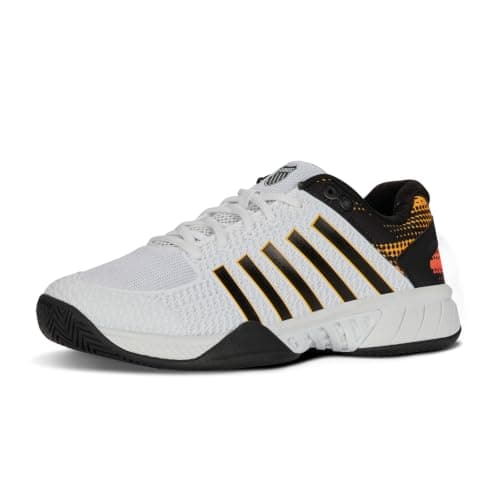
K-Swiss Express Light — the durability pick. A pickleball-specific court shoe with a reinforced toe drag guard, which is the single feature most directly tied to how long a pair survives, plus a stable lateral support platform for the pushes that wear an outsole smooth. It is our overall shoe pick and the one to buy if you play both indoors and out.
| Type | Pickleball-specific court shoe |
|---|---|
| Upper | Lightweight, breathable |
| Support | Stable lateral support platform |
| Durability | Reinforced toe drag guard |
| Best for | One do-it-all shoe, indoor and outdoor |
Skechers Viper Court Pro 2.0 — the one that stays comfortable longest. The Arch Fit contoured footbed and a cushioned midsole mean this shoe reaches the end of its outsole life before it reaches the end of its comfort life, which is the right way round. If your shoes currently start hurting before they look worn, this is the fix.
| Type | Pickleball-specific court shoe |
|---|---|
| Insole | Skechers Arch Fit contoured footbed |
| Midsole | Cushioned |
| Outsole | Court outsole with lateral support |
| Best for | Comfort-first players and long sessions |
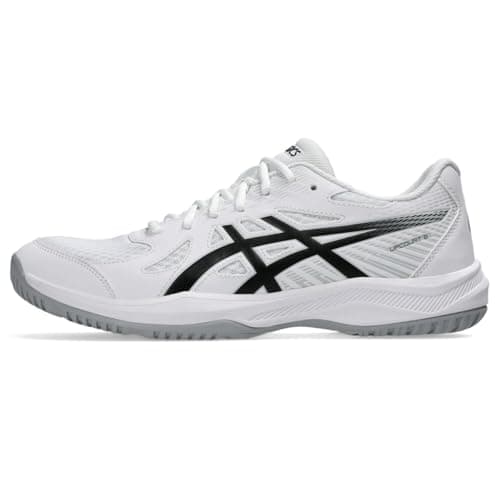
ASICS Upcourt 6 — cheap enough to replace on schedule. An indoor court shoe with a gum-style non-marking outsole on a low, wide, lateral-stable platform. The gum outsole is soft, so this is an indoorshoe and will not survive concrete — but at its price you can replace it every few months without flinching, which for a frequent indoor player is a better strategy than nursing an expensive pair.
| Type | Indoor court (volleyball) |
|---|---|
| Outsole | Gum-style non-marking indoor rubber |
| Platform | Low, wide, lateral-stable |
| Fit | Standard; women's version also sold |
| Best for | Indoor pickleball on wood or sport tile |
The bottom line
Count sessions, not months. One session a week is about a year; two is four to six months; three to five is two to three months, and outdoor play pushes every one of those to the early end. Then check the sole: if the tread under the ball of your foot has gone smooth, or you have started slipping on a clean court, replace them now rather than at the end of the season. A worn outsole is the cheapest cause of a rolled ankle in this sport, and court shoes are the one piece of gear where buying early is the frugal choice. If you are shopping now, start with best pickleball shoes.
Frequently asked questions
How long do pickleball shoes last?
About a year if you play once a week, four to six months at twice a week, and two to three months at three to five times a week - those are K-Swiss's own figures as reported by Selkirk. Outdoor play on concrete pushes every one of those ranges to its early end, because an acrylic-coated concrete surface abrades an outsole far faster than indoor wood or sport tile does.
How do I know when to replace my pickleball shoes?
Four signs: the tread has gone smooth under the ball of the foot or along the outside edge; you have started slipping on a clean court; the midsole foam stays dented when you press it and shows deep permanent creasing; or something hurts after a session that never used to. The slipping one matters most - that is an ankle-injury risk, not a comfort complaint.
Do pickleball shoes wear out faster outdoors?
Yes, substantially. Outdoor courts are concrete or asphalt with an acrylic coating, which is abrasive; indoor courts are wood or sport tile, which is not. A soft gum-rubber indoor outsole in particular will disappear on concrete, which is why an indoor shoe should not be worn outdoors. If you play both, buy a shoe built for outdoor durability or own two pairs.
Can I use running shoes instead and replace them less often?
No - and it is the wrong question, because running shoes are not safe for this. They are built for forward motion with a soft, high midsole and no lateral support, which is exactly the recipe for a rolled ankle in a game of sudden sideways pushes. It is also not a durability win, since a running outsole is not built for court abrasion. Our pickleball shoes vs tennis shoes guide covers what to look for instead.
Does replacing the insole extend the life of pickleball shoes?
It fixes comfort and arch support, not lifespan. A new insole cannot restore grip to a smooth outsole or rebound to a compressed midsole, which are the two things that actually end a court shoe's life. Treat an aftermarket insole as a fit upgrade for a shoe you are keeping, not as a way to get another season out of a worn pair.
Why does my toe always wear out first?
You are dragging it, almost certainly on serves or when reaching for volleys, and most players who do this have no idea. It is worth correcting for its own sake, and it will add months to every pair of shoes you buy. In the meantime, look specifically for a shoe with a reinforced toe drag guard - the K-Swiss Express Light has one, and it is the single feature most directly tied to how long a court shoe survives.
Sources
Keep reading
Upgrading your paddle or gearing up to play?
See how we pick, then dig into the paddle roundups and buying guides — honest picks from someone who actually plays, with no inventory to move.