Buying Guide
How Long Do Pickleball Paddles Last?
A paddle stops performing long before it visibly breaks, and most players play on a dead one for months. Here is the realistic lifespan, the four failure modes, and the test that tells you.
The short answer
A pickleball paddle lasts about one to three years for a recreational player and three to nine months for a competitive one. That is a wide range because lifespan depends almost entirely on how often you play and on what the paddle is made of, not on the calendar.
The more useful number is sessions, not years. A modern thermoformed carbon paddle gives most of its performance for roughly 150 to 300 hours of play. Someone playing twice a week hits that in about a year; someone playing five times a week and competing hits it in four to six months. Cheap fiberglass paddles last longer in terms of not breaking, because they had less performance to lose in the first place.
The thing almost nobody realizes: the face dies before the core does. A raw carbon surface loses its grit gradually, and your spin drops with it, long before anything cracks or sounds wrong. Most players never notice, because the decline is slow enough to feel like their own form.
The four ways a paddle dies
1. The face loses its texture. This is the most common and the most invisible. The spin on a raw carbon or gritty paddle comes from a microscopically rough surface, and that surface fills with ball residue, court dust and oil from your hands, then slowly wears smooth. Your topspin drives flatten out and your third-shot drops stop dipping. Cleaning restores a surprising amount of it; sanding does not, and voids approval.
2. The core softens.Every impact compresses the honeycomb or foam core slightly, and over thousands of hits the cells deform permanently. A dead core sounds dull and plays with less pop and a smaller effective sweet spot. This is the failure mode that competitive players describe as the paddle "going soft", and it is also why an 8-month-old flagship can play worse than a new budget paddle.
3. Delamination.The face separates from the core, usually at the top edge, and the paddle becomes a trampoline — often playing better for a while, which is why it is a banned condition rather than just a defect. This is a thermoformed-paddle problem specifically and it has its own full write-up in pickleball paddle delamination, explained.
4. Physical damage. Edge guard separation, a cracked face from a paddle clash or from being sat on in a car, water ingress through an unsealed handle. This is the only failure mode most players actually look for, and it is the least common.
Lifespan by how often you play
These are realistic working ranges based on construction type and play frequency, not manufacturer claims. Treat them as the point at which performance has meaningfully dropped, not the point at which the paddle breaks.
| How often you play | Budget fiberglass | Carbon, cold-pressed | Thermoformed carbon / foam |
|---|---|---|---|
| Once a week or less | 2-3 years | 2-3 years | 18 months - 2 years |
| Two or three times a week | 1-2 years | 12-18 months | 9-15 months |
| Four or five times a week | About a year | 8-12 months | 6-9 months |
| Daily, plus tournaments | 6-9 months | 5-8 months | 3-6 months |
Two things stand out. First, premium paddles do not last longer — they usually last less. Thermoformed construction with foam-injected perimeters is stiffer and stressed harder, and the high-grit faces that make modern paddles special are exactly the part that wears. You are paying for performance, not durability. Our thermoformed vs cold-pressed guide explains the construction difference.
Second, cheap paddles have a flatter decline. A smooth fiberglass face never had much grit to lose and a thick cold-pressed core deforms slowly, so a $45 paddle plays similarly at month 24 to how it played at month 2. That is a genuine argument for the under-$75 list if you play rarely.
How to tell if yours is done
Four checks, in order of how often they find the problem.
The thumbnail test, for the face.Drag a thumbnail across the face. A healthy raw carbon surface catches and feels like fine sandpaper. If it feels slick, clean it properly first — most "worn" faces are actually dirty. If it still feels slick after cleaning, the grit has gone and your spin ceiling has dropped permanently.
The tap test, for the core and for delamination.Tap gently across the face with a knuckle, working outward from the center. A healthy paddle sounds consistent everywhere. A dead or softening core sounds dull and lifeless. A rattly, hollow or noticeably different note in one area — usually near the top edge — means the face has separated from the core, and that paddle is not legal for sanctioned play.
The edge guard check. Run a finger around the edge guard looking for lifted or separated sections. A lifting edge guard lets moisture into the core, which accelerates everything else.
The honest performance check.Have your drives been landing shorter and flatter? Are your dinks sitting up? Does the paddle feel quieter than you remember? If two of those are true and the paddle is a year old, the paddle is the reason — not your form.
How to make a paddle last longer
Most of what shortens a paddle's life is storage and cleaning, not play.
Clean the face every few sessions.This is the single highest-return habit, because most lost grit is actually ball residue and dust, and it comes off. A dedicated carbon cleaning block does it without abrasion — sandpaper or a scouring pad removes surface material, which both ruins the face and voids USA Pickleball approval. The full routine is in paddle care and cleaning.
Never leave it in a car. Heat is what delaminates paddles. A car interior in summer gets far hotter than the adhesives in a thermoformed paddle were designed for, and a few hours of that does more damage than a month of play.
Use the cover, and a bag with a paddle compartment. Face-to-face contact with another paddle, keys or a water bottle is how faces get scratched. Our best pickleball bags roundup covers bags with proper paddle sleeves.
Stop using it as a ball scoop. Dragging the edge guard along concrete to pick balls up is the most common cause of edge guard separation, and it is entirely avoidable.
Rotate two paddles if you play most days. Cores recover slightly between sessions. Two paddles alternating last noticeably longer than one paddle doing twice the work, and you get a spare when one dies mid-tournament.
What to buy when it is done
One product to extend the life of the paddle you have, and three sensible replacements at three price points.
Professor Pickleball Carbon Cleaner— who it is for: anyone with a raw carbon paddle. Buy this before you buy a new paddle. It is an eraser-style block that lifts residue out of a textured carbon face and restores a lot of the grit, it fits in a bag pocket, and it costs a fraction of a new paddle.
| Type | Paddle eraser / cleaner |
|---|---|
| For | Raw carbon fiber faces |
| Benefit | Restores surface grit and spin |
| Size | Fits in a bag pocket |
| Best for | Any player with a carbon paddle |
Selkirk SLK Evo Control— who it is for: the player replacing a dead paddle who does not want to spend much. A carbon face over a control-tuned polymer core in a widebody Max shape, under $100, from the brand with the best warranty support in the category — which is the thing you care about having just had a paddle die.
| Surface | Carbon fiber |
|---|---|
| Core | Control-tuned polymer |
| Shape | Widebody (Max) |
| Line | Selkirk SLK (sub-$100 tier) |
| Best for | A forgiving carbon replacement under $100 |
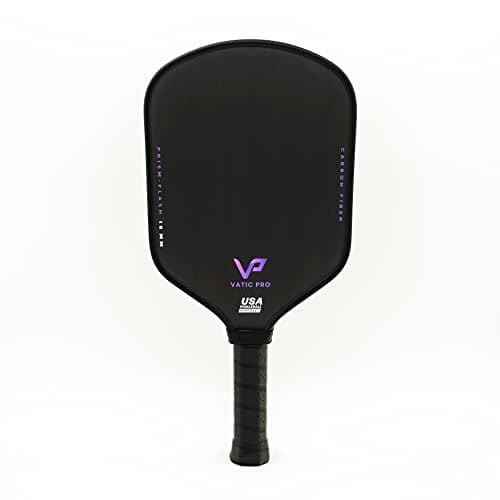
Vatic Pro Prism Flash 16mm— who it is for: the player who wants modern construction and expects to replace it again. Raw T700 carbon over a 16mm core with foam-injected walls, around $100, with a cover included. If your paddles die in 9 to 12 months regardless, buying a $100 paddle you replace annually beats a $230 one you nurse.
| Surface | Raw T700 carbon fiber (textured) |
|---|---|
| Core | 16mm with foam-injected walls |
| Shape | Elongated |
| Extras | Includes paddle cover |
| Best for | Best construction per dollar |
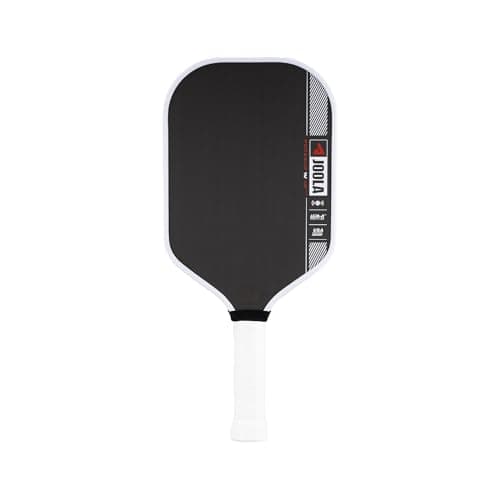
JOOLA Perseus 16mm CAS— who it is for: the player upgrading rather than just replacing. A hybrid Aero Curve shape, 16mm core and a Charged Surface carbon face, and the paddle we recommend most often across this site. More options on best paddles under $200.
| Surface | Charged Surface (CAS) carbon fiber |
|---|---|
| Core | 16mm polypropylene honeycomb |
| Shape | Hybrid / Aero Curve |
| Grip | Feel-Tec Pure |
| Certification | USA Pickleball approved |
The bottom line
Expect one to three years from a paddle if you play once or twice a week, and six to nine months if you play most days — with premium thermoformed paddles at the short end of both ranges rather than the long end. Run the thumbnail test and the tap test twice a year. And before you replace anything, clean the face properly with a carbon cleaner: a genuinely large share of "worn-out" paddles are just dirty ones.
Frequently asked questions
How long do pickleball paddles last?
About one to three years for someone playing once or twice a week, and roughly three to nine months for a competitive player training most days. In hours of play, a modern thermoformed carbon paddle gives most of its performance for about 150 to 300 hours. Premium paddles generally last less than cheap ones, because high-grit faces and stiff thermoformed construction are stressed harder.
Do pickleball paddles wear out?
Yes, in four ways. The face loses its texture, which quietly costs you spin; the core softens as its cells deform, which costs pop and sweet spot; thermoformed paddles can delaminate, which is a banned condition; and physical damage like edge guard separation or a cracked face can happen at any time. The first two are gradual enough that most players never notice them.
How do I know when my pickleball paddle is dead?
Clean it first, then drag a thumbnail across the face - a healthy raw carbon surface catches like fine sandpaper, and a slick one has lost its grit permanently. Then tap gently across the face with a knuckle: a dull, lifeless sound means the core has softened, and a rattly or hollow note in one area means delamination. If your drives have flattened and your dinks sit up, that confirms it.
Can you restore a pickleball paddle's spin?
Partly, and it is worth trying before replacing the paddle. Much of what feels like a worn face is ball residue, court dust and hand oil filling the surface texture, and a dedicated carbon cleaning block lifts that out without removing material. What you must not do is sand or scour the face - that removes surface material, permanently ruins the texture, and voids USA Pickleball approval.
Do expensive pickleball paddles last longer?
Usually the opposite. Thermoformed construction with foam-injected perimeters is stiffer and under more stress, and the high-grit faces that make premium paddles worth buying are exactly the part that wears out. You are paying for performance, not longevity. If you play often and durability is your priority, a cold-pressed paddle you replace annually is the better economics.
Should I own two pickleball paddles?
If you play most days, yes. Cores recover slightly between sessions, so two paddles alternating last noticeably longer than one paddle doing all the work - and you have a spare the day one delaminates mid-tournament. For a once-a-week player it is unnecessary; a second paddle is a reasonable thing to buy when the first one is halfway through its life rather than at the start.
Sources
Keep reading
- Pickleball paddle care and cleaning →Rally & Dink
- Pickleball paddle delamination, explained →Rally & Dink
- Thermoformed vs cold-pressed paddles →Rally & Dink
- How much does a pickleball paddle cost? →Rally & Dink
- Best pickleball paddles under $200 →
- Do expensive pickleball paddles play better? →Rally & Dink
Upgrading your paddle or gearing up to play?
See how we pick, then dig into the paddle roundups and buying guides — honest picks from someone who actually plays, with no inventory to move.