Court Gear Roundup
The Best Pickleball Paddle Covers and Cases in 2026
Most things sold as a "paddle cover" only cover the face. That is usually the right answer - but only if you know it before you buy. Six picks across sleeves, two-paddle covers and hard travel cases, plus the sizing math nobody publishes.
The short answer
Quick picks
| # | Product | Best for | Score | Price |
|---|---|---|---|---|
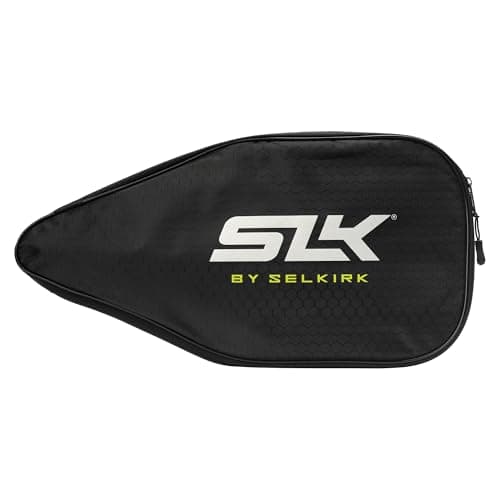
| 01 | Selkirk Sport SLK Paddle Cover The only pick here from a brand with real standing in the sport - soft terry interior, fits all paddle shapes. | Best overall | 4.4/5 | $11.99Amazon |
| 02 | 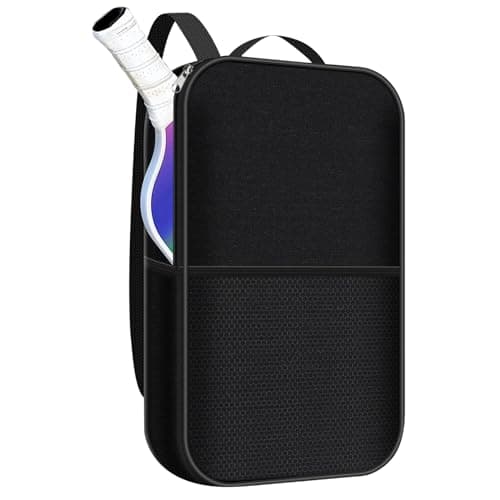 CATOSUM Paddle Cover (2 paddles, 4 balls) A zippered cover that takes two paddles, four balls and an accessory pocket. | Best for two paddles | 4.2/5 | $20.15Amazon |
| 03 | 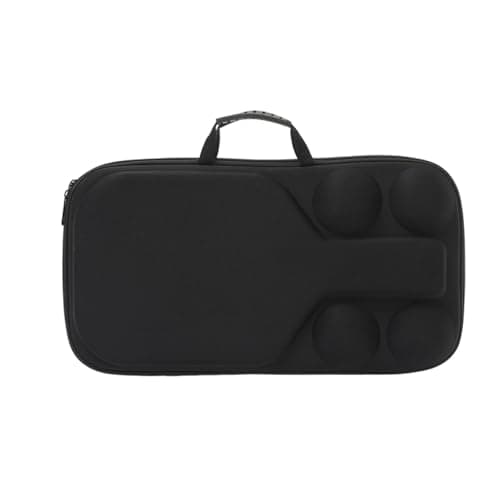 EVA Hard Shell Paddle Case A rigid EVA shell for two paddles and four balls - crush protection a sleeve cannot give you. | Best hard shell | 4.1/5 | $20.63Amazon |
| 04 | 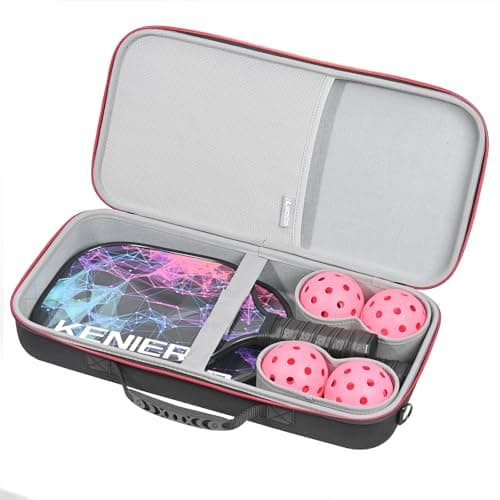 RLSOCO Pickleball Paddles Travel Bag A hard protective case for two paddles and four balls, built for luggage rather than a gear bag. | Best for travel | 4.0/5 | $35.99Amazon |
| 05 | 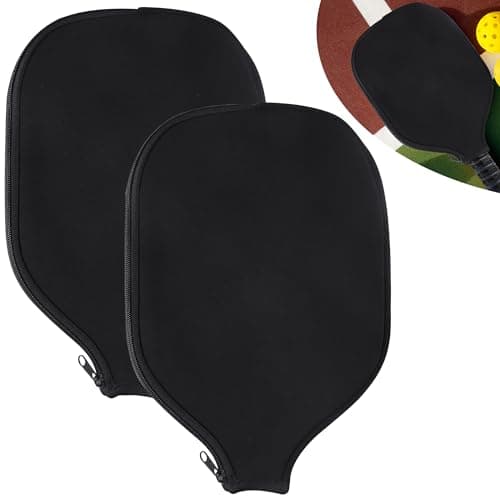 AEXHOT Neoprene Paddle Covers (2-pack) Two neoprene sleeves with published 8.26 by 11.8 inch dimensions - rare honesty in this category. | Best value | 3.9/5 | $11.99Amazon |
| 06 | 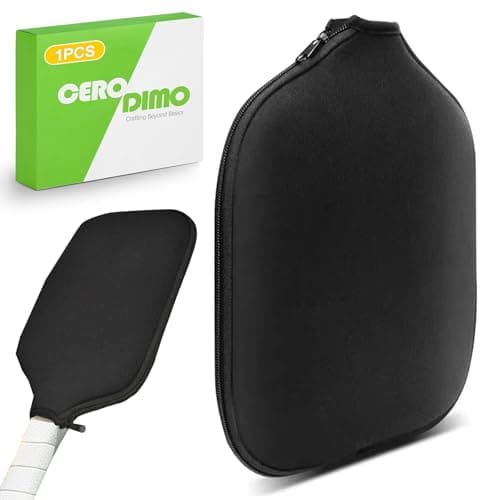 CeroDimo Neoprene Paddle Sleeve Under eight dollars, zippered, and the listing states it fits standard and elongated paddles. | Cheapest single sleeve | 3.7/5 | $7.39Amazon |
#ad · Live prices from Amazon as of November 14, 2026; where we have no verified live price we show none. We may earn a commission — see our affiliate disclosure.
The short answer
For one paddle and a gear bag, buy the Selkirk SLK Paddle Cover. It costs about twelve dollars, it has a soft terry interior rather than bare nylon against your face grit, and it is the only pick on this page from a company with actual standing in pickleball.
If you carry two paddles, the CATOSUM cover takes both plus four balls for about twenty dollars. If you are putting paddles in checked luggage, skip sleeves entirely and get the RLSOCO hard travel case. And if you just want something cheap on the face, the CeroDimo sleeve is under eight dollars.
The one thing to know before you shop: almost everything sold as a "pickleball paddle cover" is a face sleeve that leaves the handle sticking out. That is genuinely the right product for most people, but a lot of buyers are expecting a full case and are surprised. The sizing section has the numbers that tell you which one you are looking at.
What a cover actually protects
A modern paddle costs somewhere between about a hundred and two hundred and fifty dollars, and the expensive part of it is a surface you cannot repair. That is the whole case for a twelve-dollar cover, and it is worth being precise about what the cover does and does not do.
It protects the grit.A raw carbon face works through microscopic surface texture — you are striking the weave itself rather than a finish printed over it, which is the mechanism explained in carbon vs fiberglass. Grit is what makes the ball bite, and grit is also what gets scraped off when a paddle rattles against keys, water bottles, shoes and another paddle's edge guard in a bag. That abrasion is entirely avoidable and a cover avoids it.
It protects the edges and the face from point loads.A dropped paddle, a bag put down hard, a paddle at the bottom of a pile — these are how faces get gouged and edge guards get lifted.
It keeps the face clean, which matters more than it sounds. A raw carbon face loaded with court dust and ball residue stops gripping long before it is genuinely worn, which is why our paddle care and cleaning guide treats wiping the face as routine maintenance rather than housekeeping.
The three kinds of paddle cover
These three products all get listed under the same search term and they solve different problems. Picking the wrong category is the actual buying mistake here, exactly as it is with court marking kits.
| Type | What it covers | Typical price | Buy it when |
|---|---|---|---|
| Face sleeve | The face and part of the throat. The handle stays out. | $7 - $13 | You want the face protected inside a gear bag. This is what most people need. |
| Full soft cover (1 - 2 paddles) | Whole paddles, usually with a ball pocket and a strap. | $15 - $25 | You carry two paddles, or you want to carry paddles without a full bag. |
| Hard case (EVA or molded) | Whole paddles in a rigid shell. | $17 - $40 | Checked luggage, a packed car, or paddles stored loose. |
A fourth option exists and is worth naming: for many players the right answer is not a cover at all but a bag with a dedicated paddle compartment, which keeps the face away from everything else without adding a second zipper to your routine. Our best pickleball bags roundup covers those, and if that is the direction you are going, buy the bag and skip this page.
The sizing math nobody publishes
Here is the arithmetic that makes this category legible. USA Pickleball caps a paddle's combined length plus width at 24 inches, with length alone capped at 17 inches — the rule our paddle shapes guide is built around. In practice that produces two common footprints:
| Standard / widebody paddle | About 16" long x 8" wide, with a 4.5 - 5.5" handle |
|---|---|
| Elongated paddle | About 16.5" long x 7.5" wide, usually with a 5.5" handle |
| Face and throat length | Roughly 10.5 - 12" once the handle is subtracted |
Now compare that against what the covers publish. The AEXHOT sleeves state 8.26 by 11.8 inches. A 16 inch paddle does not fit inside an 11.8 inch sleeve — which is not a defect, because that sleeve is designed to swallow the face and throat and leave the grip out. Another listing in this category states 9 by 12 inches, the same story. Any "paddle cover" whose stated height is under about 13 inches is a face sleeve, and if the seller publishes no dimensions at all, assume it is one too.
Two practical consequences. First, if you have an elongatedpaddle, width is the thing to check rather than height — a 7.5 inch paddle slides into an 8.26 inch sleeve easily, but a wide 8 inch paddle with a thick edge guard is right at the limit of one. Second, if what you actually want is the grip protected too, you need a full cover or a hard case from the categories above, not a cheaper sleeve.
How we picked
Three rules, applied before anything was written.
It had to be live and in stock. Every pick was checked against Amazon on the day of publication and returned a real price and real availability. One listing was excluded on that check and is named here rather than quietly dropped: the Selkirk Premium PU Leather Paddle Cover returned a blank availability, so it is not a pick even though it is a plausible product from a brand we rate.
Each slot had to be a different decision. Six products covering all three categories above, across roughly seven to thirty-six dollars, with single and two-paddle capacities and both soft and rigid shells.
Specs come from the listing, and gaps are stated as gaps.This category is dominated by unbranded marketplace sellers who publish almost nothing about materials, thickness or construction. Where a listing states a figure we quote it; where it does not, the spec table below says "not published on the listing". We have not destructively tested any of these, and no durability claim here is presented as measured. Our method is on how we review.
At a glance
| Product | Type | Capacity | Closure | Best for |
|---|---|---|---|---|
| Selkirk SLK Paddle Cover | Face sleeve | 1 paddle | Zipper | Overall - soft terry interior, known brand |
| CATOSUM Paddle Cover | Full soft cover | 2 paddles + 4 balls | Zipper | Carrying two paddles with an accessory pocket |
| EVA Hard Shell Case | Hard case | 2 paddles + 4 balls | Zipper | Crush protection inside a bag or car |
| RLSOCO Travel Bag | Hard case | 2 paddles + 4 balls | Zipper | Checked luggage and air travel |
| AEXHOT 2-pack | Face sleeve | 1 paddle each, 2 included | Zipper | Two paddles, or a spare, with published dimensions |
| CeroDimo Sleeve | Face sleeve | 1 paddle | Zipper | The cheapest sensible option |
Best overall: Selkirk Sport SLK Paddle Cover
Who it is for: almost everyone. One paddle, a gear bag, about twelve dollars.
This is the pick because of one detail in the listing: a soft terry fabric interior. Everything else in this category lines the inside with the same nylon or neoprene it uses outside, and a raw carbon face sliding in and out of a slightly abrasive liner twice a session is a slow version of the problem the cover exists to solve. Terry is the correct material for the job. The listing also states it fits all paddle shapes and uses an easy-access zipper.
| Type | Face sleeve, 1 paddle |
|---|---|
| Interior | Soft terry fabric (the listing's description) |
| Closure | Easy-access zipper |
| Fit | Stated to fit all paddle shapes |
| Exterior material | Not published on the listing |
| Dimensions | Not published on the listing |
What I like: it is from Selkirk, a company that manufactures paddles in the United States and has a warranty operation and a reputation to protect, which is worth a dollar or two over an anonymous seller on an item you will handle every session. The terry lining is the right call and nobody else makes it.
What gives me pause: Selkirk publishes no dimensions for it, so "fits all shapes" is a claim rather than a measurement — if you run a wide 8 inch paddle with a thick edge guard, that is the one case where you want numbers and there are none. There is no ball pocket and no strap, so this is a cover and nothing else. And it is a single-paddle product: if you carry two, you are buying two.
Best for two paddles: CATOSUM Paddle Cover
Who it is for: the player who turns up with two paddles and no bag, or who wants one zippered thing that holds the whole kit.
The listing states it takes two paddles and four balls with an additional accessory pocket, and describes the shell as waterproof with a zipper closure. At around twenty dollars that is a cover and a minimal bag in one object, and it is the reason a lot of recreational players never buy a proper gear bag at all.
| Type | Full soft cover |
|---|---|
| Capacity | 2 paddles + 4 balls, plus an accessory pocket |
| Closure | Zipper |
| Shell | Described as waterproof on the listing |
| Material and thickness | Not published on the listing |
| Interior lining | Not published on the listing |
What I like: the capacity is the right capacity. Two paddles and four balls is what doubles actually needs, and the pocket takes the overgrip, keys and phone that otherwise end up loose against a paddle face. Carrying both paddles in one compartment also means they are not knocking into each other inside a larger bag.
What gives me pause: two paddles in one soft compartment means two faces in contact with each other unless you sleeve them individually, which somewhat undoes the point — face to back is fine, face to face is not. "Waterproof" on an unbranded listing is a claim with no material or rating behind it, so treat it as water-resistant. And nothing about the padding is published, so this will not protect a paddle from being crushed.
Best hard shell: EVA Hard Shell Paddle Case
Who it is for: the player whose paddles ride loose in a car, under other gear, or in a bag with a laptop in it.
EVA is the semi-rigid foam used for camera and headphone cases, and it is the cheapest way to get genuine crush protection rather than scratch protection. The listing states a rigid EVA shell holding two paddles and four balls, with a carry handle and a zipper closure. That is a meaningfully different product from a sleeve and it costs about the same as the CATOSUM.
| Type | Hard case |
|---|---|
| Shell | EVA hard shell (from the listing) |
| Capacity | 2 paddles + 4 balls |
| Features | Carry handle, zipper closure |
| Brand | Not stated on the listing |
| Interior lining and dimensions | Not published on the listing |
What I like: this is the category most players do not know exists and the one that actually prevents the expensive failure. A scraped face is cosmetic; a cracked edge guard or a creased face is the end of the paddle. For anyone who throws a bag into a trunk, the extra few dollars over a sleeve is the best money on this page.
What gives me pause: no brand is named on the listing, which means no accountability and no continuity — the identical case may appear under three seller names next month. Hard cases are also bulkier and heavier than sleeves and do not flex into a packed bag, and the seller publishes nothing about the interior lining, so sleeve your paddles inside it if the face matters to you. Note also that a rigid shell in a hot car is still a hot car; see the callout above.
Best for travel: RLSOCO Pickleball Paddles Travel Bag
Who it is for: anyone putting paddles into checked luggage, or shipping one.
This is the most protective product on the page and the most expensive, at around thirty-six dollars. The listing describes a hard protective case holding two paddles and four balls, sold as a case only, and it names JOOLA, Selkirk SLK and Franklin paddles as the fit — which is a more useful compatibility statement than "universal", because it tells you the seller has at least measured against real paddles.
| Type | Hard case (case only - no paddles included) |
|---|---|
| Capacity | 2 paddles + 4 balls |
| Stated fit | JOOLA, Selkirk SLK, Franklin Sports and most pickleball paddles |
| Closure | Zipper |
| Shell material and thickness | Not published on the listing |
| Stock | Listed with limited units on the day we checked |
What I like: checked luggage is the one scenario where paddle damage is both likely and entirely out of your hands, and this is the product for it. Naming specific paddle brands in the fit statement is the single most buyer-useful thing any listing in this category does.
What gives me pause: it is three times the price of the Selkirk sleeve and solves a problem most players have a few times a year rather than every session. The listing is explicit that it is a case only, which it should not need to be, and the stock was limited when we checked, so this one may not be there when you look. If you travel with paddles once a year, a hard case in a suitcase surrounded by clothes is doing much the same job for free.
Best value: AEXHOT Neoprene Paddle Covers (2-pack)
Who it is for: a household with two paddles, or a player who wants a spare sleeve in the car.
Two neoprene zippered sleeves for about thirteen dollars, and — unusually for this category — the listing publishes its dimensions: 8.26 by 11.8 inches, and states the fit as USAPA standard paddles. That one number is worth more than any marketing copy on this page, because it lets you check your own paddle against it before buying instead of after.
| Type | Face sleeve, 2 included |
|---|---|
| Dimensions | 8.26" x 11.8" (stated on the listing) |
| Material | Neoprene |
| Closure | Zipper |
| Stated fit | USAPA standard pickleball racquets |
| Interior lining | Not published on the listing |
What I like: published dimensions, a sane material and two of them. Neoprene also has a little give, which is what you want when a paddle has a chunky edge guard. On a per-sleeve basis this is the cheapest sensible thing here.
What gives me pause: at 11.8 inches tall this is unambiguously a face sleeve, so the handle and grip are unprotected — fine in a bag, not fine if you were hoping for a case. At 8.26 inches wide it is a close fit on a full 8 inch widebody paddle and a comfortable one on an elongated 7.5 inch paddle. And neoprene against raw carbon is more abrasive than terry, so this is a step down from the Selkirk on the one metric that matters most.
Cheapest sleeve: CeroDimo Neoprene Paddle Sleeve
Who it is for: the player who has decided a cover is worth having but not worth thinking about.
Under eight dollars, neoprene, zippered, and the listing states explicitly that it fits standard and elongated paddles— a distinction most sellers in this category do not bother to make and the one that actually determines whether it fits your paddle.
| Type | Face sleeve, 1 paddle |
|---|---|
| Material | Neoprene |
| Closure | Zipper |
| Stated fit | Standard and elongated paddles |
| Dimensions | Not published on the listing |
| Interior lining | Not published on the listing |
What I like: it is the lowest-friction purchase on the page. At this price, a cover that prevents one gouge has paid for itself several times over, and naming both paddle shapes is a small sign the seller knows what they are selling.
What gives me pause: no published dimensions, so the fit claim is unverifiable, and no brand continuity to speak of. Neoprene against a raw carbon face again, with no terry lining. And at this price the stitching and zipper are where the cost came out — expect to replace it rather than keep it, and if your paddle cost two hundred dollars, spending four more on the Selkirk is the better trade.
Who doesn't need one
Three groups, and we would rather say so than sell six covers to everybody.
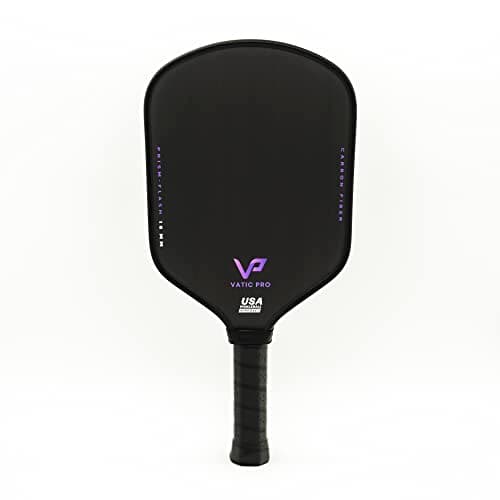
Anyone whose paddle came with one.Several paddles ship with a cover in the box — the Vatic Pro Prism Flash listing names one explicitly, and it is not the only paddle that does. Check the box before you buy anything on this page.
Anyone with a bag that has a paddle compartment. A lined, separated compartment does the same job without a second zipper, and if you are buying a bag anyway, our best pickleball bags roundup is the better spend.
Anyone playing a fiberglass or graphite paddle under fifty dollars.The case for a cover is the case for protecting raw carbon grit. On a cheap composite face there is much less to protect and the paddle is a consumable anyway — the money is better spent on better balls or a fresh overgrip.
The bottom line
Buy the Selkirk SLK cover if you have one paddle and want the one with a terry interior, the CATOSUM if you carry two paddles and balls, the EVA hard case if your paddles get crushed rather than scratched, the RLSOCO case if they are going in a suitcase, and the CeroDimo sleeve if you want this decision to cost under eight dollars.
And measure before you click. In a category where half the sellers publish no dimensions at all, the ones that do are telling you something useful about themselves.
A cover solves abrasion. If what you actually need is somewhere to put everything, our best pickleball bags under $50 page covers the same price band in bag form.
Frequently asked questions
Do pickleball paddle covers actually do anything?
Yes, for one specific job: protecting the face from abrasion in a bag. A raw carbon face grips the ball through microscopic surface texture, and that texture gets scraped off by keys, bottles, shoes and other paddles' edge guards. A cover prevents that. It will not slow the grit wear that comes from playing, and it will not protect a paddle from heat - a hot car is still the fastest way to ruin a paddle, cover or no cover.
Do paddle covers cover the handle?
Usually not. Most products sold as pickleball paddle covers are face sleeves: they swallow the face and part of the throat and leave the grip sticking out. You can spot one from the stated height - a paddle is about 16 inches long, so any cover whose listed height is under roughly 13 inches is a face sleeve. If you want the grip protected too, buy a full cover or a hard case.
What size paddle cover do I need?
Check width rather than height. Standard and widebody paddles run about 16 by 8 inches; elongated paddles are about 16.5 by 7.5 inches. An 8.26 inch wide sleeve is a close fit on a full 8 inch widebody paddle with a thick edge guard and a comfortable fit on an elongated one. USA Pickleball caps combined length plus width at 24 inches, so those two footprints cover nearly every paddle sold.
Is a hard case worth it for pickleball paddles?
It is if your paddles get crushed rather than scratched - loose in a car, under other gear, or in checked luggage. A sleeve stops abrasion; only a rigid shell stops a creased face or a cracked edge guard, which is the damage that actually ends a paddle. For a paddle that lives in a dedicated bag compartment, a hard case is more bulk than you need.
Can I put two paddles in one cover?
You can, and several covers are sold for exactly that, but put them back to face rather than face to face. Two raw carbon faces rubbing against each other inside one soft compartment is the same abrasion the cover was meant to prevent. If you carry two paddles regularly, either sleeve them individually inside a two-paddle cover or buy a bag with a divided paddle compartment.
Will a cover stop my paddle from delaminating?
No. Delamination is the face separating from the core, and it is driven by heat and by the stresses of play, not by anything a cover touches. A closed cover in a hot trunk can actually hold heat against the paddle for longer. The only real protection is not leaving a paddle in a car.
Sources
- Amazon listings for each pick - price, stock, stated capacity, materials and dimensions, checked 2026-10-27
- USA Pickleball - equipment standards (paddle maximum length 17in and combined length plus width 24in)
- Selkirk Sport - SLK paddle cover listing description (soft terry interior, fits all shapes)
- AEXHOT - 2-pack paddle cover listing (published 8.26in x 11.8in dimensions)
Keep reading
Upgrading your paddle or gearing up to play?
See how we pick, then dig into the paddle roundups and buying guides — honest picks from someone who actually plays, with no inventory to move.