Paddle Roundup
The Best HEAD Pickleball Paddles in 2026
HEAD has been building racquets since long before pickleball existed, and it brought a tennis company's engineering habits to the sport - including the naming. Here is which HEAD to buy at every price, and what the numbers and letters on the throat actually mean.
The short answer
Quick picks
| # | Product | Best for | Score | Price |
|---|---|---|---|---|
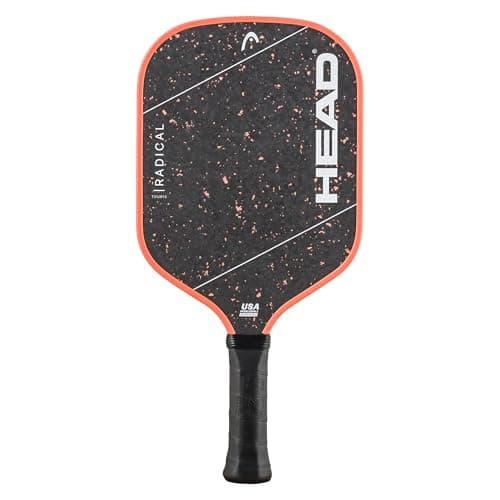
| 01 | HEAD Radical Tour 15 (2026) Thermoformed 15mm TRIFLEX core under a micro-forged raw carbon face, USAP approved and PBCoR .43 certified. | Best HEAD overall | 4.4/5 | $169.95Amazon |
| 02 | 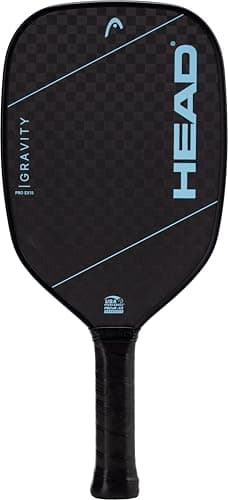 HEAD Gravity PRO EX15 (2026) TRIFLEX Precision core, 12K raw carbon face and a 5.5 inch handle in a hybrid 16.5 inch frame. | Best HEAD for control and reach | 4.3/5 | $199.95Amazon |
| 03 | 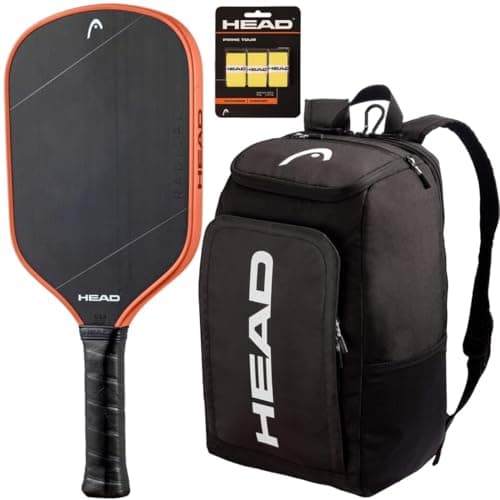 HEAD Radical Tour Raw EX Raw carbon at 8.1 oz with a slim 4 1/8 grip - rarely the best paddle in a comparison, frequently the best deal. | Best HEAD on a discount | 4.3/5 | $124.95Amazon |
| 04 | 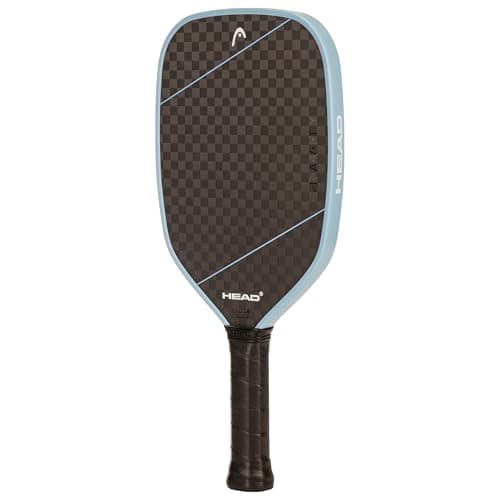 HEAD Gravity Tour EX (2025) A 17mm thermoformed core with foam sidewalls and a 12K carbon face, a generation behind and priced like it. | Best HEAD value | 4.1/5 | $71.74Amazon |
| 05 | 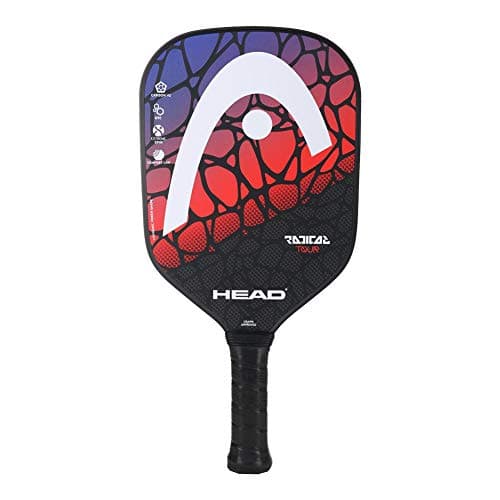 HEAD Radical Tour (graphite) A graphite face over a polymer honeycomb core for about forty-five dollars. | Best cheap HEAD | 3.6/5 | $45.49Amazon |
| 06 | 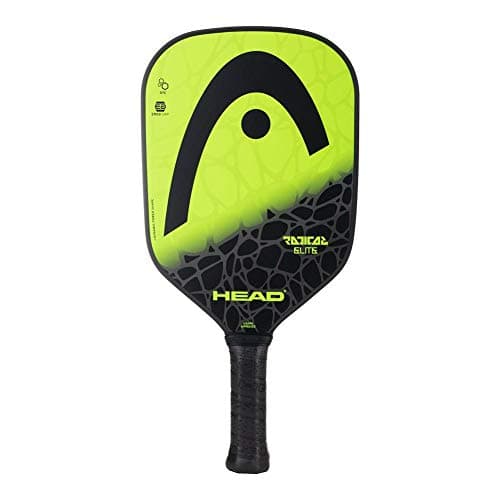 HEAD Radical Elite Fiberglass face, polymer honeycomb core - the HEAD you buy when the budget is the whole decision. | Cheapest HEAD | 3.3/5 | $44.95Amazon |
#ad · Live prices from Amazon as of November 14, 2026; where we have no verified live price we show none. We may earn a commission — see our affiliate disclosure.
The short answer
For most players shopping HEAD today, the paddle to buy is the Radical Tour 15 (2026). It is thermoformed, it has a micro-forged raw carbon face over HEAD's three-layer TRIFLEX core, and it is approved by USA Pickleball and certified at PBCoR .43 — which is the version of "legal everywhere" that actually matters in 2026.
If you want HEAD's control flagship and a longer handle, the Gravity PRO EX15 (2026) is the same construction philosophy pushed in the other direction. If you want a raw carbon HEAD for a lot less money, the Radical Tour Raw EX is the one we have reviewed in full, and it is on sale more often than it is not. And if forty-five dollars is the budget, the graphite Radical Tour is a real paddle rather than a toy.
The thing that makes HEAD genuinely hard to shop is not the paddles. It is that four years of model names sit on the same shelf at the same time, and the differences between them are encoded in a number and two letters. That is what the decoder below is for.
What HEAD is in pickleball
HEAD is a racquet-sports company first and a pickleball company second, and the order matters. It has been building tennis frames since long before pickleball had a professional tour, and the engineering habits show up in ways the newer direct-to-consumer paddle brands cannot match: published spec sheets, consistent grip shapes across a range, a real returns operation, and a model hierarchy borrowed wholesale from its tennis line.
The habits that do not transfer are also visible. HEAD arrived at modern paddle construction later than the specialists — our pickleball paddle brandsranking covers where it sits against the field — and for several years its paddles were conventionally built while CRBN, JOOLA and the value brands were already shipping thermoformed unibody frames. The 2025 and 2026 ranges close that gap. The older stock still on sale does not.
How to read a HEAD paddle name
A HEAD paddle name is four pieces of information jammed together with nothing to tell you where one ends. Once you can read it, the whole range makes sense in about ten seconds.
| Piece of the name | What it tells you | Example |
|---|---|---|
| The line (Radical, Gravity, Extreme) | The character. Radical is the all-court line, Gravity is the control line, Extreme is the older recreational line. | Gravity PRO EX15 |
| The tier (PRO, Tour, Team, Elite) | Where it sits in the hierarchy. PRO and Tour are the performance builds, Team and Elite are the budget builds. | Radical Tour 15 |
| The number (15, 17) | Core thickness in millimeters. | Radical Tour 15 = 15mm core |
| EX | Extended handle. HEAD lists the Gravity PRO EX15's handle at 140mm / 5.5in against the standard Radical Tour 15's 127mm / 5.0in. | Radical Tour EX15 |
| The year (2025, 2026) | The generation. Not cosmetic - construction changes between them. | Gravity Tour EX 2025 |
So Radical Tour EX15 2026 decodes as: all-court line, performance tier, extended handle, 15mm core, current generation. And Gravity Team EX decodes as: control line, budget tier, extended handle — a genuinely different paddle from the Gravity PRO despite sharing the first word. A half-inch of handle is not a cosmetic difference either; it changes what the paddle can do with a two-handed backhand and how fast it turns, which is the subject of our paddle handle length guide.
How we picked
Three rules, applied before any paddle was written up.
It had to be a live, in-stock HEAD listing. Every paddle on this page was checked against Amazon on the day of publication and returned a real price and real availability. HEAD has an unusually long tail of superseded model years still being sold through marketplace sellers; a paddle that could not be bought today is not here.
Each slot had to be a different decision, not a different colorway. Six paddles spanning about forty-five to two hundred dollars, covering both performance lines, both handle lengths, three core thicknesses and all three face materials HEAD currently sells. No two picks here are the same paddle with a different sticker.
Specs come from HEAD or its retailers, never from us.Where HEAD publishes a figure, we quote it and say whose figure it is. Where HEAD publishes nothing — and for the two cheap Radicals it publishes almost nothing beyond the face and core material in the listing title — this page says so instead of filling the gap. We have not run these paddles through instrumented testing; our method is on how we review.
At a glance
| Paddle | Core | Face | Handle | Best for |
|---|---|---|---|---|
| Radical Tour 15 (2026) | 15mm TRIFLEX, thermoformed | Micro-forged raw carbon (T700) | 5.0" standard | Overall, all-court |
| Gravity PRO EX15 (2026) | 15mm TRIFLEX Precision | 12K raw carbon | 5.5" extended | Control, reach, two-handed backhand |
| Radical Tour Raw EX | Conventional (not thermoformed) | Raw carbon fiber | Extended | Smaller hands, discount hunting |
| Gravity Tour EX (2025) | 17mm polypropylene, foam sidewalls | 12K carbon, rough texture | 5.5" extended | Value, thick-core control |
| Radical Tour (graphite) | Polymer honeycomb | Graphite | Not published | Cheap real paddle |
| Radical Elite | Polymer honeycomb | Fiberglass | Not published | Lowest price |
Best HEAD overall: Radical Tour 15 (2026)
Who it is for: the 3.5-plus player who wants one paddle that does everything and wants it to be legal at every event they will ever enter.
This is the paddle that finally makes HEAD a serious recommendation rather than a respectable one. It is thermoformed, built on the 15mm TRIFLEX core, and faced in what HEAD calls micro-forged raw carbon— the claim being an evenly forged surface, so that texture and spin response are consistent across the whole face rather than sharpest in the middle. HEAD lists the face material as T700 carbon.
| Core | 15mm TRIFLEX - PP honeycomb center, EPP foam perimeter, EVA outer layer (Pickleball Central's description) |
|---|---|
| Face | Micro-Forged Raw Carbon, T700 (HEAD's figure) |
| Construction | Thermoformed, edge guard included |
| Shape | Standard - 16.0" long x 7.5" wide |
| Handle | 5.0" / 127mm (HEAD lists this as the standard handle) |
| Grip | 4.125" circumference, Hydrosorb Pro |
| Weight | 8.3 oz average, 8.1 - 8.5 oz range (heavyweight on HEAD's own scale) |
| Balance point | 235mm (HEAD publishes this instead of a swing weight) |
| Certification | USAP approved, PBCoR .43 certified |
What I like: the PBCoR .43 certification is the thing to notice. Governing bodies now test what a face and core do togetherrather than just measuring the paddle, and a paddle carrying a current certification is one you will not have to replace when your league tightens its rules — the whole subject is in our guide to USA Pickleball approved paddles. The 15mm core is also the sensible middle: more dwell than a 14, quicker off the face than a 16, and HEAD's published dimensions make it a true standard shape rather than a stealth elongated one.
What gives me pause: at around a hundred and seventy dollars it is competing directly with flagship paddles from brands with far deeper player data behind them, and HEAD publishes a balance point rather than a swing weight, which makes it awkward to compare against anyone else's spec sheet — a problem we unpack in paddle swing weight. The grip is also 4 1/8 in, which is small; if you have larger hands you are building it up on day one. And HEAD describes the shape as widebody on its own site while the retailer lists 16.0 by 7.5 inches, which is a standard shape by most people's reckoning. We have flagged the discrepancy rather than picking a side.
Best HEAD for control and reach: Gravity PRO EX15 (2026)
Who it is for: the player who resets for a living, hits a two-handed backhand, or simply wants the longest handle HEAD will sell them.
Gravity is HEAD's control line and the PRO EX15 sits at the top of it. The core is TRIFLEX Precision— the three-layer idea with the foam in the middle and the honeycomb around it, which is the inverse of the Radical's stack — under a 12K raw carbon textured face. The frame is a hybrid 16.5 by 7.5 inches with a 140mm / 5.5 inch extended handle, which is where the EX in the name comes from.
| Core | 15mm TRIFLEX Precision - EPP foam center, PP honeycomb perimeter, EVA outer shell |
|---|---|
| Face | 12K raw carbon, textured (HEAD also lists a T700 carbon hitting surface) |
| Shape | Hybrid - 16.5" long x 7.5" wide (retailer figure) |
| Handle | 5.5" / 140mm elongated |
| Weight | 8.3 oz / 235 g (HEAD's heavyweight band) |
| Certification | Check the current approved list before tournament play |
What I like: this is a coherent design rather than a flagship assembled from marketing words. Everything about it points the same way — foam in the middle of the core damps the hit, the extra handle length gives a two-hander somewhere to live, and the extra half inch of frame buys reach at the kitchen line. If you came from tennis the grip shape will feel immediately familiar, which is the quiet advantage HEAD has over the specialists and the reason it shows up in our paddles for tennis players roundup.
What gives me pause: it is two hundred dollars, which puts it against the most scrutinized paddles in the sport. A 16.5 inch frame with a 5.5 inch handle is slow to turn in a hands battle at the kitchen, so doubles players who lose points in fast exchanges should look at our paddles for doublesinstead. And HEAD's own page and its retailer describe the face slightly differently — 12K raw carbon in one place, T700 in the other — which are not the same specification. We report both rather than choosing.
Best HEAD on a discount: Radical Tour Raw EX
Who it is for: players with smaller hands who want a raw carbon face and are willing to wait for a sale.
The Radical Tour Raw EX is the paddle we have already reviewed in full, and the summary holds up: a raw carbon face at 8.1 oz with a 4 1/8 inch grip, conventionally built rather than thermoformed, and on offer more weeks of the year than it is at list price. It is rarely the best paddle in any given comparison and it is frequently the best deal in one.
| Face | Raw carbon fiber |
|---|---|
| Weight | 8.1 oz |
| Grip circumference | 4 1/8" |
| Construction | Conventional - not thermoformed, no foam-loaded core |
| Category | Tournament paddle |
What I like: raw carbon at this money is still the single biggest upgrade available to a player moving off a composite paddle, because grit is what makes the ball bite — see carbon vs fiberglass. The weight is manageable and the balance is sane. For an improving 3.0 to 3.5 player this is a lot of paddle for a sale price.
What gives me pause: conventional construction means a smaller sweet spot than the thermoformed paddles above it, and than several of the picks in best thermoformed paddlesthat cost less. The 4 1/8 grip is too small for a lot of players out of the box — buildable, but a job you have to do, and our grip size guide explains the limits. And its list price is not its real price; if it is not discounted when you look, it is not the pick.
Best HEAD value: Gravity Tour EX (2025)
Who it is for:the player who wants a thick-core thermoformed control paddle and does not care that it is last year's model.
This is the most interesting listing in HEAD's range right now, because it is a genuinely modern paddle being cleared at a price the current generation does not go near. It is thermoformed, the core is 17mm polypropylene honeycomb with foam sidewalls, and the face is 12K carbonwith what one retailer bluntly classifies as a rough texture. Seventeen millimeters is thick even by control standards — our 14mm vs 16mm guide explains what each millimeter of core actually buys you.
| Core | 17mm polypropylene honeycomb with foam sidewalls, thermoformed |
|---|---|
| Face | 12K carbon fiber, rough texture |
| Shape | 16.5" long x 7.5" wide |
| Handle | 5.5" extended |
| Grip | 4 1/8" circumference, HydroSorb Pro |
| Weight | Retailers disagree - 8.6 oz average at one, 8.0 oz at another, 240 g at a third |
| Edge guard | 1/8" overlapping the face |
What I like: foam sidewalls plus a 17mm core is a specification that normally costs double this, and the combination is exactly what makes a reset land dead instead of floating. The extended handle is the same 5.5 inches as the Gravity PRO. For a control player on a budget this is the best thing HEAD currently sells per dollar.
What gives me pause: three retailers publish three different weights for this paddle, ranging from 8.0 oz to 8.6 oz. That is not a rounding difference — it is the gap between a midweight and a genuinely heavy paddle, and it changes who should buy it. Assume you may receive a heavy one. It is also a superseded model year, so stock is finite and will not be replaced: the listing showed fourteen units on the day we checked. And a 17mm core is genuinely muted; if you want the ball to come off the face, buy the Radical.
Best cheap HEAD: Radical Tour (graphite)
Who it is for: a new player who wants a real paddle from a real company for about forty-five dollars.
The listing tells you what this is and HEAD does not publish much more: a graphite face over a polymer honeycomb corewith HEAD's comfort grip. It is the old-school construction the whole category used before thermoforming arrived, and at this price that is not a criticism — it is what the price buys.
| Face | Graphite (from the listing title) |
|---|---|
| Core | Honeycomb polymer (from the listing title) |
| Grip | HEAD comfort grip |
| Other specs | HEAD publishes no weight, dimensions or handle length for this listing |
What I like: it is light, it is forgiving enough for a beginner, and it comes from a company that will still exist in three years if something goes wrong with it. That is worth more at this price than another line on a spec sheet. Compare it against the field in best paddles under $50.
What gives me pause: a graphite face does not grip the ball the way a raw carbon face does, so if spin is what you are after you will be disappointed and should save for the picks above. HEAD publishes no weight or dimensions for this listing, which means you cannot plan around it. And it is conventionally built, so the sweet spot is small — a beginner mis-hitting toward the edge will feel every one of them.
Cheapest HEAD: Radical Elite
Who it is for: someone buying a first paddle, a spare, or a loaner for visiting relatives.
The Radical Elite is the Radical Tour's cheaper sibling and the swap is the face: a fiberglass hitting surface instead of graphite, over the same honeycomb polymer core. Fiberglass is livelier and less controlled than graphite, which some beginners actually prefer because the ball goes further for less effort.
| Face | Fiberglass (from the listing title) |
|---|---|
| Core | Honeycomb polymer (from the listing title) |
| Grip | HEAD comfort grip |
| Other specs | HEAD publishes no weight, dimensions or handle length for this listing |
What I like: it is the cheapest way to own a paddle with a real brand behind it, and it is a far better object than the aluminum paddles that sell for the same money in multi-packs. As a second paddle in the bag for someone who turns up without one, it earns its shelf space.
What gives me pause: fiberglass is the least durable face material in common use and it loses its texture fastest; this paddle will feel noticeably worse after a season of outdoor play, which is the pattern we describe in how long pickleball paddles last. It is also the paddle a committed player outgrows quickest. If there is any chance you will still be playing in six months, buy one step up.
The generation problem
HEAD's biggest shopping hazard is not quality. It is that several model years are on sale simultaneously through different sellers, under names that differ by a single character, at prices that do not reflect which is which. On the day we checked, a 2022 Radical Tour and the 2026 Radical Tour 15 were both listed and about a hundred dollars apart — and nothing on the cheaper listing tells you it is four years old.
Two rules get you out of this cleanly. First, look for the year in the title. A HEAD paddle listing that names its model year is the current spec for that year; one that does not is usually older stock. Second, assume construction changed. The 2025 and 2026 paddles are thermoformed with layered cores and the earlier ones generally are not, so an older Radical at a lower price is not the same paddle at a discount — it is a different paddle. The difference is explained in thermoformed vs cold-pressed.
Who should skip HEAD entirely
Power players.Both of HEAD's current performance lines are built around control — layered cores that damp the hit, thick cores, foam where other brands put air. If you want the ball to leave the face hot, you are fighting the design intent. Start with best paddles for power instead.
Anyone shopping the hundred-dollar band on spec alone.At around a hundred dollars the value brands ship thermoformed unibody frames with foam-injected walls and raw carbon faces, and HEAD does not compete there on paper — best paddles under $100 is a fairer place to shop that budget. What HEAD offers instead is a returns operation, consistent grip shapes and a company that answers the phone. Decide which of those you are actually buying.
Players who need published swing weight and twist weight.HEAD publishes a balance point in millimeters and little else, which does not convert into the figures the rest of the category quotes. If you buy on measured numbers, HEAD will frustrate you — and the reasons the numbers do not convert are in paddle twist weight.
The bottom line
HEAD is now a genuinely good paddle company that is still easier to shop badly than well. Buy the Radical Tour 15 (2026) if you want the best HEAD for most players and want a current certification, the Gravity PRO EX15 (2026) if you play a control game with a long handle, the Gravity Tour EX (2025) if you want the most paddle per dollar in the range and can live with a superseded model year, and the graphite Radical Tour if forty-five dollars is the whole budget.
And whichever you buy, read the year in the title before you click. That one habit is worth more on this brand than any other advice on this page.
Frequently asked questions
Are HEAD pickleball paddles any good?
The current ones are. HEAD's 2025 and 2026 paddles are thermoformed with layered TRIFLEX cores and raw carbon faces, and the 2026 Radical Tour 15 is USAP approved and PBCoR .43 certified. HEAD's older paddles, which are still widely on sale, are conventionally built and are a different product - so the model year in the listing title matters more on this brand than on most.
What does EX mean on a HEAD pickleball paddle?
EX means an extended handle. HEAD lists the Gravity PRO EX15's handle at 140mm / 5.5 inches, against 127mm / 5.0 inches for the standard-handle Radical Tour 15. A longer handle gives a two-handed backhand somewhere to live and adds leverage, at the cost of how quickly the paddle turns in a hands battle.
What do the numbers in a HEAD paddle name mean?
The number is the core thickness in millimeters. A Radical Tour 15 has a 15mm core; a Gravity Tour EX 2025 has a 17mm core. The word before it is the tier - PRO and Tour are performance builds, Team and Elite are budget builds - and the first word is the line, with Radical the all-court family and Gravity the control family.
What is HEAD's TRIFLEX core?
TRIFLEX is HEAD's name for a core built from three materials rather than one. On the Radical Tour 15 its retailer describes a polypropylene honeycomb center with an EPP foam perimeter and an EVA outer layer. On the Gravity PRO EX15 the TRIFLEX Precision version is described with the foam in the center and the honeycomb around it. Same three materials, different order, different behavior.
Which HEAD pickleball paddle is best for beginners?
The graphite Radical Tour at around forty-five dollars. It is a graphite face over a polymer honeycomb core from a company with a real returns operation, which is the right trade at that price. If you already know you will keep playing, the Gravity Tour EX 2025 is a far better paddle for not much more money.
Is the HEAD Radical or the HEAD Gravity better?
They are built for different games. Radical is HEAD's all-court line and the 2026 Radical Tour 15 is the one to buy if you want a single paddle that does everything. Gravity is the control line - thicker cores, foam-centered TRIFLEX Precision construction and longer handles - and suits players whose game is resets, dinks and drops rather than drives.
Sources
- HEAD - Radical Tour 15 2026 product page (core thickness, shape, handle, weight, T700 face)
- HEAD - Gravity PRO EX15 2026 product page (TRIFLEX Precision, 140mm handle, 15mm core, 235 g)
- Pickleball Central - HEAD Radical Tour 15 2026 listing (TRIFLEX layer breakdown, dimensions, grip, USAP + PBCoR .43)
- Pickleball Central - HEAD Gravity PRO EX15 2026 listing (core stack, 16.5in x 7.5in frame)
- Pickleball Central - HEAD Gravity Tour EX 2025 listing (17mm core, foam sidewalls, 12K carbon, weight range)
- Amazon listings for each paddle - price, stock and stated specifications, checked 2026-10-27
Keep reading
Upgrading your paddle or gearing up to play?
See how we pick, then dig into the paddle roundups and buying guides — honest picks from someone who actually plays, with no inventory to move.