Paddle Roundup
The Best Pickleball Paddles Under $200 in 2026
Two hundred dollars is the price band where a paddle stops compromising. These are the six under-$200 paddles worth your money, and the honest reason each one exists.
The short answer
Quick picks
| # | Product | Best for | Score | Price |
|---|---|---|---|---|
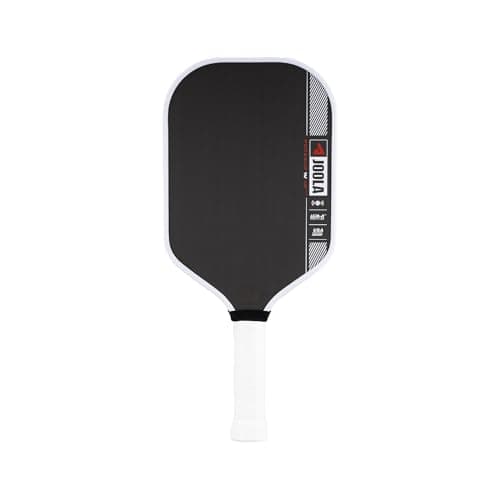
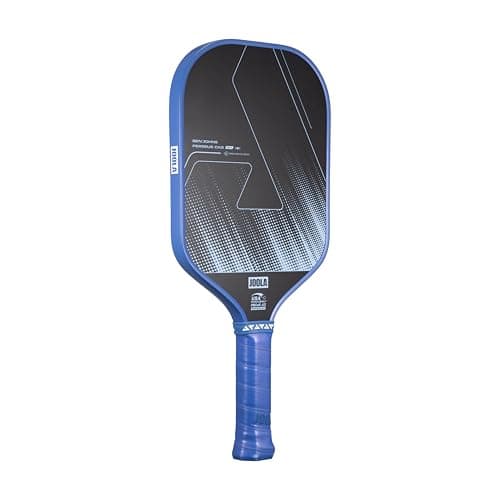
| 01 | JOOLA Perseus Pro IV 16mm A current flagship - Propulsion Core, Tech Flex Power carbon, UPA-A certified - well below the band ceiling. | Best overall under $200 | 4.8/5 | $149.95Amazon |
| 02 | 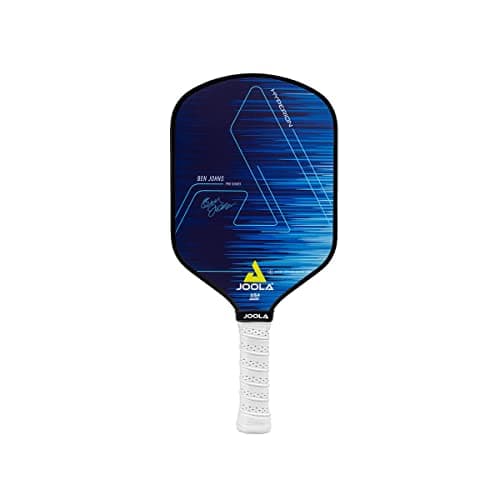 JOOLA Ben Johns Hyperion CAS 16 The high-grit CAS face that made spin paddles mainstream, now at the bottom of this band. | Best for spin | 4.7/5 | $119.95Amazon |
| 03 | 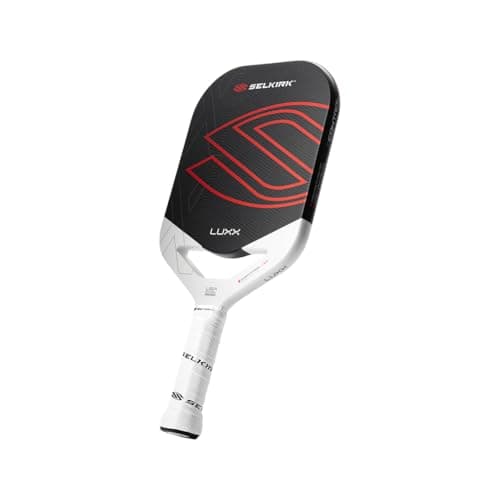 Selkirk LUXX Control Invikta A premium control line in the elongated Invikta shape - touch first, at the top of the band. | Best for the soft game | 4.6/5 | $199.99Amazon |
| 04 | 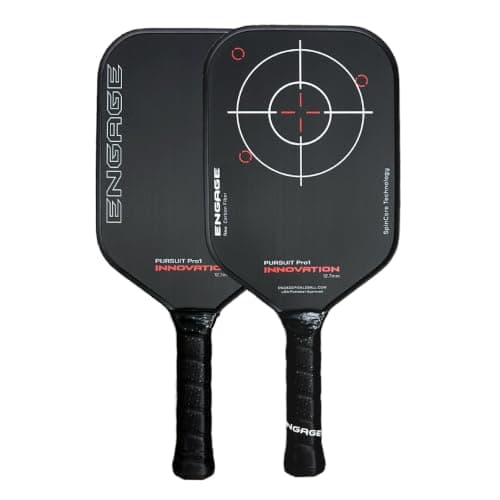 Engage Pursuit Pro1 A thin 12.7mm core and high-grit raw carbon - the most aggressive paddle here. | Best power and spin combination | 4.5/5 | $129.99Amazon |
| 05 | 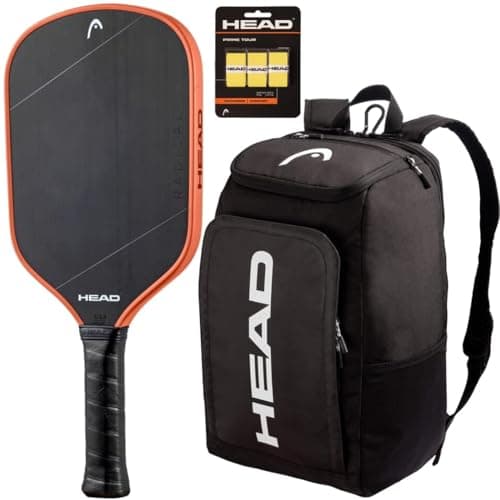 HEAD Radical Tour EX Raw Tournament-grade raw carbon from a legacy racquet brand, usually the cheapest real flagship here. | Best value in the band | 4.4/5 | $124.95Amazon |
| 06 | 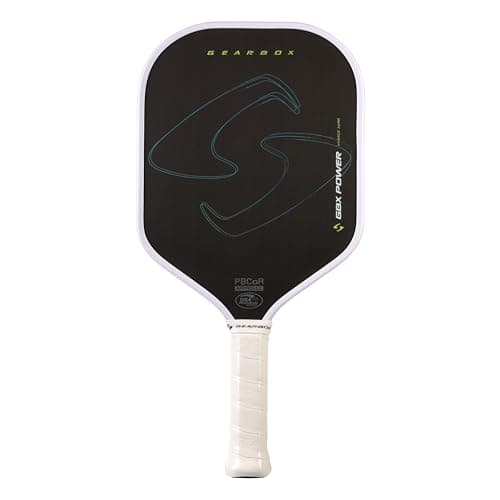 Gearbox GBX Power Hybrid Gen-3 suspended core in a hybrid shape - fewer peaks, far fewer bad misses. | Best consistency | 4.4/5 | $179.99Amazon |
#ad · Live prices from Amazon as of October 5, 2026; where we have no verified live price we show none. We may earn a commission — see our affiliate disclosure.
The short answer
The best pickleball paddle under $200 is the JOOLA Perseus Pro IV 16mm— a current-generation flagship with a Propulsion Core, a Tech Flex Power carbon face and both UPA-A and USA Pickleball certification, sitting comfortably below the ceiling of this band. It is the paddle for an intermediate or advanced player who wants one paddle that will not need replacing in a year.
If you are buying for a specific job instead: the JOOLA Ben Johns Hyperion CAS 16 for spin, the Selkirk LUXX Control Invikta for the soft game, the Engage Pursuit Pro1 if you want to hit the ball as hard as the rules allow, the HEAD Radical Tour EX Raw if you want the cheapest real flagship on this page, and the Gearbox GBX Power Hybrid if your errors bother you more than your winners excite you.
What $200 buys that $100 does not
This site has separate pages for paddles under $100 and paddles under $75, and both are honest about how good cheap paddles have become. So it is worth being precise about what the extra hundred dollars actually changes, because it is not "more power" and it is not a bigger sweet spot.
Construction method. Under $100 you mostly get cold-pressed paddles: a face glued to a honeycomb core inside a separate edge guard. Above about $120 the market is almost entirely thermoformed unibody builds with foam-injected perimeters, which is what produces the stiff, high-launch feel modern paddles have.
Face material quality.Raw carbon is not one thing. The high-grit abrasion surfaces on the paddles here — CAS, Tech Flex Power, Gearbox's unidirectional layup — hold their texture longer than cheap sanded carbon, which is the whole spin argument. Our carbon fiber paddle roundup goes through the difference in detail.
Certification you can enter a tournament with. Every paddle on this page carries current USA Pickleball approval, and two carry UPA-A certification for pro-tour play. If you intend to play sanctioned events, read our guide to USA Pickleball approval before you buy anything, at any price.
How we picked
Four rules. Every paddle had to be currently listed on Amazon with a live price we can show you, because a recommendation you cannot buy is not a recommendation. Every paddle had to carry current USA Pickleball approval. Every paddle had to do one thing clearly betterthan the others here, so the list is six answers to six questions rather than six versions of the same paddle. And nothing on this page is judged on anything but construction, published specification and time on court — we do not run lab tests and we do not pretend to. The full method is on how we review.
Prices move inside this band constantly, which is why every price on this page is pulled live and stamped with the date it was read. A paddle that is $189 today was $169 last month; that is the nature of the $100–200 segment.
At a glance
| Paddle | Core | Surface | Shape | Best for |
|---|---|---|---|---|
| JOOLA Perseus Pro IV 16mm | 16mm Propulsion Core | Tech Flex Power carbon | Elongated | Best overall |
| JOOLA Ben Johns Hyperion CAS 16 | 16mm polypropylene | High-grit CAS | Elongated | Spin |
| Selkirk LUXX Control Invikta | LUXX control build | Carbon fiber | Invikta (elongated) | Soft game |
| Engage Pursuit Pro1 | 12.7mm (thin) | Raw high-grit carbon | Elongated | Power + spin |
| HEAD Radical Tour EX Raw | Tournament build | Raw carbon | Standard | Value |
| Gearbox GBX Power Hybrid | 16mm Gen-3 suspended | Raw unidirectional carbon | Hybrid, 16.2 x 7.8 in | Consistency |
Best overall under $200: JOOLA Perseus Pro IV 16mm
Who it is for: the intermediate-to-advanced player who wants one paddle that will still be competitive in two seasons.
The Perseus Pro IV is the paddle that makes this price band worth writing about. It is not a value version of a flagship or last year's model discounted — it is a current JOOLA tournament paddle built on the Propulsion Core with a Tech Flex Power carbon face, in the elongated shape most competitive players now use. It carries UPA-A certification as well as USA Pickleball approval, so it is legal everywhere you might want to play.
| Core | 16mm Propulsion Core |
|---|---|
| Surface | Tech Flex Power carbon |
| Shape | Elongated |
| Certification | UPA-A and USA Pickleball certified |
| Best for | One paddle that will not need replacing in a year |
What I like: it does everything at a high level, which is rare — there is real pop on a drive, enough face texture for a heavy topspin third, and the 16mm core still lets you reset a hard ball into the kitchen. What gives me pause: the elongated shape has a smaller, higher sweet spot than a widebody, so off-center contact is punished, and that makes this a poor first paddle. It is also the top pick on our best paddles for advanced players list and appears on best for power; the full write-up is in the Perseus Pro IV review.
Best for spin: JOOLA Ben Johns Hyperion CAS 16
Who it is for: the player whose game is built on topspin drives and dipping third-shot drops.
The Hyperion CAS 16 is the paddle that made Carbon Abrasion Surface a phrase ordinary players know. The face is deliberately high-grit, and it grabs the ball long enough to put genuinely heavy rotation on it. It sits at the bottom of this price band now, which makes it one of the best-value flagships in pickleball.
| Surface | Carbon Abrasion Surface (CAS), high grit |
|---|---|
| Core | 16mm polypropylene honeycomb |
| Shape | Elongated, Sure-Grip handle |
| Weight | 8.3 oz average |
| Certification | USA Pickleball approved |
What I like: the spin is not marketing — you feel the ball bite, and the 5.5 in handle suits a two-handed backhand, which is why it leads our paddles for tennis playerspage. What gives me pause: at 8.3 oz it is a heavier paddle than some players want at the kitchen line, and a gritty face is a consumable — it dulls, and you clean it rather than renew it. There is a full Hyperion review, and it is the spin pick on best paddles for spin.
Best for the soft game: Selkirk LUXX Control Invikta
Who it is for: the kitchen-line player who wins points by not missing.
LUXX is Selkirk's premium control line, and the Invikta is its elongated shape. Where the Perseus and the Pursuit are built to launch the ball, this one is built to absorb it: a dink lands shorter, a block drops at your opponent's feet, and a hard drive at your chest comes off the face slower than you expect. That is the entire argument for it.
| Line | Selkirk LUXX (premium control) |
|---|---|
| Shape | Invikta (elongated) |
| Surface | Carbon fiber |
| Bias | Control / touch |
| Best for | Counter-punchers and kitchen-line players |
What I like: the most predictable face on this page, and Selkirk's build quality and warranty support are as good as the category gets. What gives me pause: it sits at the top of this band, you give up measurable put-away power versus the JOOLA paddles, and the Invikta shape asks for clean contact. It is also the soft-game pick on best Selkirk paddles and best paddles for control.
Best power and spin: Engage Pursuit Pro1
Who it is for: the aggressive singles or driving doubles player who wants the ball to leave fast and curve.
The Pursuit Pro1 takes the opposite approach to everything else here: a thin 12.7mm core instead of a thick one. A thinner core means a stiffer, poppier response — less ball compression, more immediate launch — and Engage pairs it with a high-grit raw carbon face and an unusually long dwell characteristic. The result is the most aggressive paddle on this page by a clear margin.
| Surface | Raw carbon fiber (high grit) |
|---|---|
| Core | 12.7mm (thin = more pop) |
| Shape | Elongated |
| Profile | Explosive power with extended dwell |
| Best for | Aggressive players who bang and spin |
What I like: it is the clearest power upgrade in the band, and unlike most power paddles it does not give up spin to get there. What gives me pause: a thin core is the least forgiving construction in pickleball — resets pop long, dinks sail, and your error count goes up before your winner count does. It is the overall power pick on best paddles for power and has its own Pursuit Pro1 review.
Best value in the band: HEAD Radical Tour EX Raw
Who it is for: the player who wants tournament-grade construction and does not care which brand is on it.
HEAD has been making racquets since long before pickleball existed, and the Radical Tour EX Raw is the company's tournament paddle: a raw carbon face, around 8.1 oz, a 4 1/8 in grip. It is usually the cheapest genuine flagship on this page, and the reason is brand preference rather than specification — competitive players chase JOOLA, Selkirk and CRBN, so HEAD discounts harder.
| Surface | Raw carbon fiber |
|---|---|
| Weight | About 8.1 oz |
| Grip | About 4 1/8 in |
| Class | Tournament paddle |
| Best for | Value shoppers who want tournament-grade construction |
What I like: the price-to-construction ratio is the best here, and the slim grip suits smaller hands without needing an overgrip to build it up. What gives me pause: resale value and community support are thinner than for the big pickleball-native brands, and the slim grip is a problem rather than a feature if your hands are large — see grip size. Full write-up in the Radical Tour EX Raw review.
Best consistency: Gearbox GBX Power Hybrid
Who it is for: the player who would trade their best shot for fewer of their worst ones.
Gearbox builds differently to everyone else. The GBX Power Hybrid uses a Gen-3 suspended honeycomb core and a unidirectional raw carbon face in a hybrid 16.2 x 7.8 in outline with a 5.5 in handle, at around 8.0 oz. The character that comes out of it is flatness, in the good sense: the response from the middle of the face and the response from near the edge are closer together than on any other paddle here.
| Surface | Raw unidirectional carbon fiber |
|---|---|
| Core | 16mm Gen-3 suspended honeycomb |
| Shape | Hybrid, 16.2 x 7.8 in |
| Handle / weight | 5.5 in handle, 8.0 oz average |
| Best for | Players who want consistency over peaks |
What I like: the most predictable paddle on the page across the whole face, and the hybrid shape is a sensible middle ground between reach and forgiveness. What gives me pause: it is assessed here on published specifications and construction rather than lab testing, the ceiling on a put-away is lower than the Pursuit Pro1's, and Gearbox's Gen-3 line is new enough that long-term durability data does not exist yet. It is also the balanced pick on best all-court paddles and leads best Gearbox paddles.
Who should not spend $200
Three groups, honestly.
Beginners.Every paddle on this page except the HEAD is elongated or hybrid, with a small high sweet spot. A new player needs the opposite — a widebody face that forgives contact anywhere. Start on best paddles for beginners instead and come back in a year.
Players who do not yet know their style. If you cannot say whether you win more points by hitting harder or by not missing, you cannot choose between the Pursuit Pro1 and the LUXX, and buying the wrong one at $200 is an expensive way to find out. Read how to choose a pickleball paddle first.
Anyone playing once a month. A $70 paddle from the under-$75 list will not hold you back at that frequency, and the money is better spent on court shoes, which are the only piece of pickleball gear with a genuine injury argument behind them.
The bottom line
The JOOLA Perseus Pro IV 16mm is the paddle to buy if you want the best all-round answer under $200. Spin-first player? The Hyperion CAS 16. Soft-game player? The Selkirk LUXX Control Invikta. Want to hit it as hard as the rules allow? The Engage Pursuit Pro1. Want a flagship for the least money? The HEAD Radical Tour EX Raw. Hate your own errors? The Gearbox GBX Power Hybrid. And if none of those descriptions is obviously you, that is a sign to spend less, not more.
Frequently asked questions
Is a $200 pickleball paddle worth it over a $100 one?
It depends on your level. Between about $100 and $150 you gain real things: thermoformed unibody construction, foam-injected perimeters, higher-grit face materials that hold their texture, and tournament certification. Above about $150 the gains get small. A 3.5-plus player who plays weekly will feel the jump from $100 to $150; a 3.0 player who plays monthly will not, and should spend the difference on court shoes.
What is the best pickleball paddle under $200 for an intermediate player?
The JOOLA Perseus Pro IV 16mm, on this list. The 16mm core gives you enough dwell to reset and drop reliably while still driving well, the elongated shape is the one competitive play is moving toward, and the certification means you can take it into sanctioned events. If you want more forgiveness while you develop, the Gearbox GBX Power Hybrid's flatter response across the face is the better intermediate choice.
Are thicker 16mm cores better than thin 12.7mm ones?
Neither is better; they do different jobs. A 16mm core compresses more on contact, which means more dwell, more control and softer resets. A thin core like the Engage Pursuit Pro1's 12.7mm is stiffer and launches the ball faster, giving more power at the cost of forgiveness. Our 14mm vs 16mm guide walks through how the difference feels shot by shot.
Do paddles in this price range need USA Pickleball approval?
If you plan to play in sanctioned tournaments or leagues, yes - and every paddle on this page carries current USA Pickleball approval. For recreational open play nobody checks. The catch is that approval lists change, so verify your exact model on the USA Pickleball equipment list before entering an event rather than trusting a listing or a review page.
Why do prices in the $100-200 band move so much?
Because this is where brands compete hardest. Flagships get discounted when a new generation launches, and Amazon third-party sellers price paddles independently of the brand's own store. A paddle at $189 one week can be $159 the next. That is why every price on this page is read live from Amazon and stamped with the date it was read rather than typed into the article.
Sources
Keep reading
Upgrading your paddle or gearing up to play?
See how we pick, then dig into the paddle roundups and buying guides — honest picks from someone who actually plays, with no inventory to move.