Paddle Review
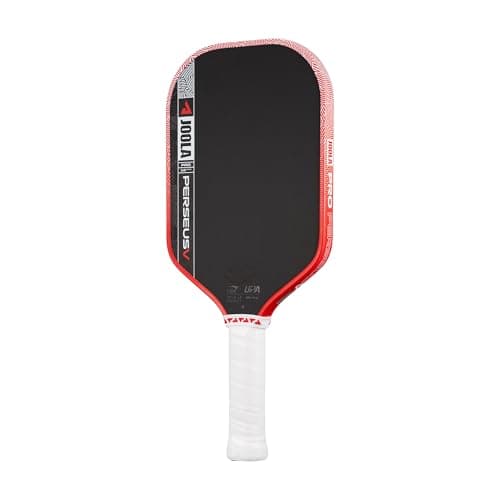
JOOLA Perseus Pro IV 16mm Review
JOOLA's current flagship is a tournament paddle in the literal sense: certified, elongated, and built so no phase of the point is a weakness. The question is whether your game is good enough to notice.
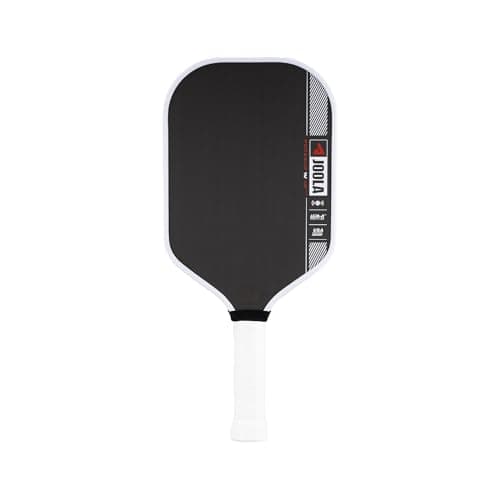
The most complete tournament paddle JOOLA makes — no weak phase, real swing weight, and a price that only makes sense if you compete.
- Best for
- Competitive 4.5+ players who want one paddle for everything
- Price context
- Premium flagship tier
JOOLA sells several paddles called Perseus, and they are not the same paddle. The Pro IV is the current flagship tier: a Propulsion Core under a Tech Flex Power carbon face, in an elongatedoutline, at roughly double what the mid-tier Perseus costs. This review is about that specific paddle. It is a research-plus-play review — the construction and certification details are verified against JOOLA's published listing.
What the Pro IV tier actually buys
Propulsion Core.JOOLA's flagship core construction, built to store and return more energy than a plain polypropylene honeycomb without losing the dwell time a 16mm core provides. In practice it is why the paddle can hit a heavy drive and still land a reset short.
Tech Flex Power face.The face layup is what separates flagship carbon from entry carbon. It holds texture at high swing speeds — the point where cheaper faces start to feel like they are skidding across the ball rather than gripping it.
Elongated shape. Reach and leverage, with the usual costs: a narrower sweet spot and slower rotation. Our elongated roundup covers that trade in full.
How it plays on court
Drives. Heavy and repeatable. The combination of core, face and length means a full swing produces a ball with pace andshape — it dips. That is the difference between a drive that gets attacked and one that forces a weak block.
Serves. The most under-discussed benefit of a long paddle at flagship tier. Extra leverage plus a face that grips at speed gives you a serve you can hit hard with real margin over the net.
Resets. Better than an elongated power paddle has any right to be. The 16mm core does its job; balls taken from mid-court can be dropped rather than merely blocked.
Hands battles. The weak spot, relatively speaking. This paddle has genuine mass out toward the head, and in a fast exchange at the kitchen it is slower to get around than a standard shape. Good hands overcome it; average hands notice it.
The swing weight conversation
Static weight — what a paddle reads on a scale — is the number people quote. Swing weight is the number that decides how it plays: how heavy the paddle feels while moving, which depends on how far the mass sits from your hand. An elongated flagship concentrates mass further out, so it swings heavier than its static weight suggests.
That is a feature on drives and a liability at the net. If you are coming from a widebody value paddle, plan on a two-session adjustment where you are late on a few speed-ups. If you're still late after that, the paddle is telling you something — a standard shape from our all-court roundup may genuinely win you more points. Our paddle weight guide explains the mechanics.
Certification: why it matters here
The Pro IV carries both UPA-A and USAPcertification. If you compete, that is not a marketing line — different tours sanction under different bodies, and a paddle approved by one is not automatically legal under the other. Dual certification means you are unlikely to arrive at an event and find your paddle ineligible.
Even so, verify the exact model and core thickness against the approved list for your sanctioning body before an event. Approval attaches to specific variants, not to a product line, and paddles do occasionally get removed from lists. Our delamination explainer covers the most common reason that happens.
Who it's for (and who should skip it)
Buy it if you play sanctioned events, you already handle an elongated paddle comfortably, and you want one paddle that has no phase you have to play around. It is the most complete thing JOOLA makes.
Skip it ifyou play rec pickleball twice a week. Not because it's bad — because the Perseus 16mm CASgives you most of the character for roughly half the money, and the difference lives at swing speeds most club players don't reach. Also skip it if hands battles are already where you lose points.
How it compares
| Paddle | Shape | Bias | Where it wins |
|---|---|---|---|
| JOOLA Perseus Pro IV | Elongated | All-round power | Reach, drives, serves |
| JOOLA Collin Johns Scorpeus Pro IV | Elongated | Touch | Counters and resets |
| CRBN TruFoam Genesis | Hybrid AeroCurve | Range | Forgiveness and hand speed |
| JOOLA Perseus 16mm CAS | Aero Curve | Balanced | Value |
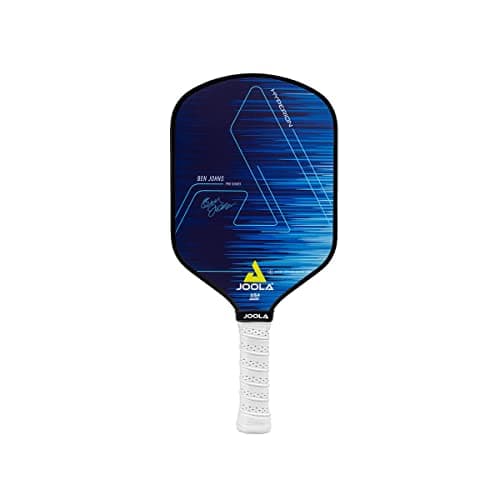
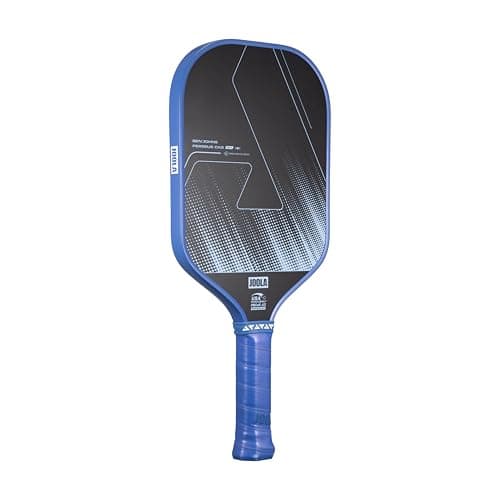
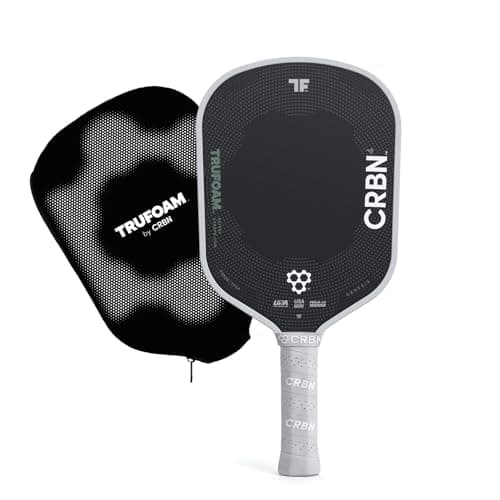
Against its own sibling, the Collin Johns Scorpeus Pro IV, the Perseus is the more aggressive paddle and the Scorpeus the better counter-puncher. Against the CRBN TruFoam Genesis, the Perseus reaches further and hits heavier; the CRBN is more forgiving and quicker in the hands. And against the mid-tier Perseus 16mm, the honest answer is that the Pro IV is better in ways a 4.0 player will struggle to feel.
Verdict
The Perseus Pro IV is exactly what a flagship should be: no phase you have to hide, dual certification so you can take it anywhere, and a face that keeps gripping when you swing hard. It is also heavy in the swing and priced for people who compete. If you do, this is the JOOLA to own. If you don't, the cheaper Perseus is not a lesser choice — it's the right one. Start with best paddles for advanced playersif you're deciding between flagships.
What we liked
- No genuinely weak phase — drives, resets, spin and counters are all strong
- Dual UPA-A and USAP certification covers most sanctioned events
- Elongated reach helps on serves, drives and stretch resets
- Tech Flex Power face holds spin at high swing speeds
What gave us pause
- Real swing weight — it punishes late hands in fast exchanges
- Flagship price for a ceiling most club players will not reach
- The cheaper Perseus 16mm CAS gets you most of the character for far less
Frequently asked questions
What's the difference between the JOOLA Perseus and the Perseus Pro IV?
They share a name and a design philosophy, not a construction. The Pro IV is the current flagship tier — Propulsion Core, Tech Flex Power carbon face, dual UPA-A and USAP certification — at roughly double the price. The standard Perseus 16mm uses JOOLA's Charged Surface carbon on a conventional 16mm core. Both are good; only one is a tournament flagship.
Is the Perseus Pro IV too heavy?
It's not unusually heavy on a scale, but it swings heavy because it's elongated and the mass sits further from your hand. That's an advantage on serves and drives and a disadvantage in fast exchanges at the net. Expect a couple of sessions of being slightly late on speed-ups; if you're still late after that, a standard shape suits you better.
Is the JOOLA Perseus Pro IV tournament legal?
It carries both UPA-A and USAP certification, which covers most sanctioned play in the US. Always verify the exact model and core thickness against the approved list for the body sanctioning your specific event, since approval attaches to individual variants rather than a whole product line.
Should a 4.0 player buy the Perseus Pro IV?
Probably not. The Pro IV's advantages live at swing speeds and shot-shaping precision that most 4.0 players don't consistently reach, so you'd be paying flagship money for headroom you don't use — while giving up sweet-spot forgiveness you still need. The Perseus 16mm CAS delivers most of the same character for roughly half the price.
Sources
Keep reading
Upgrading your paddle or gearing up to play?
See how we pick, then dig into the paddle roundups and buying guides — honest picks from someone who actually plays, with no inventory to move.