Paddle Review
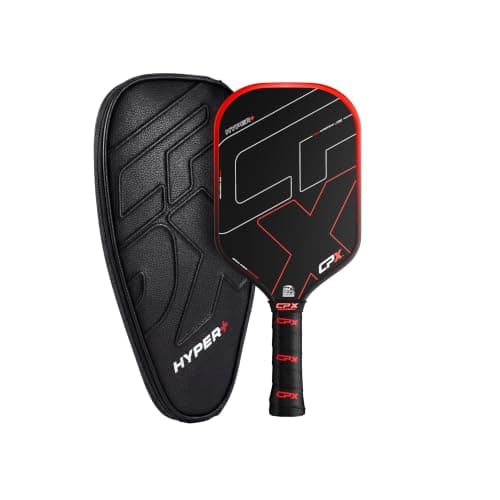
CRBN TruFoam Genesis Review
No honeycomb at all — just foam, carbon and a hybrid shape. The Genesis is the clearest example of where premium paddles have gone, and the clearest example of who shouldn't buy one.
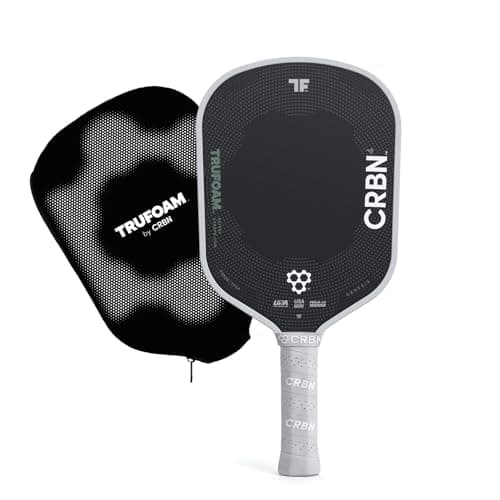
The widest gap between soft and hard I've felt in a paddle — a genuine flagship if you can already control pace, and an expensive mistake if you can't.
- Best for
- 4.5+ players who shape shots deliberately
- Price context
- Premium flagship tier
Every few years a paddle arrives that changes what the top of the market looks like. The CRBN TruFoam Genesis is one of those. It abandons the polypropylene honeycomb core that has been the industry default since the beginning and replaces it with foam — all of it, under a carbon fiber face, inside a hybrid AeroCurve outline. This is a research-plus-play review: I've played the paddle, and the construction details below are verified against CRBN's published specifications.
What TruFoam actually is
Almost every paddle you have held works the same way: a thin composite face is bonded to a core of hollow polypropylene cells, like a very fine honeycomb. Those cells crush slightly on impact and spring back, and the size and wall thickness of the cells determine most of what you feel. It is cheap, light, and it works.
The last generation of premium paddles started injecting foam into the perimeter of that core to stiffen the frame and widen the sweet spot — what the market calls Gen 2 and Gen 3 construction. The Genesis takes the idea to its conclusion: there is no honeycomb in it. The entire core is a molded foam block.
Foam behaves differently under load. Hollow cells resist, then buckle; foam compresses progressively across its whole volume. The practical consequences are two-fold. On a soft shot, the ball sinks into the face and stays there fractionally longer, which is exactly what makes a reset controllable. On a hard shot, that same compression stores and returns more energy. You get more of both ends rather than a compromise between them.
How it plays on court
The soft game.This is where the paddle justifies itself. Resets from the transition zone land shorter and die faster than they do with a honeycomb paddle of the same thickness. Dinks have an unusual quality — you can feel the ball being held rather than bounced — which makes it easier to change the height and depth of a dink deliberately rather than hopefully.
Drives and put-aways. Ball speed is high, but the more useful part is that it stays controllable when you swing at 80% rather than 100%. A lot of powerful paddles are only accurate at full commitment; the Genesis is not.
Hands battles. The hybrid AeroCurve shape matters here. It is not a full elongated outline, so it rotates faster than a Perseus or Hyperion, and the big response area means a blocked speed-up off the edge of the face still goes somewhere useful. For a paddle with this much power on tap, it defends surprisingly well.
Spin.The carbon face grips well. It is not, to my hands, a bigger spin producer than JOOLA's CAS face — see our Hyperion reviewfor the spin benchmark — but it is comfortably in the top tier, and the extra dwell time from the foam helps the texture do its job.
The adjustment period is real
Two things surprise people on first hit. The first is that a paddle described as "foam" feels firm. Foam stiffens the structure and transmits more feedback into the handle than a hollow polymer core does; the first session can read as harsh. It settles, but if you have elbow history, treat that as a real consideration and read best paddles for tennis elbow first.
The second is that more returned energy means it is easier to overhit a reset. For the first couple of sessions, balls you intended to drop at the kitchen line will float to mid-court. This is not the paddle being bad; it is the paddle giving you back energy your old one absorbed. Adjust by swinging less, not by gripping tighter.
Who it's for (and who should skip it)
Buy it ifyou are 4.5 or above, you already control pace well, and the errors you make are more often "not enough" than "too much." The Genesis gives a good player more room to work in both directions, which is precisely what a good player converts into points.
Skip it if you are still developing your soft game, if you pop balls up under pressure, or if your arm complains after long sessions. A 16mm polymer control paddle like the Selkirk SLK Evo Control will make you a better player faster and cost a quarter as much. And if you are anywhere near beginner, the honest answer is in best paddles for beginners.
How it compares
| Paddle | Core | Shape | Where it wins |
|---|---|---|---|
| CRBN TruFoam Genesis | 100% foam | Hybrid AeroCurve | Range between soft and hard |
| JOOLA Perseus Pro IV | Propulsion Core | Elongated | Reach and drive power |
| Selkirk LUXX Control Invikta | LUXX control build | Elongated | Pure soft game |
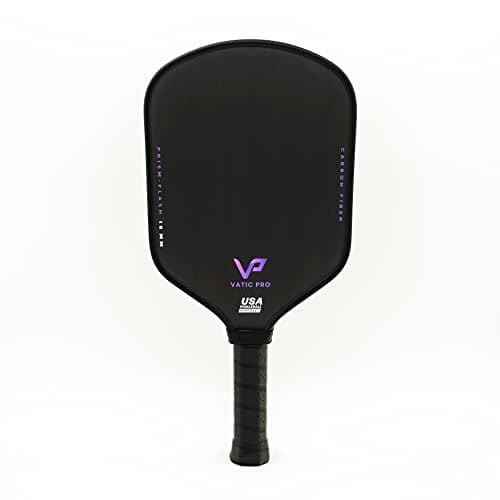
| Vatic Pro Prism Flash | 16mm, foam walls | Elongated | Value per dollar |
Against the JOOLA Perseus Pro IV, the Genesis is more forgiving and quicker in the hands; the Perseus reaches further and drives harder. Against a control flagship like the LUXX, the Genesis keeps far more power available without giving up much touch. And against the Vatic Pro Prism Flash— which costs a fraction as much — the honest answer is that the Genesis is better, but not three-times-the-price better unless you are good enough to use the extra range.
For the whole category in context, see best Gen 3 pickleball paddles and best paddles for advanced players. For the rest of CRBN's range — including the cheaper X Series and which of the four shape numbers to buy — see best CRBN pickleball paddles.
Verdict
The TruFoam Genesis is the most convincing argument I have played for foam cores. It widens what you can do at both ends of the pace spectrum instead of trading one for the other, and the forgiveness is genuinely a step beyond honeycomb paddles. It is also expensive, firm, and wasted on a player who has not yet learned to take pace off a ball. If you are that player, it is superb. If you are not yet, buy the skill first and the paddle later — our how to choose a paddle guide is a better use of the next ten minutes than the checkout page.
What we liked
- Full foam core produces an unusually wide range between soft and hard shots
- Very large effective response area — edge contact behaves closer to center
- Hybrid AeroCurve shape balances reach against hand speed
- Carbon face holds real spin on drives and rolls
What gave us pause
- Flagship price — one of the most expensive paddles you can buy
- Firmer, more demanding feel than most players expect on first hit
- More stored energy makes resets easier to overhit until you adjust
Frequently asked questions
What is a TruFoam core?
It's CRBN's name for a core made entirely of molded foam, with no polypropylene honeycomb at all. Foam compresses progressively across its whole volume rather than buckling like hollow cells, which lengthens dwell time on soft shots and returns more energy on hard ones. It also stays consistent out to the perimeter, which is why the effective sweet spot is so large.
Is the CRBN TruFoam Genesis good for intermediate players?
It's more paddle than most intermediates need. The extra range only pays off if you already control pace deliberately, and the extra stored energy makes resets easier to overhit while you're still learning them. A 16mm polymer control paddle will develop your soft game faster and costs far less.
Does a foam core feel soft?
No — most players find the Genesis feels firm on first hit. Foam stiffens the overall structure and transmits more feedback into the handle than a hollow honeycomb core does. It typically settles within a couple of sessions, but if you have elbow or forearm history, that firmness is worth taking seriously before buying.
How does the Genesis compare to the JOOLA Perseus Pro IV?
The Genesis is more forgiving on off-center contact and quicker in the hands thanks to its hybrid shape; the Perseus Pro IV reaches further and drives harder thanks to its elongated outline. If your game is built on defense and shot-shaping, the Genesis. If it's built on reach and drives, the Perseus.
Sources
Keep reading
Upgrading your paddle or gearing up to play?
See how we pick, then dig into the paddle roundups and buying guides — honest picks from someone who actually plays, with no inventory to move.