Comparison Guide
CRBN vs JOOLA: Which Paddle Brand Is Right for You?
These two brands get mentioned in the same breath and they are not really competing for the same buyer. CRBN makes premium paddles for strong players and nothing else. JOOLA makes a paddle for everyone. That difference decides this for most people before a single spec is read.
If you read pickleball gear forums, CRBN and JOOLA come up constantly and usually together, as though choosing between them were a close call about which makes the better paddle. It is not really that. They are both excellent, and they are built around opposite business ideas.
CRBN is a specialist: premium paddles for advanced players, no entry range, no attempt at one. JOOLA is a generalist with decades of table-tennis manufacturing behind it and a paddle at nearly every price point. So the honest version of "CRBN vs JOOLA" is less about which brand wins and more about whether you are the player CRBN builds for. This page answers that, then names the paddle to buy from each.
The short answer
| CRBN | JOOLA | |
|---|---|---|
| Identity | Pickleball-only specialist, premium tier only | Global table-tennis manufacturer turned full-range pickleball brand |
| Strength | Construction innovation, forgiveness-to-power ratio | Breadth, surface technology, pro presence |
| Range logic | A small number of flagship models, generation by generation | Signature athlete models and a ladder from sub-$50 upward |
| Signature tech | TruFoam - a 100% foam core replacing honeycomb | Carbon Abrasion Surface, Aero Curve shape, Propulsion Core |
| Entry-level option | None - the cheapest route is a discounted older generation | Yes, a genuine sub-$50 paddle in the Journey |
| Who it suits | 4.5-plus players who shape shots deliberately | Almost any player, at almost any budget |
| Main risk | Price out of proportion to a sub-4.0 player's results | Confusing naming and a fast release cadence |
If you are below about 4.0, buy JOOLA. Not because CRBN is worse — it is not — but because CRBN's paddles are priced for a player who can convert what they offer into points, and JOOLA makes a genuinely good paddle at a third of the money. If you are a strong player who already knows what you want from a face and a core, CRBN deserves a serious look and the TruFoam Genesis is the most interesting paddle either brand makes.
Two very different companies
JOOLAcame to pickleball from table tennis, where it has been a major manufacturer for decades, and it brought a surface-technology mindset with it. Carbon Abrasion Surface, the Aero Curve hybrid shape and the Propulsion Core are all JOOLA ideas that the rest of the market has since chased. Crucially, JOOLA's mid-price paddles get the same face technology as the flagships rather than a cheaper substitute — which is why a mid-tier JOOLA is such a strong buy and why the brand appears on so many of our roundups. Our best JOOLA paddles page works through the whole lineup.
CRBN does one thing. It makes premium paddles for strong players, it has no beginner range, and it makes no attempt at one. That focus has paid off technically: the TruFoam Genesis replaced the honeycomb core with 100% foam, which is the single biggest construction change in recent paddle history and is now being copied across the industry. CRBN led rather than followed, and the forgiveness-to-power ratio on the Genesis is genuinely class-leading. Our CRBN TruFoam Genesis review covers it in detail.
How they actually build
This is where the two brands diverge most, and it is worth understanding because the industry is currently moving in CRBN's direction.
JOOLA builds on honeycomb.Like almost every paddle made, a JOOLA uses a polypropylene honeycomb core — a grid of hollow cells between two faces. JOOLA's innovation has been mostly at the surface and the perimeter: Carbon Abrasion Surface for grip, the Propulsion Core and foam-filled walls on the flagship Perseus Pro IV for power, and shape work like the Aero Curve hybrid. It is evolution of a proven platform.
CRBN replaced the platform.TruFoam swaps the honeycomb grid for a solid foam core. That removes the cell structure entirely, which changes how the paddle deforms on contact — more evenly across the face, so the effective sweet spot grows without losing power. It is the more radical approach, and it is why other manufacturers are now shipping foam cores of their own.
Two honest caveats apply to the foam story. First, "foam core" has become a marketing term and most paddles advertising foam are honeycomb paddles with foam-filled perimeter walls, which is a different and much smaller change than a 100% foam core. Second, solid-foam cores have a short field record — we do not yet know how they hold up over several seasons, where honeycomb behavior is very well understood. Our thermoformed vs cold-pressed guide explains how these construction methods interact, and our delamination explainer covers the failure mode that modern pressed paddles are most associated with.
Decoding the model names
JOOLA names are the harder of the two,and we say so on every JOOLA page we publish. Perseus, Perseus 16mm CAS, Perseus Pro IV and Scorpeus are four different paddles at four different prices, and the names do not tell you which is which. The pattern, roughly: a signature athlete name (Ben Johns, Collin Johns, Anna Bright) plus a model family plus a generation marker plus a core thickness. The generation marker is the number that matters most — a Pro IV is a current flagship, a plain CAS model is usually a superseded one and therefore often the better buy.
CRBN names are simpler because there are fewer of them.You get a series letter or name (X Series, TruFoam Genesis), a shape designation, and a core thickness in millimeters. The number in a name like "3X 16mm" refers to the shape generation and the core thickness, not a quality tier. With only a handful of models in market at a time, there is simply less to decode.
The practical consequence: with JOOLA you need to check which generationyou are buying, because the discount on last year's flagship is often the best value either brand offers. With CRBN you mostly need to check whether the model is still current, because that is what determines whether it has been marked down below CRBN's usual band.
The price ladders compared
JOOLA has a real ladder. It runs from a genuine sub-$50 paddle in the Journey, through a strong mid-tier where the same face technology as the flagships appears at about a third of the price, up to UPA-A-certified tour paddles. There is a sensible JOOLA at nearly every price point, and the middle of that ladder is where most players should shop. Our best paddles under $100 and best paddles under $200 roundups both carry JOOLA picks for exactly this reason.
CRBN has no ladder, by design.Current CRBN models sit in roughly the $180 to $300 band, and there is no entry tier beneath it. The only way to buy a CRBN cheaply is to buy a superseded generation that retailers have marked down — which is a legitimate route, and it is why the older X Series turns up on Amazon well below CRBN's usual pricing. Just understand what you are buying: a discontinued generation, not a cheap current-line paddle.
This is the single most useful thing on this page. If your budget is under about $120, you are choosing between a current mid-tier JOOLA and a discounted older CRBN. Both are reasonable. What you cannot do is buy a current CRBN at that price, and no amount of comparison shopping will change that. For the honest view of what paddle money actually buys, see how much a pickleball paddle costs and do expensive paddles play better.
Certification and support
Both brands certify properly, and that is not a given across the wider market. JOOLA's flagship line carries UPA-A certification alongside USA Pickleball approval, which matters if you play in professional-tour-sanctioned events as well as USAP ones. CRBN's paddles are built for competitive players and certified accordingly. Either way, check the specific model and generation against the current approved list before a sanctioned event rather than trusting a retail listing — our USA Pickleball approval guide explains how.
On support, JOOLA has the larger footprint simply by virtue of scale and retail distribution: more places sell it, more places will deal with a problem, and resale demand is stronger because more players recognize the names. CRBN is a smaller specialist, which cuts both ways — a more focused company, but fewer places to turn and a narrower second-hand market outside the advanced-player community.
Which paddle to buy from each
Four paddles, two from each brand: the one most people should actually buy, and the flagship, for both.
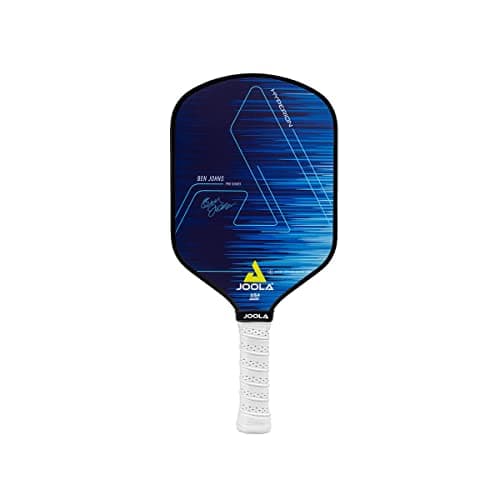
JOOLA, for most players: the Perseus 16mm.This is the mid-tier JOOLA that makes the brand's case. You get the Charged Surface (CAS) carbon fiber face, a 16mm polypropylene honeycomb core, the hybrid Aero Curve shape and the Feel-Tec Pure grip, with USA Pickleball approval, for a fraction of flagship money. It is the paddle we recommend across several roundups, including best paddles for intermediate players.
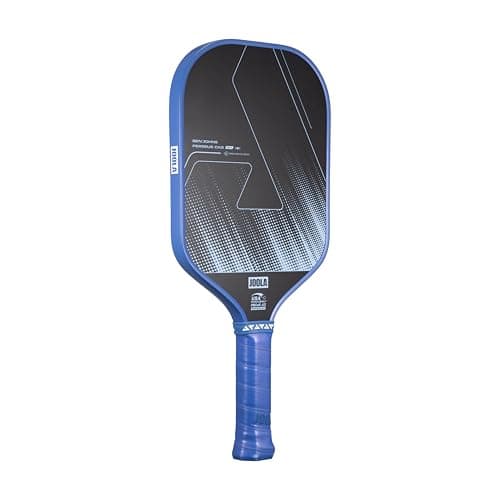
JOOLA, flagship: the Perseus Pro IV 16mm. Tech Flex Power carbon over the Propulsion Core, elongated, on a 5.5 inch handle, with both UPA-A and USAP certification. It is the most complete paddle JOOLA makes and the power pick on our best 16mm paddles roundup. The caveat is the usual one: it carries real swing weight and a narrower face, so it rewards consistent contact and punishes a wandering swing.
CRBN, the affordable route: the X Series Power 3X 16mm.This is a superseded CRBN generation, which is precisely why it is available well under CRBN's current band. It is a carbon fiber power paddle on a 16mm core, and it is the only realistic way to own a CRBN without paying flagship money. Buy it understanding that it is an older generation: it does not have the TruFoam core, colorways and stock come and go, and there is no guarantee the listing will still be there next month.
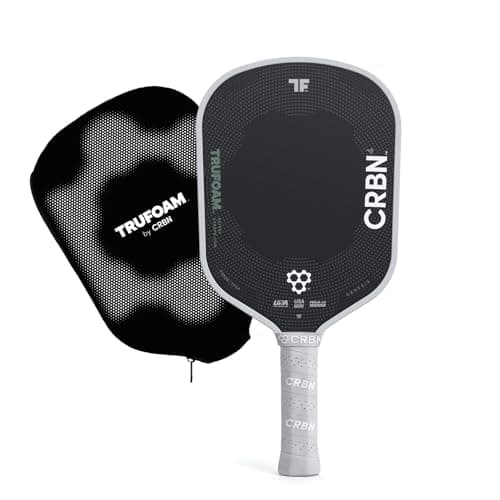
CRBN, flagship: the TruFoam Genesis. The 100% foam core, in a hybrid Aero Curve or elongated shape. The forgiveness-to-power ratio is the best we have played, and it is the paddle that pushed the rest of the industry toward foam. It is the premium pick on our best pickleball rackets ranking and on best paddles for advanced players. Two honest cautions: the price only makes sense at roughly 4.5 and above, and full-foam durability over several seasons is still unproven.
So which one?
Buy JOOLA if you are below about 4.0, if you want a ladder you can move up, or if you want the broadest support and the strongest resale. The mid-tier Perseus 16mm is one of the best value propositions in the sport, and nothing CRBN sells competes with it because CRBN does not try to.
Buy CRBN if you are a strong player who shapes shots deliberately and you want the most advanced core construction available. The TruFoam Genesis is the more interesting paddle and the better one in the right hands. In the wrong hands it is an expensive way to make the same mistakes.
And if the honest answer is "I am not sure which player I am yet", that is itself the answer: buy the mid-tier JOOLA, play it for a season, and let your game tell you whether you need what CRBN is selling. Our how to choose a pickleball paddle guide is the right starting point, and Selkirk vs JOOLA covers the other comparison most premium shoppers are weighing at the same time.
Frequently asked questions
Is CRBN better than JOOLA?
Neither is better overall - they build for different buyers. CRBN makes premium paddles for advanced players and has no entry range at all, so its pricing only makes sense for a player who can convert what it offers into points. JOOLA makes a sensible paddle at nearly every price point and puts flagship face technology into its mid-tier. Below about 4.0, JOOLA is the better buy for almost everyone.
What is the difference between a TruFoam core and a honeycomb core?
A honeycomb core is a grid of hollow polypropylene cells between the two faces, which is how almost every paddle is built. CRBN's TruFoam replaces that grid with a solid 100% foam core, so the paddle deforms more evenly across the face - which grows the effective sweet spot without losing power. It is the biggest recent construction change in paddles, but it also has a short field record, so long-term durability is still unproven.
Is there a cheap CRBN paddle?
Not in the current line. CRBN's models sit in roughly the $180 to $300 band and the brand has no entry tier by design. The only way to buy one cheaply is a superseded generation that retailers have marked down, such as the older X Series. That is a legitimate purchase, but you are buying a discontinued generation rather than an inexpensive current paddle.
Which JOOLA paddle should I buy first?
The Perseus 16mm. It carries the Charged Surface carbon face, a 16mm polypropylene honeycomb core, the hybrid Aero Curve shape and USA Pickleball approval, at a fraction of flagship money - and JOOLA notably does not substitute cheaper face technology in its mid-tier. Move up to the Perseus Pro IV only when you know you want the elongated shape and the extra swing weight.
Why are JOOLA's model names so confusing?
Because the names stack a signature athlete, a model family, a generation marker and a core thickness, and the release cadence is fast. Perseus, Perseus 16mm CAS, Perseus Pro IV and Scorpeus are four different paddles at four different prices. The practical tip is to check the generation marker: a current flagship carries one, and a plain older model is usually the superseded version - which often makes it the better value.
Are CRBN and JOOLA paddles tournament legal?
The models on this page are approved, and both brands certify properly, with JOOLA's flagship line also carrying UPA-A certification for professional-tour-sanctioned play. But approval is granted per model and per generation, not per brand. Always check the specific paddle against the current USA Pickleball approved list before a sanctioned event rather than relying on a retail listing.
Sources
Keep reading
Upgrading your paddle or gearing up to play?
See how we pick, then dig into the paddle roundups and buying guides — honest picks from someone who actually plays, with no inventory to move.