Overall Paddle Roundup
The Best Pickleball Rackets in 2026 (They're Called Paddles)
Search for a pickleball racket and you get paddles, because that is what this sport calls them. Here are the seven I would actually hand someone, sorted by the job each one does rather than by who paid for the top slot.
The short answer
Quick picks
| # | Product | Best for | Score | Price |
|---|---|---|---|---|
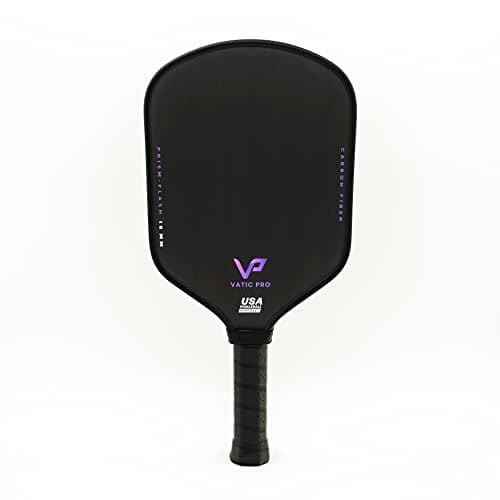
| 01 | Vatic Pro Prism Flash 16mm Raw T700 carbon and foam-injected walls at a price that undercuts every flagship. | Best overall | 4.7/5 | $99.99Amazon |
| 02 | 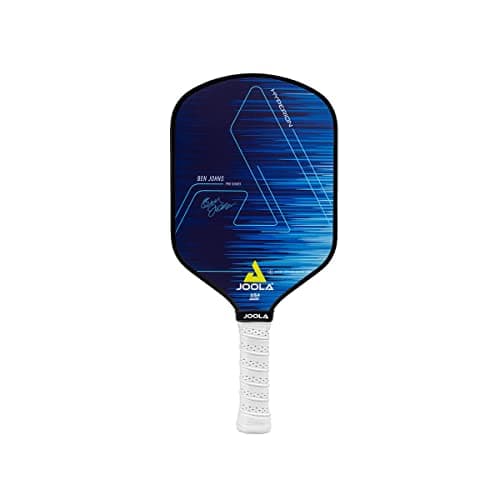 JOOLA Ben Johns Hyperion CAS 16 The high-grit CAS face is still the spin benchmark the rest of the field chases. | Best for spin | 4.7/5 | $119.95Amazon |
| 03 | 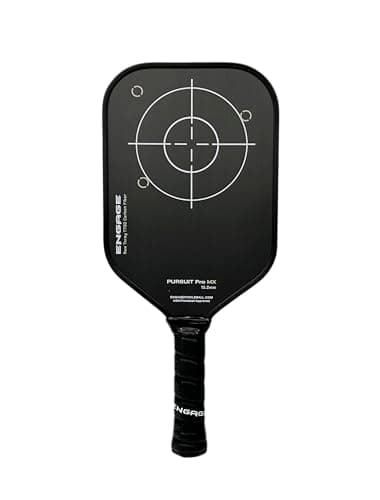 Engage Pursuit Pro MX 6.0 A damped, planted feel that makes resets and blocks sit down instead of springing off. | Best for control | 4.7/5 | $129.99Amazon |
| 04 | 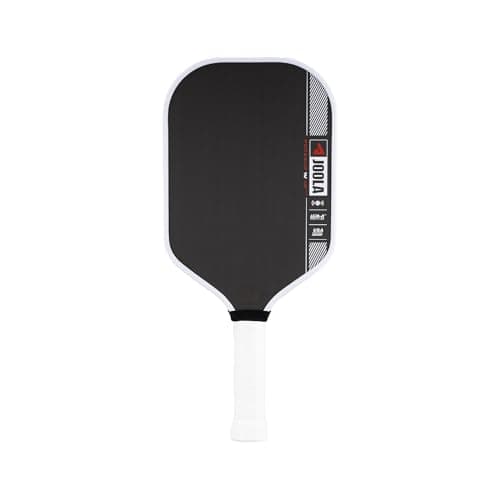 JOOLA Perseus Pro IV 16mm Propulsion Core and real swing weight - a tournament paddle with no weak phase. | Best for power | 4.6/5 | $149.95Amazon |
| 05 | 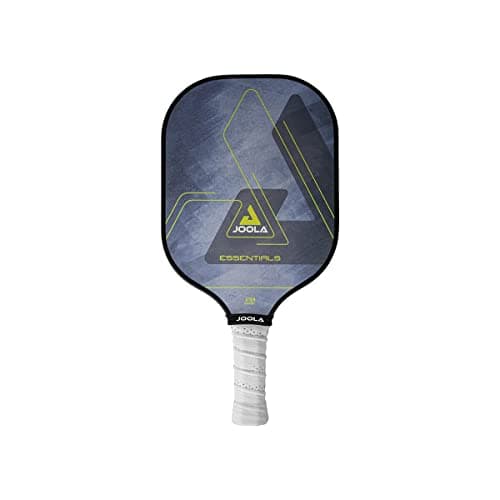 JOOLA Essentials Performance A forgiving fiberglass face from a top brand, at a price that does not punish a false start. | Best for beginners | 4.6/5 | $59.95Amazon |
| 06 | 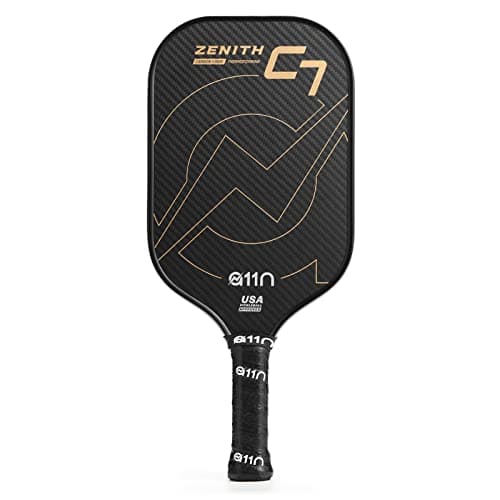 A11N Zenith C7 16mm Thermoformed T700 carbon and foam walls for about what a fiberglass paddle costs. | Best under $75 | 4.6/5 | $49.99Amazon |
| 07 | 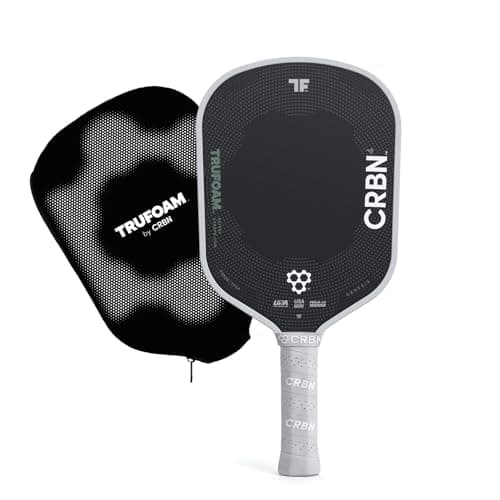 CRBN TruFoam Genesis A full foam core with the widest soft-to-hard range I have felt - and a flagship price. | Best premium | 4.8/5 | $229.99Amazon |
#ad · Live prices from Amazon as of Sep 22, 2026; where we have no verified live price we show none. We may earn a commission — see our affiliate disclosure.
Almost everyone who arrives at this sport from tennis, badminton or squash types the same thing into a search box: best pickleball racket. What comes back is a wall of paddles, because that is the only thing the sport actually sells. The vocabulary gap is harmless, but it hides a real question underneath it — if you already know how to swing a racket, which of these flat, stringless things should you buy, and why do they cost anywhere from forty dollars to well past two hundred?
This page is the one ranked list on this site that spans the whole field. Everywhere else I split paddles up by the job they do — spin, control, power, beginners, under $100— which is the right way to shop once you know what kind of player you are. This is the list for before that. Seven paddles, seven different jobs, each one currently buyable and each one with the honest reason it might be the wrong paddle for you.
My overall pick is the Vatic Pro Prism Flash 16mm, and that is a deliberately unglamorous answer: it is not the most expensive paddle here, and it is not the highest-scoring one. It is the paddle that gives the most players the most of what modern paddle construction actually buys you, for the least money. The highest score on this page belongs to the CRBN TruFoam Genesis, which costs more than twice as much and which I would recommend to maybe one reader in twenty.
Racket, racquet or paddle?
They are all the same object, and the sport's own rulebook calls it a paddle. USA Pickleball's equipment standards specify a solid paddle with no strings, no tensioned membrane and no moving parts, with the combined length plus width capped at 24 inches and the length capped at 17 inches. "Racket" and the British spelling "racquet" are just what people call it before they own one. No manufacturer prints the word on the product, so if you shop by that word you are shopping blind past the specs that matter.
The difference from the racket you already own is bigger than the name suggests. There are no strings, so there is no string bed to deform and grip the ball — all of the spin comes from the texture of the face, which is why the phrase "raw carbon" appears on almost every paddle on this page. There is no tension to tune, so the equivalent adjustment is core thickness: a thicker core absorbs more and plays softer. And the whole thing weighs roughly half what a tennis racket does, which is why paddle weight is quoted in tenths of an ounce and why an ounce either way completely changes how a paddle feels.
How I picked
I play, I buy my own gear, and no brand pays for a place on this page. I have not personally wear-tested all seven of these paddles across a full season, so this is a research-led roundup rather than a lab test and I say so plainly: the specs below come from the manufacturers and the retail listings, the scores are my own editorial judgment, and where a claim is the seller's claim I attribute it to them. There is no invented swing-speed data on this site.
Four bars, and everything here cleared all four.
1. It has to be buyable today.Every paddle on this page was checked against Amazon on the day of publication and returned a live, in-stock price. That single rule is why a couple of paddles that sit on other "best of" lists are not here — the pickleball market churns hard, and a paddle that has quietly gone out of stock is not a recommendation, it is a dead end.
2. It has to own its category outright. Seven picks, seven different jobs. I would rather give you one clear answer per job than rank nine paddles that all do the same thing slightly differently. Where two paddles were close, the cheaper one won.
3. The construction has to be honest about its price.A paddle is a face material, a core, a shape and a weight. Anything charging flagship money needs flagship construction — thermoformed, foam-filled or full-foam, with a raw carbon face. Anything charging beginner money needs to be genuinely forgiving rather than just cheap.
4. It has to be tournament-legal. Every paddle here is certified by USA Pickleball or the UPA-A, which matters the day you enter your first event even if you never do. If you want to check a paddle yourself, our guide to USA Pickleball approved paddles shows you where the official list lives.
At a glance
| Paddle | Category | The spec that earns it | Best for |
|---|---|---|---|
| Vatic Pro Prism Flash 16mm | Best overall | Raw T700 carbon, 16mm, foam-injected walls | Almost everyone, at a sane price |
| JOOLA Ben Johns Hyperion CAS 16 | Best for spin | High-grit CAS face, 5.5 in handle | Spin-first drivers, two-handers |
| Engage Pursuit Pro MX 6.0 | Best for control | 16mm Control Pro core, Vortex Barrier edge | The soft game, resets, blocks |
| JOOLA Perseus Pro IV 16mm | Best for power | Propulsion Core, Tech Flex Power face | Competitive players who drive |
| JOOLA Essentials Performance | Best for beginners | Reinforced fiberglass, honeycomb core | A trustworthy first paddle |
| A11N Zenith C7 16mm | Best under $75 | Thermoformed T700 carbon, foam walls | The most paddle per dollar |
| CRBN TruFoam Genesis | Best premium | 100% foam core, thermoformed unibody | 4.5+ players who shape shots |
Best overall: Vatic Pro Prism Flash 16mm
The Prism Flash is the paddle I recommend more than any other, and the reason is boring in the best way: it has the construction of a paddle costing twice as much, and nothing about it is a compromise you have to work around. The face is raw Toray T700 carbon fiber with heat-compressed texturing, the core is 16mm with foam-injected perimeter walls, and the frame is elongated at 16.2 by 7.7 inches. A few years ago that spec sheet was flagship-only. Today it is the paddle I hand a friend who has played for six months and wants to stop borrowing mine.
| Surface | Raw Toray T700 carbon fiber, heat-compressed texturing |
|---|---|
| Core | 16mm (a 14mm version is also sold) with foam-injected walls |
| Shape | Elongated - 16.2 in x 7.7 in |
| Handle | Standard 5.3 in or Long 5.75 in; 4.125 in grip circumference |
| Weight | About 7.9 - 8.2 oz (16mm); 7.7 - 7.9 oz (14mm) |
| Extras | Includes paddle cover |
| Certification | USA Pickleball approved |
What I like: the raw carbon face grips the ball properly, so the spin you can generate is limited by your technique rather than by the paddle. The foam-injected walls widen the effective hitting area, which is what makes an elongated paddle usable for a player who is still finding the middle. And Vatic sells a long-handle version, so a two-handed backhand is catered for without stepping up a price tier. It leads our best all-court paddles and best paddles under $100 lists for the same reasons.
What gives me pause: Vatic is a direct-to-consumer brand, and popular colorways and weights sell out without warning — check what is actually in stock before you settle on a spec. The 4.125 in grip is slim for a large hand, so budget for an overgrip or two. And a raw face is a consumable surface: it needs a wipe-down every few sessions to keep its bite, which is true of every paddle on this page but truer of the cheaper ones. The full breakdown is in our Vatic Pro Prism Flash review.
Best for spin: JOOLA Ben Johns Hyperion CAS 16
The Hyperion is the paddle that made high-grit faces the standard, and it is still the one I use as the reference point. JOOLA's Carbon Abrasion Surface is one of the grippiest legal faces in the sport, sitting over a 16mm polypropylene honeycomb core in an elongated frame with a 5.5 inch Sure-Grip handle and an average weight JOOLA lists at 8.3 oz. For a tennis player with a heavy topspin forehand, this is the paddle where that swing translates on day one instead of month three.
| Surface | Carbon Abrasion Surface (CAS), high grit |
|---|---|
| Core | 16mm polypropylene honeycomb |
| Shape | Elongated, 16.5 in x 7.5 in |
| Handle | 5.5 in Sure-Grip elongated handle; 4.25 in grip |
| Weight | 8.3 oz average, per JOOLA (8.1 - 8.5 oz range) |
| Certification | USA Pickleball approved |
What I like: the CAS face bites hard enough that a topspin roll from below net height is a realistic shot rather than a hope, and the elongated frame adds reach on serves, drives and stretch volleys. The 5.5 in handle is a genuine 5.5 in rather than a marketing number, which makes it one of the few flagship paddles that actually fits a two-handed backhand. It tops our best paddles for spin list and our best elongated paddles list.
What gives me pause: 8.3 oz is heavy, and an elongated frame puts the sweet spot higher and narrower than a widebody does. Together that means mishits both happen more often and cost you more, and if you have any history of elbow trouble this is not the place to start — read best paddles for tennis elbow instead. It is also priced in the upper-mid tier, and the gritty face needs cleaning to hold its spin. Our full JOOLA Hyperion review has the long version.
Best for control: Engage Pursuit Pro MX 6.0
Control is the hardest category to shop, because every paddle claims it. The Pursuit Pro MX is the one that earns it structurally rather than in the copy. Engage pairs a raw carbon-fiber face with a plush 16mm Control Pro polymer core and adds the Vortex Barrier edge, which damps vibration around the perimeter. The result is a paddle that feels planted and quiet: a reset drops instead of springing off the face, and a block at the kitchen line stays down where you aimed it.
| Surface | Raw carbon fiber (textured) |
|---|---|
| Core | 16mm Control Pro polymer |
| Shape | Elongated |
| Feature | Vortex Barrier edge (vibration damping) |
| Made in | USA (Engage) |
| Best for | Players who want a quiet, planted control feel |
What I like: the damping is the real feature, and it is the kind of thing that only shows up in the third hour of open play, when your hands are tired and a jumpy paddle starts popping resets up into someone's attack. Engage has a long-standing reputation for tight quality control, and the raw face still holds enough grit to shape a slice. It is the top pick in our best control paddles roundup.
What gives me pause: this is premium-tier money for a paddle that deliberately gives up raw power — if you win points by driving the ball, you will feel like you are working harder than your opponents. The Amazon listing is also confusingly labeled: the title carries a 15.2mm figure while naming a 16mm Control Pro core, so read the variant description carefully and make sure you are buying the thickness you wanted. If you want the same brand with more pop, the Engage Pursuit Pro1 is the louder sibling.
Best for power: JOOLA Perseus Pro IV 16mm
The Perseus Pro IV is the most complete tournament paddle JOOLA makes, and the reason it wins the power category rather than a cheaper, poppier paddle is that its power does not come at the cost of everything else. The Propulsion Core stores and returns energy on drives, the Tech Flex Power carbon face keeps hold of the ball at high swing speeds, and the elongated 16mm build gives it reach plus enough absorption to reset when you need to. It carries dual UPA-A and USAP certification, which covers most sanctioned events.
| Core | Propulsion Core |
|---|---|
| Surface | Tech Flex Power carbon |
| Shape | Elongated |
| Thickness | 16mm |
| Certification | UPA-A and USAP certified |
What I like: there is no genuinely weak phase in this paddle. Drives, counters, rolls and resets are all strong, which is rare at any price, and the swing weight means a clean drive goes through the court rather than sitting up. If you compete and want one paddle for everything, this is the honest answer. It anchors our best paddles for advanced players list and sits in the premium slot of best paddles for power.
What gives me pause: the same swing weight that drives the ball punishes late hands in a fast exchange at the net, and it is a flagship price for a ceiling most club players will never reach. The cheaper JOOLA Perseus 16mmgets you most of the same character for a lot less, and for most readers that is the smarter buy — this pick is for people who are genuinely competing. Our Perseus Pro IV review lays out where the extra money goes.
Best for beginners: JOOLA Essentials Performance
If you have played fewer than twenty sessions, this is the paddle to buy, and the money you save is better spent on court shoes. The Essentials Performance uses a reinforced fiberglass faceover a honeycomb polypropylene core — the oldest and most forgiving combination in the sport. Fiberglass flexes more than carbon, which means a slightly larger margin for error on contact and a softer, friendlier feel while your hands are still learning what a paddle does.
| Surface | Reinforced fiberglass |
|---|---|
| Core | Honeycomb polypropylene |
| Feel | Forgiving, easy to control |
| Brand | JOOLA (pro-level pedigree) |
| Best for | New players who want a trusted first paddle |
What I like: it is a real paddle from a real brand at a price that does not punish you for discovering the sport is not for you. Nothing about it fights a new player — it is light in the hand, the sweet spot is friendly, and it will not teach you the bad habits a wooden set paddle does. It leads our best paddles for beginners list.
What gives me pause: fiberglass does not grip the ball the way raw carbon does, so the spin ceiling is genuinely lower, and a player who catches the bug will want to upgrade inside a year. That is fine — that is what this paddle is for — but go in knowing it is a stepping stone rather than a keeper. If you are buying for two people at once, a bundle may be better value: see our pickleball starter set guide.
Best under $75: A11N Zenith C7 16mm
The Zenith C7 is the paddle that shows how far the budget end has come. For roughly the price of a fiberglass beginner paddle you get a Toray T700 carbon-fiber face on a thermoformed unibody build with foam-injected perimeter walls— the same three construction ideas the flagship paddles on this page are built on. It plays firmer and livelier than its price suggests, and it is USA Pickleball approved.
| Surface | T700 carbon fiber (textured, thermoformed) |
|---|---|
| Core | 16mm polymer honeycomb, foam-injected walls |
| Shape | Elongated |
| Weight | About 8.0 - 8.4 oz |
| Certification | USA Pickleball approved |
| Best for | Players who want a modern carbon build cheaply |
What I like: a genuine thermoformed carbon paddle at a price that used to buy you plywood. The spin is real, the pop is real, and as a second paddle to keep in the car it is hard to argue with. It wins our best paddles under $75 list and appears in best value paddles.
What gives me pause: it runs on the heavy end of the range, so quick hands at the net take some adjusting, and the elongated shape trades sweet-spot forgiveness for reach — a combination that makes this a better second paddle than a first one. The open question with any budget thermoformed paddle is how long the face grit and the foam edge hold up under heavy play; there is no long-term durability data I would trust here, and I am not going to invent any.
Best premium: CRBN TruFoam Genesis
The TruFoam Genesis is the highest-scoring paddle on this page and the one I recommend least often, which is not a contradiction. Instead of a honeycomb core with foam injected around the edges, it uses a 100% foam corein a thermoformed unibody, wrapped in a carbon-fiber face and cut to CRBN's hybrid AeroCurve shape. The effect is the widest gap between a soft shot and a hard one I have felt in a paddle — a dead-feeling reset and a genuinely heavy drive out of the same frame.
| Core | 100% foam |
|---|---|
| Surface | Carbon fiber |
| Shape | Hybrid AeroCurve |
| Construction | Thermoformed unibody |
| Tier | Premium flagship |
What I like: the effective response area is unusually large for a hybrid shape, so contact near the edge behaves far more like center contact than it has any right to. If you already control pace deliberately — if you know the difference between the reset you meant and the one that floated — this paddle gives you more range to work with than anything else here. It tops our best paddles for advanced players list and our best Gen 3 foam-core paddles guide.
What gives me pause: the price, first and loudest — this is one of the most expensive paddles you can buy, and nothing about it will fix a 3.0 game. The feel is firmer and more demanding than most players expect on first hit, and the extra stored energy makes resets easy to overhit until you recalibrate, which takes a few sessions. Buy it because you have plateaued on a good paddle, not because it is the most expensive thing on the list. Our full CRBN TruFoam Genesis review is blunt about who should not buy it.
The four specs that decide it
Ignore the marketing names. Every paddle on the market is a combination of four things, and if you can read those four off a listing you can shop this entire category without anyone's help.
Face material.Raw carbon fiber — usually Toray T700 — has a rough, unpainted surface that grips the ball and generates spin. Fiberglass flexes more, hits a little harder off the face and grips less. Graphite sits in between and is what most classic paddles used. If spin matters to you, the face is the spec that buys it, and carbon vs fiberglass is the page to read next.
Core thickness.16mm absorbs more, plays softer and is more forgiving; 14mm is firmer, faster and more powerful with a smaller margin for error. Six of the seven paddles here are 16mm, which is not an accident — it is the thickness that suits the way most people actually play. 14mm vs 16mm covers the trade-off in detail.
Shape.Elongated paddles trade a smaller, higher sweet spot for reach and leverage. Widebody paddles trade reach for a big forgiving hitting area. Hybrids split the difference. Most of this list is elongated because that is where the modern market sits, but a newer player is often better served by a widebody — see best widebody paddles and paddle shapes explained.
Weight. Under about 7.8 oz is light and maneuverable but gives up plow-through. Over about 8.2 oz drives well but loads the elbow on every off-center hit. Most players land between, and you can always add lead tape later but you can never take an ounce out. Our paddle weight guide and lead tape guide cover both directions. Grip circumference is the fifth spec people forget: measure yours with the index-finger test in our grip size guide before you spend two hundred dollars on the wrong handle.
What to skip
Wooden paddles. They are heavy, dead, and the cheapest possible way to make the sport feel worse than it is. If your budget is genuinely tiny, a composite paddle from a real brand costs a few dollars more and plays like a different sport.
Anything that will not tell you its weight, core thickness and face material. Those three numbers cost nothing to publish. A listing that hides them behind words like "pro-grade" and "maximum power" is hiding them for a reason.
A second paddle bought before session twenty. The most common mistake I see is a new player buying a flagship paddle in month two because their drives keep going long. Drives go long because of contact point and swing path, not because of the paddle. Play the forgiving paddle until you can name what you want it to do differently.
Paddle prices that look too good on a marketplace listing. Counterfeit flagship paddles are a real problem in this category. Buy from the brand or from a listing sold and shipped by a seller you recognize, and treat a sixty-dollar Hyperion as the warning sign that it is. The context on what paddles genuinely cost is in how much a pickleball paddle costs.
The bottom line
There is no such thing as a pickleball racket, and once you stop shopping for one the category gets much simpler. For the overwhelming majority of players the answer is the Vatic Pro Prism Flash 16mm: modern construction, a face that actually grips, and a price that leaves you money for shoes. If you are brand new, the JOOLA Essentials Performance is the paddle that will not get in your way while you learn, and if the budget is the binding constraint the A11N Zenith C7 is the most carbon fiber anyone sells for the money.
From there it is about the shot you want to own. Spin, the JOOLA Hyperion CAS 16. The soft game, the Engage Pursuit Pro MX. Drives and competition, the JOOLA Perseus Pro IV. And if you have genuinely outgrown a good paddle — not before — the CRBN TruFoam Genesis has more range in it than you will use for a while. If you are still working out which of those you are, start with how to choose a pickleball paddle and work back to this page.
Frequently asked questions
Is a pickleball racket the same thing as a pickleball paddle?
Yes. The sport's rulebook and every manufacturer call it a paddle, and USA Pickleball's equipment standards define it as a solid hitting surface with no strings, no tensioned membrane and no moving parts. "Racket" and "racquet" are what people call it before they buy one, usually because they are arriving from tennis, badminton or squash. If you search for pickleball rackets you will be shown paddles, and nothing is lost except the right vocabulary for reading a spec sheet.
What is the best pickleball racket overall in 2026?
For most players, the Vatic Pro Prism Flash 16mm. It pairs a raw Toray T700 carbon face with a 16mm core and foam-injected perimeter walls — construction that was flagship-only a few years ago — at a price well under the premium tier. It is not the highest-scoring paddle on this page (that is the CRBN TruFoam Genesis, at more than twice the price), but it is the one that gives the largest number of players the most of what modern paddle construction actually buys.
How much should I spend on my first pickleball paddle?
Less than you think. A forgiving fiberglass paddle from a real brand, like the JOOLA Essentials Performance, is enough for your first twenty sessions, and a budget carbon paddle such as the A11N Zenith C7 covers you well past that. Spend the difference on court shoes instead — they are the only pickleball purchase with a genuine injury argument behind them. Upgrade when you can name the shot you want the paddle to do better.
Do more expensive pickleball paddles actually play better?
Up to a point, then the returns fall off sharply. Moving from a wooden or basic composite paddle to a raw-carbon, foam-filled paddle is a real and obvious change in spin and control. Moving from a good hundred-dollar paddle to a flagship is a change in range and feel that mostly benefits players who already control pace deliberately. Our article on whether expensive paddles play better goes through the evidence.
What pickleball paddle should a tennis player buy?
Look for two specs. A handle of 5.5 inches or longer if you hit a two-handed backhand — the JOOLA Ben Johns Hyperion CAS 16 and the long-handle Vatic Pro Prism Flash both qualify — and a 16mm core rather than 14mm, because the thicker core absorbs more and will not punish a full tennis swing as harshly. A high-grit face such as JOOLA's CAS also means the topspin you already own translates immediately instead of after months of adjustment.
Are all of these paddles tournament legal?
Every paddle on this page carries USA Pickleball approval, and the JOOLA Perseus Pro IV additionally carries UPA-A certification, which covers most professional and sanctioned events. Certification can change and paddles are occasionally delisted, so if you are entering a sanctioned tournament, check the official approved-equipment list for your exact model and generation before you play.
What is the difference between a 14mm and a 16mm pickleball paddle?
Core thickness changes how much the paddle absorbs. A 16mm core is softer, more forgiving and better for resets and control; a 14mm core is firmer, faster off the face and more powerful, with a smaller margin for error. Six of the seven paddles here are 16mm because that is what suits the way most people play. If you drive the ball flat and want extra pop, 14mm is worth trying — several of these models, including the Prism Flash, are sold in both.
Sources
- USA Pickleball - equipment standards (paddle definition, 24 in length-plus-width and 17 in length limits, approved equipment list)
- Vatic Pro - Prism Flash published specifications (raw Toray T700 face, 16mm and 14mm cores with foam-injected walls, 16.2 x 7.7 in, 5.3 in / 5.75 in handles, 4.125 in grip, 7.9 - 8.2 oz)
- JOOLA - Ben Johns Hyperion CAS 16 specifications (Carbon Abrasion Surface, 16mm polypropylene core, 16.5 x 7.5 in, 5.5 in Sure-Grip handle, 4.25 in grip, 8.3 oz average) and Perseus Pro IV specifications (Propulsion Core, Tech Flex Power face, 16mm, UPA-A and USAP certified)
- Engage Pickleball - Pursuit Pro MX specifications (raw carbon face, Control Pro core, Vortex Barrier edge technology)
- CRBN Pickleball - TruFoam Genesis specifications (100% foam core, carbon fiber face, thermoformed unibody, hybrid AeroCurve shape)
- A11N Sports - Zenith C7 specifications (T700 carbon face, 16mm thermoformed core with foam-injected walls, elongated shape, USA Pickleball approved)
- Amazon retail listings - availability, current pricing and seller-stated features for all seven paddles, checked 2026-09-22 (reached via the buy links on this page)
Keep reading
Upgrading your paddle or gearing up to play?
See how we pick, then dig into the paddle roundups and buying guides — honest picks from someone who actually plays, with no inventory to move.