Paddle Roundup
The Best 16mm Pickleball Paddles in 2026
A 16mm core is the thicker of the two standard thicknesses, and it buys you dwell time, resets and a bigger margin for error. These are the six best, from about $30 to flagship money - and an honest account of who should buy 14mm instead.
The short answer
Quick picks
| # | Product | Best for | Score | Price |
|---|---|---|---|---|
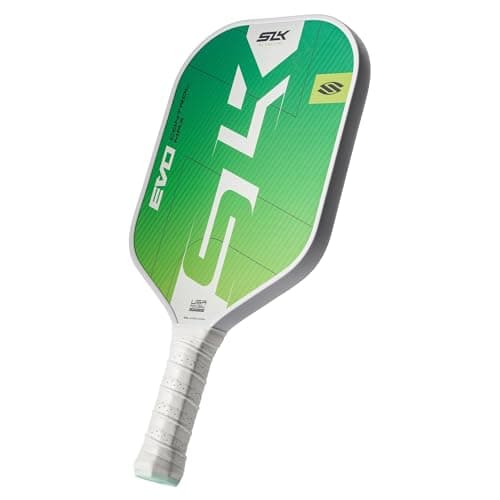
| 01 | Selkirk SLK Evo Control Max A carbon face on a control-tuned 16mm core in Selkirk's widest shape - the safe default. | Best 16mm overall | 4.6/5 | $64.97Amazon |
| 02 | 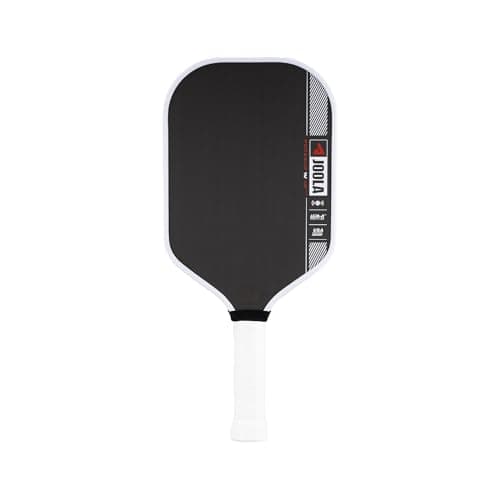 JOOLA Perseus Pro IV 16mm Proof a thick core does not mean a soft paddle - 16mm with real drive behind it. | Best 16mm for power | 4.8/5 | $149.95Amazon |
| 03 | 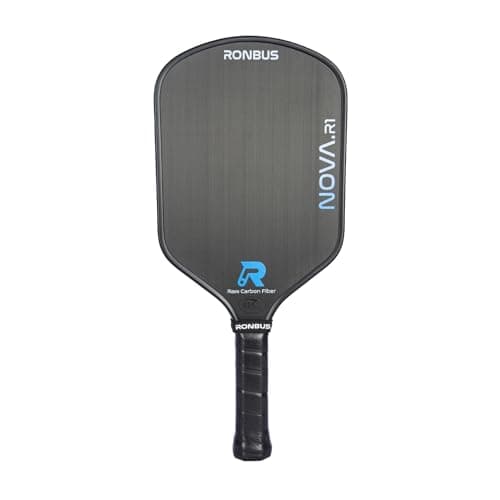 Ronbus R1.16 Nova Raw Toray T700 carbon over a thermoformed 16mm core, at well under $100. | Best value thermoformed 16mm | 4.5/5 | $63.99Amazon |
| 04 | 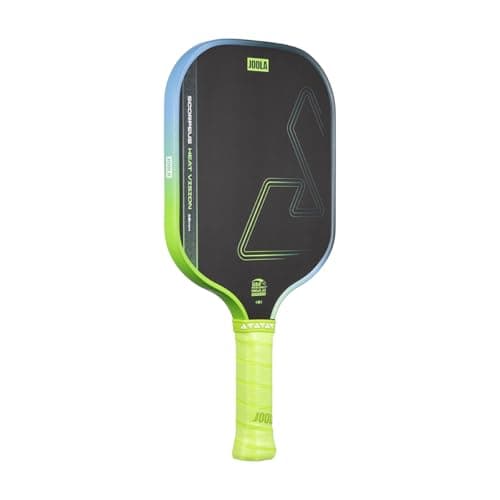 JOOLA Scorpeus Heat Vision 16mm A wide standard head with SK Film damping - the most forgiving modern 16mm here. | Best standard-shape 16mm | 4.4/5 | $99.95Amazon |
| 05 | 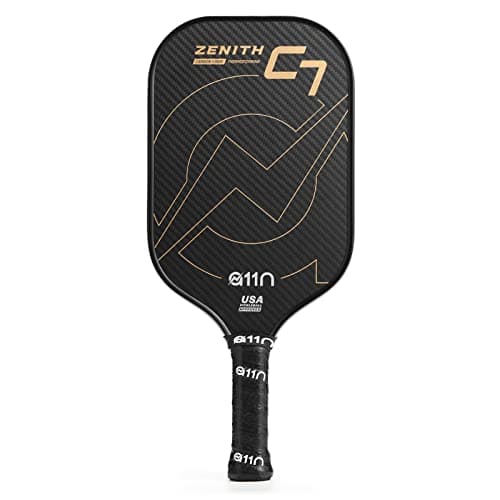 A11N Zenith C7 16mm A thermoformed T700 carbon face with foam walls for about the price of two overgrips. | Best budget 16mm | 4.2/5 | $34.99Amazon |
| 06 | 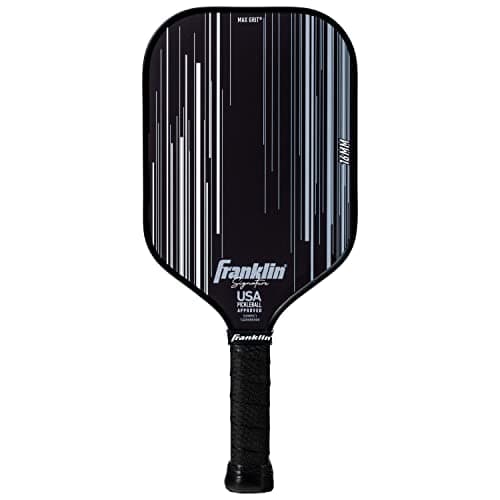 Franklin Signature Pro 16mm USA Pickleball approved on a 16mm control core, for less than a decent overgrip multipack. | Cheapest tournament-legal 16mm | 4.1/5 | $31.65Amazon |
#ad · Live prices from Amazon as of October 6, 2026; where we have no verified live price we show none. We may earn a commission — see our affiliate disclosure.
What a 16mm core actually does
Core thickness is the most consequential paddle spec that buyers understand the least. Almost every serious paddle made today comes in one of two thicknesses — about 14mm or about 16mm — and the choice changes how the paddle plays more than the brand on the face does.
A 16mm core is thicker, so the honeycomb cells are longer and the whole structure flexes a little more slowly under load. In practice that produces three things. Dwell time: the ball stays on the face a fraction longer, which gives you more time to influence its direction and more grip for spin. Reset ability: a thicker core absorbs incoming pace rather than returning it, which is exactly what you want when you are blocking a drive down into the kitchen. Forgiveness: the effective sweet spot is larger and off-center contact loses less, because the core deforms more evenly across the face.
The cost is pop. A 16mm paddle gives you less free power than a 14mm version of the same model, so drives and put-aways need more from your own swing. That is the whole trade-off, and our 14mm vs 16mm guide works through it in full. This page is the shopping list that guide has been missing.
Who should buy 14mm instead
Three groups should stop reading and go look at 14mm paddles, because this page is not for them.
Players who cannot generate their own pace. If your drives already land short, a thicker core will make that worse. A 14mm paddle hands you free power, and there is no shame in taking it.
Singles players and anyone whose game is built on driving. If you win points by hitting through people rather than out-dinking them, the pop you give up at 16mm is the pop you actually use.
Players coming from tennis who swing fast and long. You usually bring enough racket-head speed that the extra dwell time is less valuable to you than the quicker, livelier response of a thinner core. Our paddles for tennis players page covers that case properly.
Everyone else — which is most recreational and most doubles players, at almost every level — is better served at 16mm. If you spend most of a game at the kitchen line, the thicker core is simply the right tool.
How we picked
Three rules. Every paddle had to be a genuine 16mm coreper the manufacturer's own published spec — no 15.2mm or 14.3mm paddles rounded up, which rules out several good paddles we carry elsewhere. Every paddle had to be in stock on Amazon with a live price, re-verified on the day this page published. And the six had to spread across the real decisionsa 16mm buyer faces — control or power, standard or elongated, $30 or flagship — rather than stacking six similar control paddles. Our full method is on how we review.
Specs come from manufacturer and retailer listings. We have not measured core thickness ourselves, and where a listing is vague about it we have left the paddle off rather than assume.
At a glance
| Paddle | Face | Shape | Construction | Best for |
|---|---|---|---|---|
| Selkirk SLK Evo Control Max | Carbon fiber | Widebody (Max) | Control-tuned polymer core | Best overall |
| JOOLA Perseus Pro IV 16mm | Tech Flex Power carbon | Elongated | Propulsion Core | Power |
| Ronbus R1.16 Nova | Raw Toray T700 carbon | Elongated, edge grid | Thermoformed | Value thermoformed |
| JOOLA Scorpeus Heat Vision | Textured carbon | Standard | SK Film damping | Forgiveness |
| A11N Zenith C7 16mm | T700 carbon, textured | Elongated | Thermoformed, foam walls | Budget |
| Franklin Signature Pro 16mm | MaxGrit fiberglass | Standard | Polypropylene honeycomb | Cheapest legal |
Best 16mm overall: Selkirk SLK Evo Control Max
Who it is for: almost anyone buying their first or second real 16mm paddle.
The SLK Evo Control is the paddle I point most 16mm shoppers at, because it stacks every forgiveness advantage in one place and then charges under $100 for it. You get a carbon fiber face, a control-tuned polymer core, and the Maxwidebody outline — Selkirk's widest shape. A thick core enlarges the sweet spot and a widebody face enlarges the target, so the two work in the same direction instead of against each other.
| Surface | Carbon fiber |
|---|---|
| Core | Control-tuned polymer |
| Shape | Widebody (Max) |
| Line | Selkirk SLK (sub-$100 tier) |
| Best for | A forgiving carbon 16mm under $100 |
What I like: it is the least-risky paddle on this page. A carbon face means it can still bite the ball, the control tuning means it resets properly, and Selkirk's support is among the best in the sport if something goes wrong. It is also the overall pick on our best widebody paddles roundup and a core recommendation on best paddles for control.
What gives me pause: the SLK line is Selkirk's entry tier, and it is not thermoformed — so it does not have the firm, connected feel of the Ronbus or the A11N below, and advanced players often describe it as slightly muted. The widebody outline also costs you reach at the stretch volley. If you are already a consistent 4.0, this is a paddle you will outgrow.
Best 16mm for power: JOOLA Perseus Pro IV 16mm
Who it is for: the 3.5-plus player who wants drive and reach without giving up the reset.
This is the paddle that disproves the thickness-equals-control shorthand. The Perseus Pro IV is a 16mm core, and it is one of the hardest-hitting paddles in the sport, because JOOLA builds it elongated on a Propulsion Core with a stiff Tech Flex Power carbon face. You get the thick core's dwell time and reset behavior, and the elongated head's leverage, at the same time. It carries both UPA-A and USAP certification.
| Core | Propulsion Core |
|---|---|
| Surface | Tech Flex Power carbon |
| Shape | Elongated |
| Thickness | 16mm |
| Handle | 5.5 in |
| Certification | UPA-A and USAP certified |
What I like: it is the most complete paddle here, and the 5.5 inch handle leaves room for a two-handed backhand. It is the power pick on our best pickleball rackets ranking and on best paddles for men.
What gives me pause: the price, by a long way — it is several times the cost of the two budget picks below, and the gap in on-court results is nothing like several times. The elongated head also carries real swing weight, so hand speed in fast kitchen exchanges suffers, and the narrower face punishes inconsistent contact. Below 3.5, buy the Scorpeus.
Best value thermoformed 16mm: Ronbus R1.16 Nova
Who it is for: the player who wants the modern thermoformed feel and will not pay flagship money for it.
The R1.16 is the best-value serious paddle on this page. The ".16" in the name is the core thickness, and Ronbus builds it thermoformed— the shell is pressed and cured as one unit with the foam-filled perimeter, which makes the whole paddle stiffer and more connected than a cold-pressed build. The face is raw Toray T700 carbon, which is the material that actually grips the ball, in an elongated outline with an edge grid.
| Surface | Raw Toray T700 carbon fiber |
|---|---|
| Core | 16mm polypropylene honeycomb, thermoformed |
| Shape | Elongated with edge grid |
| Certification | USA Pickleball approved |
| Best for | First real paddle on a budget |
What I like: raw carbon plus thermoforming plus a 16mm core is the specification of a $200 paddle, and this is not priced like one. Our thermoformed vs cold-pressed guide explains why that construction matters more than the logo. It is also an all-court pick on best all-court paddles.
What gives me pause: thermoformed paddles with foam walls are the construction most associated with delamination, where the face separates from the core and the paddle gets illegally hot. Ronbus has a good record, but the risk is real across the category and it is the honest reason this is not the top pick. Ronbus is also a direct-to-consumer brand with a smaller support footprint than Selkirk or JOOLA, and Amazon stock on specific models comes and goes.
Best standard-shape 16mm: JOOLA Scorpeus Heat Vision 16mm
Who it is for: the player who wants a modern 16mm paddle but keeps missing the middle of an elongated face.
Three of the paddles on this page are elongated, and elongated faces are narrower. The Scorpeus is the modern standard-shape alternative: textured carbon over a 16mm core in a wide standard head, with SK Film damping to cut vibration. Combining a thick core with a wide head gives you the two biggest forgiveness levers available, which makes this the most mistake-tolerant paddle here that still feels current.
| Surface | Textured carbon fiber |
|---|---|
| Core | 16mm |
| Shape | Standard |
| Damping | SK Film (reduced vibration) |
| Certification | USAP approved |
What I like: it is the paddle most 3.0 to 3.5 players should actually buy instead of the flagship, and the damping makes it one of the kinder paddles here on the elbow — worth knowing if you are managing tennis elbow. It is the standard-shape pick on best widebody paddles.
What gives me pause: a standard head means genuinely less reach than the Perseus or the Ronbus, and you will notice it on wide balls and overheads. The handle is standard length, so a two-handed backhand is cramped. The textured carbon face is also sprayed rather than raw, which means its spin ceiling drops as the texture wears.
Best budget 16mm: A11N Zenith C7 16mm
Who it is for: the player who wants a thermoformed carbon 16mm paddle for the smallest possible outlay.
The Zenith C7 is the cheapest paddle here with a genuinely modern specification: a textured T700 carbon fiber face, a 16mm polymer honeycomb core with foam-injected walls, thermoformed construction, elongated shape and USA Pickleball approval. Five years ago that spec sheet would have cost four figures of marketing hype. It is a lot of paddle for the money.
| Surface | T700 carbon fiber (textured, thermoformed) |
|---|---|
| Core | 16mm polymer honeycomb, foam-injected walls |
| Shape | Elongated |
| Weight | About 8.0-8.4 oz |
| Certification | USA Pickleball approved |
| Best for | Players who want a modern carbon build cheaply |
What I like: it is the clearest value on this page and a legitimate way to find out whether you like the thermoformed 16mm feel before committing real money. It is the overall pick on our best paddles under $75 roundup.
What gives me pause: at 8.0 to 8.4 oz it is the heaviest paddle on this page, and on an elongated outline that is a lot of swing weight for a player with slower hands. A11N is a budget brand without the quality-control record or the warranty support of Selkirk or JOOLA, so unit-to-unit consistency is less certain and resale value is effectively nil. And the same delamination caveat that applies to the Ronbus applies here, with less of a track record behind it.
Cheapest tournament-legal 16mm: Franklin Signature Pro 16mm
Who it is for: a league starting next week and a budget that has already gone on shoes.
It is genuinely rare to find a USA Pickleball tournament approved paddle at this price, and the Signature Pro is one. Franklin uses a MaxGrit textured surface over a 16mm polypropylene honeycomb core, in a standard shape with an unusually large grip. Franklin is the official ball supplier to USA Pickleball, so this is a real product from a real brand rather than a marketplace paddle with a sticker on it.
| Surface | MaxGrit (textured fiberglass) |
|---|---|
| Core | 16mm polypropylene |
| Shape | Standard |
| Grip | About 4 1/2 in (large) |
| Certification | USA Pickleball tournament approved |
| Brand | Franklin Sports |
What I like: a 16mm control core and tournament approval for the price of a few sleeves of balls, so you will not have to rebuy when you enter a sanctioned event. The large grip is a real advantage if your hands are big. It is the tournament-legal value pick on best paddles under $100.
What gives me pause: the face is fiberglass, not carbon, and that is the big compromise — MaxGrit bites noticeably less than a raw carbon face, wears smoother over time, and a fiberglass face is livelier and less predictable on touch shots. The grip is only offered large, so smaller hands have no option in this model. You are buying legality and a thick core, not a face that shapes the ball.
Three things 16mm does not fix
It does not add spin on its own.Dwell time helps, but spin comes overwhelmingly from the face — raw carbon grips, sprayed texture grips less, fiberglass grips least. A 16mm fiberglass paddle will spin less than a 14mm raw carbon one. Our best carbon fiber paddles page is the right place to shop if spin is the goal.
It does not make a paddle legal.Thickness has nothing to do with certification. Approval depends on dimensions, surface roughness and the manufacturer submitting the model — see are pickleball paddles USA Pickleball approved for how to check a specific paddle before a sanctioned event.
It does not cure arm pain by itself. A thicker core does damp vibration, and that genuinely helps. But grip circumference, total weight, balance and how hard you squeeze matter at least as much. If your elbow hurts, read best paddles for tennis elbow rather than just buying thicker.
The bottom line
Buy the Selkirk SLK Evo Control Max if you want one safe answer: a carbon face, a control-tuned 16mm core, the widest shape Selkirk makes, and real support behind it for under $100. If you play at 3.5 or above and want drive and reach with the thick-core reset intact, the JOOLA Perseus Pro IV is the best paddle here and priced accordingly.
Want the modern thermoformed feel without the flagship bill? The Ronbus R1.16 Nova. Still mis-hitting elongated paddles? The JOOLA Scorpeus is the honest choice. On the tightest budget, the A11N Zenith C7 gets you a thermoformed carbon 16mm paddle for very little, and the Franklin Signature Pro gets you a legal one for less still. And if after all this you suspect you want more free power than any of them will give you, go read the 14mm vs 16mm guideand buy the thinner core instead — that is a legitimate answer, not a downgrade.
Frequently asked questions
What is the best 16mm pickleball paddle?
The Selkirk SLK Evo Control Max, for most players. It combines a carbon fiber face, a control-tuned 16mm polymer core and Selkirk's widest Max outline, so the thick core's larger sweet spot and the widebody's larger target work together - and it sits under $100 with proper warranty support. If you play at 3.5 or above and want power as well, the JOOLA Perseus Pro IV 16mm is the better paddle.
Is a 16mm paddle better than a 14mm paddle?
Neither is better; they do different things. A 16mm core gives you more dwell time, better resets and a larger effective sweet spot, which suits doubles and anyone who lives at the kitchen line. A 14mm core gives you more pop and a quicker, livelier response, which suits players who drive the ball or cannot generate their own pace. Most recreational doubles players are better served at 16mm.
Does a 16mm paddle have less power?
A 16mm version of a given model gives you less free power than the 14mm version, yes - the thicker core absorbs more of the incoming energy instead of returning it. But thickness is only one input. The JOOLA Perseus Pro IV is a 16mm paddle and one of the most powerful on the market, because its elongated shape, stiff carbon face and foam-filled perimeter all push the other way.
Is 16mm good for beginners?
Yes, generally it is the better starting point. The larger effective sweet spot means off-center contact costs you less, and the better reset behavior helps you survive the kitchen exchanges where beginners lose most points. The one exception is a player who cannot yet generate any pace of their own, who may get more out of a 14mm paddle's free power.
Does a thicker core help with tennis elbow?
It helps, but it is not a cure. A 16mm core damps more vibration than a 14mm one, and vibration is part of the problem. Grip circumference that is too small, a paddle that is too heavy or badly balanced, and simply gripping too hard all matter at least as much. Our best paddles for tennis elbow page handles the full picture rather than just thickness.
Are all 16mm paddles USA Pickleball approved?
No. Core thickness has nothing to do with certification, which depends on the paddle's dimensions, surface roughness and the manufacturer actually submitting the model for testing. Every paddle on this page is approved, but plenty of 16mm paddles are not. Always check the current approved list before a sanctioned event rather than trusting a product listing.
Sources
Keep reading
Upgrading your paddle or gearing up to play?
See how we pick, then dig into the paddle roundups and buying guides — honest picks from someone who actually plays, with no inventory to move.