Buying Guide
Pickleball Shoes vs Tennis Shoes
Tennis shoes are court shoes, so they are already the right tool - and often the cheaper one. Here is the short list of things pickleball-specific shoes genuinely do better, and who should pay for them.
The short answer
A tennis shoe is a perfectly correct pickleball shoe, and for most players it is the better buy. Tennis shoes and pickleball shoes are both court shoes: the low firm platform and the lateral-grip outsole that make pickleball safe are standard on both. Tennis shoes are usually cheaper for the same construction, and the outsole compounds are often harder-wearing because tennis players cover more ground.
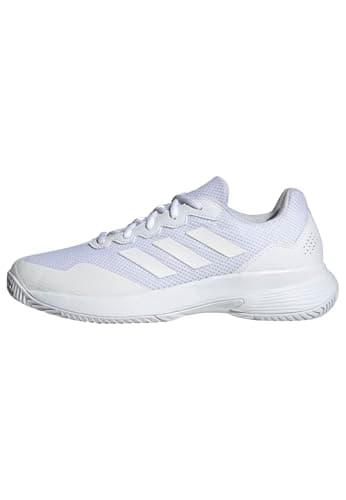
Pickleball-specific shoes earn their premium in four narrower ways — a slightly wider and lower platform, more toe-drag reinforcement, non-marking outsoles aimed at indoor courts, and comfort packages tuned for standing-and-shuffling rather than running-and-sprinting. If you play indoors a lot, drag your toe, or want the most cushioned option available, buy pickleball-specific. Otherwise an entry-level tennis shoe like the adidas Gamecourt 2 does the job for less.
What is not acceptable, in either direction, is a running shoe. That is the comparison that actually matters, and it has its own page: what shoes not to wear for pickleball.
What the two have in common
Almost everything that matters, which is why this comparison turns out less dramatic than the marketing suggests.
A low, firm, wide platform. Both are built so the foot sits close to the ground on a stable base. This is the feature that stops the foot rolling over the edge of the shoe during a lateral push, and it is the single most important safety property of any court shoe.
A lateral-grip outsole. Herringbone or modified-herringbone tread that grips sideways, rather than the narrow forward-biased outsole of a running shoe.
Reinforced toe and lateral overlays. Both have a cage, overlay or toe reinforcement to handle the abrasion and shear of side-to-side movement.
Firm midsoles. Both deliberately use less and firmer cushioning than running shoes, because soft tall cushioning is unstable under sideways load.
The four real differences
1. Platform width and height. Pickleball courts are smaller than tennis courts, so the movement pattern is shorter, more frequent and more lateral, with less forward sprinting. Pickleball-specific shoes tend to sit a little lower and wider to suit that, which gives a marginal stability advantage in the split-step-and-shuffle pattern of a kitchen-line exchange. It is a real difference, and it is small.
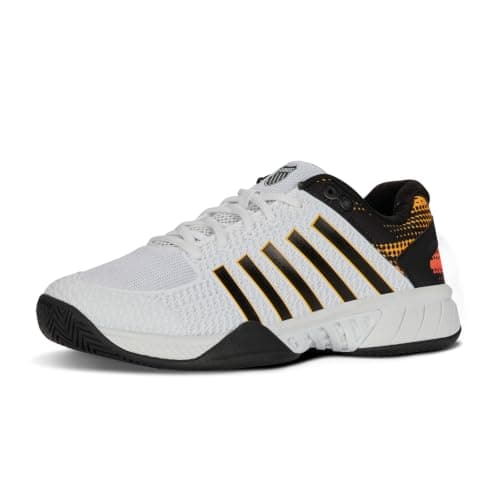
2. Toe-drag reinforcement.Pickleball players drag the toe of the back foot on the serve and on low volleys more than tennis players do, and pickleball-specific shoes usually add a dedicated drag guard there. The K-Swiss Express Light's toe drag guard is a good example. If you have worn a hole in the toe of a shoe, this is the difference you care about most.
3. Indoor outsoles.A lot of pickleball is played on gym floors and sport tile, and that needs a gum-style non-marking outsole rather than an abrasion-resistant hard-court compound. Tennis shoes are overwhelmingly built for outdoor hard court. Indoor court shoes do exist in other sports — the ASICS Upcourt is sold for volleyball — but if you want "indoor and outdoor, non-marking, one shoe", the pickleball-specific shelf is where that lives.
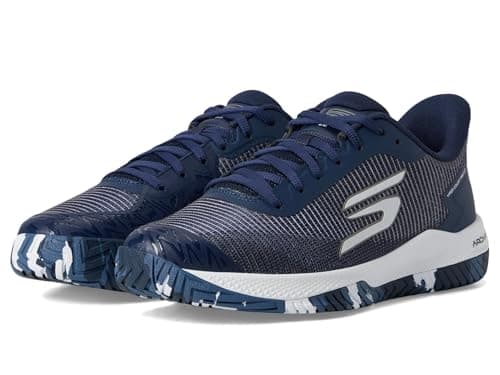
4. Comfort tuning.Pickleball sessions involve more standing and shuffling and less sustained running, and several pickleball-specific shoes lean into that with contoured insoles and softer uppers — the Skechers Arch Fit footbed being the clearest example. Our most comfortable pickleball shoes roundup is mostly pickleball-specific models for this reason.
Notice what is not on that list: grip, stability, ankle protection and durability. Those are equivalent, and a good tennis shoe often beats a mediocre pickleball shoe on all four.
Side by side
| Property | Tennis shoe | Pickleball shoe | Which wins |
|---|---|---|---|
| Platform height and firmness | Low and firm | Low and firm, often slightly lower | Pickleball, marginally |
| Outsole grip pattern | Herringbone, lateral grip | Herringbone, lateral grip | Tie |
| Outdoor durability | Hard-court compounds, often harder | Varies by brand | Tennis, usually |
| Indoor non-marking options | Rare | Common | Pickleball |
| Toe drag reinforcement | Present, not emphasized | Dedicated drag guards | Pickleball |
| Cushioning and insole comfort | Firm, performance-tuned | Often contoured and softer | Pickleball |
| Price for equivalent build | Lower, especially entry level | Higher | Tennis |
| Choice of widths | Narrow as a category | Narrow, with wide-fit specialists | Pickleball, slightly |
If you buy a tennis shoe
Two entry-level tennis shoes worth your money. Both are on our best budget pickleball shoeslist, which is the point — they are not second-class options.
adidas Gamecourt 2— who it is for: outdoor players who want the most durable outsole per dollar. It is adidas' entry hard-court tennis shoe, built around a durable outsole compound intended for abrasive concrete, with a supportive upper and a low stable platform. Cushioning is basic, and adidas court shoes run narrow.
| Type | Tennis / hard court |
|---|---|
| Outsole | Durable hard-court rubber |
| Platform | Low, stable, court-specific |
| Best for | Outdoor concrete and asphalt courts |
adidas Courtjam Control 3— who it is for: aggressive movers who want more lateral support than an entry shoe normally gives. It is the most supportive shoe in the budget band, with a midfoot-control focus, and it sits at the top of entry-level tennis pricing rather than the bottom.
| Type | Tennis / hard court |
|---|---|
| Focus | Lateral stability and midfoot control |
| Outsole | Hard-court rubber |
| Best for | Aggressive movers who want support under $70 |
If you buy a pickleball shoe
Two pickleball-specific shoes that genuinely earn the premium, both from our best pickleball shoes roundup.
K-Swiss Express Light— who it is for: the player who drags their toe and wants a light, breathable shoe. The toe drag guard is the clearest pickleball-specific feature on this page, and the light upper has fewer pressure points than a reinforced tennis shoe. Less underfoot cushioning than the Skechers.
| Type | Pickleball-specific court shoe |
|---|---|
| Weight | Lightweight build |
| Upper | Breathable |
| Durability | Toe drag guard |
| Best for | Most players who want one do-it-all shoe |
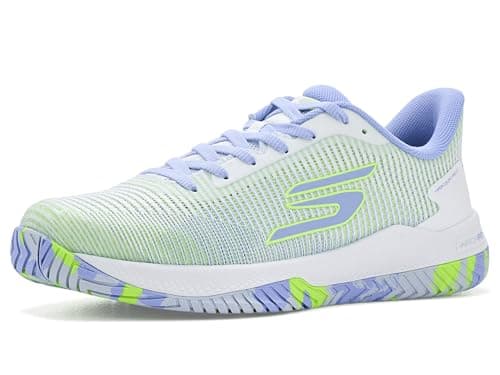
Skechers Viper Court Pro 2.0— who it is for: anyone whose feet ache underneath, and anyone who plays both indoors and outdoors. The Arch Fit contoured footbed is the comfort feature no tennis shoe at this price matches, and the court outsole works on both surfaces. The trade is slightly less stability on a hard lateral push and softer outsole wear outdoors.
| Type | Pickleball-specific court shoe |
|---|---|
| Insole | Skechers Arch Fit contoured footbed |
| Midsole | Cushioned |
| Outsole | Court outsole with lateral support |
| Best for | Comfort-first players and long sessions |
Who should buy which
Buy a tennis shoe ifyou play outdoors most of the time, your budget is tight, you wear out outsoles quickly, or you already own a pair of court-appropriate tennis shoes — in which case the honest advice is to play in them and spend the money on a better paddle instead.
Buy a pickleball-specific shoe ifyou play indoors on wood or sport tile regularly, you have worn a hole in the toe of a shoe, you want the most cushioned option available, or you need a wide fitting — the wide-fit specialists in court footwear are mostly on the pickleball shelf.
Buy neither if what you were really asking is whether your running shoes are fine. They are not, and that is the one genuinely important shoe decision in this sport. The full explanation is in how to choose pickleball shoes.
The bottom line
Tennis shoes and pickleball shoes are the same category of product, and the gap between them is far smaller than the gap between either one and a running shoe. If you want the cheapest correct answer, buy the adidas Gamecourt 2. If you play indoors, drag your toe or want the best comfort available, buy the K-Swiss Express Light or the Skechers Viper Court Pro 2.0. Either way, you will be wearing a court shoe, which is the decision that actually protects your ankles.
Frequently asked questions
Can I wear tennis shoes for pickleball?
Yes - tennis shoes are court shoes, and they have exactly the properties pickleball needs: a low firm wide platform and a herringbone lateral-grip outsole. Several entry-level tennis shoes appear on our budget pickleball shoe roundup on merit, not as compromises. If you already own court-appropriate tennis shoes, play in them.
What is the difference between pickleball shoes and tennis shoes?
Four things, all fairly narrow. Pickleball shoes tend to sit slightly lower and wider for a more lateral movement pattern; they add dedicated toe-drag guards; they are far more likely to offer gum-style non-marking outsoles for indoor courts; and they often use softer contoured insoles tuned for standing and shuffling. Grip, stability and ankle protection are equivalent, and tennis outsoles are often more durable outdoors.
Are pickleball shoes worth the extra money?
For some players. They are worth it if you play indoors on wood or sport tile regularly, if you wear out the toe of your shoes dragging it, if you want the most cushioned option on the market, or if you need a wide fitting. If you play outdoors in standard widths on a budget, an entry-level tennis shoe gives you the same protection for less.
Are tennis shoes more durable than pickleball shoes?
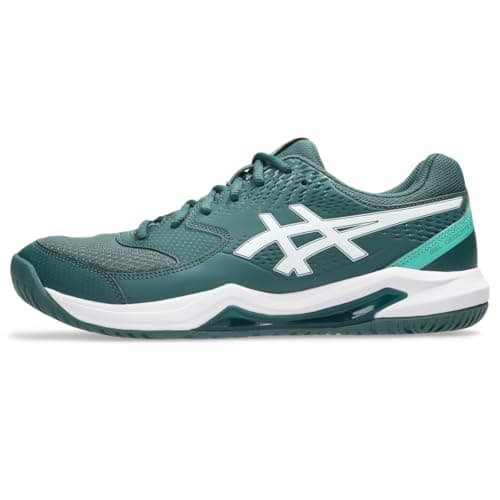
Often, yes. Tennis players cover far more ground per session, so tennis brands put a lot of engineering into hard outsole compounds, and some models carry outsole durability warranties. If you play outdoors on abrasive concrete and go through shoes quickly, a tennis shoe from ASICS, adidas or Babolat is usually the longer-lasting choice.
Do I need non-marking shoes for indoor pickleball?
Most indoor venues require them, and in any case a gum-style non-marking outsole genuinely grips better on wood and sport tile than a hard-court compound does. This is the clearest case for buying pickleball-specific or indoor court footwear, because tennis shoes are overwhelmingly built for outdoor hard courts. Check your venue's rules before you buy.
Sources
Keep reading
Upgrading your paddle or gearing up to play?
See how we pick, then dig into the paddle roundups and buying guides — honest picks from someone who actually plays, with no inventory to move.