Shoe Roundup
The Best Women's Pickleball Shoes in 2026
Running shoes are the single most common injury risk on a pickleball court, and women's court options were an afterthought for years. They aren't any more — these five are worth your feet.
The short answer
Quick picks
| # | Product | Best for | Score | Price |
|---|---|---|---|---|
| 01 | Skechers Viper Court Pro 2.0 (Women's) Arch Fit cushioning in a pickleball-specific court shoe — the safe default. | Best overall | 4.7/5 | $94.90Amazon |
| 02 | 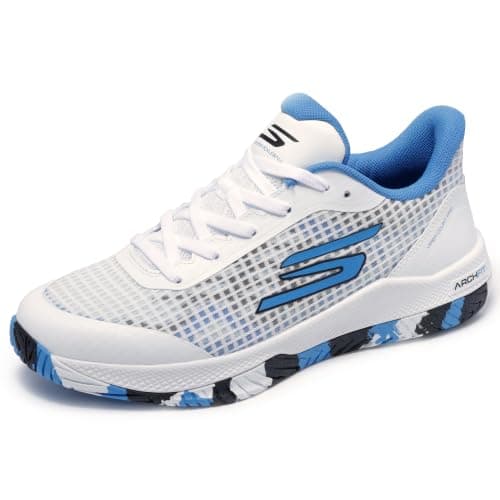 Skechers Viper Court Pro (Women's) The previous generation, still excellent and usually cheaper. | Best value | 4.5/5 | $86.90Amazon |
| 03 | Wilson Pickle Pro (Women's) Tennis-shoe heritage in a pickleball-specific outsole. | Best for outdoor courts | 4.4/5 | Check price → |
| 04 | 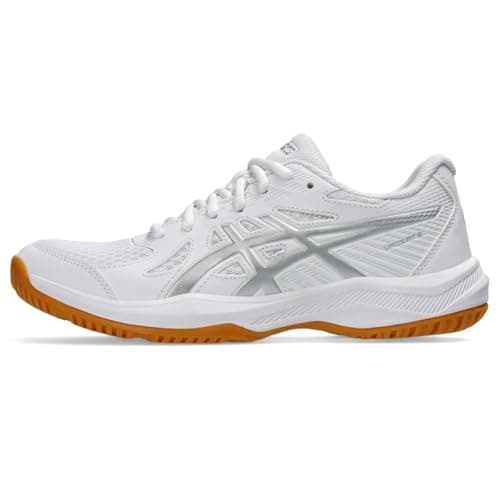 ASICS Upcourt 6 (Women's) Gum-style indoor court outsole with ASICS' well-earned fit reputation. | Best for indoor courts | 4.4/5 | $64.95Amazon |
| 05 | adidas Gamecourt 2 (Women's) A real tennis court shoe at the lowest sensible price. | Best budget | 4.2/5 | Check price → |
#ad · Live prices from Amazon as of October 19, 2026; where we have no verified live price we show none. We may earn a commission — see our affiliate disclosure.
The most consequential purchase in pickleball isn't a paddle. It's shoes — and specifically, whether you are wearing court shoes or the running shoes you already own. Running shoes are engineered to move you forward efficiently: a soft, tall, deliberately unstable midsole and an outsole with no lateral grip. Pickleball moves you sideways, constantly, with sudden stops. That mismatch is how ankles roll.
For years the women's side of the court-shoe market was thin, which pushed a lot of players into men's sizes or into running shoes by default. That has genuinely improved. My overall pick is the Skechers Viper Court Pro 2.0; if you want to spend as little as possible while still being safe, the adidas Gamecourt 2 is a real tennis shoe at a low price.
Why court shoes, specifically
Lateral support.A court shoe has a reinforced, wider upper and a lower, firmer midsole so your foot doesn't roll over the edge of the platform when you push hard sideways. A running shoe's tall, cushioned stack is the exact opposite structure.
The right outsole. Herringbone (outdoor) or gum (indoor) patterns give you grip in every direction and let you slide in a controlled way rather than catching. Running outsoles grip forward and skid sideways.
Toe-drag protection. Pickleball destroys the outside toe of the shoe on your dominant side. Court shoes armor that area; running shoes wear through it in weeks.
Durability warranties. Many court shoes carry an outsole durability guarantee. Nobody warranties a running shoe against a pickleball court.
Our companion piece, what shoes not to wear for pickleball, covers the failure modes in more detail.
What's different about women's court shoes
It is not just a smaller men's shoe with different colors — or at least, it shouldn't be. Women's lasts are typically narrower through the heel relative to the forefoot, which matters a great deal in a shoe whose job is to stop your foot sliding around inside it during lateral movement. A heel that slips is a blister at best and an unstable landing at worst.
Women's models also tend to run on a lighter, lower-volume build, and several use slightly softer midsole compounds tuned for lower average body weight. That is a genuine engineering difference, not marketing.
At a glance
Specs come from each manufacturer's published listing. Live prices sit on the buttons below; shoe listings are size-specific, so check that the size you want is the one priced.
| Shoe | Type | Best surface | Standout |
|---|---|---|---|
| Skechers Viper Court Pro 2.0 | Pickleball-specific | Indoor & outdoor | Arch Fit insole |
| Skechers Viper Court Pro | Pickleball-specific | Indoor & outdoor | Previous-gen value |
| Wilson Pickle Pro | Pickleball-specific | Outdoor | Tennis outsole heritage |
| ASICS Upcourt 6 | Indoor court | Indoor | Fit and gum outsole |
| adidas Gamecourt 2 | Tennis | Outdoor | Lowest sensible price |
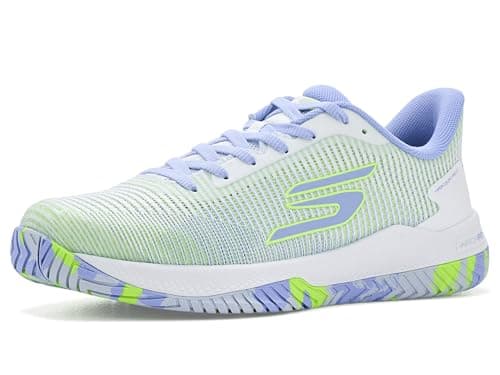
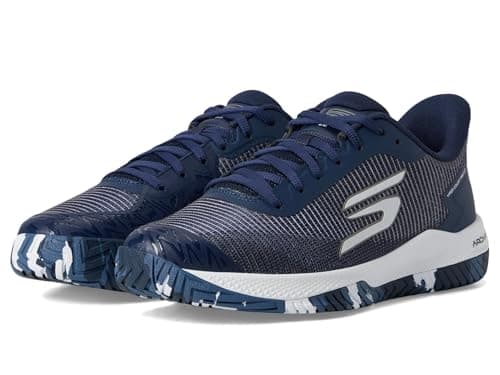
Best overall: Skechers Viper Court Pro 2.0 (Women's)
The Viper Court line is the reason a lot of clubs now look like a Skechers advertisement, and the 2.0 is the current version. It is a pickleball-specific court shoe— not a tennis shoe repurposed — with the Arch Fit insole Skechers builds its comfort reputation on, and a court outsole that works on both gym floors and outdoor hard courts.
| Category | Pickleball-specific court shoe |
|---|---|
| Cushioning | Arch Fit insole |
| Surfaces | Indoor and outdoor |
| Fit | Women's-specific last |
| Best for | Most players, most of the time |
What I like: it is comfortable straight out of the box in a category where break-in is often brutal, and it is genuinely stable laterally. What gives me pause: comfort-first cushioning means slightly less court feel than a firmer tennis shoe — some players want to feel the ground more. Our full Viper Court Pro review covers the platform in detail.
Best value: Skechers Viper Court Pro (Women's)
The previous-generation Viper Court Pro is still an excellent shoe and usually sells for meaningfully less than the 2.0. Same fundamental design brief — a pickleball-specific court shoe with a cushioned ride and a proper court outsole. If your budget is the binding constraint, this is where the money goes furthest.
| Category | Pickleball-specific court shoe |
|---|---|
| Generation | Previous (pre-2.0) |
| Surfaces | Indoor and outdoor |
| Fit | Women's-specific last |
| Best for | The same shoe for less money |
What I like: buying last year's court shoe is one of the few genuinely free lunches in gear. What gives me pause: as a discontinued generation, size availability thins out — if your size is in stock, don't wait.
Best for outdoor courts: Wilson Pickle Pro (Women's)
Wilson has been making tennis footwear for decades, and the Pickle Pro applies that outsole engineering to a pickleball-specificshoe. Outdoor hard courts are the harshest surface a shoe faces — abrasive, unforgiving on the toe drag, and demanding on grip — and that is where this one is at its best.
| Category | Pickleball-specific court shoe |
|---|---|
| Best surface | Outdoor hard court |
| Heritage | Wilson tennis outsole engineering |
| Fit | Women's-specific |
| Best for | Players who live on outdoor courts |
What I like: outdoor durability and grip are its clear priorities, which is exactly right for the surface most people play on. What gives me pause: a firmer outdoor-oriented build is less plush than the Skechers — if comfort is your top criterion, start with the Viper Court Pro 2.0.
Best for indoor courts: ASICS Upcourt 6 (Women's)
The Upcourt 6 is an indoor court shoefrom ASICS' volleyball line, and it is a very good pickleball shoe for anyone playing on gym floors. Indoor court shoes use a gum-style outsole that grips polished wood without marking it, and ASICS' reputation for fit is deserved — the heel lockdown is excellent, which is the single most important thing in a shoe you move sideways in.
| Category | Indoor court (volleyball) shoe |
|---|---|
| Best surface | Indoor gym floors |
| Outsole | Gum-style indoor court |
| Fit | Women's-specific, secure heel |
| Best for | Indoor-only players |
What I like: for indoor play it does everything a pickleball-branded shoe does, often for less. What gives me pause: an indoor outsole wears quickly on abrasive outdoor courts — if you play both, buy the Viper Court Pro 2.0 instead. Read how to choose pickleball shoes for the indoor-vs-outdoor outsole breakdown.
Best budget: adidas Gamecourt 2 (Women's)
The Gamecourt 2 is a proper tennis court shoe at close to running-shoe money. It is not pickleball-specific and it is not the most cushioned option here, but it has the two things that matter: a stable, low-profile platform and a court outsole. Compared with playing in running shoes, it is a transformational upgrade for very little outlay.
| Category | Tennis court shoe |
|---|---|
| Best surface | Outdoor hard court |
| Build | Low-profile, stable platform |
| Fit | Women's-specific |
| Best for | First court shoe on a tight budget |
What I like: it removes the biggest injury risk in the sport for the smallest possible spend. What gives me pause: less cushioning and less toe-drag armor than the pickleball-specific models — expect a shorter life if you play a lot.
How to choose
Match the outsole to your surface.Outdoor hard courts want a herringbone rubber outsole built to survive abrasion. Indoor gym floors want gum rubber. Playing both? Buy an outdoor-capable shoe — it will survive indoors, whereas an indoor sole disappears outdoors.
Get the heel right before anything else. If your heel lifts or slides, the shoe cannot support a hard lateral push no matter how good the outsole is. Try shoes late in the day when your feet have swollen slightly, and wear the socks you actually play in.
Buy for width, not just length.Court shoes are cut narrower than running shoes on purpose — that is the support. If you need genuine width, look for a wide-specific model rather than sizing up; our arch support and wide-fit roundup covers those.
Replace them before they fail. Court shoes die from the outsole in, and a worn-smooth outsole is a slip risk. Once the herringbone pattern is gone under the ball of your foot, it is finished, whatever the upper looks like.
The bottom line
For most women players the Skechers Viper Court Pro 2.0 is the right shoe. Want the same thing cheaper? The previous-generation Viper Court Pro. Outdoor-heavy? The Wilson Pickle Pro. Indoor-only? The ASICS Upcourt 6. Minimum spend? The adidas Gamecourt 2. Any of them beats running shoes by a distance — the whole court gear hub has the rest of the kit, and our best pickleball gear for women roundup assembles it into one complete kit, paddle included.
Frequently asked questions
Do I really need pickleball-specific shoes, or will tennis shoes work?
Tennis shoes work well — they're built for the same lateral movement on the same surfaces, and a good tennis shoe is far better than a mediocre pickleball-branded one. What doesn't work is running shoes: their tall, soft, deliberately unstable midsole and forward-only outsole are the opposite of what side-to-side movement needs, and they're the most common cause of rolled ankles on court.
Are women's pickleball shoes different from men's?
Yes, meaningfully. Women's lasts are typically narrower through the heel relative to the forefoot, which matters a lot in a shoe whose job is to stop your foot sliding around during lateral pushes. They're also generally lighter and lower-volume, and some use midsole compounds tuned for lower average body weight.
What's the difference between indoor and outdoor pickleball shoes?
The outsole. Indoor court shoes use soft gum rubber that grips polished wood without marking it, and it wears away quickly on abrasive outdoor surfaces. Outdoor shoes use harder herringbone rubber built to survive concrete and asphalt. If you play both, buy an outdoor-capable shoe — it survives indoors, but not the other way round.
How often should I replace my pickleball shoes?
Judge by the outsole rather than by time or mileage. Once the tread pattern has worn smooth under the ball of your foot — usually the pivot point on your dominant side — the shoe can no longer grip reliably in lateral movement, and that's a slip risk regardless of how good the upper still looks. Many court shoes carry an outsole durability warranty worth checking.
Can I wear volleyball shoes for pickleball?
Indoors, yes — volleyball shoes are indoor court shoes built for exactly the kind of explosive lateral movement pickleball demands, with gum outsoles suited to gym floors. The ASICS Upcourt 6 on this list is one. Outdoors they're a poor choice, because a gum outsole wears down fast on abrasive hard courts.
Sources
Keep reading
- Best pickleball shoes →
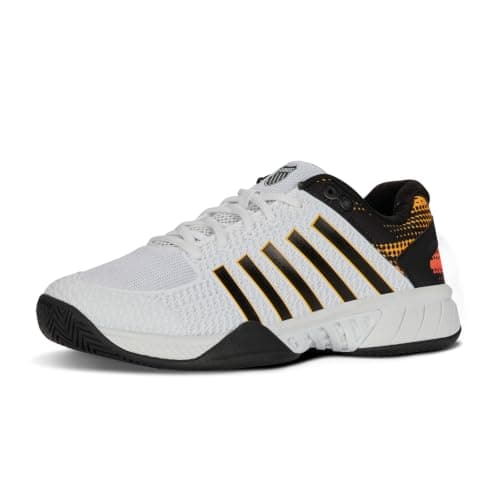
- Best pickleball shoes for plantar fasciitis →
- How to choose pickleball shoes →Rally & Dink
- Skechers Viper Court Pro review →
- What shoes not to wear for pickleball →Rally & Dink
- Best pickleball paddles for women →Rally & Dink
- Best pickleball gear for women (complete kit) →
- Best budget pickleball shoes →Rally & Dink
Upgrading your paddle or gearing up to play?
See how we pick, then dig into the paddle roundups and buying guides — honest picks from someone who actually plays, with no inventory to move.