Complete Kit Roundup
The Best Pickleball Gear for Women in 2026
Most gear sold as women's pickleball equipment is a colorway with a markup. Three things genuinely differ - grip circumference, swing weight and the shape of a shoe - and this kit is built entirely around those three.
The short answer
Quick picks
| # | Product | Best for | Score | Price |
|---|---|---|---|---|
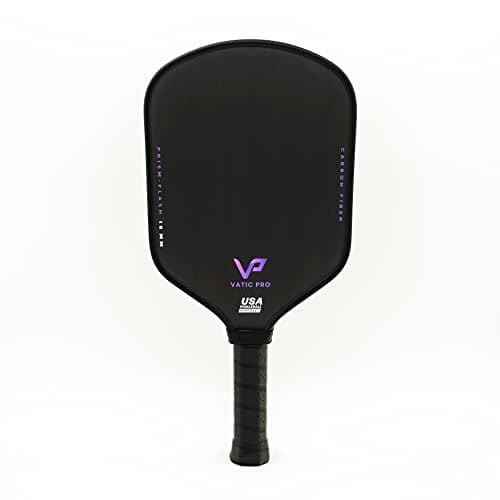
| 01 | Vatic Pro Prism Flash 16mm Raw T700 carbon on a 4.125 in grip - a real performance paddle that fits a smaller hand. | Best paddle overall | 4.6/5 | $99.99Amazon |
| 02 | 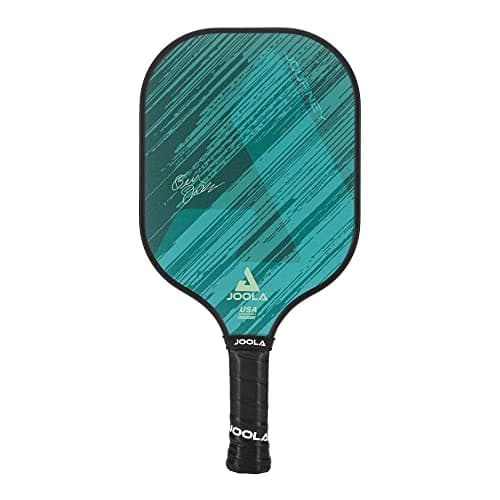 JOOLA Journey A genuine 4 in grip at about 7.8 oz - built small rather than marketed small. | Best small-grip and lightest paddle | 4.1/5 | $41.87Amazon |
| 03 | 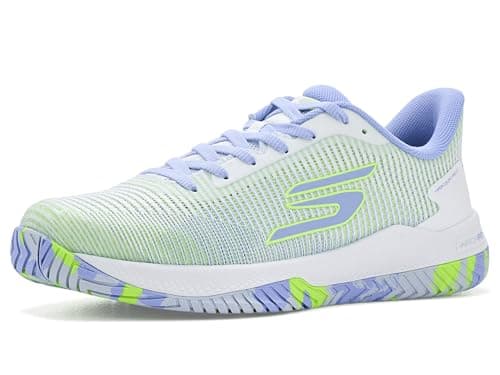 Skechers Viper Court Pro 2.0 (Women's) Arch Fit cushioning on a pickleball-specific outsole, in a women's last. | Best court shoes | 4.7/5 | $115.00Amazon |
| 04 | 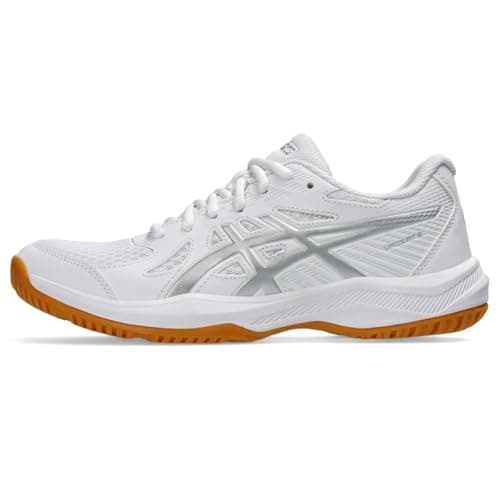 ASICS Upcourt 6 (Women's) A proper indoor court outsole for roughly half the price of the Skechers. | Best value and indoor shoes | 4.4/5 | $64.95Amazon |
| 05 | 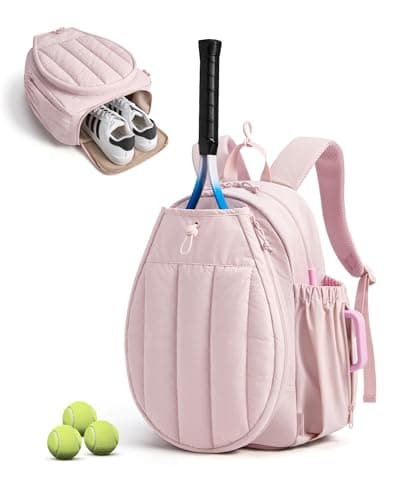 BAGSMART Quilted Tennis & Pickleball Backpack Two paddles, a vented shoe pocket and a 15.6 in laptop sleeve in one bag. | Best bag for court and work | 4.3/5 | $27.99Amazon |
| 06 | 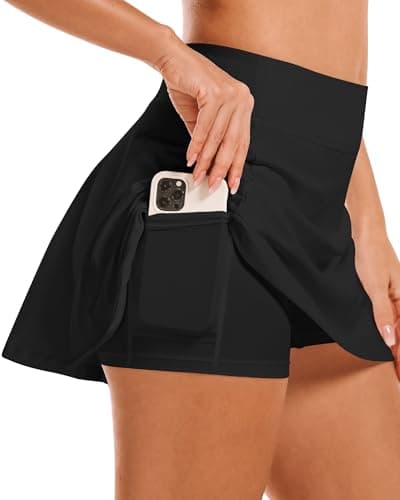 Stelle High-Waisted Skort Built-in shorts and real pockets - the only apparel spec that matters on court. | Best skort with pockets | 4.2/5 | $19.99Amazon |
| 07 | 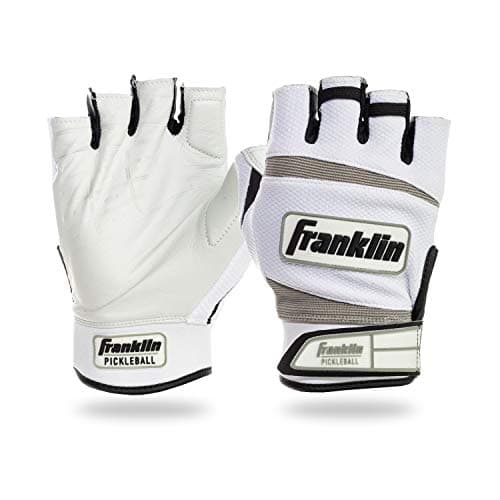 Franklin Sports Pickleball Glove (Small) One glove for the paddle hand, in a small size that actually fits. | Best fix for a grip that slips | 4.3/5 | $15.99Amazon |
#ad · Live prices from Amazon as of Sep 8, 2026; where we have no verified live price we show none. We may earn a commission — see our affiliate disclosure.
Walk into the pickleball aisle and the women's section is mostly pink versions of the men's section. That is not a conspiracy, it is just how sporting goods work — but it does mean the useful question gets buried. The useful question is not "which gear is for women," it is which specs change when a hand is smaller, a foot is narrower and a swing is a little shorter. There are exactly three of those specs, and once you know them the whole kit falls out of them.
My overall paddle pick is the Vatic Pro Prism Flash 16mm, because it pairs a genuine raw-carbon face with a 4.125 in grip circumference rather than the usual 4.25 in. If the standard handle has never felt right in your hand, the JOOLA Journey is a true 4 in grip at about 7.8 oz. And the single most important purchase on this page is not a paddle at all: it is a pair of court shoes, which is the one item where a women's-specific version is a real thing rather than a marketing exercise.
What a “women’s” label actually buys
Three things change, and they are worth paying attention to.
1. Grip circumference.Most paddles ship at 4.25 in around the handle. A lot of women — and plenty of men — are better served by 4 in to 4.125 in. Too big a grip means you squeeze harder to keep the paddle from turning on contact, and a tight forearm is where both control problems and elbow pain start. Too small a grip is easier to fix than too big: an overgrip adds roughly a sixteenth of an inch per wrap. Our grip size guide has the index-finger test you can do at home.
2. Swing weight, not static weight.Static weight is the number on the box; swing weight is how heavy the paddle feels once it is moving, and it is driven by shape and balance far more than by ounces. An elongated paddle at 8.0 oz can feel much heavier through a fast hands exchange than a widebody at 8.0 oz. If you are giving anything up in raw arm strength, this is the spec to shop on — the explainer is in our paddle weight guide.
3. Shoe last.This one is genuinely anatomical. Women's court shoes are typically built on a last that is narrower through the heel relative to the forefoot, with a different instep volume. Buying a men's shoe a size and a half down does not reproduce that shape, and a heel that slides inside the shoe during a lateral push is exactly the movement that rolls an ankle.
How I picked
I play, I buy my own gear, and no brand pays for a place on this page. What I have not done is wear-test every one of these items myself, so this is a research roundup rather than a lab test, and I say so plainly: the specs below come from the manufacturers and the retail listings, and where a claim is the seller's claim I attribute it to them.
Everything here had to clear four bars. It had to be currently buyable— every product on this page was checked against Amazon on the day of publication and returned a live price, which is why you will not find a discontinued cult favorite in the list. It had to earn its place on a spec that actually differs for the reasons above, not on a colorway. It had to be the right item for its job, which for shoes means a court outsole and for a bag means it carries paddles. And it had to be something I would tell a friend to buy at that price, which is why two of the seven picks cost less than a restaurant dinner.
One deliberate omission: I have not included balls, because open play almost always supplies them, and I have not included eyewear as a ranked pick because there is no women's-specific eyeguard worth singling out — both get honest treatment in what else you need below.
At a glance
| Item | Category | The spec that earns it | Best for |
|---|---|---|---|
| Vatic Pro Prism Flash 16mm | Paddle | 4.125 in grip, raw T700 carbon | Your main paddle |
| JOOLA Journey | Paddle | 4 in grip, about 7.8 oz | Small hands, first paddle |
| Skechers Viper Court Pro 2.0 (W) | Court shoes | Women's last, Arch Fit insole | Most players, any surface |
| ASICS Upcourt 6 (W) | Court shoes | Gum indoor outsole | Indoor play, tighter budget |
| BAGSMART Quilted Backpack | Bag | 2 paddles, vented shoe pocket, laptop | Court straight from work |
| Stelle High-Waisted Skort | Apparel | Built-in shorts, real pockets | Somewhere to put the ball |
| Franklin Pickleball Glove (S) | Grip | Sold single, in a small size | Sweaty hands, blisters |
Best paddle overall: Vatic Pro Prism Flash 16mm
The Prism Flash is the paddle I point most people at when they want a real performance paddle without flagship pricing, and it happens to be one of the better-fitting handles in that class. The grip measures 4.125 inaround rather than the usual 4.25 in, which is a small number with a big effect: it is the difference between holding a paddle and gripping it. The face is raw Toray T700 carbon with heat-compressed texturing — the same material story as paddles at twice the price — over a 16mm core with foam-injected walls that widen the usable part of the face.
| Surface | Raw Toray T700 carbon, heat-compressed texturing |
|---|---|
| Core | 16mm with foam-injected walls |
| Shape | Elongated, 16.2 in x 7.7 in |
| Grip | 4.125 in circumference; 5.3 in standard handle |
| Weight | About 7.9 - 8.2 oz (16mm) |
| Certification | USA Pickleball approved; paddle cover included |
What I like: it is a paddle you can grow into rather than out of. The raw carbon face generates genuine spin, the foam walls make an elongated shape far more forgiving than elongated paddles usually are, and it ships with a cover, which is a nice touch at around a hundred dollars.
What gives me pause: this is not a light paddle. At roughly 8 oz in an elongated shape, its swing weight is higher than the Journey's, and if your wrist or elbow already complains you should read the paddles in our tennis elbow roundup before buying. Amazon carries the 16mm with the standard handle; the 14mm version and the long handle are Vatic-direct only. And it is the most expensive paddle here by a wide margin. The full breakdown, including the 14mm-versus-16mm decision, is in our Vatic Pro Prism Flash review.
Smallest grip and lightest: JOOLA Journey
The Journey is the paddle to buy if the phrase "it just feels too big" is why you are on this page. JOOLA lists it at a 4 in grip circumference with a 5 in handle, 15.8 in x 7.8 in, and an average weight of about 7.8 oz— genuinely built small rather than marketed small, and one of the few paddles at any price that goes below 4.125 in on the handle.
| Surface | Fiberglass |
|---|---|
| Core | 10mm |
| Shape | Standard, 15.8 in x 7.8 in |
| Grip | 4 in circumference; 5 in handle |
| Weight | About 7.8 oz average |
| Certification | USAPA approved (JOOLA listing) |
What I like: the fit, and the price. A 4 in grip in a sub-8 oz paddle from a major brand for around forty dollars is a genuinely good answer for a new player, a junior moving up, or anyone whose hands are tired of squeezing. Fiberglass is also a livelier, more forgiving face than carbon at this price point — it gives you free power while your swing is still developing.
What gives me pause: a fiberglass face produces noticeably less spin than raw carbon, and the 10mm core is thinner and firmer, so soft resets at the kitchen line are harder than they are with a 16mm paddle. If you improve quickly you will outgrow it, which is fine at this price but worth knowing before you buy. If you want a small grip and a carbon face, the alternatives are on our best paddles for women page.
Best court shoes: Skechers Viper Court Pro 2.0 (Women’s)
If you buy one thing off this page, buy this one. Court shoes are the only pickleball purchase with a real injury argument behind it: a running shoe has a tall, soft, narrow platform built for going forward, and pickleball is played almost entirely sideways. The Viper Court Pro 2.0 is Skechers' pickleball-specific court shoe, and the women's version is built on a women's last rather than shrunk down from the men's.
| Type | Pickleball-specific court shoe |
|---|---|
| Insole | Skechers Arch Fit contoured footbed |
| Outsole | Pickleball court outsole |
| Support | Lateral support for side-to-side movement |
| Fit | Women's last; sizes and colors are separate listings |
What I like: the Arch Fit insole is the reason this shoe has the following it does — it is comfortable in the third hour, not just the first, and it is the same platform that leads our best women's pickleball shoes roundup and appears in our plantar fasciitis page for the arch support.
What gives me pause: it is comfortably the most expensive item in this kit, and Skechers court outsoles are not the hardest-wearing compound out there — heavy outdoor play on abrasive concrete will wear them faster than a premium tennis shoe would. Because Amazon lists shoes per size and colorway, the price and stock you see depend on which size is selected, so use the size selector on the listing. There is also a full Viper Court Pro review if you want the long version.
Best value and best indoor: ASICS Upcourt 6 (Women’s)
Plenty of women's pickleball happens in a gym, on wood or sport tile, and that surface wants a different outsole. The Upcourt 6 is ASICS' indoor court shoe — sold for volleyball, because volleyball is simply the biggest indoor court sport — with a gum-style non-marking outsole tuned for grip indoors and the low, wide platform that keeps a foot from rolling. It is also roughly half the price of the Skechers.
| Type | Indoor court (volleyball) |
|---|---|
| Outsole | Gum-style non-marking indoor rubber |
| Platform | Low, wide, lateral-stable |
| Fit | Women's last |
| Best for | Indoor pickleball, and the tighter budget generally |
What I like: ASICS' fit reputation in court shoes is as good as anyone's, and this is the cheapest way I know to put a woman in a genuinely correct shoe. Indoor court shoes are consistently cheaper than their outdoor equivalents, so the budget pick and the indoor pick end up being the same shoe.
What gives me pause: gum outsoles wear quickly on outdoor concrete. If you play outside most weeks, this is the wrong shoe and you should look at the hard-court options in our best budget pickleball shoes roundup instead. It also has less of a lateral cage than a dedicated tennis shoe, so aggressive movers will feel the ceiling sooner.
Best bag for court and work: BAGSMART Quilted Backpack
There is no anatomical case for a women's pickleball bag, so I judged this category on the request that actually sits behind the search: a bag that carries pickleball gear without looking like a tournament duffel when you take it into an office or a coffee shop. BAGSMART's quilted women's tennis and pickleball backpack does that, and it carries the right things — the listing specifies room for two rackets or paddles, a ventilated shoe compartment, a 15.6 in laptop sleeve, a 40 oz tumbler holder and a separate wet-and-dry pocket.
| Paddle capacity | Fits 2 rackets or paddles (per listing) |
|---|---|
| Shoe storage | Ventilated shoe compartment |
| Laptop | 15.6 in padded sleeve |
| Bottle | 40 oz tumbler holder |
| Extras | Wet and dry pocket; quilted fabric, padded back panel |
What I like: the vented shoe pocket is the feature that matters and it is the one budget bags usually drop — keeping court shoes off the sidewalk until you arrive is how a cheap pair lasts a season. Adding a laptop sleeve to that is the difference between one bag and two.
What gives me pause: it is a lifestyle bag first. Two paddles is the ceiling, quilted fabric is not the armor a tournament bag gives you, and the listing does not claim a fence hook — which you will miss the first time you play somewhere with no benches. If you want a dedicated court bag, the pickleball-brand options in our best pickleball bags roundup are better at that job and worse at this one.
Best skort: Stelle High-Waisted with Pockets
Apparel is where the pickleball tax is worst. A branded court skort can cost three or four times a generic athletic one for the same two features that actually matter on court: a pocket that holds a balland a built-in short that does not ride up when you lunge. Stelle's high-waisted skort has both, at a price that lets you buy two.
| Type | Athletic skort, high waisted |
|---|---|
| Liner | Built-in shorts |
| Pockets | Pockets in the liner (per listing) |
| Fabric | Stretch fabric with tummy-control panel (per listing) |
| Best for | Carrying the second serve ball |
What I like: it solves the actual problem. If you have ever served with a spare ball wedged under your paddle arm, you know why a liner pocket is the single most useful thing pickleball apparel can do. The high waist also stays put through a split step, which is more than can be said for a lot of tennis skirts.
What gives me pause: this is a generic athletic brand, not a court brand — there is no pickleball-specific pocket sizing, no moisture-technology story worth repeating, and fit on a garment like this varies more between bodies than any other item on this page. Buy it from a seller with a friendly return policy and expect to size by the chart rather than by habit.
Best glove: Franklin Sports Pickleball Glove (Small)
A glove is not a default purchase. It is the fix for two specific problems — a paddle that turns in a sweaty hand, and blisters — and it is a better fix than an overgrip for a smaller hand, because an overgrip solves slip by addingcircumference to a handle you may already find too big. Franklin sells this as a single right-hand glove for the paddle hand, and crucially it comes in an adult small that fits rather than a men's medium that bunches.
| Type | Pickleball-specific glove |
|---|---|
| Sold as | One glove, for the paddle hand |
| Size | Adult small (right-hand listing) |
| Best for | Sweaty hands, blisters, cold-morning play |
What I like: it is the cheapest meaningful upgrade on this page, it is pickleball-specific rather than a repurposed golf glove, and one glove is the correct answer — your non-paddle hand does not need one.
What gives me pause: this listing is the right-hand glove, so left-handed players need the left-hand version instead. A glove also puts a layer between your hand and the grip, and some players simply never get used to that feel. If your only problem is sweat rather than fit, a fresh tacky overgrip is cheaper to try first — the options are in our best pickleball overgrips roundup, and the full case for and against a glove is in best pickleball gloves.
What else you need, and what to skip
Eye protection — buy it, but not a "women's" one.The American Academy of Ophthalmology recommends eye protection for pickleball, and doubles carries the higher risk because you stand closer to the net. There is no women's-specific eyeguard worth singling out; buy on fit and on a polycarbonate lens with front and side coverage. Our best pickleball eyewearpage covers which ones actually protect and which lens-free "pickleball glasses" do nothing at all.
Balls — probably not yet. Open play supplies them. Buy your own when you start drilling, and buy the right type for the surface: outdoor balls are harder with 40 smaller holes, indoor balls are softer with fewer larger ones. Start at best pickleball balls.
An overgrip — only if your grip is too small. Each wrap adds roughly a sixteenth of an inch. That is the right tool for building a 4 in handle up to 4.125 in, and the wrong tool for a handle that already feels fat.
What to skip:paddle sets sold as women's bundles, where the markup pays for the print; anything with a wooden paddle in it; and the second paddle you are tempted to buy before you have played twenty sessions with the first one. Gear does not fix a swing. If you are starting from nothing, the sequencing advice in pickleball gear for beginners applies equally here.
The kit at three budgets
Roughly a hundred dollars, total. The JOOLA Journey and the ASICS Upcourt 6. That is a correct paddle for a smaller hand and a correct shoe for the sport, which is the entire safety and fit package. Everything else on this page is comfort.
Roughly two hundred. Add the BAGSMART backpack and the Stelle skort, or put the money into the Skechers Viper Court Pro 2.0 instead if you play more than twice a week. Comfort over three hours is worth more than most people expect.
Roughly three hundred. The Vatic Pro Prism Flash, the Viper Court Pro 2.0, the bag and the glove. At that point you own a paddle you will not outgrow for a couple of seasons, and the rest is replaceable.
The bottom line
The three specs are grip circumference, swing weight and shoe last. Shop those and the "women's" label stops mattering. For most players that means the Vatic Pro Prism Flash 16mm on a 4.125 in grip and the Skechers Viper Court Pro 2.0 on your feet. If the handle is still the problem, the JOOLA Journey goes down to a true 4 in. If the budget is the problem, the ASICS Upcourt 6 is a correct shoe at half the price, and it is a much better use of a hundred dollars than a prettier paddle.
Frequently asked questions
Is there a difference between men's and women's pickleball paddles?
Not in performance. There is no women's core material, carbon weave or face texture — a paddle marketed to women is usually the same paddle in a different print. What does differ, and what is worth shopping on, is grip circumference (4 in to 4.125 in suits many women better than the standard 4.25 in) and swing weight, which is how heavy the paddle feels once it is moving rather than what it weighs on a scale.
What grip size should a woman use on a pickleball paddle?
There is no gendered answer, only a hand-sized one. Hold the paddle in a normal grip and try to slide the index finger of your other hand into the gap between your fingertips and the base of your thumb: if it fits snugly, the grip is right; if there is room to spare, it is too big. Most players who find standard handles too large land at 4 in to 4.125 in. Remember that you can always build a grip up with an overgrip — roughly a sixteenth of an inch per wrap — but you cannot shrink one down.
Do I really need women's-specific pickleball shoes?
Court shoes yes, women's-specific ideally. Women's court shoes are typically built on a last that is narrower through the heel relative to the forefoot, and a heel that slips inside the shoe during a lateral push is the movement that rolls ankles. What matters far more than the gender label, though, is that the shoe is a court shoe at all — a women's running shoe is a worse choice than a men's court shoe in your size.
What should women wear to play pickleball?
Anything you can move sideways in, with one court-specific requirement: somewhere to put the second serve ball. That is why skorts and shorts with liner pockets dominate on court, and why an otherwise good pair of leggings without pockets is annoying to play in. Beyond the pocket, apparel is the one category where the pickleball-branded version buys you essentially nothing over generic athletic wear.
How much does a complete women's pickleball kit cost?
A correct starting kit — a paddle sized for your hand and a real court shoe — lands around a hundred dollars if you shop the value picks. Adding a bag, a skort and a glove roughly doubles it, and stepping up to a performance carbon paddle and a premium court shoe puts you near three hundred. Prices change constantly, so the live figures on this page come straight from Amazon rather than from us.
Should I buy a glove or an overgrip?
Try the overgrip first if the paddle slips but the handle size feels right, since it is cheaper and takes two minutes to change. Choose a glove instead if your hand sweats heavily, if you get blisters, or if the handle already feels slightly too big — an overgrip adds circumference, which makes a too-big grip worse, while a glove adds tack without changing the handle.
Sources
- Vatic Pro - Prism Flash published specifications
- JOOLA - Journey paddle specifications (4 in grip, 5 in handle, 15.8 x 7.8 in, about 7.8 oz)
- Skechers - Viper Court Pro 2.0 pickleball footwear
- ASICS - Upcourt 6 indoor court shoe specifications
- Franklin Sports - pickleball glove range
- Amazon retail listings - BAGSMART quilted tennis and pickleball backpack, Stelle high-waisted skort (feature claims as listed by the seller; reached via the buy links on this page)
- American Academy of Ophthalmology - eye protection guidance for racket sports
Keep reading
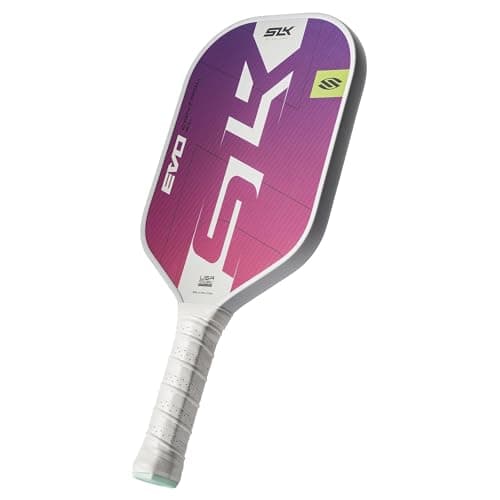
Upgrading your paddle or gearing up to play?
See how we pick, then dig into the paddle roundups and buying guides — honest picks from someone who actually plays, with no inventory to move.