How-To Guide
How to Hold a Pickleball Paddle
Nearly every recreational player holds the paddle in a grip built for one shot and squeezes it twice as hard as they need to. Both are fixable in a session.
The short answer
Use the continental grip, and squeeze about four out of ten.The continental — sometimes called the handshake or hammer grip — puts the V between your thumb and index finger on the top bevel of the handle, which leaves the paddle face neutral. From there you can hit a forehand, a backhand, a volley, a dink and a serve without changing anything, and in a sport where exchanges at the kitchen happen in under a second, not having to change grip is the whole point.
The pressure matters as much as the position and gets discussed far less. Most recreational players hold the paddle at something like an eight out of ten. Four is enough to stop the paddle twisting on contact, and a loose hand is what lets you take pace off a ball instead of blocking it back hard.
The continental grip, step by step
1. Shake hands with the paddle.Hold the paddle out in front of you with the face vertical — like a blade pointing at your opponent rather than a frying pan — and shake hands with the handle. That is almost the whole technique. The error most people make is rotating the handle in the palm afterwards until the face feels "flatter", which turns it into a different grip.
2. Check the V. Look at the V shape formed between your thumb and index finger. In a continental grip it sits on the top bevel of the handle, in line with the top edge of the paddle face. If the V has rotated toward your forehand side, you have drifted into an eastern grip.
3. Separate the index finger slightly. Let the index finger sit a little apart from the other three, with its knuckle resting on the side bevel of the handle. This is where face-angle feel comes from. Some players extend the finger up the back of the paddle face; that gives even more feel at the cost of some stability, and it is a personal preference rather than a rule.
4. Keep the wrist relaxed and slightly laid back. A locked wrist kills your touch on dinks and your ability to flick a counter in a hands battle.
5. Hold the handle where it fits your hand.Not choked right up at the face, not hanging off the butt cap. If the heel of your hand sits off the end of the handle, the handle is too short for you — which is a real buying consideration, and one our grip size guide covers along with circumference.
How hard to squeeze
Grip pressure is the most under-taught thing in pickleball, and it is the difference between resetting a ball and popping it up.
| Shot | Pressure out of ten | Why |
|---|---|---|
| Dink | 3-4 | A soft hand absorbs pace; a tight hand bounces the ball up |
| Reset or block off a hard drive | 3-4 | You want the paddle to give, not to rebound |
| Third-shot drop | 4 | Soft enough to take pace off, firm enough to control the face |
| Drive | 6-7, briefly | Firm through contact, then release again |
| Overhead or put-away | 7 | Maximum stability for maximum pace |
| Serve | 4-5 | Control matters more than power on a serve you must land |
The pattern is that almost everything in pickleball is a soft-hand shot and you firm up only briefly. A player who grips hard all the time has a paddle that rebounds every ball, which is why their blocks fly long and their dinks sit up. If you have ever wondered why a control paddle did not fix your resets, this is usually the reason — grip pressure overrides core softness.
Grip pressure is also the main driver of arm and hand strain. Sustained squeezing is what aggravates tennis elbow and arthritic hands, and loosening it is free.
The other grips, and when they are right
| Continental | V on the top bevel. The default. Best for volleys, dinks and fast exchanges. Use this. |
|---|---|
| Eastern forehand | V rotated toward the forehand side. More topspin on a forehand drive, weaker backhand and volley. Occasionally used by singles drivers. |
| Western | V rotated much further. Heavy forehand topspin only; the backhand becomes unplayable. Not recommended in pickleball. |
| Two-handed backhand | Non-dominant hand added above the dominant one. Common for tennis converts; needs a handle of about 5.5 in. |
In practice, the honest answer is: use the continental, and only consider an eastern forehand if you play a lot of singles and your forehand drive is the shot your whole game runs through. Everyone else gains more from one reliable grip than from a slightly better forehand and a much worse backhand.
If you want to play a two-handed backhand, that is a legitimate choice, but it constrains your paddle: you need a handle of around 5.5 in, which rules out most widebody paddles. Our tennis-player paddle roundup and elongated paddle roundup list the models with long enough handles.
Where to hold it between shots
How you hold the paddle when you are not hitting matters almost as much as the grip itself, because at the kitchen line you often have no time to move it.
Paddle up, in front of the chest. Tip above the wrist, face slightly open, elbows in front of your body rather than tucked at your sides. From there, a ball at either shoulder is reachable without moving your hand across your body.
Favor the backhand side slightly. Most players are faster to the forehand than the backhand, so holding the paddle slightly on the backhand side of center evens out your coverage. This is standard practice at the kitchen line.
Do not rest the paddle low. A paddle held at waist height has to travel upward and forward to meet a speed-up at your chest, and in a kitchen exchange that time does not exist. Paddle-down is the single most common reason players get beaten by a speed-up they saw coming. There is more on kitchen-line positioning in our guide to the kitchen, and dinking drills is where to practice it.
The two mistakes that cost most points
1. The frying pan grip. Holding the paddle with the face horizontal, like a frying pan, so the paddle is an extension of your palm. It feels natural, it works fine for a forehand volley at chest height, and it is nearly useless for a backhand, a low dink or anything on your off side. If you are a self-taught recreational player and nobody has ever corrected your grip, this is probably what you are doing. Fixing it costs one awkward session and pays back permanently.
2. The death grip. Squeezing at eight or nine out of ten all the time. It makes every ball rebound off the face, which ruins dinks, blocks and resets; it tires the forearm; and it is the main equipment-adjacent cause of elbow and hand pain. The practical cure: between rallies, deliberately relax the hand until the paddle feels slightly loose, then play the next point from there. It will feel insecure for about ten minutes.
When the grip itself is the problem
Sometimes you cannot hold the paddle loosely because the handle will not let you. A grip that is too small forces you to squeeze to stop the paddle twisting, and a slick grip forces you to squeeze to stop it sliding. Both are cheap to fix, and both are worth fixing before you blame your technique.
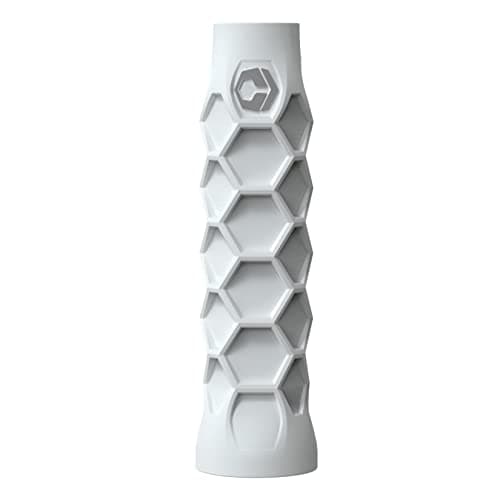
Hesacore Pickleball Paddle Grip— who it is for: anyone who cannot stop gripping hard, or whose hand hurts after playing. A molded replacement grip whose raised hexagonal pattern spreads load across the palm instead of concentrating it on the handle edges, which lets you hold the paddle genuinely loosely and still control it. It is the single most effective product on this page.
| Type | Molded replacement grip |
|---|---|
| Length | 5.25 in |
| Benefit | Load spreading, reduced grip tension |
| Also | Vibration reduction, anti-sweat |
| Best for | Breaking the habit of squeezing too hard |
Tourna Mega Tac (10-pack)— who it is for: dry hands, cool conditions, and anyone whose paddle slides. An extra-tacky overgrip that sticks to the hand so you do not have to squeeze to keep hold of it. Ten wraps to a pack makes it the cheapest per-wrap option, and each wrap adds a little circumference too.
| Type | Extra tacky overgrip |
|---|---|
| Pack | 10-pack |
| Color | White |
| Brand | Tourna |
| Best for | Dry hands, cool conditions, value per wrap |
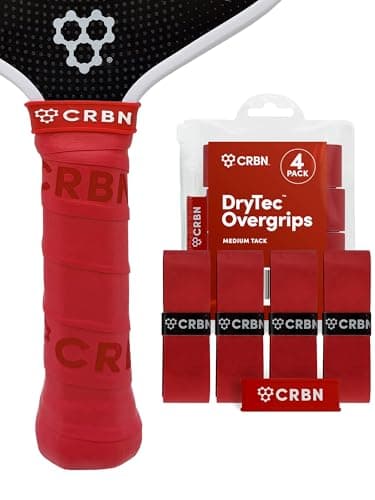
Hesacore Hesatac (6-pack)— who it is for: sweaty hands, hot weather, and anyone who wants cushioning rather than tack. A soft, stretchable, absorbent overgrip that adds padding between the handle and your fingers. Softer grips wear faster than tacky ones, so expect to re-wrap more often. More options in best pickleball overgrips.
| Type | Soft, absorbent, anti-slip overgrip |
|---|---|
| Pack | 6-pack |
| Sports | Pickleball, padel, tennis |
| Character | Stretchable, cushioned |
| Best for | Comfort and vibration damping |
The bottom line
Shake hands with the paddle, keep the V on the top bevel, let the index finger sit on the side bevel, and squeeze about four out of ten. Hold the paddle up in front of your chest between shots, slightly favoring your backhand side. If you cannot hold it loosely because it slides or twists, the handle is the problem rather than your hand — check your grip size and add a wrap. Everything else in the soft game gets easier once the grip is right.
Frequently asked questions
What is the correct way to hold a pickleball paddle?
Use the continental grip: hold the paddle with the face vertical and shake hands with the handle, so the V between your thumb and index finger sits on the top bevel in line with the top edge of the face. Let the index finger knuckle rest on the side bevel for feel. This one grip handles forehands, backhands, volleys, dinks and serves without changing, which matters because kitchen exchanges are too fast to switch grips.
How tight should you hold a pickleball paddle?
About four out of ten for dinks, blocks, resets and third-shot drops - just firm enough that the paddle does not twist on contact. Firm up to six or seven briefly through a drive or an overhead, then release. Most recreational players grip at eight or nine all the time, which makes every ball rebound off the face and is why their blocks fly long and their dinks sit up.
Is the continental grip the same as the handshake grip?
Yes - handshake grip and hammer grip are both common names for the continental grip, because shaking hands with the handle is how you find it and because it is the grip you would use to swing a hammer. All three names describe the same hand position, with the V between thumb and index finger on the top bevel of the handle.
What is the frying pan grip and why is it wrong?
It is holding the paddle with the face horizontal, so the paddle sits like an extension of your palm. It feels natural and works adequately for a forehand volley at chest height, but it leaves you nearly unable to play a backhand, a low dink or anything on your off side. It is the most common self-taught grip error, and correcting it costs one awkward session.
Should my index finger go on the back of the paddle face?
It is optional. Letting the index finger separate slightly so its knuckle rests on the side bevel is standard and gives you face-angle feel. Extending the finger further up the back of the face gives even more feel at the cost of some stability in a hands battle - a genuine personal preference used by plenty of good players, not a mistake either way.
Can I use a two-handed backhand in pickleball?
Yes, and many tennis converts do. The constraint is equipment rather than technique: you need a handle of around 5.5 inches to fit both hands, which rules out most widebody paddles. Elongated and hybrid paddles with long handles - the JOOLA Hyperion and the Gearbox GBX Power Hybrid among them - are the models to look at.
Sources
Keep reading
Upgrading your paddle or gearing up to play?
See how we pick, then dig into the paddle roundups and buying guides — honest picks from someone who actually plays, with no inventory to move.