Technique Guide
The Third Shot Drop, Explained
It is the least glamorous shot in pickleball and the one that decides more points than any other. Not because it wins rallies - because it ends the part of the rally where you are losing.
Pickleball has a structural problem built into its rules, and the third shot drop is the answer to it. Understanding the problem first is what makes the shot make sense — most players learn the technique before they understand why they are bothering, which is why they abandon it the moment it goes into the net twice.
Why the third shot exists
The serving team must let the return bounce — that is the two-bounce rule, covered in our pickleball rules guide. So while the returning team walks calmly to the kitchen line, the serving team is stuck at the baseline waiting for a ball to bounce.
By the time the serving team hits their third shot, the opponents are at the net and they are not. In pickleball, the team at the kitchen line wins the overwhelming majority of points — you hit down, they hit up, and eventually one of those balls sits up. So the serving team starts every rally at a positional disadvantage created by the rules themselves.
The third shot is the shot that fixes it. Not by winning the point — by buying the two or three steps forward that get you to where the point is winnable.
What a third shot drop actually is
A soft, arcing shot hit from around the baseline that lands in or near your opponent's kitchen — the seven-foot non-volley zone either side of the net, explained in what is the kitchen.
The reason it targets the kitchen is not that the kitchen is a magic square. It is that a ball landing there has to be allowed to bounce, and a ball your opponent takes off the bounce at ankle height cannot be hit down at you. Take away their downward angle and you have taken away their advantage — which is all the time you need.
The shot shares its DNA with the dink; it is essentially a long dink hit from 20 feet further back. If the soft game is unfamiliar, read what is a dink first, because everything about paddle face, swing path and patience transfers directly.
How to hit one
Get your feet there early.Almost every bad drop is a footwork problem wearing a technique costume. Judge the return's depth as it crosses the net and move so you can take the ball at a comfortable height, rather than reaching for it late.
Start the paddle below the ball, face open. The lift comes from the path of the paddle, not from scooping with the wrist.
Swing low to high, from the shoulder.Slow and continuous. The wrist stays quiet — a wrist-driven drop is the first thing to fall apart under pressure, and the main reason a shot that works in practice fails in a game.
Aim for the apex, not the target. This is the single most useful cue in the whole shot. Instead of aiming at the kitchen, pick a height above yourside of the net — roughly a meter or so above the tape — and send the ball through that point. Gravity does the rest. Players who aim at the kitchen hit the ball too flat, and a flat drop arrives high and gets attacked.
Move forward behind the ball. Two or three steps in while it travels, then split-step as your opponent makes contact. If you hit a perfect drop and stay at the baseline, you have wasted it.
Expect to do it twice. Advancing in stages is normal. Drop, take a few steps, drop again from mid-court, take a few more. Nobody gets from baseline to kitchen in one shot reliably, and trying to is how you end up hitting it too hard.
The four ways it fails
| What happened | Actual cause | Fix |
|---|---|---|
| Into the net | Paddle face too closed, or swing not low-to-high enough | Open the face and start the paddle lower; aim higher over the net |
| Too high, gets smashed | Aimed at the target instead of the apex; too much pace | Pick an apex height on your side and slow the swing down |
| Lands deep, gets attacked | Too much wrist, or hitting from a poor position | Quiet the wrist; fix the footwork so you are not reaching |
| Good drop, still lose the point | You did not move forward behind it | Take the steps — the drop exists to earn them |
The fourth row is the one nobody talks about, and it is the most common of the four at intermediate level. A drop that works and is not followed forward is a wasted shot.
Drop or drive?
The drop is not always right. The third shot drive— a hard, flat drive at your opponents' feet or body — is the alternative, and good players choose between them based on the return they received.
| Situation | Play |
|---|---|
| Deep return, you are behind the baseline | Drop — you have no angle for a drive and no time to recover |
| Short return, you can step in | Drive — you have a downward angle and they are still moving |
| High, floaty return | Drive, or a hard roll — punish it |
| Opponents already set at the kitchen | Drop — driving into two ready paddles hands them the point |
| You are out of position or off balance | Drop — reset the rally, do not gamble |
A useful pattern at intermediate level is the drive-then-drop: drive the third, and if it comes back, drop the fifth from the mid-court position the drive bought you. That combination is genuinely easier than a perfect third shot drop and it is how a lot of 4.0 doubles is actually played.
How to practice it
Start at the kitchen and walk back. Rally soft dinks from the kitchen line until they are consistent, then take three steps back and hit the same shot. Then three more. The drop is a dink hit from further away, and building it from the kitchen outward is far more effective than starting at the baseline and hoping.
Use a target you can see.Put a towel or a couple of balls in the kitchen and aim at that, not at "the kitchen" in the abstract. Count how many land in ten.
Practice the movement, not just the shot. Every drop in practice should be followed by the two or three steps forward and a split-step. Otherwise you are training a shot without training the reason for it.
A wall or a rebounder works.Solo repetition on the swing path builds the shoulder-driven, quiet-wrist motion faster than court time does — our best pickleball rebounders and ball machines roundups cover the equipment side, and dinking drills has the partner drills that transfer directly.
Does gear help? (a little)
Technique is 90% of this shot. But paddle choice is not neutral, and it is worth being accurate about which direction it pushes you.
A control-tuned paddle with a thicker coreabsorbs more of the incoming ball's pace, which means the ball leaves your paddle slower for the same swing. On a drop — a shot whose entire objective is to arrive soft — that is genuine help. A stiff, thin-cored power paddle does the opposite: it returns energy readily, so your drops fly deeper and your margin for error shrinks. The mechanics are in 14mm vs 16mm.
The ball matters less, but it matters. A softer, slower ball is more forgiving on drops than a fast outdoor ball — and if you compete, practicing with the ball you will compete with is worth more than any small difference in feel (see Franklin X-40 vs Dura Fast 40).
More options in our best control paddlesroundup — but be honest with yourself first: if your drops go into the net, that is a swing-path problem, and no paddle fixes it.
Frequently asked questions
What is a third shot drop in pickleball?
It is a soft, arcing shot hit from around the baseline that lands in or near the opponents' kitchen. Its purpose is not to win the point but to be unattackable — a ball landing in the kitchen must be allowed to bounce, so the opponents cannot hit down at you, which gives the serving team time to move forward to the kitchen line where points are actually won.
Why is the third shot so important in pickleball?
Because the two-bounce rule puts the serving team at a positional disadvantage. The returning team walks to the kitchen while the servers wait for the return to bounce, so the servers are stuck at the baseline hitting up at opponents who are hitting down. The third shot is the shot that buys the serving team the steps forward needed to level the position.
Should I drive or drop the third shot?
Read the return. A deep return that pushes you behind the baseline calls for a drop — you have no angle and no time. A short return you can step into calls for a drive, because you have a downward angle and the opponents are still moving. If they are already set at the kitchen, drop; driving into two ready paddles usually loses the point.
Why does my third shot drop keep going into the net?
Almost always paddle face and swing path. The face needs to be open and the paddle head needs to start below the ball, with a slow low-to-high lift driven from the shoulder rather than the wrist. The other common cause is aiming at the kitchen instead of at an apex height above your own side of the net — aiming at the target flattens the arc and reduces your margin.
How do you practice the third shot drop?
Build it backwards from the kitchen. Rally soft dinks at the kitchen line until they are consistent, then step back three paces and hit the same shot, then three more, until you are at the baseline. Use a visible target in the kitchen and count successes out of ten, and follow every drop with the two or three steps forward — the movement is part of the shot.
Sources
Keep reading
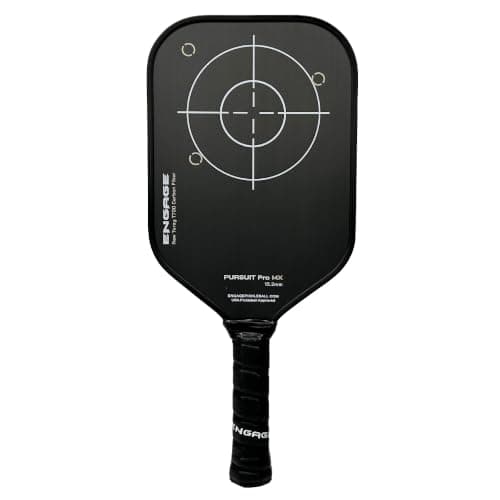
Upgrading your paddle or gearing up to play?
See how we pick, then dig into the paddle roundups and buying guides — honest picks from someone who actually plays, with no inventory to move.