Equipment Roundup
The Best Pickleball Rebounders in 2026
A rebounder is a ball machine that costs a tenth as much and never needs charging. It can't do everything a machine does — but for dinks, volleys and resets it might be better.
The short answer
Quick picks
| # | Product | Best for | Score | Price |
|---|---|---|---|---|
| 01 | G-SQAURED 2-in-1 Rebounder & Game Net A 6x6ft rebounder that converts into a portable game net — two products in one. | Best overall | 4.2/5 | Check price → |
| 02 | 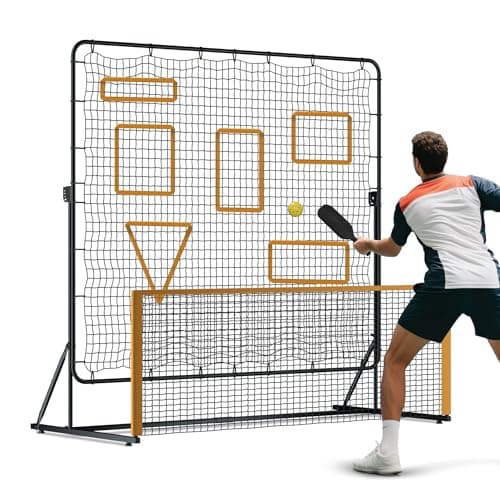 MR Pickleball Rebounder 6'x6' The full 6x6ft face, adjustable in both angle and height, for the least money here. | Best value | 4.3/5 | $79.99Amazon |
| 03 | 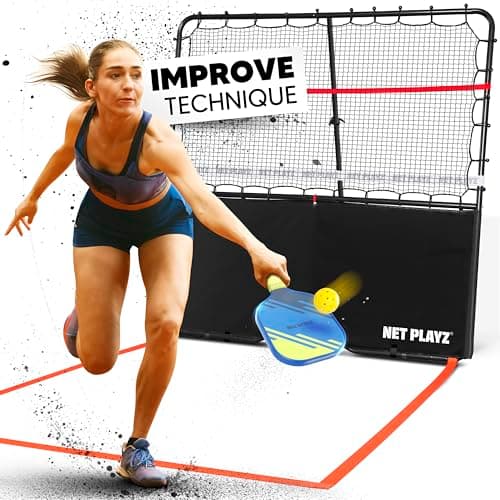 Pickleball Rebounder Training Aid Three marked angle settings — 70, 80 and 90 degrees — and a frame that folds flat. | Best for drill variety | 4.1/5 | $134.99Amazon |
| 04 | 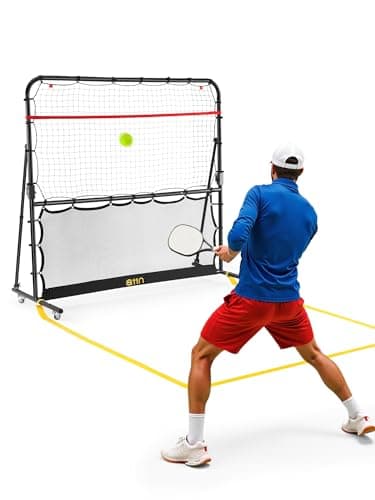 A11N SPORTS Rebounder with 360° Wheels Rolls out of the garage on 360° wheels, and has a marked kitchen zone to aim at. | Best for easy setup | 4.3/5 | $99.99Amazon |
#ad · Live prices from Amazon as of October 19, 2026; where we have no verified live price we show none. We may earn a commission — see our affiliate disclosure.
The gap between people who improve at pickleball and people who plateau is usually not talent. It is repetitions. Games give you a handful of any particular shot, scattered across two hours and never twice in a row, which is a poor way to build anything.
A rebounder solves that for a specific and useful subset of shots: anything you can hit into a tensioned net and receive back. That covers dinks, volleys, resets, drives and reaction work — a genuinely large share of what decides points. And it does it for well under the price of a ball machine. My overall pick is the G-SQAURED 2-in-1, which gives you a 6x6ft rebound face and converts into a portable game net — two pieces of kit in one footprint. If you only want the rebounder and want to spend less, the MR 6’x6’ is the same size face for a good deal less money.
What a rebounder does well
Unlimited reps with no setup between shots.The ball comes back. That single property is what makes a rebounder more useful per dollar than almost anything else in practice equipment — no collecting, no refilling, no battery.
Dink and reset consistency. The highest-value use. Soft shots return softly, so you can hit forty dinks in a row and actually feel what your paddle face is doing. This is the drill that most directly improves rec-level results.
Hand speed and volley reaction.Stand closer, hit harder, and the ball comes back faster. At close range a rebounder produces genuinely quick exchanges — the closest thing to a hands battle you can practice alone.
Warm-up. Five minutes before a session beats walking straight onto court cold, especially for players managing elbow issues.
What it can't do
It returns what you give it.A rebounder is a mirror — hit a bad ball and you get a bad ball back, which can spiral. A ball machine feeds a consistent ball regardless of how well you hit the last one, which is why machines are better for grooving a stroke from scratch.
No serves, no third-shot drops from the baseline. Anything requiring a full court and a ball arriving from distance is out of scope. That is a real limitation, since the drop is the shot most rec players most need.
No disguise, no shot selection. Same limitation as a machine, and the reason neither replaces a practice partner. Pair rebounder work with the partner drills in our dinking drills guide.
Wind is a problem outdoors.A tensioned fabric face plus wind equals an unpredictable return and, with lighter frames, a rebounder that walks across the court. Weight the base if it's breezy.
At a glance
Specs come from each manufacturer's published listing. Live prices are on the buttons.
| Rebounder | Size | Angle | Standout | Best for |
|---|---|---|---|---|
| G-SQAURED 2-in-1 | 6x6 ft | Adjustable | Converts to a game net | Overall |
| MR 6'x6' | 6x6 ft | Angle and height | Cheapest 6x6 here | Value |
| Pickleball Rebounder Training Aid | Per listing | 70 / 80 / 90 degrees | Marked angle settings, folds flat | Varied practice |
| A11N SPORTS | Per listing | 4 settings | 360° wheels, marked kitchen zone | Easy setup |
Best overall: G-SQAURED 2-in-1 Rebounder & Game Net
The 2-in-1 converts between a rebounder and a portable pickleball net, on a heavy-duty iron frame at 6x6 ft. For a driveway or a garden that has to serve both purposes — solo practice on weekdays, actual games at the weekend — that is a genuinely good deal on space as much as money.
| Size | 6 x 6 ft |
|---|---|
| Modes | Rebounder and portable game net |
| Frame | Heavy-duty iron |
| Adjustment | Adjustable rebound angle |
| Best for | Driveway setups doing double duty |
What I like: two pieces of equipment in one footprint, which is the constraint most home setups actually hit, on a full 6x6ft face. What gives me pause: a convertible product compromises slightly at both jobs — if you want a real game net, our best portable nets roundup covers regulation options, and if you only ever want a rebounder the MR 6’x6’ gives you the same face size for less.
Best value: MR Pickleball Rebounder 6’x6’
The 6x6 footface is the important number here — a bigger target means fewer balls missed entirely, which matters more than it sounds when you are trying to build rhythm. This is the cheapest way to get one, and it is the only net on this page that adjusts in both angle and height rather than angle alone. Height matters more than it sounds: raising the face turns dink practice into volley practice without you moving.
| Size | 6 x 6 ft |
|---|---|
| Adjustment | Adjustable angle and adjustable height |
| Drills | Dinks, volleys, accuracy, kitchen control |
| Also works for | Tennis, badminton, squash |
| Warranty | Lifetime manufacturer warranty (per listing) |
| Best for | The most rebounder per dollar |
What I like: a full-size face and two axes of adjustment at the lowest price here, plus a listed lifetime warranty, which is unusual for a category built on short seller runs. What gives me pause: a 6x6 frame takes real space and real setup time, so check where it will live before buying — and the listing does not publish a frame weight or a wheel, so assume you are carrying it rather than rolling it. If you want to roll it, take the A11N.
Best for drill variety: Pickleball Rebounder Training Aid
This one is the only rebounder here that tells you what its angles actually are, and that is why it earns the drill-variety slot. The face locks at 70 degrees for a slower, higher return that suits overheads and beginners, 80 degrees for groundstrokes, volleys and dinks, and 90 degreesfor flat, fast returns and close-range net work. Three named settings is a lot more useful than "adjustable" on a listing, because you can repeat a session rather than guess at it.
| Adjustment | Three locked angles - 70, 80 and 90 degrees |
|---|---|
| Drills | Forehands, backhands, dinks, volleys, overheads |
| Setup | Quick-lock assembly, frame folds flat for storage |
| Portability | Light enough for one person to move |
| Best for | Varied training sessions you can repeat |
What I like: named angle settings turn this into a training tool you can run a programme on, and the frame folding flat solves the real problem with a 6ft net, which is where it lives between sessions. What gives me pause: it is the most expensive net on this page — at which point a budget ball machine kitbecomes a comparison — and the listing does not publish face dimensions, so if size is your priority buy the MR 6’x6’ instead.
Best for easy setup: A11N SPORTS Rebounder with 360° Wheels
The best practice equipment is the equipment you actually use, and the biggest predictor of that is how annoying it is to move. A11N puts the whole frame on 360° wheels, so it rolls out of a garage onto a driveway and back again rather than being disassembled every time. It also has the feature I most wanted from the mini-court net this replaced: a marked kitchen zone and an adjustable target line on the face, so you have something specific to aim at instead of a wall of mesh.
| Adjustment | Four angle settings |
|---|---|
| Transport | 360° wheels, roll it as one piece |
| Frame | Reinforced steel with dual support poles, high-tension net |
| Targets | Marked kitchen zone and adjustable target line |
| Face | Dual-sided - one side rebounds quick, one controlled |
| Use | Indoor garage, driveway, backyard |
| Best for | Players short on setup patience |
What I like: wheels turn a twenty-minute chore into a two-minute one, and that is the difference between weekly use and quarterly use. The dual-sided face is a genuine bonus — one side gives you a quick rebound for hands work, the other a controlled bounce for dinks, without touching the angle. What gives me pause: wheels add height and a bit of instability, so it needs a level surface, and A11N does not publish the face dimensions, so assume it is smaller than the 6x6 frames above.
Five drills worth doing
1. The hundred-dink. Tilt the face back, stand at dinking distance, and hit a hundred soft balls without letting one get above your chest. Count out loud; the discipline is the drill.
2. Close-range volley reaction. Steepen the angle, stand three or four feet away, and volley continuously. Thirty seconds on, thirty off. This builds the hands you need for firefights better than anything else you can do alone.
3. Reset from a fast ball. Hit a hard ball into the net and absorb the return softly, aiming to drop it just over an imaginary net line. This is the single highest-value shot in transition play.
4. Backhand-only. Whatever your weaker side is, spend a full drill on it. Rebounders are perfect for this because nobody is watching and no game is being lost.
5. Target accuracy. Pick a specific zone on the net face and hit twenty in a row to it. Then switch zones. Accuracy under fatigue is what holds up in a third game.
For the partner-based versions of these, see best dinking drills, and what the kitchen actually is if you want the strategic reason all of this matters.
The bottom line
Most players should buy the G-SQAURED 2-in-1: a full 6x6ft rebound face that doubles as a portable game net, which is the most use you can get out of one footprint. Want the same size face for less? The MR 6’x6’. Want repeatable, named angle settings? The three-angle training aid. Hate setup? The A11N on 360° wheels, which also gives you a kitchen zone to aim at. Any of them will get you more repetitions this month than open play will all year — and if you want a consistent feed instead of a mirror, read best pickleball ball machines.
Frequently asked questions
What is a pickleball rebounder used for?
It's a tensioned practice net that returns the ball to you, so you can drill alone. It's best for dinks, resets, volleys and reaction work — anything you can hit into it and receive back. It can't feed serves or replicate a third-shot drop arriving from the baseline, so it complements rather than replaces court time with a partner.
Is a rebounder better than a pickleball ball machine?
For soft-game and reaction work, often yes — and it costs a fraction as much, never needs charging and requires no ball collection. A machine is better for grooving a stroke from scratch, because it feeds a consistent ball regardless of how well you hit the previous one, while a rebounder returns whatever you gave it.
Why does the rebound angle matter?
The angle determines what you can practice. Set near-vertical, the net returns balls flat and fast, which suits volley and reaction drills. Tilted back, it lofts the ball for dinks and resets. Opened further still, it feeds higher balls for overheads and accuracy work. Angle adjustability is the feature that turns a rebounder into a training tool rather than a one-drill toy.
Can you use a pickleball rebounder outdoors?
Yes, with one caveat: wind. A tensioned fabric face catches wind, which makes returns unpredictable and can move a lighter frame across the court. Weight or anchor the base on breezy days, and choose a heavier frame if your practice space is exposed.
What happened to the Fostoy rebounder and the 6x6ft mini-court rebounder?
Both are gone, and so is the third. The Fostoy with wheels now shows as currently unavailable on Amazon with no buyable offer, and the 6x6ft mini-court rebounder and the original adjustable-angle net have had their listings pulled entirely. That is normal for this category, which is dominated by small sellers doing short production runs. We replaced all three in September 2026: the A11N SPORTS rebounder takes over the wheeled, easy-setup slot and adds target markings, the MR 6'x6' takes over as the big-face value pick, and a three-angle training aid takes the drill-variety slot.
How big should a pickleball rebounder be?
Bigger is genuinely better within reason — a 6x6 foot face means fewer balls missed entirely, which is what lets you build rhythm in a drill. The trade-off is footprint and setup time, so check where it will live and how often you'll be putting it up before choosing the largest option.
Sources
- Manufacturer product listings for the rebounders above (specifications as published)
- USA Pickleball — what is pickleball & equipment overview
Keep reading
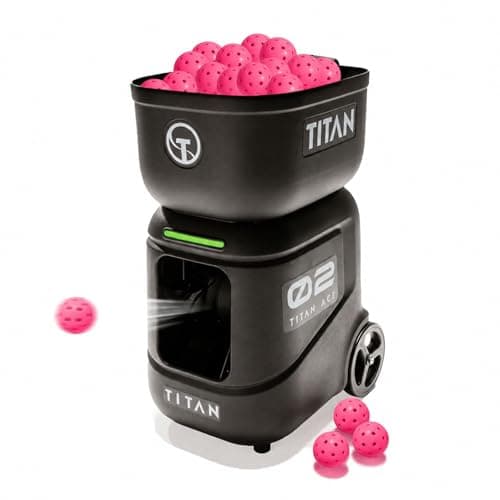
Upgrading your paddle or gearing up to play?
See how we pick, then dig into the paddle roundups and buying guides — honest picks from someone who actually plays, with no inventory to move.