Spec Guide
The Pickleball Paddle Sweet Spot, Explained
Every paddle advertises a big sweet spot and almost none of them tell you what that means. It is a real, physical thing you can locate on your own paddle in about five minutes - and the specs that make it bigger are not the ones in the marketing.
What the sweet spot actually is
The short version: the sweet spot is the part of the face where the paddle does what you expected it to.Hit inside it and the ball goes where you aimed with the pace you intended. Hit outside it and three things go wrong at once — the ball comes off slower, it comes off in a direction you did not choose, and the paddle sends a dead, uncomfortable shock into your hand.
It is worth knowing that “sweet spot” is actually three separate physical effects that happen to overlap in roughly the same place:
The centre of percussion— the point where contact produces no net rotation about your hand, so the handle does not kick or pull. This is the one you feel; miss it and the paddle twists or jars.
The node— the point where the face vibrates least. Miss it and you get the hollow, buzzy sensation players describe as hitting it “dead”.
The maximum-return zone— where the core compresses and rebounds most efficiently, so you get the most ball speed per unit of swing speed.
When a brand says a paddle has a big sweet spot, what they almost always mean is that the first of those — the no-twist zone — is wide, because that is the one construction can genuinely change.
Where it sits on your paddle
Not in the middle of the face, which surprises most players. On nearly every paddle the sweet spot sits slightly above the geometric centre, toward the tip, because the relevant physics is measured from your hand rather than from the paddle's outline. On an elongated paddle that offset is larger, which is exactly why elongated paddles feel “tippy” to players coming off a widebody: their old contact point is now below the good zone.
Shape then decides how big that zone is. USA Pickleball caps length plus width at 24 inches, so every paddle is spending the same budget two ways. Spend it on length and you get reach, leverage and spin, with a narrower, higher sweet spot. Spend it on width and you get a wider, more forgiving zone and give up reach. There is no shape that wins both; see paddle shapes explained.
| Shape | Sweet spot size | Sweet spot position | What you give up |
|---|---|---|---|
| Widebody / square | Largest | Closer to the geometric centre | Reach and spin leverage |
| Hybrid | Middle | Slightly above centre | A little of each |
| Elongated | Smallest | Noticeably above centre, toward the tip | Forgiveness on off-centre contact |
Three things that make it bigger
1. Width.The single biggest factor, and the one you can read straight off a listing. A wider face puts more mass further from the paddle's long axis, which means the face rotates less when you catch a ball off-centre. That resistance to rotation is called twist weight, and it is the real mechanism behind nearly every big-sweet-spot claim — our twist weight guide covers how it is measured and why the published numbers do not agree.
2. Mass at the perimeter. Where the mass sits matters more than how much there is. A foam-filled edge wall, a foam-injected perimeter or an explicit perimeter-weighting system puts material exactly where it resists twisting, which is why modern thermoformed paddles forgive edge contact so much better than the cold-pressed ones they replaced. An 8.5 oz paddle with its mass up the middle can have a smaller effective sweet spot than a 7.9 oz paddle with its mass at the edges.
3. Core thickness.A thicker core — 16mm rather than 14mm — compresses more and returns the ball more softly and more consistently across the face. It makes the feel of the sweet spot more generous even when the geometry has not changed. This is why 16mm is the standard recommendation for improving players; see 14mm vs 16mm.
How to find yours in five minutes
You do not need equipment, and doing this once changes how you think about your paddle.
The bounce test. Hold the paddle loosely by the very end of the handle, between finger and thumb, so it can pivot freely. Drop a ball from about a foot onto the face, starting near the tip, and work down the paddle an inch at a time. Listen and watch. Near the tip the handle kicks forward in your fingers and the sound is sharp; low on the face the handle kicks backward and the sound is dull. Somewhere between the two the handle barely moves and the ball rebounds highest with a solid, clean note. That band is your sweet spot, and on most paddles it sits higher than you assumed.
The marker test. Wipe the face, then play a game with a light smear of chalk dust or a dry-erase mark on a ball. The cluster of contact marks tells you where you actuallyhit the ball, which is usually not where you think. If your cluster sits below the band you found in the bounce test, you are hitting low on the paddle — a very common fault on elongated paddles and an easy one to correct once you can see it.
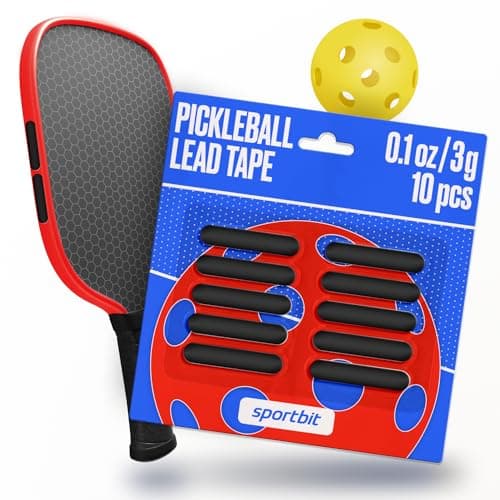
What to do with the answer.If the band is high and your contact is low, the fix is contact point and footwork, not a purchase. If the band is simply narrow — the good zone is small no matter where you hit — then shape and construction are working against you, and the paddles below are the answer. You can also widen the no-twist zone on the paddle you own with two strips of tape at 3 and 9 o'clock; our lead tape guide covers placement.
Paddles with the largest sweet spots
#ad· The buy buttons in this section are affiliate links, and every price they show comes from our live price feed with the date it was captured.
Three paddles we carry that are built the way a large-sweet-spot paddle has to be built: wide faces, mass at the perimeter, forgiving cores. All three are under or around $100, because forgiveness is one of the few things in this sport that does not require a flagship budget.
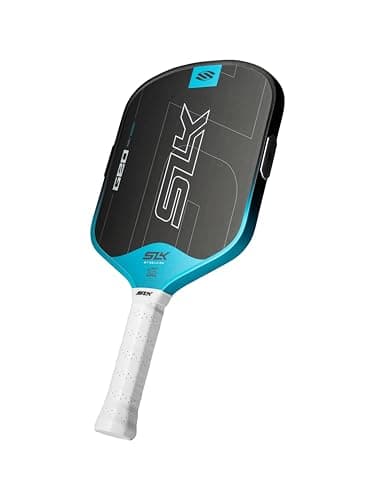
Selkirk SLK Geo — perimeter weighting, stated outright.Selkirk's MOI Tuning System shifts mass out to the perimeter, which is the mechanical reason a paddle forgives off-centre contact instead of twisting in your hand, and in the widebody outline it gives you the most stable face in this price range. Blocks off the edge stay in play rather than spraying wide.
| Surface | T700-grade raw carbon fiber |
|---|---|
| Core | Rev-Pro polymer honeycomb |
| Shape | Widebody (elongated also offered) |
| Feature | MOI Tuning System - perimeter weighting |
| Line | Selkirk SLK (value tier) |
Onix Graphite Z5 — the widest, oldest answer. The Z5 has been in bags for a decade because the widebody outline does exactly what this page describes: a wide, low sweet spot that forgives contact a modern elongated paddle would punish. A textured graphite face over a Nomex honeycomb core, with a cushioned comfort grip. It is in best widebody paddles for the same reason.
| Surface | Graphite (textured) |
|---|---|
| Core | Nomex honeycomb |
| Shape | Widebody |
| Grip | Cushioned comfort grip, ~4 1/4 in |
| Certification | USA Pickleball approved |
Paddletek Bantam EX-L — forgiving and comfortable, for less.A polycarbonate face over Bantam PolyCore in a standard shape. It is not a spin weapon — polycarbonate is smoother than carbon and does less to the ball — but it is forgiving, comfortable and USA Pickleball approved, and for a player whose problem is clean contact rather than spin, that is the right set of trade-offs.
| Surface | Polycarbonate |
|---|---|
| Core | Bantam PolyCore polymer honeycomb |
| Shape | Standard |
| Grip | High Tack Performance grip |
| Certification | USA Pickleball approved |
Playing with a small sweet spot on purpose
Plenty of very good players choose a paddle with a smaller sweet spot, and they are not making a mistake. An elongated paddle buys three things a widebody cannot: reach at the net and on the stretch, leverage that makes spin easier to generate, and a longer handle for a two-handed backhand. If your contact is reliable, those are worth more than forgiveness you do not need.
The honest test is whether your misses are contact misses or position misses. If the marker test shows a tight cluster slightly off the ideal band, buy the elongated paddle and fix your contact point. If it shows a scatter across the whole face, a wider paddle will win you points this week. Our best elongated paddles and best paddles for beginners pages are the two ends of that decision.
The bottom line
The sweet spot is real, it sits higher on the face than most players think, and its size is governed by width, perimeter mass and core thickness — not by face material or brand. Spend five minutes on the bounce test and a game with a marked ball before you spend anything on a paddle: half the players who think they need a bigger sweet spot are actually hitting below the one they have. If the zone genuinely is narrow, buy width — the SLK Geo or Onix Z5— or add two strips of tape at 3 and 9 o'clock and keep the paddle you like.
Frequently asked questions
Where is the sweet spot on a pickleball paddle?
Slightly above the geometric centre of the face, toward the tip. The relevant physics is measured from your hand rather than from the paddle's outline, so the no-twist zone sits higher than the middle - and on an elongated paddle it sits higher still. That is why players moving from a widebody to an elongated paddle often feel like they have suddenly lost the middle of the face.
Which pickleball paddle has the biggest sweet spot?
A widebody paddle with mass at its perimeter. Of the paddles we carry, the Selkirk SLK Geo is the clearest example because its MOI Tuning System deliberately shifts mass out to the edges, and the Onix Graphite Z5 is the long-standing widebody answer. Width is the single biggest factor, perimeter mass is second, and a thicker 16mm core makes the sweet spot feel more generous.
How do I find the sweet spot on my paddle?
Hold the paddle loosely by the very end of the handle so it can pivot, then drop a ball onto the face from about a foot, working from the tip downward an inch at a time. Near the tip the handle kicks forward; low on the face it kicks backward. Where the handle barely moves and the ball rebounds highest with a clean note is your sweet spot. Then play a game with a marked ball to see where you actually make contact.
Does a thicker core give a bigger sweet spot?
It gives a more forgiving one rather than a geometrically bigger one. A 16mm core compresses more than a 14mm core and returns the ball more softly and consistently across the whole face, so off-centre contact feels and plays better even though the no-twist zone has not moved. That is why 16mm is the usual recommendation for players still developing consistent contact.
Can I make my paddle's sweet spot bigger?
You can widen the no-twist zone, which is the part that matters most. Put a short bar of lead or tungsten tape at 3 and 9 o'clock - level with the widest point of the face - to move mass as far from the paddle's long axis as its shape allows. It costs a few dollars, adds around three grams per bar, and is fully reversible. You cannot change the paddle's shape or core, so there is a limit.
Is a bigger sweet spot always better?
No. Width is bought with length under the 24-inch length-plus-width limit, so the most forgiving paddles are also the shortest - you give up reach, some spin leverage, and handle length for a two-handed backhand. If your contact is already reliable, an elongated paddle with a smaller sweet spot will serve you better. Decide with a marked-ball test rather than on instinct.
Sources
Keep reading
Upgrading your paddle or gearing up to play?
See how we pick, then dig into the paddle roundups and buying guides — honest picks from someone who actually plays, with no inventory to move.