Ball Reviews
The Best Pickleball Balls for Dinking and Practice
Drilling burns through balls, and the ball you drill with changes what you learn. These are the balls worth buying for dink work and drills - bulk outdoor packs, the best indoor ball, and quiet foam for home.
The short answer
Quick picks
| # | Product | Best for | Score | Price |
|---|---|---|---|---|
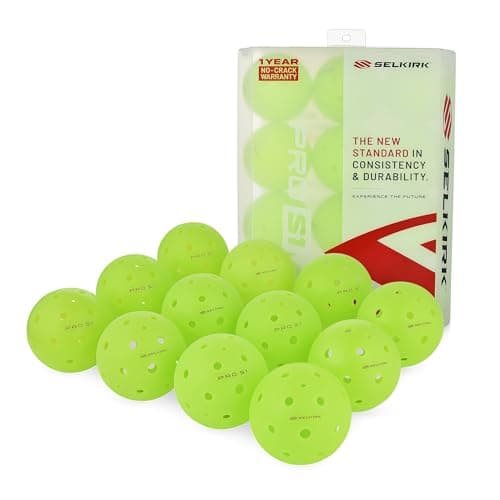
| 01 | Selkirk Pro S1 Outdoor (12-pack) 38-hole, crack-resistant, sold by the dozen - built for volume drilling. | Best overall practice ball | 4.6/5 | Check price → |
| 02 | 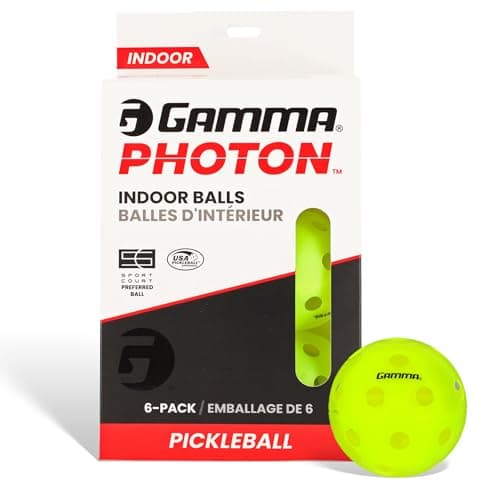 Gamma Photon Indoor (6-pack) Soft, slow and predictable on a gym floor - the easiest ball to dink with. | Best for indoor dink drills | 4.5/5 | $21.97Amazon |
| 03 | 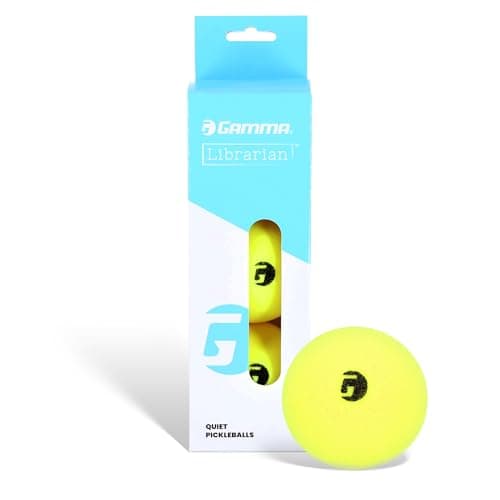 Gamma Librarian Foam On USA Pickleball's quiet list. About 60 dB - conversation volume. | Best for quiet practice at home | 4.4/5 | $12.99Amazon |
| 04 | 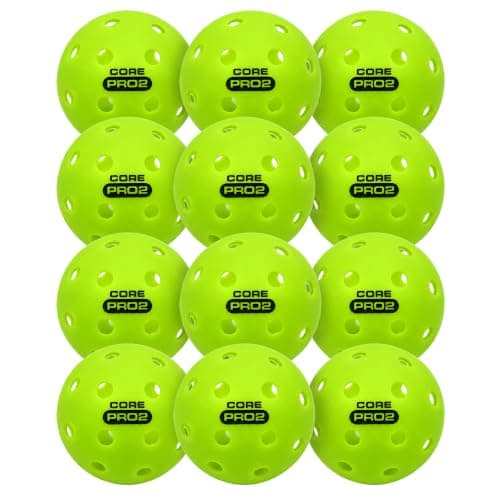 CORE Pro-40 Outdoor (12-pack) A dozen USA Pickleball approved 40-hole balls for feeding drills. | Best big-batch outdoor pack | 4.3/5 | $29.99Amazon |
| 05 | 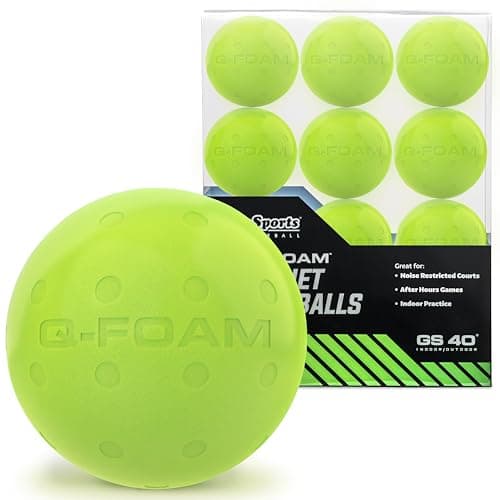 GoSports GS 40 Q-Foam (12-pack) Twelve quiet foam balls - enough for a whole clinic without the noise. | Best foam multipack for groups | 4.0/5 | $29.99Amazon |
#ad · Live prices from Amazon as of October 20, 2026; where we have no verified live price we show none. We may earn a commission — see our affiliate disclosure.
Practice balls are a different purchase from game balls, and most people never think about it. A drilling session puts hundreds of contacts through a ball, usually with someone feeding from a bucket, often in a driveway or a gym rather than on a pristine court. What matters shifts: you want durability, quantity, and — if you are hitting against a wall in a residential street at 7am — you want to not get shouted at.
So this page rates balls as practice balls. That is a different job from ranking them for match day, which we do separately in best pickleball balls. A ball can be a great tournament ball and a mediocre drilling ball, and vice versa.
Short answer: drilling outdoors, buy the Selkirk Pro S1 by the dozen. Drilling indoors on a gym floor, the Gamma Photon. Practising at home where noise is a problem, the Gamma Librarian foam ball.
How we reviewed these
The scores above rate each ball as a practice ball. We weighted four things: cost per ball (drilling is a volume activity, so a dozen-pack beats a three-pack), durability (outdoor balls crack, especially in the cold, and a drilling session is exactly where that shows up), how closely it behaves like your match ball (practice transfers only if the flight and bounce are familiar), and noise, which is not a nice-to-have if you are practising at home.
You will notice the same balls appear here and in our game-ball roundup with different scores. That is deliberate, not an error — a ball that wins on match day for its flight consistency does not automatically win a page about drilling on a budget.
Which ball should you drill with?
Start with where you are and how loud you can be. Everything else follows.
| Where you're drilling | What to buy | Why |
|---|---|---|
| Outdoor courts | A 12-pack of outdoor balls | Match-realistic, and buying by the dozen keeps the cost per ball down |
| Indoor gym or hall | Indoor balls (26 larger holes) | Softer and slower on a wood floor - much easier to control on dinks |
| At home, noise matters | Foam quiet balls | About conversation volume instead of a sharp crack, but the bounce differs |
| Prepping for a tournament | The exact ball the event uses | Flight and bounce vary between brands - match realism matters most here |
The indoor-versus-outdoor split is not marketing. Outdoor balls are harder and heavier with 40 small holes so they hold a line in wind; indoor balls are softer and lighter with around 26 larger holes. Use the wrong one and everything feels slightly off. Full explanation: indoor vs outdoor pickleball balls.
At a glance
| Ball | Type | Pack | Best for |
|---|---|---|---|
| Selkirk Pro S1 | 38-hole outdoor | 12 | Volume drilling outdoors |
| Gamma Photon | 26-hole indoor | 6 | Dink drills on a gym floor |
| Gamma Librarian | Foam, quiet | 3 or 6 | Practising at home without the noise |
| CORE Pro-40 | 40-hole outdoor | 12 | Big-batch feeding drills |
| GoSports GS 40 Q-Foam | Foam, quiet | 12 | Quiet group sessions and clinics |
Best overall practice ball: Selkirk Pro S1 (12-pack)
If you drill outdoors, this is the one to buy, and the reason is simple: it is sold by the dozen and Selkirk builds it to resist cracking. Cracking is the failure mode that ends an outdoor ball's life, it happens far faster in cold weather, and a drilling session is precisely the situation that finds it — you are hitting one ball hundreds of times in a row rather than rotating through a game.
It is a 38-hole outdoor ball rather than the more common 40-hole pattern, with Selkirk's aerodynamic profile, and it is USA Pickleball approved for tournament play. That last point matters more than it looks: it means what you learn drilling with it transfers, because you are practising with a ball that behaves like a real one, not a training substitute.
What gives us pause: at 38 holes it is not identical to the 40-hole Franklin X-40 that most US outdoor courts default to, so there is a small flight difference. If you are drilling specifically to prepare for matches played with X-40s, see the match realism section below.
| Type | Outdoor, 38 holes |
|---|---|
| Pack size | 12 |
| Certification | USA Pickleball approved for tournament play |
| Standout | Crack resistance - the reason it survives drilling |
| Best use | Volume dink and drop drills on outdoor courts |
Best for indoor dink drills: Gamma Photon (6-pack)
Indoor balls are quietly the best-kept secret in dink practice. With around 26 larger holes and a softer, lighter build, an indoor ball travels more slowly and sits down more predictably than an outdoor ball. On a gym floor that makes the soft game noticeably easier to learn: you get more time to set your feet, and a mishit does not immediately fly.
The Photon is our pick within that category because it is USA Pickleball approved, high-visibility, and known for being well balanced — which matters when you are hitting the same ball fifty times and want the flight to be the same every time. It is also our overall indoor pick in the main ball roundup, so this is not a practice-only compromise.
What gives us pause: it is emphatically an indoor ball. Take it outside and any breeze will push it around. And a 6-pack is a smaller batch than the dozen-packs above, so the cost per ball is higher.
Best quiet ball: Gamma Librarian Foam
This is the one that solves a real problem. Pickleball's signature sound is a hard plastic ball hitting a rigid paddle, and it is loud enough to have become a genuine neighbourhood dispute in a lot of places. If you want to hit dinks against a garage wall before work, a standard ball is not a viable option.
The Librarian is a foam ball, and it is the one we point people to because it is not just a marketing claim: it appears on USA Pickleball's Quiet Category acoustic equipment list, alongside a small number of other genuinely quiet balls. Gamma publishes it at a 2.91" diameter and 0.847 oz — close to regulation dimensions — and rates it at roughly 60 dB, which the brand compares to a quiet conversation. In practice that is the difference between drilling at home and not drilling at home.
What gives us pause — and this is important: Gamma markets it as having a true bounce like a normal pickleball, and owner feedback consistently disputes that, reporting that it bounces noticeably higher than a regulation ball. We are repeating that because it changes what the ball is good for. Treat it as a touch and contacttrainer — paddle face control, brushing up for spin, hand speed, wall work — rather than a way to groove the exact height of a dink. Foam also wears faster outdoors than plastic.
| Type | Foam quiet ball |
|---|---|
| Diameter | 2.91" (Gamma published) |
| Weight | 0.847 oz (Gamma published) |
| Noise | About 60 dB per Gamma - roughly conversation level |
| Listed by | USA Pickleball Quiet Category acoustic equipment list |
| Pack sizes | 3 or 6 |
| Watch out | Owners report a higher bounce than a regulation ball |
Best big batch: CORE Pro-40 Outdoor (12-pack)
A straightforward dozen of USA Pickleball approved 40-hole outdoor balls. The 40-hole pattern is the standard most US outdoor play uses, so this is the closest thing on this page to "a bucket of normal balls," which is exactly what feeding drills need. If you are the person who runs drills for a group, this is the practical buy.
What gives us pause:it does not make any particular crack-resistance claim the way the Selkirk Pro S1 does, and outdoor balls do crack — especially below about 50 degrees. If you drill through the winter, spend the extra on the Selkirk.
Best foam multipack: GoSports GS 40 Q-Foam (12-pack)
The same idea as the Librarian, bought by the dozen. If you are running a quiet clinic, a school session, or a group drill somewhere noise is restricted, twelve foam balls costs far less than twelve of anything else and means nobody stops to collect balls every thirty seconds.
What gives us pause:unlike the Librarian, we could not find it on USA Pickleball's quiet equipment list, so treat the noise claim as the manufacturer's rather than independently listed. The same foam caveats apply — different bounce from a regulation ball, and faster wear outdoors. It is a volume buy, not a precision instrument.
When to drill with your match ball instead
There is one situation where everything above is the wrong advice: when you are preparing for specific matches. Balls are not interchangeable — hole count, weight and hardness differ between brands, and the flight differs with them. If your league or tournament plays with a particular ball, drilling with that exact ball for the couple of weeks beforehand is worth more than saving a few dollars.
For most US outdoor play that means the Franklin X-40, the official ball of USA Pickleball, the APP Tour and the US Open. Competitive players often prefer the livelier Dura Fast 40, and the difference between the two is genuinely worth understanding — we compare them in Franklin X-40 vs Dura Fast 40.
How many balls do you actually need?
For partner dink drills, three or four is plenty — you are rallying, not feeding, so you rarely need to stop. This is where a 3-pack of your match ball makes sense.
For feeding drills (one person hitting third-shot drops or resets while a partner feeds), you want a dozen minimum. Stopping to collect balls every four shots is the fastest way to turn a focused 20-minute drill into an hour of walking.
For solo wall work, two or three is enough, and this is where the foam balls earn their place — you can do it at home, early, without annoying anyone. If you want the drills themselves rather than the equipment, our dinking drills guide is the place to start, and a rebounder or ball machine changes solo practice completely if you are serious about it.
The bottom line
Buy for where you drill, not for what is on the tournament ball list. Outdoors, the Selkirk Pro S1 12-pack gives you crack resistance and a sensible cost per ball. Indoors, the Gamma Photon makes the soft game easier to learn. At home with neighbours, the Gamma Librarian foam ballis the one that is actually on USA Pickleball's quiet list — just accept that its bounce is not regulation, whatever the box says.
And in the two weeks before a tournament, switch to the exact ball the event uses. That single habit is worth more than any ball on this page.
Frequently asked questions
What is the best pickleball ball for dinking practice?
It depends on where you practise. Outdoors, a 12-pack of a durable outdoor ball like the Selkirk Pro S1 - crack resistance matters because drilling puts hundreds of contacts through one ball. Indoors on a gym floor, an indoor ball such as the Gamma Photon, because the softer, slower flight makes the soft game much easier to control. At home where noise is an issue, a foam quiet ball like the Gamma Librarian.
Are foam pickleballs any good for practice?
For touch, contact and wall work, yes - and they solve the noise problem, which is the reason most people buy them. The Gamma Librarian is listed on USA Pickleball's Quiet Category acoustic equipment list and Gamma rates it at roughly 60 dB, about conversation volume. The honest caveat is bounce: owner feedback consistently reports foam balls bouncing higher than a regulation ball, so use them to groove paddle-face control rather than to practise the exact height of a dink.
How many pickleballs do I need for a practice session?
Three or four for partner dink drills, since you are rallying rather than feeding. A dozen for feeding drills, where one person hits and the other feeds - fewer than that and you spend the session collecting balls. Two or three for solo wall work. Buying a 12-pack is almost always cheaper per ball than repeat 3-packs if you drill regularly.
Should I practise with the same ball I play matches with?
In the couple of weeks before a tournament or league season, yes. Hole count, weight and hardness differ between brands and the flight differs with them, so match realism matters when you are sharpening up. Outside that window, buying a cheaper or more durable practice ball is a sensible trade - just be aware you will need a short adjustment when you switch back.
Are quiet pickleballs allowed in tournaments?
Quiet balls and standard tournament balls are different categories. USA Pickleball maintains a separate Quiet Category acoustic equipment list, which the Gamma Librarian foam ball appears on, distinct from the approved balls used for sanctioned play. Foam quiet balls are practice and noise-sensitive-venue equipment, not tournament balls. If you need a ball for sanctioned play, check the standard approved list.
Do outdoor pickleballs really crack that often?
Yes, and cold weather makes it much worse. It is the normal end of life for an outdoor ball rather than a defect, and drilling accelerates it because you are hitting one ball repeatedly rather than rotating through several during a game. That is why crack resistance, not flight, is the spec we weight most heavily on a practice ball.
Sources
Keep reading
- Best pickleball balls (indoor & outdoor) →
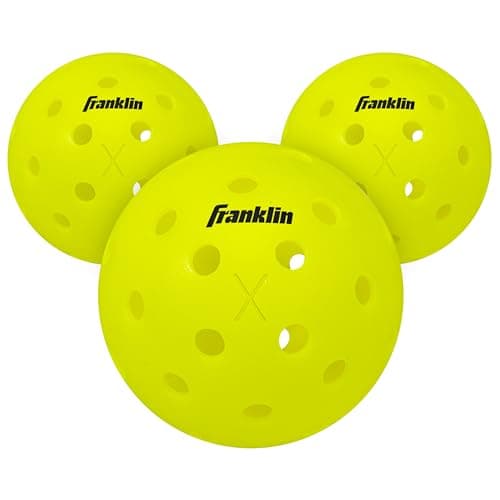
- Indoor vs outdoor pickleball balls →Rally & Dink
- Dinking drills that actually work →Rally & Dink
- What is a dink? →Rally & Dink
- Franklin X-40 review →
- Dura Fast 40 review →
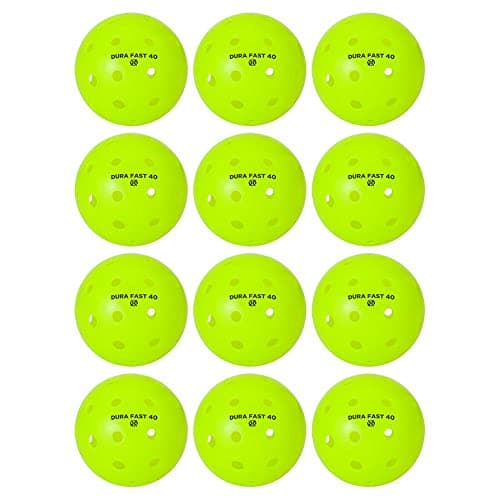
- Franklin X-40 vs Dura Fast 40 →Rally & Dink
- Best pickleball rebounders →Rally & Dink
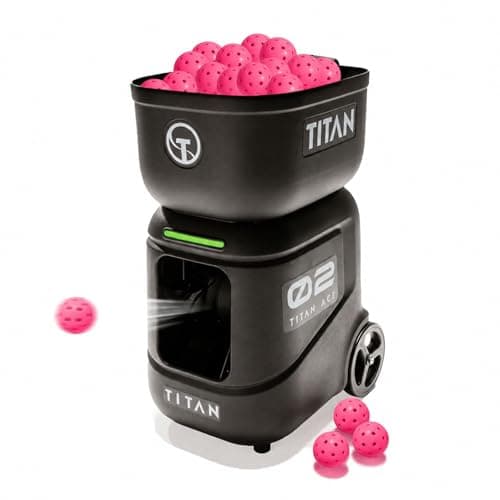
- Best pickleball ball machines →
Upgrading your paddle or gearing up to play?
See how we pick, then dig into the paddle roundups and buying guides — honest picks from someone who actually plays, with no inventory to move.