By Material
The Best Wooden Pickleball Paddles
Wood is the only material in pickleball that is bought for a reason other than how it plays. It is heavy, it is loud, and it is close to indestructible for ten dollars a paddle - which makes it exactly right for a class, a group or a driveway, and exactly wrong for you if you play every week.
The short answer
Quick picks
| # | Product | Best for | Score | Price |
|---|---|---|---|---|
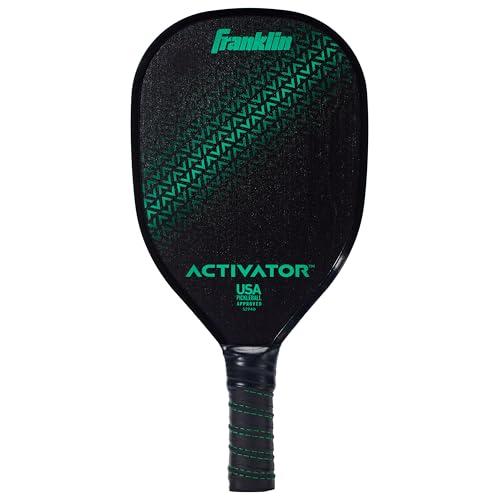
| 01 | Franklin Sports Activator Wood Paddle The only single wood paddle here that publishes USA Pickleball approval, for about ten dollars - the one to buy by the handful. | Best overall / budget pick | 4.2/5 | $10.39Amazon |
| 02 | 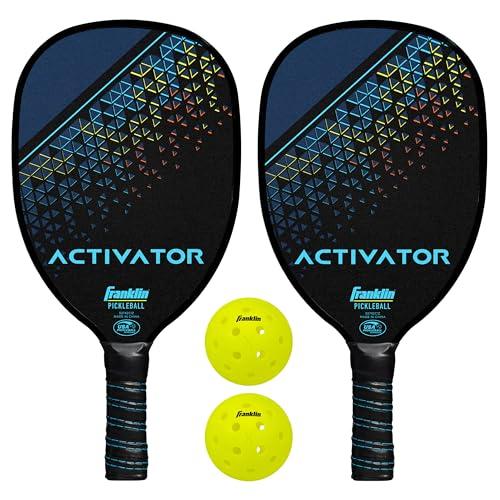 Franklin Activator 2-Player Set Two approved wood paddles plus two genuine Franklin X-40 outdoor balls - the only kit here whose balls are tournament-grade. | Best two-player kit | 4.3/5 | $16.99Amazon |
| 03 | 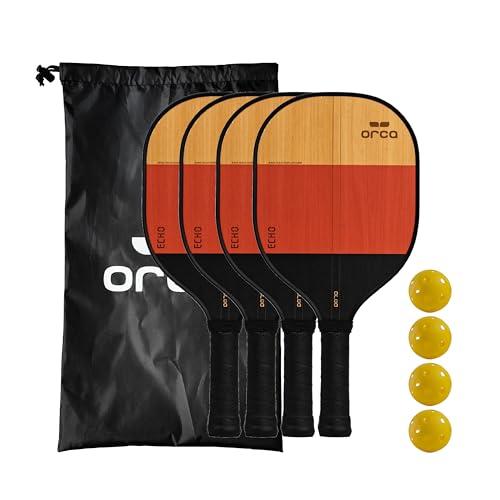 Orca Echo 4-Pack (Maple Wood Core) Four maple-core paddles with a travel bag and indoor balls - the cleanest doubles-ready kit at about six dollars a paddle. | Best four-pack | 4.0/5 | $25.96Amazon |
| 04 | 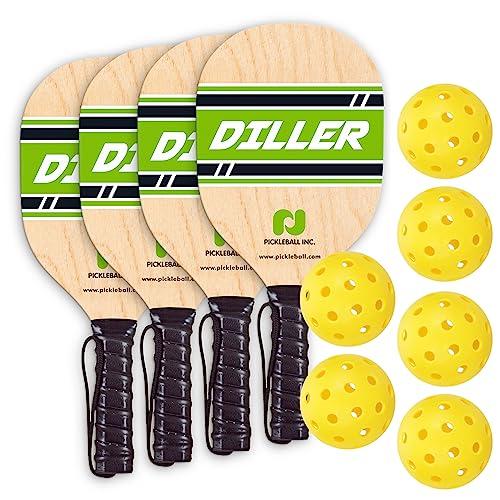 Diller 4-Player Bundle Four paddles and six balls from one of the oldest names in wood paddles - no bag, more balls. | Best for a driveway or garage | 3.9/5 | $24.99Amazon |
| 05 | 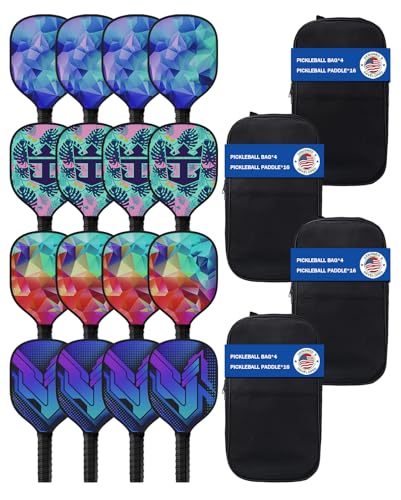 16-Piece Wood Paddle Set Sixteen paddles and four carry bags for about six dollars a paddle - the cheapest way to put a whole group on court at once. | Best for a class or rec center | 3.8/5 | $99.84Amazon |
| 06 | 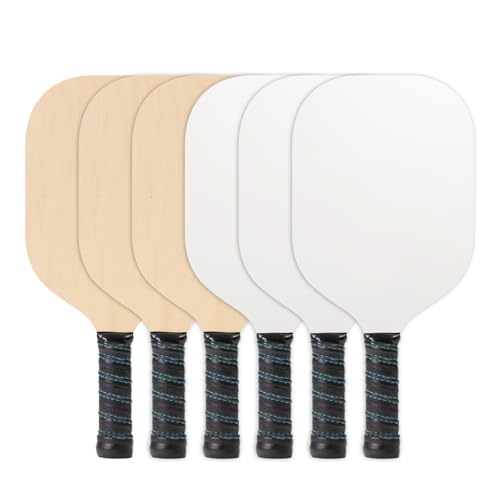 PYD Life Plywood Sublimation Blanks, 6-Pack Blank printable plywood paddles with published dimensions and weight - for team events, camps and prizes, not for play. | Best for custom printing | 3.7/5 | $54.14Amazon |
#ad · Live prices from Amazon as of November 25, 2026; where we have no verified live price we show none. We may earn a commission — see our affiliate disclosure.
The verdict, up front: buy the Franklin Sports Activator— by the handful. It is the only single wood paddle on this page that publishes USA Pickleball (USAPA) approval, it costs about ten dollars, and buying singles lets you build exactly the number you need instead of paying for a set's worth of balls you already own. It is also the budget pick; nothing here is cheaper per paddle. If you want a complete two-player kit, the Activator 2-player set includes real Franklin X-40 outdoor balls rather than the throwaway balls most wood sets ship. Equipping a whole group? Go straight to the 16-piece set.
Every price below is live from our price layer with the capture date on the button. And before any of it: the next section is me telling most of you not to buy a wooden paddle at all.
Who should actually buy a wooden paddle
Wood is the original pickleball material. The first paddles, cut in a garage on Bainbridge Island, were plywood, and wood is still the cheapest way to put a paddle in someone's hand by a factor of ten. What it is not, in 2026, is a paddle a regular player should be using.
Buy wood if you are equipping other people. A PE teacher who needs thirty paddles. A camp counselor. A rec center, a church hall, a cruise ship, a community center. An HOA that put a net on a tennis court and needs a bin of paddles that survives being thrown into a shed. Unit cost and durability are the only two variables that matter, and wood wins both by an enormous margin.
Buy wood for a driveway, a garage or a beach house. Paddles that live in a car trunk at 120 degrees, get rained on, get stepped on, and get handed to whoever shows up. A composite paddle in that life delaminates or cracks and costs eighty dollars to replace. A wood paddle in that life gets scratched.
Buy wood to find out whether you like the sport.Ten dollars to discover you love pickleball is a bargain, and ten dollars to discover you do not is the cheapest possible answer. But be clear that this is what you are doing — and if you already know you are going to keep playing, skip wood entirely and read our beginner sets page instead.
What wood costs you on court
Four things, in order of how much they matter.
Weight.This is the big one. Wood paddles are the heaviest paddles in the sport — solid plywood simply weighs more than a honeycomb core between two thin skins. The PYD Life blanks on this page are the only product here that publishes a figure, at 8 oz for a 7.5 x 15.5 in blank, and none of the playing paddles publishes a weight at all. A heavy paddle is slower to get up at the net, harder to reset a fast ball with, and asks more of your elbow and shoulder over two hours. If you have any history of tennis elbow, do not play with wood. Our paddle weight guide explains what the difference feels like.
Sweet spot. A polymer honeycomb core deforms on contact and spreads the impact; solid wood does not. Off-center hits on wood are dead, jarring, and go nowhere. This is the single biggest reason a beginner with a cheap composite paddle improves faster than a beginner with wood: more of their mishits stay in play.
Spin. Wood has essentially no grit. Modern faces generate spin from a rough raw-carbon or textured fiberglass surface, which is how the ball bites. A wood paddle can hit flat and it can hit hard, and that is the whole repertoire. If spin is the point, start at best paddles for spin.
Noise.Solid wood is loud — a hard, high crack rather than a thud. If you are playing anywhere near houses, this matters more than you think; court noise is the number one reason communities close pickleball courts, and the quieter constructions are all thick-core composites. That is covered on best quiet pickleball paddles.
What you get in exchange is real: a paddle that costs almost nothing, cannot delaminate because there are no layers to separate, and does not care about heat, cold or rain. For the buyer in the section above, that is the entire specification.
How I ranked these
Because nobody buys a wooden paddle for feel, the usual criteria do not apply. These are ranked on four things that do matter to a bulk buyer:
1. Cost per paddle.The only number that scales. A set is only a bargain if dividing its price by its paddle count beats buying singles — and for several wood sets, it does not.
2. Whether the ball is any good. This is where wood sets quietly differ. Most ship soft, light, off-spec balls that crack in a week; a set with genuine Franklin X-40balls in it is worth several dollars more immediately. If you are buying for a group, assume you will replace cheap balls and price that in — see best pickleball balls.
3. USA Pickleball approval, where it is published. Only one product family here publishes it. For a driveway this is irrelevant; for a rec center running anything resembling organized play, it is the difference between usable and not. Our guide to USA Pickleball approval explains what the mark does and does not mean.
4. How it is carried and stored. Sixteen paddles in a bin is a mess. Sets with real bags survive institutional life much better than sets without, which is why the bag count is in the comparison table.
What I deliberately did notrank on: grip comfort, core thickness, balance or any performance claim. Several wood listings describe "ergonomic cushion grips" and similar; a wood paddle is a wood paddle, and I am not going to pretend one plywood blade plays meaningfully better than another when no manufacturer publishes a weight, a balance point or a core spec to compare.
At a glance
Six wood options side by side. "Per paddle" is the arithmetic on the price at the time of writing; the live figure is on each button, so check it rather than trusting the division.
| Product | Paddles | Balls included | Bag | USAP approval published | Best for | Price |
|---|---|---|---|---|---|---|
| Franklin Activator (single) | 1 | None | No | Yes | Building exactly the count you need | Check price |
| Franklin Activator 2-Player Set | 2 | 2 x Franklin X-40 outdoor | No | Yes | A real two-player kit | Check price |
| Orca Echo 4-Pack | 4 | Indoor balls (count not stated) | Travel bag | Not stated | A doubles group | Check price |
| Diller 4-Player Bundle | 4 | 6 yellow pickleballs | No | Not stated | A driveway or garage | Check price |
| 16-Piece Wood Set | 16 | None stated | 4 carry bags | Not stated | A class or rec center | Check price |
| PYD Life Sublimation Blanks | 6 blanks | None | No | No - blanks, not play paddles | Custom printing and prizes | Check price |
#ad· Prices and availability change frequently — each button opens the live listing. We may earn a commission at no extra cost to you; see our affiliate disclosure.
Best overall and budget pick: Franklin Sports Activator Wood Paddle
Who it is for: anyone buying wood for any reason. Buy as many as you need.
The Activator is a single wood paddle from Franklin Sports, who are the official ball supplier of the USA Pickleball national championships and therefore not a no-name. The reason it leads this page is one line in the listing title: USAPA Approved. Of every wood product I looked at, the Franklin Activator family is the only one that publishes USA Pickleball approval — which for a school or a rec center running organized play is not a nicety, it is the requirement.
The second reason is that it is sold singly. Every other wood product here is a bundle, which means paying for balls and bags you may not need. If you want eight paddles and already have a tube of X-40s, eight singles is the cheapest and cleanest way to get there.
| Material | Wood |
|---|---|
| Count | 1 paddle |
| Balls included | None |
| USA Pickleball approval | USAPA Approved (published on the listing) |
| Published weight | Not published on the listing |
| Colors | Sold as separate listings by color (this one is Green) |
What I like: the cheapest paddle on this page, the only published approval in the category, and a brand with a real pickleball business behind it. What gives me pause: it is still a wood paddle, with everything in the section abovethat implies — heavy, no grit, small sweet spot, loud. Franklin publishes no weight for it, so if weight is a concern for you, nobody is going to tell you the number. And colors are separate Amazon listings at different prices, so if you are buying eight, check two or three of the color variants before you commit — they do not always cost the same.
Best two-player kit: Franklin Activator Paddle and Ball Set
Who it is for: two people who want everything but the net, and want the balls to still be usable next month.
Two USA Pickleball approved Activator wood paddles plus two genuine Franklin X-40 balls. That ball is the detail that earns this set its place: the X-40 is a USA Pickleball approved outdoor ball and the official ball of the USA Pickleball national championships, and we have a full review of it. Almost every other wood bundle ships unbranded balls that go soft or crack quickly, so a set that includes two real ones has already saved you a purchase.
| Material | Wood |
|---|---|
| Count | 2 paddles |
| Balls included | 2 x Franklin X-40 (outdoor) |
| USA Pickleball approval | USA Pickleball (USAPA) Approved (published on the listing) |
| Bag | None |
| Published weight | Not published on the listing |
What I like: approved paddles and approved balls in one box, for less than most people spend on a single composite paddle. The honest math is that this set costs only a few dollars more than two singles, and the X-40s are worth more than that on their own. What gives me pause: two balls is two balls — you will want a six or twelve pack before long. There is no bag. And X-40 is an outdoor ball, so if you are playing on a gym floor you want a different one; the distinction is in indoor vs outdoor pickleball balls.
Best four-pack: Orca Echo 4-Pack Maple Wood Core
Who it is for: a household or a group of four who want one box that contains a game of doubles and something to carry it in.
Four paddles that Orca publishes as maple wood core, with a travel bag and indoor ballsincluded. The bag is the reason this ranks above the Diller bundle: four loose paddles in a car is four loose paddles forever, and at this price a carry bag is genuinely useful rather than a token. Maple is a sensible wood for a paddle face — dense and hard — though Orca publishes no thickness or weight, so treat "maple core" as a material claim and not a performance one.
| Material | Maple wood core (as published) |
|---|---|
| Count | 4 paddles |
| Balls included | Indoor balls (quantity not stated on the listing) |
| Bag | Travel bag included |
| USA Pickleball approval | Not stated on the listing |
| Published weight | Not published on the listing |
What I like: the lowest cost per paddle of any four-pack here once the bag is counted, indoor balls rather than outdoor ones (which is the right choice for a gym or a garage), and a brand that at least names its wood. What gives me pause: no published USA Pickleball approval, no published weight, and the ball quantity is not stated — assume the balls are a starter allocation and not a supply. If you need approved paddles, buy Franklin singles instead.
Best for a driveway or garage: Diller 4-Player Bundle
Who it is for: the house with a net in the driveway, where paddles live outside and balls disappear.
Four Diller paddles and six yellow pickleballs. Diller is one of the longest-standing names in wooden paddles — the kind of paddle that has been in school gym closets for decades — and this bundle leans toward balls over bags: six, where the Orca set does not state a count. For a driveway that is arguably the better trade, because the thing you actually run out of is balls.
| Material | Wood |
|---|---|
| Count | 4 paddles |
| Balls included | 6 yellow pickleballs |
| Bag | None |
| USA Pickleball approval | Not stated on the listing |
| Published weight | Not published on the listing |
What I like: six balls is a genuinely useful number, it is a known wood-paddle name, and nothing in the box can break. What gives me pause: no bag, no published approval, no published weight, and the balls are unbranded — expect them to go soft faster than an X-40. It also costs about the same as the Orca four-pack while giving you less to carry it in, which is why it ranks below it.
Best for a class or rec center: 16-Piece Wood Paddle Set
Who it is for:a PE teacher, a camp, a community center — anyone who has to put a group on court at once.
Sixteen wood paddles and four portable carry bags. Sixteen is a genuinely useful institutional number: four courts of doubles, or a class rotating in groups. The four bags are what make this work in practice — four bags of four paddles is a system you can hand to four groups, where a box of sixteen is a pile somebody has to count at the end of every session.
| Material | Wood |
|---|---|
| Count | 16 paddles |
| Bags | 4 portable carry bags |
| Balls included | None stated on the listing |
| USA Pickleball approval | Not stated on the listing |
| Published weight | Not published on the listing |
What I like: the cheapest way on this page to equip a whole group, and the four-bag split is a real operational benefit rather than packaging. What gives me pause: it is a generic listing with no brand behind it, no published approval and no published weight, and the title describes it as "suitable for players of all levels", which is marketing — it is suitable for beginners and groups, full stop. It also includes no balls, so budget for a dozen balls on top. If your program needs approved equipment, buy sixteen Franklin Activator singles instead and accept the higher cost.
Best for custom printing: PYD Life Plywood Sublimation Blanks
Who it is for: a club running a tournament, a camp making prizes, a team wanting branded paddles, or anyone searching for a wooden pickleball paddle to paint— which is a real and surprisingly common query.
Six plywood blanks, 7.5 x 15.5 in, 2/5 in thick, 8 oz, printable on one side with the other side left as wood. This is the only product on this page that publishes dimensions and a weight, which tells you something about the rest of the category. They are sold for heat transfer printing— sublimation blanks, not play paddles.
| Material | Plywood, double-sided (one side white printable, one side wood) |
|---|---|
| Count | 6 blanks |
| Dimensions | 7.5 in x 15.5 in (published) |
| Thickness | 2/5 in (published) |
| Weight | 8 oz (published) |
| Intended use | Heat transfer / sublimation printing |
What I like: it is the honest answer to a question the other listings dodge, the published 8 oz figure is a useful reference point for how heavy wood actually is, and for an event these are the cheapest custom trophy in the sport. What gives me pause: these are not playing paddles. They carry no grip to speak of, no approval, and no edge protection, and at 8 oz with a solid plywood blade they will play exactly as badly as that suggests. Buy them for printing, not for a game.
When to stop buying wood
There is a clean line here, and it is worth stating because the money involved is small.
The moment you play twice in a week, you have outgrown wood.Not because wood is embarrassing — because the sweet spot is costing you points you could be winning and the weight is costing your arm. A composite paddle at $40-60 changes more about your game than any other purchase in the sport will at any price, and the gap between a wood paddle and a good budget composite is far larger than the gap between a $60 composite and a $200 one. Start at best paddles under $50.
Keep the wood anyway. This is the part most upgrade advice misses. Wooden paddles are the correct loaner. Keep two in the car for whoever wants to try, keep two at the beach house, keep two for the kids to beat up. Nothing else in pickleball costs ten dollars and survives everything.
If you are buying for a group, wood is not a stage you grow out of.A rec center does not need better paddles; it needs thirty paddles that still exist next season. That is wood's permanent job and it is very good at it.
Where to go next, depending on who you are: a single player ready to upgrade should read best paddles for beginners; a family wanting a real kit with a net should read best sets with a net; and anyone wondering whether price actually buys performance should read do expensive paddles play better.
The bottom line
Buying wood at all? The Franklin Activator single— the only published USA Pickleball approval in the category, about ten dollars, and you can buy exactly as many as you need. Want a complete two-player kit with balls worth keeping? The Activator 2-player set with its X-40s. Four players and a bag? The Orca Echo 4-pack. Driveway with a ball-eating hedge? The Diller bundle and its six balls. A class, a camp or a rec center? The 16-piece set, and budget for balls. Printing paddles for an event? The PYD Life blanks— and do not try to play with them. And if you play every week, buy none of these: go to best paddles under $50 and get a composite.
Frequently asked questions
Are wooden pickleball paddles any good?
They are good at exactly two things: costing almost nothing and surviving almost anything. For equipping a class, a camp, a rec center or a driveway, that makes them the correct choice and nothing else comes close. For a player who plays regularly they are a poor choice — solid wood is the heaviest construction in the sport, the sweet spot is small because wood does not deform on contact the way a honeycomb core does, there is no grit for spin, and the sound is loud. If you play weekly, a $40-60 composite paddle will do more for your game than any other purchase.
How much do wooden pickleball paddles weigh?
Most wood paddle listings do not publish a weight at all, which is itself telling — of the six products on this page, only the PYD Life plywood blanks state a figure, at 8 oz for a 7.5 x 15.5 inch blank. As a category wood is the heaviest construction in pickleball because a solid plywood blade weighs more than a honeycomb core between two thin faces. If paddle weight matters to you, either for swing speed or for your elbow, that absence of published figures is a good reason to buy a composite paddle whose weight is specified.
Are wooden pickleball paddles USA Pickleball approved?
Some are, but very few publish it. Across the wood products we checked, the Franklin Sports Activator family is the only one whose Amazon listings state USA Pickleball (USAPA) approval — both the single paddle and the two-player set carry it. The generic four-packs and sixteen-packs do not state approval either way. For a driveway that does not matter. For a rec center, school or club running anything resembling organized play, it is the deciding factor, and it is worth paying more per paddle for.
Wooden or composite pickleball paddle for a beginner?
Composite, if the beginner intends to keep playing. The larger sweet spot means more mishits stay in play, which is the single biggest thing that speeds up early improvement, and the lighter weight makes net exchanges possible. Wood is the right call in only two beginner situations: you are not yet sure you will like the sport and want to spend ten dollars finding out, or you are equipping a group of beginners at once where unit cost and durability decide everything.
How many wooden paddles do I need for a class or group?
Count the maximum number of people on court at the same time, then add about 20 percent for breakages, losses and a paddle somebody took home. Four courts of doubles is sixteen players, which is why a sixteen-paddle set is a common institutional buy. Bags matter more than most people expect — four bags of four paddles is a system you can hand to four groups, where sixteen loose paddles in a bin is something somebody has to count at the end of every session. Also budget separately for balls, since bulk paddle sets usually include none.
Sources
- Franklin Sports, Orca Paddle Co., Diller and PYD Life published listing copy for the products above (material, count, included balls and bags, USA Pickleball approval, and the one published dimension/weight set)
- Amazon listings for all six products above — availability and price verified through the site price layer on 2026-11-24
Keep reading
Upgrading your paddle or gearing up to play?
See how we pick, then dig into the paddle roundups and buying guides — honest picks from someone who actually plays, with no inventory to move.