Court Gear
The Best Ankle Braces for Pickleball
Pickleball is a sport of short, violent sideways pushes off a hard surface, and the ankle is where that load lands. These six braces are ranked on one thing: how much sideways motion the design actually limits, and what you give up to get it.
The short answer
Quick picks
| # | Product | Best for | Score | Price |
|---|---|---|---|---|
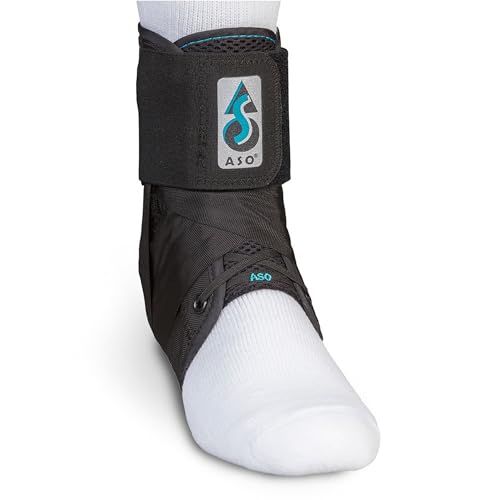
| 01 | Med Spec ASO Ankle Stabilizer A laced ballistic nylon boot plus elastic figure-8 straps - the design most athletic trainers reach for, and it fits either foot. | Best overall | 4.6/5 | $35.77Amazon |
| 02 | 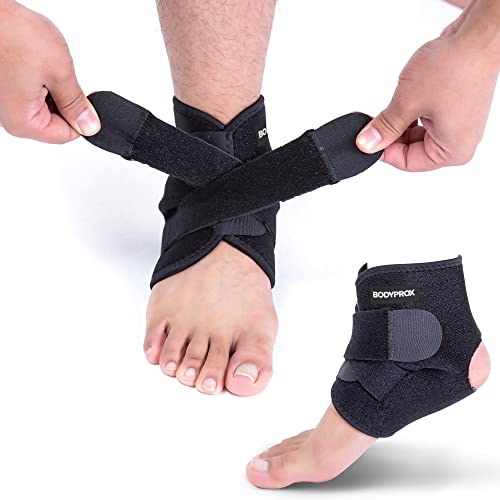 Bodyprox Ankle Support Brace A breathable adjustable wrap for about ten dollars - the least support here, but it fits in any shoe and you will actually wear it. | Budget pick | 3.9/5 | $9.99Amazon |
| 03 | 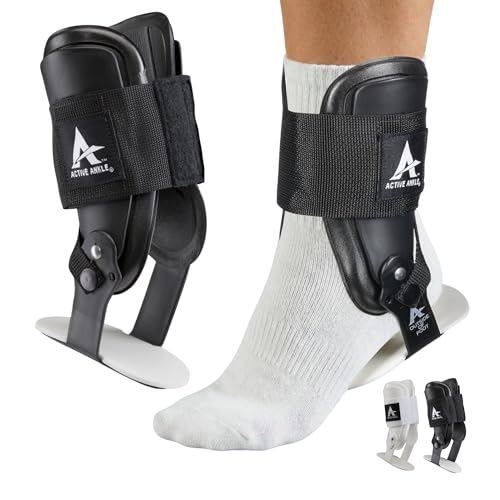 Active Ankle T2 A hard bilateral stirrup with EVA padding and one strap - the most inversion limit you can put on in ten seconds. | Best rigid support | 4.4/5 | $26.26Amazon |
| 04 | 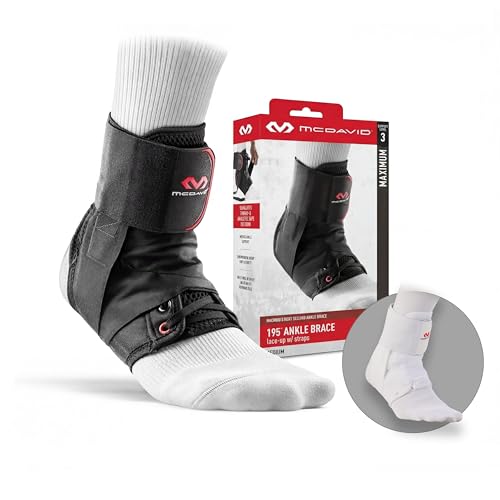 McDavid Ultralight Lace-Up (Figure 8) Figure-8 straps and side stabilizers in a thinner shell than the ASO - the one to try if a brace will not fit your court shoe. | Best low-bulk lace-up | 4.3/5 | $26.94Amazon |
| 05 | 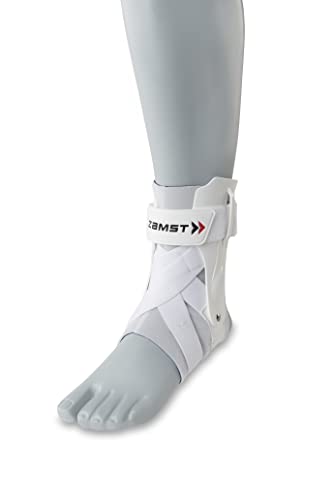 Zamst A2-DX External guards on both sides plus a lace-up shell, sold specifically for high ankle sprains and chronic instability - and side-specific. | Best for chronic instability | 4.4/5 | $80.00Amazon |
| 06 | 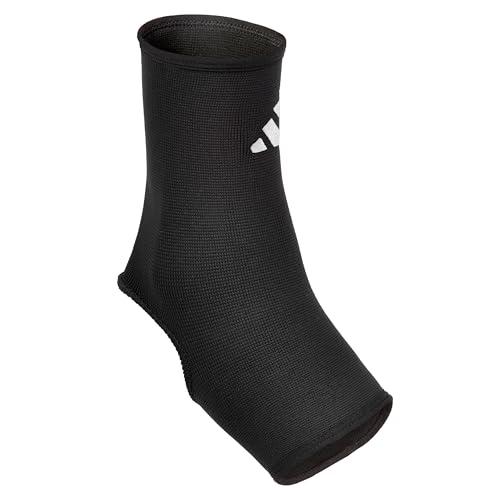 adidas Ankle Support Compression Sleeve A plain pull-on compression sleeve from a brand you know - proprioception and warmth, not mechanical restraint. | Lowest profile | 3.7/5 | $10.20Amazon |
#ad · Live prices from Amazon as of November 25, 2026; where we have no verified live price we show none. We may earn a commission — see our affiliate disclosure.
The verdict, up front: most players should buy the Med Spec ASO Ankle Stabilizer. It is a laced ballistic nylon boot with elastic figure-8 straps over the top, which is the design that has been standard issue in athletic training rooms for decades, and Med Spec publishes it as bilateral— one brace fits the left or the right foot. The budget pick is the Bodyprox wrapat around ten dollars, which limits far less but fits in any shoe. If you want the most restraint available in the time it takes to buckle one strap, the design you want is a rigid stirrup — the Active Ankle T2.
Every price below is live from our price layer with the capture date on the button. All six are assessed on published construction, not on lab testing. And before you buy any of them, read the section on how a brace changes your shoe fit— it is the single most common reason a brace gets bought and then left in a bag.
What an ankle brace actually does
The injury almost every pickleball player is worried about is a lateral ankle sprain: the foot inverts, rolling outward underneath you, and the ligaments on the outside of the ankle take a load they were not built for. In this sport it happens in a very specific moment — a hard sideways push-off to cover a wide ball, a backpedal for an overhead, or the half-step into the kitchen that lands on the edge of your own foot.
A brace addresses that in two completely different ways, and understanding which is which is most of this purchase.
Mechanical restraint. A rigid or laced brace physically runs out of travel before your ankle does. Straps, stays, a hard shell or a laced shell stop the joint rolling past a point. This is the part you are paying for in the ASO, the T2, the McDavid and the Zamst, and it is why those four cost two to eight times what a sleeve costs.
Proprioception and warmth.A compression sleeve puts pressure on the skin, which gives your nervous system more information about where the joint is. That is a genuine effect and the reason sleeves are popular, but it is not restraint — a sleeve will not stop a roll that a laced brace would have stopped. It is the thing the Bodyprox wrap and the adidas sleeve are selling, and it is worth having if the alternative is nothing.
The honest trade is that restraint costs you range of motion, bulk and comfort, in that order. A braced ankle does not dorsiflex as deeply, which you will feel on a low dig and on the split-step. Players who have never sprained an ankle generally hate the strong designs and stop wearing them. Players who have sprained one twice generally stop noticing within a week.
The four designs, strongest to softest
Every ankle brace sold for court sport is one of four things. Decide the design first, then pick the product — shopping by star rating across all four at once is how people end up with a sleeve when they needed a stirrup.
1. Rigid / hinged stirrup.Two hard shells either side of the ankle joined under the heel, usually with a hinge so the foot can still point and flex. Maximum inversion and eversion limit, minimal effect on up-and-down motion, and the fastest to put on — one strap. The Active Ankle T2 is this category. The cost is bulk: a hard shell needs room inside the shoe.
2. Lace-up with figure-8 straps.A laced fabric boot, usually ballistic nylon, with elastic straps that cross over the top of the foot and around the heel in a figure eight — the same pattern an athletic trainer tapes. Slightly less hard-stop than a stirrup, noticeably more adjustable, and it distributes pressure over more of the ankle. The ASO, the McDavid Ultralight and the Zamst A2-DX are all this category, in rising order of material.
3. Adjustable wrap. A fabric sleeve or wrap with one or two hook-and-loop straps. Some restraint from the strap tension, mostly compression. Thin enough to disappear in any shoe. The Bodyprox is this category.
4. Compression sleeve. A pull-on knit tube with no straps and no stays. Proprioception, warmth and a little swelling control. No mechanical restraint worth the name. The adidas sleeve is this category.
At a glance
The six side by side, by design type and by what each manufacturer publishes. Note the left/right column: two of these are sold as a single bilateral brace that fits either foot, and one is side-specific, which is an easy and expensive mistake at checkout.
| Brace | Design | Restraint | Fits either foot? | Best for | Price |
|---|---|---|---|---|---|
| Med Spec ASO Ankle Stabilizer | Lace-up + elastic figure-8 straps | High | Yes - published bilateral | Most players, most of the time | Check price |
| Bodyprox Ankle Support | Adjustable breathable wrap | Low | Yes | Spending the least | Check price |
| Active Ankle T2 | Rigid bilateral stirrup, EVA padding | Highest | Yes - published left or right | The most limit, fastest to fit | Check price |
| McDavid Ultralight Lace-Up | Lace-up + figure-8, side stabilizers | High | Not stated on the listing | Fitting a brace in a tight shoe | Check price |
| Zamst A2-DX | Lace-up + external side guards | Highest in a laced shell | No - sold left or right | Chronic instability, high sprains | Check price |
| adidas Compression Sleeve | Pull-on knit sleeve | None (compression only) | Yes | Proprioception with zero bulk | Check price |
#ad· Prices and availability change frequently — each button opens the live listing. We may earn a commission at no extra cost to you; see our affiliate disclosure.
Best overall: Med Spec ASO Ankle Stabilizer
Who it is for: the player who wants the design with the longest track record, and wants to be able to dial the tension up or down session by session.
The ASO is a laced ballistic nylon boot with elastic figure-8 straps that cross the top of the foot and wrap the heel, plus a stabilizing strap over the laces. Med Spec publishes it as bilateral orthopedic support— a single brace fits the left or the right foot, which is the detail that makes it cheaper than it looks when you are only bracing one ankle. The listing states it is intended for sprains, instability and sports injury recovery, and is sold in sizes down to kids.
What makes it the default recommendation is adjustability. The laces set the overall fit, the figure-8 straps set the inversion limit independently, and you can slacken the straps on a drills night and crank them for a tournament. No other design here lets you do that.
| Design | Lace-up ballistic nylon boot with elastic figure-8 straps |
|---|---|
| Restraint | Laces plus independently adjustable figure-8 strap tension |
| Left / right | Bilateral - published as fitting either foot |
| Sizing | Multiple sizes; color and size are separate Amazon listings |
| Manufacturer's stated use | Sprains, instability, bilateral orthopedic support, sports injury recovery |
| Published weight | Not published on the listing |
What I like: it is the most adjustable brace here, the figure-8 pattern mirrors what a trainer would tape, and one brace covers either ankle. What gives me pause: it is the second most expensive on this page, the laced shell takes longer to put on than a stirrup, and — the real catch — size and color are separate Amazon listings, so read the variant before you order. A brace one size too large is a brace that does nothing.
Budget pick: Bodyprox Ankle Support Brace
Who it is for: the player who wants something rather than nothing, and whose court shoes have no spare room inside them.
A breathable adjustable wrap sold as a 1-pack, with flexible compressionfor sports, workouts and daily use. It is the cheapest product on this page by a wide margin and the thinnest of the six. Bodyprox makes no claim about limiting inversion and neither do we — what this gives you is strap tension and compression.
| Design | Adjustable hook-and-loop wrap |
|---|---|
| Restraint | Strap tension and compression; no stays or shell |
| Material | Breathable, published as flexible compression |
| Pack | 1 brace |
| Left / right | Wrap design - fits either foot |
| Manufacturer's stated use | Sports, workouts and daily use |
What I like: it costs about a tenth of the Zamst, it fits inside a court shoe you already own, and a brace you wear beats a stronger brace in a drawer. What gives me pause: it is the least supportive thing here, a wrap loosens over a long session and needs re-tensioning between games, and if you have a history of rolling the same ankle this is not the one — buy the ASO or the T2 instead.
Best rigid support: Active Ankle T2
Who it is for: the player who wants the hardest stop available and wants it on in seconds.
The T2 is a rigid bilateral stirrup: two hard shells either side of the ankle, joined under the heel, with lightweight EVA padding inside and one adjustable strap. Active Ankle publishes it as fitting the left or right foot, and sizes it by shoe size — the Medium here is listed for men's 7-10 and women's 8-11. It comes out of volleyball and cheerleading, which are the two indoor sports with the most landings per hour.
A hard shell does something no fabric brace can: it does not stretch. Lace-ups and straps give a little under load, which is often fine and occasionally is not. If what you want is a wall, this is the wall.
| Design | Rigid bilateral stirrup with under-heel bridge |
|---|---|
| Restraint | Hard shells either side - the highest inversion limit here |
| Padding | Lightweight EVA |
| Closure | Single adjustable strap |
| Left / right | Published as fitting left or right foot |
| Sizing | By shoe size (Medium = men's 7-10 / women's 8-11) |
What I like: ten seconds to put on, nothing to re-tension mid-session, and it is cheaper than the ASO. What gives me pause: a hard shell is the bulkiest option here and needs genuine room inside the shoe — see the shoe fit section, because this is the brace that most often forces a half-size up. It is also the least adjustable: one strap, one amount of support, take it or leave it. And a hard edge against a bony ankle is an acquired taste.
Best low-bulk lace-up: McDavid Ultralight Lace-Up
Who it is for: the player who wants figure-8 restraint but could not get the ASO into their shoe.
McDavid publishes this as an ultralight figure-8 lace-up with side stabilizers, sold for basketball, soccer, football, volleyball and running. It is the same mechanical idea as the ASO — laced shell, crossing straps, vertical stays — executed in a thinner, lighter package. That is the whole reason it is on this page: the strongest brace that will not fit inside your court shoe supports nothing.
| Design | Lace-up with figure-8 strap and side stabilizers |
|---|---|
| Restraint | High - laces, crossing straps and lateral stays |
| Profile | Published as ultralight; thinner shell than a standard lace-up |
| Left / right | Not stated on the listing - check the variant |
| Sizing | Multiple sizes sold as separate listings |
| Manufacturer's stated use | Sprained ankle support for court and field sport |
What I like: it is the most shoe-friendly of the three high-restraint braces, it is the cheapest of them, and McDavid has been making this pattern long enough that the sizing is well understood. What gives me pause: a thinner shell is a shell with less material in it, so it will not hold as hard as the ASO at the same strap tension, the listing does not state whether it is bilateral, and McDavid's Amazon catalog for this brace is a thicket of near-identical variants — read the title of the one you add to the cart.
Best for chronic instability: Zamst A2-DX
Who it is for: the player with an ankle that has gone over more than once, who has decided to stop economizing on it.
The A2-DX is a laced shell with external protective guards on both sides of the ankle, and Zamst sells it specifically for high ankle sprains and chronic ankle instability— that is the manufacturer's framing, not ours. It is the most expensive brace on this page by a factor of two, and the only one here that is side-specific: the listing we link is White, Right, Large, and you must pick the variant for the ankle you are bracing.
The guards are the difference. A laced brace resists inversion with fabric tension; the A2-DX adds a hard external element on each side, so it behaves more like a stirrup while keeping the adjustability of laces. It is, in effect, the two strongest designs on this page at once.
| Design | Lace-up shell with external protective guards both sides |
|---|---|
| Restraint | Highest available in a laced brace |
| Left / right | Side-specific - sold as left or right |
| Sizing | By size and side; each combination is a separate listing |
| Manufacturer's stated use | High ankle sprains and chronic ankle instability |
| Stated sports | Basketball, volleyball, lacrosse, football |
What I like: it is the most brace you can buy here short of a custom orthosis, and the external guards are a real engineering answer rather than more webbing. What gives me pause: the price, first — this is a premium medical-adjacent product and most pickleball players do not need it. Second, the side-specific sizing is genuinely easy to get wrong on Amazon, and a right brace on a left ankle is a return. Third, several A2-DX variants show low stock, so the exact size and side you want may not be the one that is available. If you have no injury history, buy the ASO and spend the difference on better shoes.
Lowest profile: adidas Ankle Support Compression Sleeve
Who it is for: the player who wants a little feedback and warmth around the joint and no change at all to how their shoe fits.
A plain pull-on compression sleeve from adidas, sold under sports and fitness rather than as a medical device. No straps, no stays, no shell. It is on this page because it is the honest low end of the category and because a lot of players who search for an ankle brace actually want this: something that makes a cranky ankle feel more connected, with zero bulk and a brand name on it.
| Design | Pull-on knit compression sleeve |
|---|---|
| Restraint | None - compression and proprioception only |
| Profile | Thinnest option here; no effect on shoe fit |
| Left / right | Sleeve - fits either foot |
| Sizing | By size (the listing linked is Large) |
| Published compression figure | Not published on the listing |
What I like: it disappears inside a shoe, it is about ten dollars, and it is the one product here nobody will refuse to wear. What gives me pause: be clear-eyed about what you are buying. A sleeve does not stop an ankle rolling. If your reason for being on this page is a sprain you are afraid of repeating, this is not the product — it is the one you wear on the nights you leave the real brace at home.
The part everybody gets wrong: the shoe
A brace is not an accessory to your shoe. It is a layer inside it, and it changes the fit of the shoe in three ways at once.
It takes up volume. A laced brace or a stirrup occupies real space around the ankle and over the instep. Most players who brace one ankle in a court shoe that already fit snugly need either a half size up or a shoe with more volume. If you are buying a brace and a shoe in the same month, buy the brace first and try the shoe with it on.
It changes the lacing.You will usually have to slacken the lower eyelets to get the brace in, which reduces the midfoot hold the shoe was giving you — and upper hold is one of the three structural properties that keeps a foot on top of the midsole in the first place. Lace from the top down and keep the upper eyelets tight.
It changes what you can wear over it.A laced brace or a stirrup sits above the ankle bone, so a short, tight sock stops below it and the brace rubs skin for two hours. A crew sock solves that for a couple of dollars — see best pickleball socks— and the rest of the court outfit, including whether a pocket will hold a spare ball, is on best pickleball shorts.
It raises the heel slightly.A padded stirrup or a laced shell lifts the heel a few millimeters inside the shoe. On a worn shoe with a compressed heel counter that can be enough to cause slip. If the shoe is near the end of its life anyway, replace it — court shoes have a short usable life and a worn outsole tilts the platform you are standing on.
Three things that matter more than the brace
Strength and balance work.The single-leg balance and calf work that physiotherapists prescribe after a sprain addresses the actual deficit — the ankle's ability to catch itself — which no brace does. Our injury prevention guide covers what the general advice looks like, and it is not a shopping list.
The surface and your footwork. Most pickleball ankle rolls do not happen in the middle of the court. They happen on a line, a crack, a loose ball, or the edge of the court on a wide chase. Clearing stray balls before a point and knowing where the court ends prevents more sprains than webbing does.
Not playing on it. The most expensive brace in this category exists partly because people keep playing on an unstable ankle. If an ankle has gone over and still feels wrong, the equipment answer is a holding pattern, not a fix. The ASO will get you through league night; it will not rebuild a ligament.
The bottom line
Want the brace most players should own? The Med Spec ASO Ankle Stabilizer — adjustable figure-8 restraint, and one brace fits either foot. Spending the least? The Bodyprox wrap, which is compression rather than restraint and is honest about it. Want the hardest stop, on in ten seconds? The Active Ankle T2. Can't fit a brace in your shoe? The McDavid Ultralight. An ankle that has gone over repeatedly? The Zamst A2-DX, in the correct side. Just want feedback and warmth with no bulk? The adidas sleeve. And whichever you choose, go and read the shoe fit sectionbefore you order — it is the reason most of these end up unused.
Frequently asked questions
Do I need an ankle brace for pickleball?
Most players with no injury history do not. A proper court shoe — wide platform, flat, torsionally rigid — is the equipment that matters, and a brace adds restraint on top of it rather than replacing it. The players who get real value from a brace are the ones who have already rolled an ankle, who feel an ankle give way on a hard change of direction, or who have been told by a clinician to support it. If that is you, a lace-up figure-8 design like the Med Spec ASO is the usual starting point.
Lace-up brace or rigid stirrup for pickleball?
A rigid stirrup like the Active Ankle T2 gives the hardest limit on sideways roll and goes on in about ten seconds, but it is bulky and offers one level of support. A lace-up with figure-8 straps like the ASO holds almost as hard, spreads the pressure over more of the ankle, fits more shoes, and lets you set the tension differently for drills and for match play. Most pickleball players are better served by the lace-up; players who want a wall and have room in the shoe should take the stirrup.
Will an ankle brace fit inside my pickleball shoes?
Not always, and this is the most common reason a brace goes unused. A laced brace or a stirrup takes up real volume around the ankle and over the instep, so a court shoe that already fit snugly often needs a half size up or a higher-volume last. It also forces you to slacken the lower eyelets, which reduces the midfoot hold the shoe was providing. If you are buying both, buy the brace first and try the shoe with the brace on.
Do compression sleeves help a weak ankle?
A compression sleeve provides pressure and warmth, which gives the nervous system better information about where the joint is, and many players find that helps a cranky ankle feel more connected. What it does not do is mechanically stop an inversion — there are no stays, no shell and no straps to run out of travel. If your concern is repeating a sprain, a sleeve is the wrong product; buy a laced brace or a stirrup and keep the sleeve for easy nights.
Do I need one ankle brace or two?
One, for the ankle that is the problem. These braces are sold singly, and two of the ones here — the Med Spec ASO and the Active Ankle T2 — publish that a single brace fits either the left or the right foot, so you are not paying for a side you do not need. Buying a pair doubles the cost and the bulk and makes you less likely to keep wearing either. The Zamst A2-DX is the exception to watch: it is sold side-specific, so pick left or right deliberately.
Can an ankle brace prevent a sprain?
We make no such claim, and this page is not medical advice. What the strong designs do is physically limit how far the ankle can roll, which is why athletic training rooms have used lace-up figure-8 braces for decades, and each manufacturer states its own intended use on its listing — the Zamst A2-DX, for instance, is sold for high ankle sprains and chronic instability. Whether a brace is right for your ankle is a question for a physiotherapist or doctor, especially if you are returning from an injury.
Sources
- Med Spec, Bodyprox, Active Ankle, McDavid, Zamst and adidas published listing copy for the six braces above (design, materials, closure, left/right fitting and stated intended use)
- Amazon listings for all six braces above — availability and price verified through the site price layer on 2026-11-24
Keep reading
Upgrading your paddle or gearing up to play?
See how we pick, then dig into the paddle roundups and buying guides — honest picks from someone who actually plays, with no inventory to move.