Court Gear Roundup
The Best Pickleball Elbow Braces and Sleeves in 2026
Pickleball asks your forearm for more swings per hour than almost any other racquet sport, and the elbow is where a lot of players feel it first. Here is what a brace can and cannot do, the three designs that exist, and which one to buy at each price.
The short answer
Quick picks
| # | Product | Best for | Score | Price |
|---|---|---|---|---|
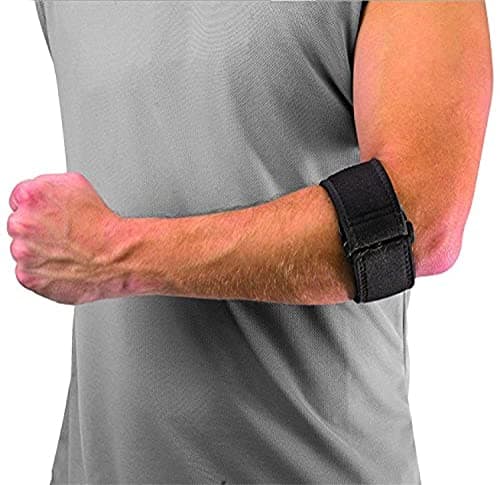
| 01 | Mueller Tennis Elbow Brace with Gel Pad A one-size counterforce strap with a gel pad from the best-known sports-medicine brand in the category. | Best overall | 4.3/5 | $14.47Amazon |
| 02 | 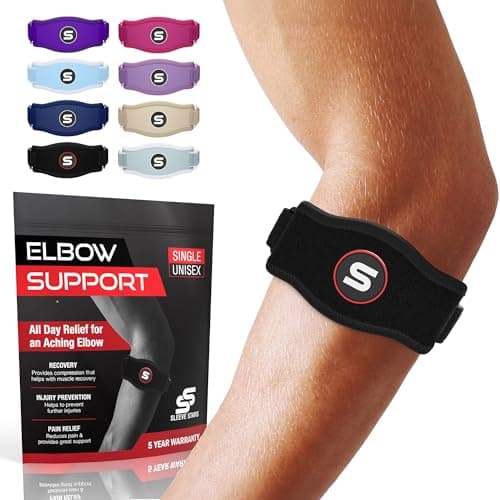 Sleeve Stars Tennis Elbow Brace An adjustable counterforce brace the listing rates for 9 to 23 inch arms - the widest published fit range here. | Best for unusual arm sizes | 4.1/5 | $16.95Amazon |
| 03 | 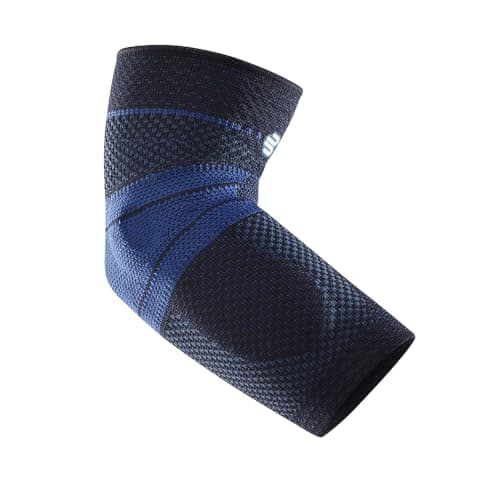 Bauerfeind EpiTrain Elbow Support A measured-to-fit compression knit with two-part viscoelastic pads either side of the joint. | Best medical-grade support | 4.4/5 | $99.90Amazon |
| 04 | 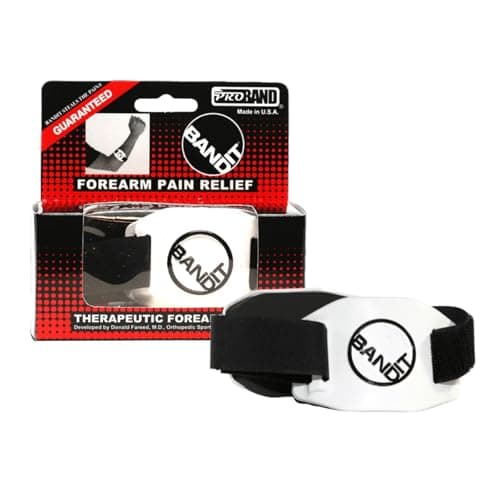 BandIT Therapeutic Arm Band A band that presses on the muscle group without wrapping the forearm all the way around. | Best non-circumferential design | 4.0/5 | $38.95Amazon |
| 05 | 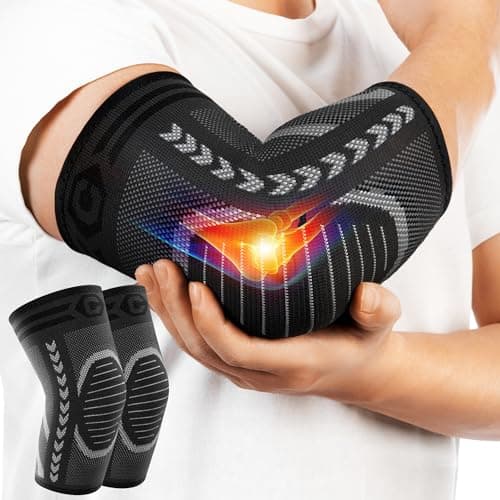 CAMBIVO Elbow Compression Sleeves (2 pack) A 3D-knit pull-on sleeve with no straps - warmth and light compression rather than a pressure point. | Best compression sleeve | 3.9/5 | $9.99Amazon |
| 06 | 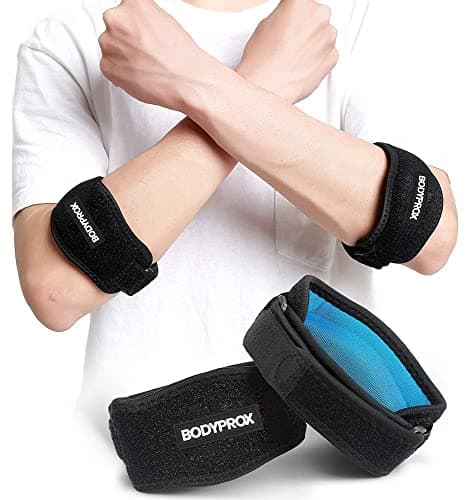 Bodyprox Elbow Brace (2 pack) Two adjustable compression straps for about the price of one from a name brand. | Best value two-pack | 3.8/5 | $12.99Amazon |
#ad · Live prices from Amazon as of November 14, 2026; where we have no verified live price we show none. We may earn a commission — see our affiliate disclosure.
The short answer
For most players the right first purchase is the Mueller Tennis Elbow Brace with a gel pad. It is a one-size counterforce strap from the most established sports-medicine brand in this category, it costs less than a tube of balls, and it does not ask you to measure your forearm before ordering. If it helps, you have spent almost nothing. If it does not, you have learned something for almost nothing.
If you want the best-made support here and are willing to measure, the Bauerfeind EpiTrain is a genuine medical-grade compression knit from a German orthopedic manufacturer, and it is a different class of object from everything else on this page. If straps always slide on you, the BandIT is built not to wrap the forearm at all. And if you want warmth and light compression rather than a pressure point, the CAMBIVO sleeves are the cheapest thing on this page.
The honest framing first, though, because it changes what you should expect: a brace is a symptom-management tool, it is not a cure, and the published evidence for this whole category is thin. Everything below is written on that basis.
What an elbow brace actually does
Almost everything sold for pickleball elbow is a counterforce brace: a strap worn around the thick part of the forearm, an inch or two below the elbow, usually with a pad or air cell pressing into the muscle. The idea behind it is mechanical. The tendon that hurts attaches at the bony bump on the outside of the elbow, and a strap placed across the muscle belly below that attachment is meant to change where the pull is absorbed, so that less of each swing arrives at the sore spot.
Some manufacturers add a second claim about vibration. The makers of the BandIT describe their band as exerting gentle pressure on the extensor, supinator and flexor muscles to dampen vibration in the elbow— the argument being that the shock of each ball strike travels up those muscles to the tendon, and that a band intercepts some of it. We are reporting that as the manufacturer's claim, because that is what it is.
A compression sleeve works differently and more modestly: it is a pull-on knit tube that provides warmth and even, light compression over the whole joint, with no pressure point anywhere. And a medical knit supportlike the EpiTrain is a third thing again — a sized compression garment with shaped pads positioned either side of the joint.
What the evidence says
This is the part most roundups skip, and it is the part that should set your expectations.
The most-cited assessment of counterforce braces is a Cochrane review of orthotic devices for lateral epicondylitis, whose conclusion — as summarized in a later clinical review — was that there was insufficient data to support their use for relief of either acute or chronic epicondylar pain, with the underlying studies of weak and varying quality. A systematic review of orthotic devices for tennis elbow from the same research group reached a similar place: no definitive conclusions could be drawn about effectiveness.
More recent work is friendlier but not stronger. A 2017 systematic review in the Journal of Ayub Medical College concluded that an orthosis, alone or alongside routine physical therapy, could be considered an evidence-based strategy — while itself calling for higher-quality trials, because the trials it pooled were small. Other clinical reviews describe the evidence for counterforce orthoses against alternatives as conflicting.
Put plainly: nobody has shown that these work well, and nobody has shown that they do not.What is clear is that the downside is small. A fifteen-dollar strap is cheap, reversible and carries little risk if you do not strap it tight enough to cut off circulation. That asymmetry — low cost, uncertain benefit — is the honest reason to try one, and it is why this page does not rank the most expensive option first.
The three designs, and who each suits
| Design | How it is worn | Best suited to | Watch out for |
|---|---|---|---|
| Counterforce strap | Buckled or hook-and-loop around the forearm below the elbow, pad over the muscle | Pain that spikes during play; most players start here | Slides down if under-tightened, numbs the arm if over-tightened |
| Non-circumferential band | Pressure applied to the muscle group without wrapping all the way around | Players who find full straps constricting or who keep losing fit | Bulkier, more expensive, and reviewers report plastic parts can fail |
| Compression sleeve | Pulled on over the joint, no fastening | Mild ache, cold mornings, all-day wear under a shirt | No pressure point at all, so it does not do what a counterforce brace claims to do |
| Medical knit support | Sized to a measured forearm circumference, pads sit either side of the joint | Chronic pain, and anyone who wants the best-constructed option | Costs five to ten times a basic strap; wrong size means wrong product |
One more distinction worth knowing before you shop: a brace sold for tennis elbow and one sold for golfer's elboware usually the same object worn on a different side of the arm. Tennis elbow is pain on the outside of the elbow, golfer's elbow on the inside. Most listings here name both conditions, and the strap does not care — you position the pad over whichever muscle group is doing the work.
How we picked
Four rules, applied before anything was written up.
It had to be live and in stock. Every item here was checked on the day of publication and returned a real price and real availability. This is a category full of identical white-label listings that appear and vanish, so a product that cannot be bought today is not on the page.
The six had to cover the real choices, not six versions of one choice. Three counterforce straps at different prices and fit ranges, one non-circumferential band, one compression sleeve and one measured medical knit. Roughly ten dollars to a hundred.
Published specifications only.Most sellers in this category publish almost nothing — no material, no pad dimensions, no fit range. Where that is the case, the spec table below says so rather than filling the gap with a guess. Where a manufacturer makes a mechanism claim, we attribute it to them.
No clinical claims of our own. We have not tested these on an injured elbow under controlled conditions and nobody honest could. Our method is on how we review, and for this category it means reporting what manufacturers publish, what the research literature concludes, and what the design can and cannot plausibly do.
At a glance
| Product | Type | Sizing | Quantity | Best for |
|---|---|---|---|---|
| Mueller with Gel Pad | Counterforce strap, gel pad | One size | Single | Overall - cheap, branded, no measuring |
| Bauerfeind EpiTrain | Medical compression knit with pads | Measured, sizes 0-6 | Single | Chronic pain, best construction |
| Sleeve Stars | Adjustable counterforce brace | Fits 9" - 23" arms (listing figure) | Single | Unusually large or small arms |
| BandIT Therapeutic Arm Band | Non-circumferential band | Adjustable strap | Single | Players who dislike full wraps |
| CAMBIVO 2 pack | 3D-knit compression sleeve | Sized by the seller | 2 | Warmth, light compression, all-day wear |
| Bodyprox 2 pack | Adjustable compression strap | Adjustable | 2 | Lowest cost per brace |
Best overall: Mueller Tennis Elbow Brace with Gel Pad
Who it is for: almost everyone buying their first one.
Mueller Sports Medicine is the name you see in training rooms, and this is its plain counterforce strap with a gel pad, sold in one size. That last detail is worth more than it sounds. The single most common way to get this purchase wrong is to buy a sized support and guess the size; a one-size strap removes that failure mode entirely. The listing names tennis, golf, painting and factory-line work as uses, which is a fair description of what repetitive forearm loading has in common.
| Type | Counterforce strap with a gel pad |
|---|---|
| Sizing | One size, black |
| Conditions named on the listing | Tennis elbow, golfer's elbow |
| Quantity | One brace |
| Materials and pad dimensions | Not published on the listing |
What I like: it is the cheapest credible way to find out whether a counterforce brace helps you at all, from a company with a decades-long presence in sports medicine rather than a four-letter marketplace name. The gel pad is the right idea — a pad concentrates pressure over the muscle instead of spreading it around the whole forearm, which is the entire premise of the design. And a single strap is less to lose than a two-pack.
What gives me pause: Mueller publishes very little about it. There is no material specification, no pad dimension and no fit range on the listing, which for a one-size product means players at the extremes of arm size are buying on faith. Gel pads also tend to be the first part of a cheap brace to go hard, and nothing here is washable in a way the seller commits to. Treat it as a consumable.
Best medical-grade support: Bauerfeind EpiTrain
Who it is for: the player with ongoing elbow pain who wants the best-constructed support available and will measure their forearm to get it.
The EpiTrain is not a strap. It is a circular-knit compression sleeve from a German orthopedic manufacturer, with two-part viscoelastic padssitting either side of the joint — Bauerfeind describes them as massaging the surrounding muscle, relieving pressure on the sore area and holding the support in position as the arm moves. It is sized rather than adjustable: Bauerfeind runs sizes 0 to 6 based on the circumference of the widest part of the forearm, and a separate forearm strap is sold as an optional add-on.
| Type | Medical compression knit with two-part viscoelastic pads (Epicon+) |
|---|---|
| Sizing | Sizes 0-6, measured at the widest part of the forearm. This listing is Size 3, black |
| Claimed mechanism | Compression plus pad massage and mechanosensory stimulation (Bauerfeind's own description) |
| Named uses | Tennis elbow, golfer's elbow, arthritis, post-injury and post-surgical recovery |
| Accessories | An EpiTrain forearm strap is available separately |
What I like: this is the only product on the page that feels like it came from a company whose main business is orthopedics rather than e-commerce. A knit that stays put through a full swing is a genuinely different experience from a strap you re-tighten between games, and the construction quality is visible. If your elbow has been grumbling for months rather than days, this is the one worth the money.
What gives me pause: the price. It is five to ten times a basic strap, and given what the literature says about this whole category, that is a lot to spend on an uncertain benefit. Sizing is also a real hazard — retailers publish charts in different units and different ranges, so measure your own forearm and check the chart on the exact listing you are buying rather than assuming your size carries across. And because each size and color is a separate listing, the one you want may not be the one in stock. The claims about circulation and mechanosensory stimulation are Bauerfeind's and its retailers', not independent findings.
Best fit range: Sleeve Stars Tennis Elbow Brace
Who it is for: anyone whose forearm is well outside average, in either direction.
This is a conventional adjustable counterforce brace with one specification that earns it a slot: the listing rates it for arms from 9 to 23 inches, which is the widest published fit range of anything here by a distance. That matters because a counterforce strap only works if the pad sits on the muscle and the strap holds it there, and a one-size strap on a very slim or very heavy arm does neither.
| Type | Adjustable counterforce brace / forearm strap |
|---|---|
| Fit range | Fits 9" - 23" (the figure on the listing) |
| Quantity | Single, black |
| Conditions named on the listing | Tennis elbow, golfer's elbow, tendonitis |
| Pad material and dimensions | Not published on the listing |
What I like: a published fit range is itself a sign of a seller paying attention, and the range here covers essentially every adult. For a player who has already tried a one-size strap and found it either loose or tourniquet-tight, this is the obvious next thing to try and it costs about the same.
What gives me pause: beyond the fit range, Sleeve Stars publishes nothing — no material, no pad construction, no dimension. The listing name stacks half a dozen search terms together, which is the house style of the category and not a confidence signal. And a very wide adjustment range usually means a long strap, so expect spare tail to tuck away.
Best non-circumferential design: BandIT Therapeutic Arm Band
Who it is for: the player who finds a full forearm wrap constricting, or who has tried straps and hated them.
The BandIT is the only genuinely different design on this page. Its maker describes it as applying pressure to the extensor, supinator and flexor muscles without constricting the forearm all the way around, with the stated aim of damping the vibration that travels up those muscles to the tendon. It is a hook-and-loop closure with adjustable pads, and the maker's own instruction is to tighten the strap no more than is necessaryto keep it in place during whatever aggravates the condition — which is better advice than most sellers in this category give.
| Type | Non-circumferential dynamic compression band |
|---|---|
| Claimed mechanism | Gentle pressure on extensor, supinator and flexor muscles to dampen vibration (the manufacturer's description) |
| Closure | Hook-and-loop with adjustable pads |
| Named uses | Tennis elbow, golfer's elbow, tendonitis, carpal tunnel, sprains, arthritis |
| Care | The maker advises against machine washing or drying |
What I like: the design reasoning is coherent and it is the right answer for a specific complaint that basic straps cause, which is the dead, pins-and-needles feeling of a too-tight wrap. It has also been on sale for a very long time, which in a category of disposable white-label listings counts for something.
What gives me pause: it costs roughly two to three times a basic strap for a benefit that is comfort rather than effect, it is bulkier than the alternatives, and retailer reviews include reports of the plastic hardware failing inside a couple of weeks. It cannot be machine washed, which on a piece of gear that absorbs sweat for a whole summer is a real limitation. And the vibration-damping mechanism is a manufacturer claim; we have seen no independent measurement of it.
Best compression sleeve: CAMBIVO Elbow Sleeves (2 pack)
Who it is for: mild, nagging ache rather than sharp pain; cold mornings; and players who want something they can forget they are wearing.
These are pull-on sleeves, not braces, and the distinction is the whole point. There is no strap, no buckle and no pad — just a 3D-knit tube with four-way stretch that the seller describes as breathable and moisture-wicking, in a two pack. The listing names pickleball among its sports, which is rarer in this category than you would expect.
| Type | Compression sleeve - no straps or hook-and-loop |
|---|---|
| Construction | Breathable 3D knit fabric, four-way stretch (the listing's description) |
| Quantity | 2 sleeves |
| Named uses | Tendonitis, tennis elbow, golfer's elbow, arthritis, weightlifting, pickleball |
| Fiber content and compression rating | Not published on the listing |
What I like: the cheapest item on this page, two to a pack, and the most comfortable thing here to wear for four hours of open play. Warmth over a joint that aches when it is cold is a real and underrated benefit, and a sleeve delivers it without any of the ways a strap can be worn wrong. A pair also means one in the wash and one in the bag.
What gives me pause: a sleeve is not a counterforce brace and does not do what one claims to do.There is no pressure point over the muscle, so the mechanism described at the top of this page simply is not present. If your pain spikes on contact, this is the wrong product and the straps above are the right one. The seller also publishes no fiber content and no compression rating, so "compression" here is a description rather than a specification.
Best value two-pack: Bodyprox Elbow Brace (2 pack)
Who it is for: players who want a strap in the bag and a strap in the car, or who are buying for two people.
Two adjustable compression straps for about what one name-brand strap costs. The listing describes them as easing forearm stress from sports, workouts, work and daily tasks, which is honest about what they are: a basic, generic counterforce strap, bought on price.
| Type | Adjustable compression strap, counterforce style |
|---|---|
| Quantity | 2 braces |
| Named uses | Tennis elbow, golfer's elbow, workouts, work, daily tasks |
| Fit range, materials and pad detail | Not published on the listing |
What I like: the lowest cost per brace on the page, and two is genuinely useful — braces live in bags, get sweaty and get left behind, and having a spare means you actually wear one. If you have already established that a counterforce strap helps you and you just want more of them, this is the efficient purchase.
What gives me pause: Bodyprox publishes nothing about fit range, materials or pad construction, which is the weakest disclosure on this page. There is no sports-medicine brand behind it and no published size guidance at all, so if your arm is unusually large or small you are better off with the Sleeve Stars and its published range. And on a ten-dollar-a-pair product, do not expect either of them to survive two seasons.
How to position one so it works
A counterforce brace worn in the wrong place is just a bracelet, and the wrong place is where most people put it. Three rules get the geometry right.
Put the pad on muscle, not on bone. The strap belongs around the thick part of the forearm roughly one to two finger-widths below the elbow crease, with the pad over the bulge of the muscle. If you can feel the strap sitting on the bony bump at the side of your elbow, it is too high and it is pressing on the thing that already hurts.
Tighten it the least you can get away with.This is the BandIT maker's own instruction and it applies to every strap here: tighten it only enough that it stays put during the activity that aggravates the problem. A strap tight enough to tingle your fingers is doing something other than what you bought it for.
Take it off when you are not playing. A counterforce brace is for the hours when the arm is loaded. Wearing one around the clock does not accelerate anything and removes the signal that tells you how the elbow is actually doing.
Four things that matter more than the brace
If you only change one thing, do not make it the brace. These four move the load more than any strap does, and three of them are free.
Grip size.A grip that is too small makes you squeeze, and squeezing is forearm work on every single shot. It is the cheapest fix on this list — measure yours against our pickleball grip size guide and build it up with an overgrip if it is undersized. A grip that is too small can be built up; one that is too large cannot be reduced.
The paddle itself. Paddle mass, core stiffness and thickness all change how much of each hit arrives at your elbow. Our best pickleball paddles for tennis elbow roundup is the companion to this page and the more important of the two, and 14mm vs 16mmexplains why a thicker core is usually the kinder one. If you are shopping a brand range, know that thin-core power paddles are the harshest thing in it — the 14mm option in our best Wilson paddles roundup is a good example of a paddle we would steer an aching arm away from.
Paddle weight, in both directions. Too heavy is obvious. Too light is the mistake people make trying to fix an elbow: a very light paddle transmits more shock and makes you swing harder for the same ball. Our paddle weight guide covers the middle ground, and adding lead tape is the cheap way to move a paddle into it.
How much you play, and how you warm up.Pickleball asks for far more shots per hour than tennis does, so volume compounds fast — which is the central point of our injury prevention guide. Four days in a row of open play will beat any brace on this page.
The bottom line
Buy the Mueller strap with the gel padfirst. It is cheap, it is one size, and it answers the only question that matters at this stage — whether a counterforce brace helps you. If it does and you want something better made, the Bauerfeind EpiTrain is the real upgrade. If straps constrict your arm, the BandIT was designed around that complaint. If the ache is mild and you mostly want warmth, the CAMBIVO sleeves cost almost nothing.
And keep the expectation calibrated. The published evidence for this category is inconclusive, which is a reason to spend ten or fifteen dollars finding out rather than a hundred. The purchase that actually changes an aching pickleball elbow is usually the paddle, the grip and the schedule — not the strap. The same arithmetic applies one joint down, where the Cochrane reviews are no kinder: see best pickleball knee braces.
Frequently asked questions
Do elbow braces actually work for pickleball elbow?
The evidence is inconclusive. The most-cited Cochrane review of orthotic devices for lateral epicondylitis found insufficient data to support their use for acute or chronic pain, and a systematic review from the same group drew no definitive conclusions. A later 2017 review was more favorable but pooled small, low-quality trials. What is clear is that a basic strap is cheap and low-risk, so trying one is a reasonable experiment - just not a substitute for addressing the cause.
Where should an elbow brace sit on your arm?
Around the thick part of the forearm, roughly one to two finger-widths below the elbow crease, with the pad over the muscle rather than over the bony bump on the side of the elbow. If you can feel the strap on that bone, it is too high. Tighten it only as much as needed to keep it in place during play - the BandIT's own instructions say exactly that - and take it off when you are not playing.
Is a compression sleeve or a counterforce strap better for pickleball?
They do different things. A counterforce strap puts a pad on the forearm muscle to change where each swing's load is absorbed, and that is the design the research literature is about. A compression sleeve has no pressure point at all - it provides warmth and even light compression, which suits a mild ache or a cold morning. If your pain spikes on ball contact, buy the strap. If it is a background ache, the sleeve is more comfortable to wear all day.
What size elbow brace do I need?
Most counterforce straps are one size or broadly adjustable, which is one reason to start with one - the Mueller is one size and the Sleeve Stars publishes a 9 to 23 inch fit range. Sized medical supports are different: Bauerfeind's EpiTrain runs sizes 0 to 6 based on the circumference of the widest part of your forearm, and retailers publish charts in different units, so measure your arm and check the chart on the exact listing you are buying.
Is a tennis elbow brace the same as a golfer's elbow brace?
Usually it is the same object worn on the other side of the arm. Tennis elbow is pain on the outside of the elbow and golfer's elbow is pain on the inside; a counterforce strap is positioned with its pad over whichever muscle group is doing the work. Nearly every listing in this roundup names both conditions for that reason.
What helps pickleball elbow more than a brace?
Grip size, paddle choice, paddle weight and playing volume. A grip that is too small makes you squeeze on every shot; a thin, light, stiff paddle sends more shock up your arm; and pickleball's shot count per hour means a run of consecutive playing days compounds load fast. Our best paddles for tennis elbow roundup and our injury prevention guide cover all four, and if the pain persists, see a physician or physical therapist rather than buying more gear.
Sources
- Journal of Family Practice (via MDedge) - review summarizing the Cochrane finding of insufficient data to support counterforce braces for epicondylar pain
- Monash University research record - Orthotic devices for tennis elbow: a systematic review (no definitive conclusions on effectiveness)
- Journal of Ayub Medical College (2017) - systematic review concluding orthosis can be considered an evidence-based strategy while calling for higher-quality trials
- Bauerfeind - EpiTrain elbow support product page (compression knit, two-part viscoelastic Epicon+ pads, optional forearm strap)
- Cascade Healthcare Solutions - Bauerfeind EpiTrain listing (sizes 0-6, forearm circumference sizing)
- AliMed - BandIT Therapeutic Arm Band listing (pressure on extensor, supinator and flexor muscles, vibration damping claim, non-circumferential design, tightening and care instructions)
- Amazon listings for each product - price, stock and stated features, checked 2026-11-03
Keep reading
Upgrading your paddle or gearing up to play?
See how we pick, then dig into the paddle roundups and buying guides — honest picks from someone who actually plays, with no inventory to move.