Shoe Review
K-Swiss Express Light Review
K-Swiss has been making court shoes since before most of the brands in this category existed. The Express Light is its answer to the specific problem of pickleball: long sessions, constant lateral load, and a toe that drags.
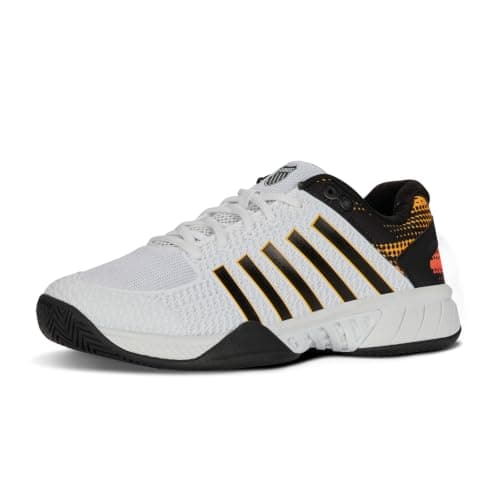
The least fatiguing court shoe I've played long sessions in — genuinely stable for its weight, with the toe protection pickleball demands.
- Best for
- Long sessions and multi-game days
- Price context
- Mid tier
K-Swiss built its reputation on tennis courts decades before pickleball existed, and the Express Light is a genuinely pickleball-specific application of that experience: a lightweight, breathable court shoe with stable support and a durable toe drag guard. This is a research-plus-play review; the specifications are verified against K-Swiss's published listing.
Why shoe weight matters in pickleball
Pickleball sessions are longer than most people account for. Open play runs two or three hours, you play six or eight games, and unlike tennis there is very little standing around between points. That cumulative load is where shoe weight shows up.
A heavy stability shoe is more supportive in the first hour and more tiring by the third, and a tired foot loads badly — you land flatter, your arch works harder, and your lateral push gets sloppier. For players who play long or play multiple days in a row, taking weight off the foot is a real performance and injury consideration, not a marketing angle.
The catch is that light usually means less material, and less material usually means less support. That is the trade the Express Light is trying to thread.
The toe drag guard is the headline
Here is the thing nobody tells new players: pickleball destroys the outside of your dominant-side toe. Every time you push off laterally or slide into a wide dink, the outer edge of that shoe scrapes the court. On a running shoe it wears through in a matter of weeks.
The Express Light carries a durable toe drag guard— reinforced material exactly where that abrasion happens. On a shoe otherwise built to be light, that is a deliberate and correct allocation of material: put the durability where the wear is, take it out everywhere else.
How it plays on court
Lateral stability. Good, and better than the weight suggests. The platform is low and the chassis holds the foot through a hard side-to-side push. It is not as locked down as a dedicated stability shoe, but it does not feel like a running shoe pretending.
Fatigue. Its best quality. On a long session you notice the absence of weight more than you notice any single feature. Third-game legs arrive later.
Breathability. Genuinely good. Hot-weather outdoor play is where a mesh upper earns its place, and this one moves air well.
Cushioning.Adequate rather than plush. If you are coming from a cushioned comfort shoe, this will feel firmer. That firmness is part of why it is stable, but if you have heel or arch pain it may be less than you want — see best shoes for plantar fasciitis.
Fit and sizing
It runs like a traditional court shoe: reasonably snug through the midfoot with a secure heel. That is exactly what you want in a shoe you move sideways in — a heel that lifts cannot support a hard push — but it does mean players with wide feet will find it tight.
If you need width, don't size up in length to get it. That leaves your heel loose and your toes sliding forward on stops. Buy a wide-specific court shoe instead; our arch-support and wide-fit roundup covers those.
Try shoes late in the day when your feet have swollen slightly, and wear the socks you actually play in. Both change the answer by more than half a size.
Who it's for (and who should skip it)
Buy it if you play long sessions or several days a week, you have normal to narrow feet, and you value staying fresh over maximum cushioning. It is also a good hot- weather shoe.
Skip it ifyou have wide feet, you need serious arch support, or you want the plushest possible ride — the Skechers Viper Court Pro is the comfort-first alternative.
How it compares
| Shoe | Character | Width | Where it wins |
|---|---|---|---|
| K-Swiss Express Light | Light, breathable, stable | Standard | Long sessions and hot weather |
| Skechers Viper Court Pro 2.0 | Cushioned comfort | Standard | Out-of-box comfort |
| Babolat SFX 4 | Stability and durability | Standard | Support that lasts |
| FitVille Wide | Arch support, wide fit | Wide / X-Wide | Wide feet and foot pain |
Against the Skechers Viper Court Pro, the K-Swiss is lighter and cooler; the Skechers is more cushioned and easier on sore feet. Against the Babolat SFX 4, the K-Swiss is less tiring and the Babolat holds its support longer. Full field in best pickleball shoes.
Verdict
The Express Light does something specific well: it keeps you fresh through a long session without giving up the lateral stability that makes a court shoe a court shoe, and it armors the one spot pickleball actually destroys. It is not the most cushioned shoe, not the widest, and not the longest-lasting — but for a player who spends three hours on court and wants to feel like it was two, it is the right choice. If you're not sure what matters most for your feet, start with how to choose pickleball shoes.
What we liked
- Genuinely light without feeling flimsy underfoot
- Breathable upper keeps feet cooler over long sessions
- Durable toe drag guard where pickleball shoes usually fail first
- Stable, low-profile platform for lateral movement
What gave us pause
- Less cushioning than a comfort-first shoe like the Skechers Viper Court Pro
- Standard width only — narrow through the forefoot for some players
- Lighter build means a shorter service life than heavier stability shoes
Frequently asked questions
Is the K-Swiss Express Light good for pickleball?
Yes — it's a pickleball-specific court shoe with a low, stable platform, a breathable upper and a reinforced toe drag guard where pickleball shoes wear out first. Its particular strength is being light enough that long open-play sessions are less fatiguing, which matters more in this sport than most people expect.
What is a toe drag guard and do I need one?
It's reinforced material on the outer edge of the toe, where pickleball players scrape the court pushing off laterally and sliding into wide dinks. Check your current shoes: wear on the outer toe of your paddle-side foot is extremely common. If yours are worn there, a toe guard directly determines how long your next pair lasts.
Does the K-Swiss Express Light run narrow?
It fits like a traditional court shoe — snug through the midfoot with a secure heel, which is what lateral support requires. Players with wide feet often find it tight. Don't size up in length to gain width, since that leaves the heel loose and the toes sliding on stops; buy a wide-specific court shoe instead.
K-Swiss Express Light or Skechers Viper Court Pro?
Choose the K-Swiss if you play long sessions, play in heat, or value staying fresh — it's lighter and more breathable. Choose the Skechers if you want maximum out-of-box comfort and cushioning, particularly if you have any heel or arch sensitivity. Both are genuine court shoes, so either beats a running shoe by a wide margin.
Sources
Keep reading
Upgrading your paddle or gearing up to play?
See how we pick, then dig into the paddle roundups and buying guides — honest picks from someone who actually plays, with no inventory to move.