Shoe Review
Babolat SFX 4 Review
Babolat's players spend four hours on court in one match. That heritage shows up in the SFX 4 as the one thing most pickleball shoes get wrong: support that's still there in month six.
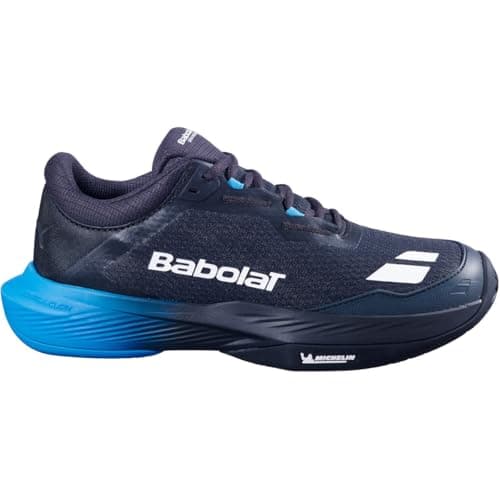
The most durable support on this site's shoe list — heavier and firmer than the comfort-first options, and still supportive long after they've packed out.
- Best for
- Frequent players who want support that survives a season
- Price context
- Mid to upper tier
Babolat has been making tennis footwear for players who spend hours grinding on hard courts, and the SFX line has always been its stability-and-durability shoe. Applied to pickleball, the SFX 4 is a durable court shoebuilt around holding its structure — which is a less exciting pitch than "incredibly comfortable" and a more useful one. This is a research-plus-play review; specifications are verified against Babolat's published listing.
The argument for a durable shoe
Court shoes fail in two ways, and most buyers only think about one of them. The obvious failure is the outsole wearing smooth, which you can see. The quieter failure is the midsole packing out and the heel counter softening, which you can't — the shoe still looks fine and no longer supports you.
That second failure is the dangerous one, because it happens gradually. A shoe that was stable in month one can be meaningfully less stable in month five while feeling "broken in." If you play three or four times a week, a shoe engineered to resist that is worth more than one that felt softer on day one.
What tennis heritage actually buys
Tennis and pickleball share the movement pattern that breaks shoes: hard lateral pushes, abrupt stops, and dragging the toe of the trailing foot. Tennis simply demands it for longer, on more abrasive surfaces, from heavier and faster-moving players.
What that experience produces is unglamorous engineering — outsole rubber compounds that survive abrasion, reinforcement placed exactly where the wear happens, and heel counters that keep their shape under repeated load. None of it is a feature you can see in a photo, and all of it is why the shoe is still good later.
The trade is weight. Durable material is heavier material, and the SFX 4 is not a light shoe. If long sessions leave you flat, our K-Swiss Express Light review covers the other side of that trade.
How it plays on court
Lateral stability. Excellent, and the reason to buy it. Hard side-to-side pushes feel planted rather than wobbly, which is the single most important safety property a pickleball shoe has.
Outdoor durability. Very good. Outdoor hard courts are the harshest surface a shoe meets, and this is where the tennis engineering shows most clearly.
Cushioning. Firm. There is enough impact protection, but it is a supportive firmness rather than a soft one. Players coming from a cushioned comfort shoe will notice.
Weight. The honest downside. Over a three-hour open play session you feel it more than you would in a lighter shoe.
Who it's for (and who should skip it)
Buy it if you play several times a week on outdoor hard courts, you have rolled an ankle before or worry about it, or you have been disappointed by shoes that went soft after a couple of months.
Skip it if you want the plushest ride — the Skechers Viper Court Prois the comfort pick — or if you need width, in which case see our wide-fit and arch-support roundup.
How to tell when it's finished
Look at the outsole under the ball of your foot. If the tread pattern has worn smooth at your pivot point, the shoe can no longer grip reliably in lateral movement. That is a slip risk and it is the clearest signal.
Squeeze the heel counter. The stiff cup around your heel should resist. If you can collapse it between finger and thumb, it will collapse under you.
Press the midsole. Compare it to a new shoe if you can. A midsole that has packed out feels dead and returns nothing, and it is no longer absorbing what it was built to absorb.
Check the toe. Wear through the outer toe on your paddle-side foot is normal and expected in this sport; wear through into the upper means the shoe is done regardless of how the rest looks.
How it compares
| Shoe | Character | Weight | Where it wins |
|---|---|---|---|
| Babolat SFX 4 | Stability and durability | Heavier | Support that lasts |
| K-Swiss Express Light | Light and breathable | Lighter | Long sessions and heat |
| Skechers Viper Court Pro 2.0 | Cushioned comfort | Medium | Out-of-box comfort |
| FitVille Wide | Arch support, wide fit | Medium | Wide feet and foot pain |
Against the K-Swiss Express Light, the Babolat holds its support longer and tires you sooner. Against the Skechers Viper Court Pro, the Babolat is firmer and more durable, the Skechers more immediately comfortable. Full field in best pickleball shoes, and the women's options in best women's pickleball shoes.
Verdict
The SFX 4 is a shoe for people who play a lot and have learned that the shoe you love in week one is often not the shoe supporting you in month five. It is heavier and firmer than the fashionable alternatives, and it earns that back by still doing its job when they have gone soft. If you play twice a week on gym floors, buy something lighter. If you are on outdoor hard courts four times a week, this is the sensible purchase — and how to choose pickleball shoes covers the rest of the decision.
What we liked
- Support and structure hold up far longer than lighter shoes
- Built for the abrasion of outdoor hard courts
- Genuinely stable platform for hard lateral pushes
- Tennis-derived outsole durability engineering
What gave us pause
- Heavier than lightweight court shoes — more fatiguing over long sessions
- Firmer ride with less out-of-box plushness
- Standard width only
Frequently asked questions
Is the Babolat SFX 4 good for pickleball?
Yes, particularly for frequent outdoor players. It's a stability-focused court shoe with the abrasion resistance and structural durability Babolat developed for tennis, which maps well onto pickleball's hard lateral pushes and toe drag. It's heavier and firmer than lightweight or comfort-first options — that's the trade for support that lasts.
Can you use tennis shoes for pickleball?
Absolutely — tennis and pickleball demand the same things from a shoe: a low, stable platform, a court outsole that grips in every direction, and reinforcement where the toe drags. A good tennis shoe beats a mediocre pickleball-branded one. What doesn't work is running shoes, whose tall, soft midsoles and forward-only outsoles are the opposite of what lateral movement needs.
How do I know when my pickleball shoes need replacing?
Check four things: whether the outsole tread has worn smooth under the ball of your foot, whether the heel counter still resists being squeezed, whether the midsole feels dead compared with a new shoe, and whether the outer toe has worn through into the upper. The midsole and heel counter fail invisibly, which is why shoes that look fine can stop supporting you.
Is a heavier court shoe worse for pickleball?
Not worse — different. Heavier shoes use more material, which generally means more support and longer life, and they're the right choice if you play often on abrasive outdoor courts. Lighter shoes leave you fresher through long sessions, which matters because a fatigued foot loads badly. Match the choice to how long and how often you play.
Sources
Keep reading
Upgrading your paddle or gearing up to play?
See how we pick, then dig into the paddle roundups and buying guides — honest picks from someone who actually plays, with no inventory to move.