Buying Guide
How Long Do Pickleball Balls Last?
An outdoor ball can die in one session or survive a month, and the difference is mostly temperature and who you play with. Here are realistic lifespans, the four failure modes, and the tests that tell you a ball is finished.
The short answer
An outdoor pickleball used in competitive play typically lasts one to three sessions before it is out of round or cracked. In casual recreational play it often lasts several weeks. An indoor pickleball typically lasts months— usually ten to thirty sessions — because it is softer plastic hitting a smoother surface at lower speeds.
The variance is enormous and it is driven by three things: temperature (cold plastic cracks), how hard people hit (a 4.5 game kills balls that a 3.0 game barely marks), and surface roughness (rough asphalt abrades holes into ovals). If you need one planning number: budget a sleeve of three outdoor balls per month of regular doubles, and more in winter.
Realistic lifespans
| Use | Typical life | What usually kills it |
|---|---|---|
| Outdoor, competitive 4.0+ | 1-3 sessions | Cracking from hard drives and put-aways |
| Outdoor, recreational doubles | 2-6 weeks | Going out of round, then cracking |
| Outdoor, cold weather (under ~50F) | Sometimes one rally | Brittle plastic cracking on impact |
| Outdoor, rough asphalt | Shorter than smooth concrete | Hole abrasion and surface scuffing |
| Indoor, gym floor | 10-30 sessions | Going soft and losing bounce |
| Practice / foam balls | Longest of all | Surface wear rather than failure |
Note that outdoor and indoor balls fail differently, not just at different rates. Outdoor balls are hard plastic with 40 small holes and they crack. Indoor balls are softer plastic with around 26 larger holes and they soften— they go dead and lose bounce rather than breaking. Our indoor vs outdoor balls guide explains why the two are genuinely different products.
The four ways a ball dies
1. Cracking.The obvious one, and the main cause of death outdoors. A hairline crack usually starts at a hole edge and runs. A cracked ball is not playable — it goes soft, flies unpredictably and is not legal for sanctioned play. Cold makes this dramatically more likely.
2. Going out of round.The quiet one, and the reason people play with dead balls for weeks without noticing. USA Pickleball's specification allows a very small out-of-round tolerance — 0.020 of an inch — and repeated hard impacts deform a ball past that. A ball that is slightly oval wobbles in flight and bounces inconsistently, which players usually blame on themselves. Figures and tolerances are in our pickleball specifications guide.
3. Softening. The plastic fatigues and the ball loses its rebound. This is the normal end of life for an indoor ball, and it happens gradually enough that only a direct comparison with a new ball reveals it.
4. Hole and surface abrasion.Rough outdoor surfaces grind the ball's surface and widen the holes, which changes how it flies and how much the paddle can grip it. A visibly scuffed ball with rounded-out holes is slower and less predictable even if it is intact.
Three tests for a dead ball
The sound test. Hold the ball next to your ear and squeeze, or tap it on a hard surface. A good ball rings; a cracked or fatigued one gives a dull thud or an audible click. This is the fastest check and it catches most hairline cracks.
The spin test. Spin the ball on a flat hard surface like a top. A round ball spins smoothly in place. An out-of-round ball wobbles and walks sideways. This is the only easy way to catch the failure mode nobody notices.
The drop test. Drop the suspect ball and a brand new one from the same height, side by side, onto the same surface. A fresh outdoor ball dropped from 78 inches should bounce roughly 30 to 34 inches. If the old ball comes up noticeably lower, it is done, however intact it looks.
Why cold weather ruins balls
Outdoor pickleballs are moulded from a hard, relatively brittle plastic, and brittleness increases as temperature falls. Below roughly 50°F the material has far less give, so the energy of a hard drive goes into fracturing the shell rather than deforming it elastically. Players who play through winter routinely crack a ball in a single game, and sometimes in a single rally.
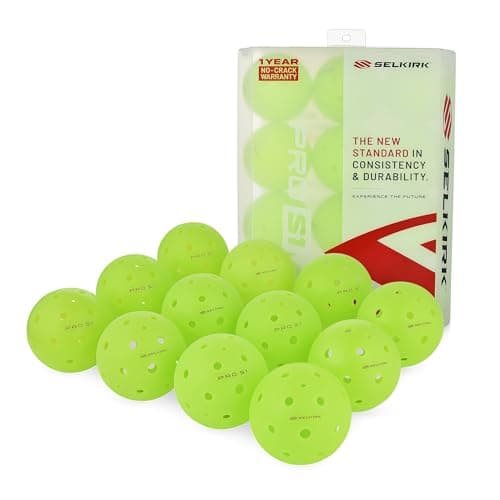
Three practical mitigations. Keep spare balls warm— in a coat pocket or the car, not in an unheated garage — and rotate a warm ball in. Buy a ball marketed as crack-resistant for winter; the Selkirk Pro S1 on our best pickleball balls page is built for exactly this and uses a 38-hole aerodynamic pattern. Buy in bulk for the season rather than a sleeve at a time.
Heat is the lesser problem but not nothing: a ball left in a hot car can soften and go slightly out of round without ever being hit.
How to make them last longer
Store them indoors at room temperature. Not the garage, not the car boot. This is most of it.
Rotate a bucket. Using the same ball every session concentrates all the wear in one place. Rotating four or five balls spreads it and means you always have a comparison ball for the drop test.
Retire balls to practice duty. A ball that is slightly out of round is still fine for dinking drills and wall work, where flight consistency matters less. Our dinking drills page does not care whether the ball is tournament-legal, and practice balls exist precisely for this.
Do not scoop balls with the paddle edge.Not a ball-saving tip — a paddle-saving one. Dragging an edge guard along concrete is the most common cause of edge guard separation, as our paddle lifespan guide covers.
Balls worth buying
Four balls we carry, chosen for the different ways people solve this problem: the default, the tournament standard, the bulk buy and the indoor option.
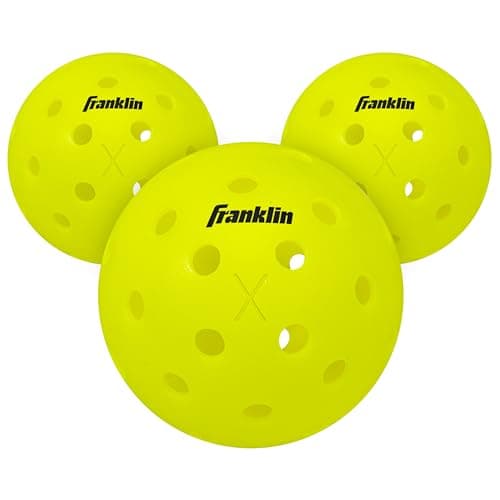
Franklin X-40 Outdoor— who it is for: almost everyone who plays outside. The official ball of USA Pickleball, the APP Tour and the US Open, with the standard 40-hole outdoor pattern. Buying what your league uses means practising with what you compete with. Caveat: like every hard outdoor ball, it cracks, and cold makes it worse.
| Type | Outdoor |
|---|---|
| Holes | 40 (outdoor pattern) |
| Certification | USA Pickleball approved |
| Notable | Official ball of USA Pickleball, APP Tour, US Open |
| Best for | The universal outdoor default |
Dura Fast 40— who it is for: competitive and tournament outdoor players. The long-standing tournament standard, fast and lively off the paddle. It is also the ball with the shortest honest lifespan on this page: Dura balls are known for cracking sooner than most, and cold weather makes that markedly worse. Worth it if you want the flight characteristics; not the economical choice. Full detail in our Dura Fast 40 review and the X-40 vs Dura comparison.
| Type | Outdoor |
|---|---|
| Holes | 40 (outdoor pattern) |
| Character | Fast, lively, tournament standard |
| Note | Can crack in cold weather |
| Best for | Competitive / tournament outdoor players |
CORE Pro-40 (12-pack)— who it is for: anyone who has read this page and concluded that the answer is buying more balls at once. A USA Pickleball approved 40-hole outdoor ball sold in a twelve-pack, which is the cheapest per-ball way to run a rotation and get through a winter. Caveat: a less famous ball than the two above, so your group may prefer their flight.
| Type | Outdoor |
|---|---|
| Holes | 40 (outdoor pattern) |
| Pack | 12-pack (bulk value) |
| Certification | USA Pickleball approved |
| Best for | Groups, coaches, and high-volume players |
Gamma Photon Indoor— who it is for: gym-floor play, and anyone who wants the longest-lasting ball on this page. Around 26 larger holes in softer plastic, so it flies slower, bounces predictably on wood and is noticeably quieter. Indoor balls fail by going soft over months rather than by cracking, which is why they outlast outdoor balls many times over. Caveat: it is genuinely not an outdoor ball — in wind it flies unpredictably and wears out fast.
| Type | Indoor |
|---|---|
| Holes | About 26 (larger indoor holes) |
| Feel | Softer, quieter, easy to control |
| Visibility | High-visibility, ultra-balanced |
| Best for | Indoor / gym-floor play |
The bottom line
Outdoor balls last one to three sessions in competitive play and a few weeks in casual doubles. Indoor balls last months. Cold weather is the single biggest factor and can shorten an outdoor ball's life to a single rally, so keep spares warm and buy crack-resistant balls for winter.
Run the spin test on your bucket today. Most recreational groups are playing with at least one ball that is quietly out of round, and replacing it is the cheapest improvement available to a pickleball game — cheaper than a grip, let alone a paddle. More options on best pickleball balls.
Frequently asked questions
How long do pickleball balls last?
Outdoor balls last one to three sessions in competitive 4.0-plus play and two to six weeks in casual recreational doubles. Indoor balls last far longer - typically ten to thirty sessions, often months - because softer plastic on a smooth gym floor at lower speeds fails by gradually going soft rather than by cracking. Cold weather can cut an outdoor ball's life to a single rally.
How do you know when a pickleball is dead?
Three tests. Tap it or squeeze it next to your ear - a good ball rings, a cracked or fatigued one thuds. Spin it on a flat surface like a top - a round ball spins in place, an out-of-round ball wobbles and walks sideways. And drop it beside a new ball from the same height; a fresh outdoor ball dropped from 78 inches bounces about 30 to 34 inches, and a noticeably lower bounce means it is finished.
Why do pickleballs crack so easily in cold weather?
The hard plastic used for outdoor balls becomes more brittle as temperature drops, so below roughly 50F the energy of a hard drive fractures the shell instead of deforming it elastically. Keep spare balls warm in a pocket or the car and rotate a warm one in, and buy a ball marketed as crack-resistant if you play through winter.
Do indoor pickleballs last longer than outdoor ones?
Yes, by a wide margin. Indoor balls use softer plastic with around 26 larger holes and are played on smooth gym floors at lower ball speeds, so they fail by gradually losing bounce over months rather than cracking. Outdoor balls are hard plastic with 40 small holes played on abrasive concrete or asphalt, and they crack. The two are not interchangeable.
How many pickleballs should I buy at a time?
For regular outdoor doubles, plan on about a sleeve of three per month and buy in larger packs if you play several times a week or play through winter. A twelve-pack is the cheapest per ball and lets you rotate four or five balls at once, which spreads wear and gives you a fresh comparison ball for the drop test.
Can you still use a cracked pickleball?
Not for real play. A cracked ball goes soft, flies unpredictably and is not legal for sanctioned play. It is fine for dinking drills or wall work where flight consistency does not matter, which is a sensible way to retire balls rather than binning them - dedicated practice and foam balls exist for the same purpose.
Sources
Keep reading
Upgrading your paddle or gearing up to play?
See how we pick, then dig into the paddle roundups and buying guides — honest picks from someone who actually plays, with no inventory to move.