Construction
The Best Foam Core Pickleball Paddles
A foam core is the one construction change since thermoforming that you can actually feel on a dink. Here are the five paddles built that way, what the foam does, and the cheapest one worth owning.
The short answer
Quick picks
| # | Product | Best for | Score | Price |
|---|---|---|---|---|
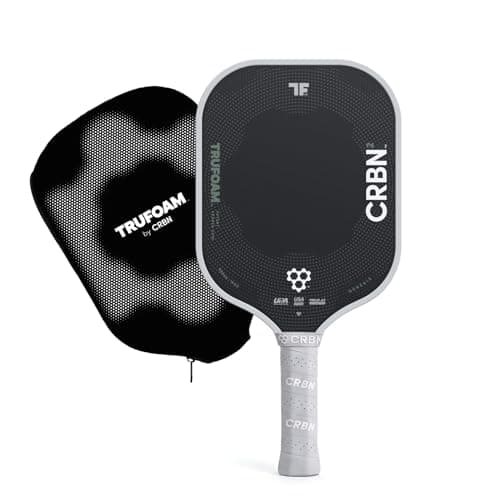
| 01 | CRBN TruFoam Genesis (Square) The 100% foam core that created the category, in the most forgiving shape CRBN sells. | Best foam core overall | 4.7/5 | $169.99Amazon |
| 02 | 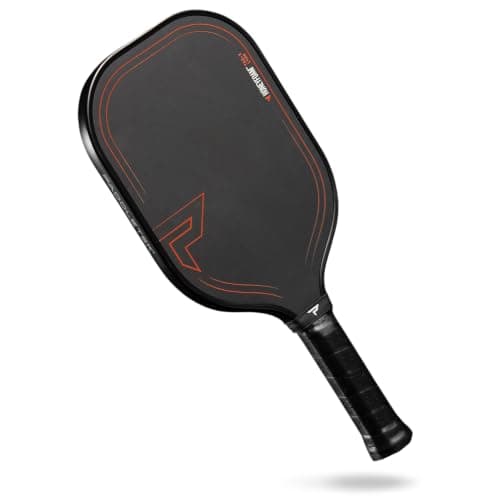 Paddletek Honeyfoam TKO-X 16mm The cheapest genuine foam core we carry - a multi-foam core under a raw PT-700 face. | Budget pick | 4.5/5 | $124.99Amazon |
| 03 | 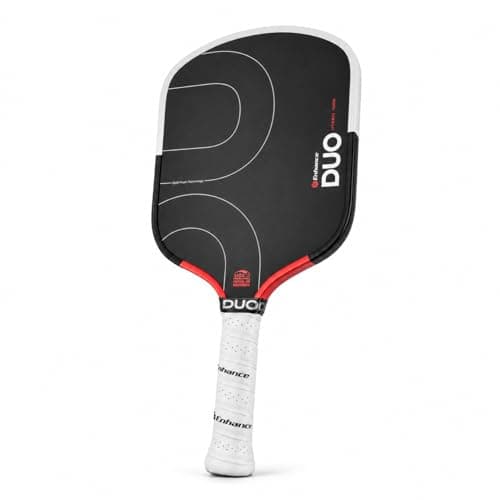 Enhance Duo A 16mm thermoformed foam core and a raw T700 face, with USAPA approval published. | Best for mishits | 4.3/5 | $174.99Amazon |
| 04 | 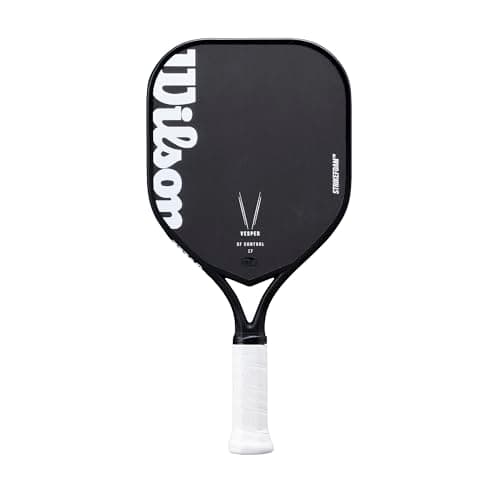 Wilson Vesper SF Control 17 A 17mm solid foam core with no honeycomb at all - the longest dwell on this page. | Best for the soft game | 4.3/5 | $95.85Amazon |
| 05 | 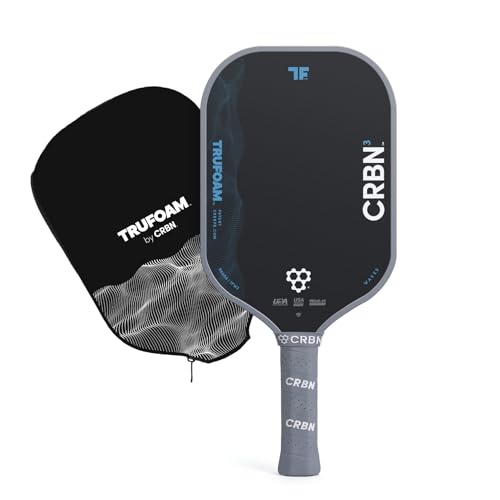 CRBN TruFoam Waves, Elongated 14mm Foam dwell in a thin core and a long head - the most shot-shaping paddle here. | Best for spin | 4.4/5 | $149.99Amazon |
#ad · Live prices from Amazon as of November 22, 2026; where we have no verified live price we show none. We may earn a commission — see our affiliate disclosure.
The verdict, up front: buy the CRBN TruFoam Genesis in the square shape. It is the paddle for the 4.0-plus all-court player who wants what a 100% foam core does — a soft ball that sits down and a hard ball that still comes off firm — in the widest head CRBN makes, so mishits cost the least. The budget pick is the Paddletek Honeyfoam TKO-X 16mm, the cheapest paddle on this site with a genuine foam core rather than foam trim, and the one I would hand to anyone curious about the construction who is not ready to spend two hundred dollars to find out.
Every paddle below carries a live price from our price layer, printed on the button with the date it was captured. Nothing here has been play-tested in a lab and I am not going to pretend otherwise — what follows is construction, published specification, and what each core type does to the ball.
What a foam core actually does
Almost every pickleball paddle ever made has a honeycomb core: a sheet of hexagonal polymer cells sandwiched between two faces. Honeycomb is cheap, light and stiff, and it has one structural quirk — it is much stiffer at the middle of a cell wall than at the gap between cells, and it is far stiffer in the center of the paddle than near the edge, where the cells are cut off by the frame. That is why a honeycomb paddle has a "sweet spot" at all.
A foam core replaces the cells with a solid or multi-density block. Two things follow. First, the response evens out. There is no cell geometry to fall off, so the ball you catch an inch off center behaves much closer to the one you catch in the middle. Second, the core compresses progressively rather than all at once. On a soft dink the foam gives and holds the ball a fraction longer, so it drops; on a drive the same foam stops compressing once you swing through it, so the ball leaves firm. Honeycomb paddles generally pick one of those two behaviors. Foam is the first construction that genuinely offers both, which is the whole reason the category exists.
The trade is weight distribution and tuning. A honeycomb paddle can be tuned with lead tape at the edge, as our lead tape guide explains, because the frame is the stiff part. Add weight to a foam paddle and you change its feel more than you change its swing weight. Foam paddles arrive the way they play.
Foam core vs foam-injected: not the same thing
This is where most of the shopping confusion lives, and it is worth two minutes. A huge number of 2025–2026 paddles advertise "foam" and mean foam-injected walls or a foam perimeter: honeycomb in the middle, foam poured into the channel between the honeycomb and the frame. That is a real and useful feature — it stops the face twisting on off-center contact — but it is trim around a honeycomb core, not a foam core.
At a glance
The five side by side. Core, face and shape are as published by each manufacturer; every row price-checks on the spot.
| Paddle | Core | Face | Shape | Best for | Price |
|---|---|---|---|---|---|
| CRBN TruFoam Genesis (Square) | 100% foam | Carbon fiber | Square (CRBN2, standard) | Overall, forgiveness | Check price |
| Paddletek Honeyfoam TKO-X 16mm | 16mm multi-foam | PT-700 raw carbon | Elongated | Spending the least | Check price |
| Enhance Duo | 16mm thermoformed foam core | Raw T700 carbon | Standard | Mishits under pressure | Check price |
| Wilson Vesper SF Control 17 | 17mm StrikeFoam solid foam, no honeycomb | Raw carbon, full face | Widebody, 16 x 7.75 in | The soft game | Check price |
| CRBN TruFoam Waves (Elongated 14mm) | 100% foam, 14mm | Carbon fiber | Elongated | Spin and shot-shaping | Check price |
#ad· Prices and availability change frequently — each button opens the live listing. We may earn a commission at no extra cost to you; see our affiliate disclosure.
Best foam core overall: CRBN TruFoam Genesis (Square)
Who it is for: the 4.0-plus all-court player who wants the foam-core feel and does not want to pay for it twice in mishits.
The Genesis is the paddle that made CRBN's reputation and the reference point for the whole full-foam category: a 100% foam core under a carbon fiber face, built as a thermoformed unibody. This listing is the squareshape, CRBN's standard outline, positioned by CRBN for defense and resets — and that is deliberately the one to lead with. A foam core already widens the effective response area; putting it in the widest head CRBN offers compounds the effect.
| Core | 100% foam |
|---|---|
| Surface | Carbon fiber |
| Shape | Square (CRBN2, standard) |
| Construction | Thermoformed unibody |
| Line | TruFoam Genesis - positioned as all-court |
| Published weight / handle | Not stated by CRBN on the line page |
What I like: edge contact behaves closer to center contact than on anything honeycomb-cored, which in a real game means the ball you catch slightly late lands in the kitchen instead of popping up. What gives me pause: the price, and the newness — nobody, CRBN included, has a long-run record of how a 100% foam core plays after two seasons in a hot car. The rest of the brand's range is on best CRBN paddles.
Budget pick: Paddletek Honeyfoam TKO-X 16mm
Who it is for: the player who wants to find out what a foam core does without spending flagship money to do it.
This is Paddletek answering the foam-core wave with its own recipe: a multi-foam core rather than a single density, paired with a raw PT-700 carbonface in a 16mm elongated build. Multi-foam means the core is not uniform — the edges are stiffened relative to the middle, which is a different route to the same destination as CRBN's solid block. It is also, by a clear margin, the cheapest real foam core we carry.
| Surface | PT-700 raw carbon fiber |
|---|---|
| Core | 16mm multi-foam |
| Shape | Elongated |
| Notable | Shock arrestor edge guard |
| Best for | Experienced players who want modern power with Paddletek feel |
What I like: perimeter stiffness is the single most useful thing foam buys, and this is the least expensive way on the site to get it from a brand with a long warranty record. What gives me pause: it is an elongated 16mm paddle, so it is not the most forgiving shape here, and Paddletek is explicit that this sits above the Tempest and Bantam families rather than replacing them — the full line is on best Paddletek paddles.
Best for mishits: Enhance Duo
Who it is for: the player whose errors come from catching the ball off center when the point speeds up.
The Duo runs a 16mm thermoformed foam core under a raw T700 carbon face, and it is the paddle on this page with the plainest claim: a large, even response area. It also publishes its USAPA approval, which not every new foam-core brand does, and that matters if you intend to enter anything sanctioned — see USA Pickleball approved paddles for how to check the current list yourself.
| Face | Raw T700 carbon fiber |
|---|---|
| Core | 16mm thermoformed foam core |
| Certification | USAPA approved |
| Character | Large, even response area |
| Best for | Players who mishit under pressure |
What I like: it is the most straightforward value proposition in foam — mainstream price, published certification, no exotic claims. What gives me pause: Enhance is a young brand with no resale market and no long-run durability record, and a standard shape gives up reach against the elongated paddles here.
Best for the soft game: Wilson Vesper SF Control 17
Who it is for: the kitchen-line player who wins points with resets and rolls, not drives.
This is the most extreme core on the page: 17mm of StrikeFoam solid foam with no honeycomb at all, behind a full raw carbon face. Seventeen millimeters is thicker than anything else here, and a thick solid foam core is the longest dwell time you can buy — the ball stays on the face measurably longer, which is exactly what a drop or a reset needs. Wilson also publishes the numbers other foam brands leave out: weight, grip circumference, handle length and certification.
| Core | 17mm StrikeFoam solid foam core - no honeycomb |
|---|---|
| Face | Raw carbon fiber, full carbon face with a raw surface texture |
| Shape | Widebody - 16" long x 7.75" wide |
| Handle | 5.0" |
| Grip | 4 1/8" circumference, Wilson Perforated Grip |
| Weight | 8.1 oz |
| Construction | FreeFlex throat, StableMax handle |
| Certification | USAP approved |
What I like: published specs from a company that has been making racquets for a century, and the widebody outline makes it the second most forgiving paddle here. What gives me pause: a 17mm control-biased foam core is a genuinely soft paddle, so if you need put-away power you will have to generate all of it yourself, and the 4 1/8 in grip is small for larger hands — see pickleball paddle grip size before you order. The rest of the line is on best Wilson paddles.
Best for spin: CRBN TruFoam Waves, Elongated 14mm
Who it is for:the player whose game is built on shaping the ball — rolls, flicks, heavy third-shot drops — rather than hitting through it.
Waves is the TruFoam line CRBN positions for dwell and spin, where Genesis is all-court. Same 100% foam core idea, tuned to keep the ball on the face a fraction longer. In the 14mm thickness and the elongated shape, that gives you the most shot-shaping paddle here: a thinner core is firmer and more connected, and the elongated head gives you leverage to brush up the back of the ball.
| Core | 100% foam, 14mm |
|---|---|
| Surface | Carbon fiber |
| Shape | Elongated |
| Line | TruFoam Waves - positioned as dwell and spin |
| Construction | Thermoformed unibody |
What I like: the combination of foam dwell with a thin core is rare, and this is a genuinely different paddle from the Genesis rather than a colorway. What gives me pause: 14mm plus elongated is the least forgiving combination CRBN sells, and a firmer core sends more into your arm. Spin also depends on face texture, which wears — see paddle spin ratings.
The honest downsides of foam
Nobody knows the long-run durability yet. Honeycomb paddles fail in known ways: the face delaminates or the core crushes, both documented in our delamination explainer. A solid foam core is a newer failure surface, and 2026 is too early for a two-season record on any of these.
You cannot tune them the usual way. Lead tape on a honeycomb frame adds swing weight without much changing feel. On foam it changes feel first. Buy the balance you want.
You pay for it. Four of the five here sit above a hundred and twenty dollars, and the honest truth is that a good foam-injected honeycomb paddle at half the price plays better than most players can exploit. If your paddle budget is the constraint, start at best paddles under $100 instead and come back to foam when a mishit at the kitchen line is the thing costing you games.
The bottom line
Most players who want a foam core should buy the CRBN TruFoam Genesis in the square shape: the original, in the most forgiving outline. Want the construction for the least money? The Paddletek Honeyfoam TKO-X. Mishitting under pressure? The Enhance Duo. Living at the kitchen line? The Wilson Vesper SF Control 17, the softest paddle here by a distance. Shaping every ball? The TruFoam Waves 14mm. And if you are not sure foam is the thing you are missing, read best Gen 3 pickleball paddlesfirst — a foam-injected honeycomb paddle solves most of the same problem for less.
Frequently asked questions
Is a foam core pickleball paddle better than honeycomb?
Better at one specific thing: evenness. A foam core removes the cell geometry that makes a honeycomb paddle stiffer in the middle than at the edges, so off-center contact behaves closer to center contact. It also compresses progressively, which is why the same paddle can drop a dink and still drive. It is not better at being light, not better at being tuned with lead tape, and not better value — a good foam-injected honeycomb paddle at half the price is enough for most recreational players.
What is the cheapest real foam core pickleball paddle?
The Paddletek Honeyfoam TKO-X 16mm, of the paddles we carry. It uses a multi-foam core rather than a single solid block, under a raw PT-700 carbon face. Be careful shopping below that price: most cheaper paddles advertising foam have foam-injected walls or a foam perimeter around a honeycomb core, which is a different and lesser claim.
What is the difference between a foam core and foam-injected walls?
A foam core replaces the honeycomb entirely — the spec will say 100% foam, solid foam core, multi-foam or thermoformed foam core. Foam-injected walls, a foam perimeter or a foam edge wall mean honeycomb in the middle with foam poured into the channel around it. The injected version stops the face twisting on mishits and costs much less; the full foam core also changes how the ball comes off the face.
Do foam core paddles last as long as honeycomb paddles?
There is no reliable answer yet, and anyone who gives you one is guessing. Full-foam cores arrived in volume during 2025 and 2026, so no model on this page has a two-season field record. What is known is that heat is hard on any thermoformed paddle, so keep it out of a hot car and use a cover — our paddle care guide covers the routine.
Can you add lead tape to a foam core paddle?
You can, but it does not behave the way it does on a honeycomb paddle. On a honeycomb frame the stiff perimeter means edge weight mostly raises swing weight. A foam core is already stiff at the edge, so added weight changes the feel and the balance point more than it changes forgiveness. Buy the balance you want rather than planning to tune it.
Sources
- CRBN product line pages for TruFoam Genesis and TruFoam Waves (core, shape and line positioning as published)
- Paddletek product page for the Honeyfoam TKO-X (core, face and edge guard as published)
- Wilson product page for the Vesper SF Control 17 (core, face, dimensions, weight, grip and certification as published)
- Amazon listings for all five paddles above (availability and price verified through the site price layer)
Keep reading
Upgrading your paddle or gearing up to play?
See how we pick, then dig into the paddle roundups and buying guides — honest picks from someone who actually plays, with no inventory to move.