Comparison Guide
Onix vs Selkirk: The Pioneer and the Incumbent
Both brands were making paddles before the boom. Only one of them kept redesigning them. The real gap between Onix and Selkirk is not price or feel - it is how much of each catalog is from this decade, and what happens when a paddle cracks.
The short answer
Quick picks
| # | Product | Best for | Score | Price |
|---|---|---|---|---|
| 01 | 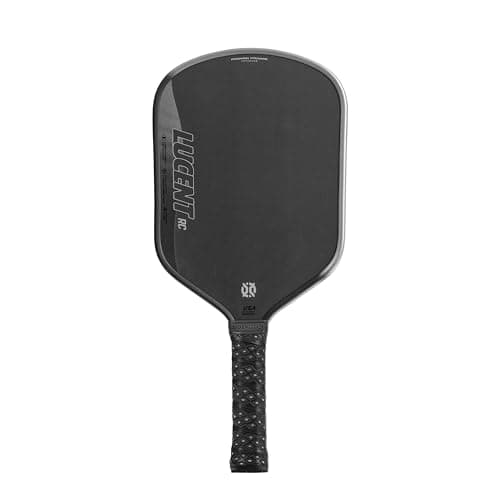 Onix Lucent RC The only raw carbon face Onix sells, on a 14mm elongated chassis with a 5.7 inch handle. | Best Onix in this comparison | 4.5/5 | $107.89Amazon |
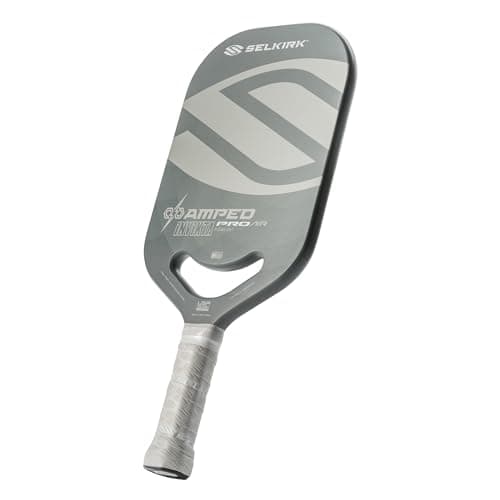
| 02 | Selkirk Amped Pro Air Invikta Flagship shape and air throat from Selkirk's mid-upper line, with the lifetime warranty behind it. | Best Selkirk in this comparison | 4.4/5 | $79.99Amazon |
| 03 | 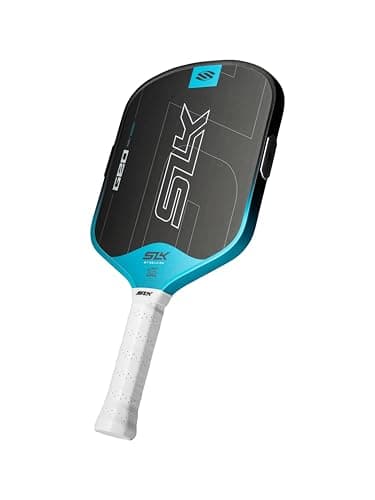 Selkirk SLK Geo A T700 carbon widebody at around a hundred dollars - the most forgiving paddle here. | Best value from either brand | 4.3/5 | $99.99Amazon |
| 04 | 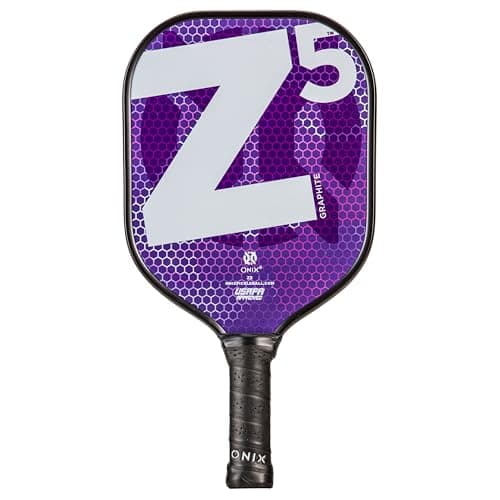 Onix Graphite Z5 A 12mm Nomex widebody from the sport's first decade - huge sweet spot, dated face. | Cheapest paddle worth owning here | 4.1/5 | $68.64Amazon |
#ad · Live prices from Amazon as of November 14, 2026; where we have no verified live price we show none. We may earn a commission — see our affiliate disclosure.
The short answer
Buy Selkirk unless you specifically want an Onix.That is blunter than we usually put a brand comparison, and it is not because Onix makes bad paddles — the Graphite Z5 taught a generation of players how to play and is still a lot of forgiveness for the money. It is because Selkirk has kept redesigning its range every eighteen months while Onix has largely not, so a current Selkirk and a current Onix at the same price are frequently paddles from different technological eras.
The exceptions are real, though. If you want Onix's one modern paddle, the Lucent RC is a genuine raw carbon elongated with a long handle and no apology needed. If you want the cheapest big-sweet-spot paddle either company sells, that is the Z5. And if you want the single best value in this comparison from either brand, it is the SLK Geo at around a hundred dollars.
The thing that actually separates them, and that nobody writes about, is what happens six months later when the face starts to separate. We get to that below.
Two pioneers, two different decades
Onixhas been in pickleball since long before the boom, and the catalog is a museum as much as a product line. A 12mm Nomex widebody designed in the sport's first decade sits on the same shelf as a 14mm raw carbon elongated, at prices that do not clearly signal which is which. Onix is a brand of a larger sporting-goods group rather than a pickleball-only company, and that shows in both directions: broad retail distribution and reliable availability on one side, slower iteration on the other. It is also still selling wood paddles in starter sets, which tells you how wide the catalog is.
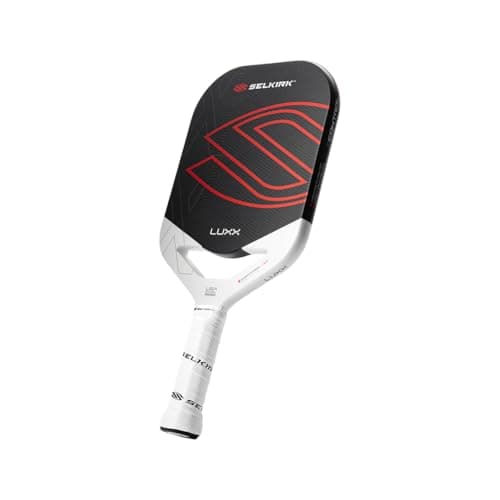
Selkirkis family-run, manufactures in Idaho, and is the most established pickleball-native brand in the United States. Its whole proposition is that there is an American company standing behind the paddle — and it has used that position to iterate hard, resetting whole lines when the technology moves. It retired three SLK models in February 2026 alone. The cost of that habit is that Selkirk's naming is a thicket; the benefit is that almost nothing in the current range is old.
Our full brand rankings cover where each sits against the rest of the field in best pickleball paddle brands, and the individual ranges are decoded model by model in best Onix pickleball paddles and best Selkirk pickleball paddles.
The face material gap
This is the single most practical difference between the two catalogs, and it is easy to miss because both brands use the word carbon.
Across Selkirk's current range, a T700 carbon face is the defaultand it goes all the way down the ladder: the SLK Geo is a T700 carbon widebody at around a hundred dollars, and the outgoing SLK Evo Control is a thermoformed T700 CarbonFusion paddle that has been discounted below fifty. In Onix's range, by contrast, exactly one paddle has a raw carbon face— the Lucent RC. Everything else is graphite, composite or DF Composite fiberglass.
That matters because raw carbon grit is what lets a face bite the ball hard enough to shape it, which is the whole subject of carbon vs fiberglass. It does not make Onix's fiberglass paddles bad — fiberglass genuinely is nicer for touch, the ball sits on the face a fraction longer, and drops land softer. It means that if spin is part of your game, Onix has one answer for you and Selkirk has a dozen.
Decoding the names, side by side
Both companies name paddles in pieces. Selkirk's system is more complicated and more consistent; Onix's is simpler and tells you less.
| What you want to know | How Selkirk tells you | How Onix tells you |
|---|---|---|
| Price and technology tier | The line name: SLK (value), Amped (mid-upper), Vanguard (premium power), LUXX (premium control) | Loosely by model family: Lucent is current, Evoke is the long-running competition line, Z5 is heritage |
| Power or control bias | Stated in the name - Power Air, Pro Air, Control | Not stated. You infer it from the face material and the shape |
| Shape | Named: Invikta is elongated, Epic is hybrid, Max and S2 are widebody | Named inconsistently: Impact is the 16 x 8in Evoke shape, others are described rather than named |
| Face material | Usually in the listing - T700 carbon, CarbonFusion | In the listing - Raw Carbon, Composite, DF Composite, Graphite. The RC suffix means raw carbon |
| Core | X5 / X5+ honeycomb, Rev-Control honeycomb | Hexcell polypropylene on the Lucent line, Nomex honeycomb on the Z5 |
The practical upshot: with Selkirk you pick your shape first, then your character, then buy the highest line your budget allows. With Onix you read the face material first, because that is what separates the modern paddles from the heritage ones. If the shape vocabulary is new to you, pickleball paddle shapes explained covers what each outline does.
The warranty, and where it differs
This is the part of the comparison worth the most money and the part nobody covers, so here are the published terms as carefully as we can state them.
Selkirk publishes a limited lifetime warranty on its paddles, covering manufacturing defects in materials and workmanship. The small print is real: products must be registered with Selkirk to be eligible, coverage applies to the original owner onlyand is not transferable after registration, and Selkirk has the final say on claims. It also does not apply to every line — Selkirk Labs paddles carry a two-year warranty against manufacturer defects, and the Pro S1 is published with a one-year no-crack warranty.
Onixis harder to pin down, and we are going to say so rather than guess. We could not locate a warranty page published by Onix or its parent group. PickleballCentral's manufacturer warranty index lists Onix and Escalade paddles at one year on all non-wood paddles and ninety days on wood paddles. That is a third-party retailer's summary, it may be out of date, and you should confirm it with the seller before relying on it — but it is the only published figure we could find, and a one-year term is consistent with what a mass-market sporting-goods brand typically offers.
Price ladders and what each leaves out
Selkirk's ladder is complete.There is a Selkirk at essentially every price from under fifty dollars for run-out SLK stock, through a hundred for the current SLK Geo, to the Amped line in the middle and the Vanguard and LUXX flagships above. Whatever your budget is, Selkirk has something aimed at it — which is precisely the trap, since the cheapest Selkirk and the dearest Selkirk are not the same kind of object.
Onix's ladder has a hole in the middle and a basement nobody needs. At the top the Lucent RC is a credible modern paddle. Below it sit the composite Lucent and the long-running Evoke Premier, and below those the heritage graphite paddles and, at the very bottom, wood starter sets. What is missing is the sixty-to-ninety-dollar band filled with recent designs, which is where most improving players actually shop — our best paddles under $75 roundup is where to look at that budget, and it is not dominated by either of these brands.
One more honest note on availability, because this comparison was written against live listings: Onix has a long tail of superseded models still being sold through marketplace sellers, and Selkirk's habit of resetting lines means its outgoing models get deeply discounted. Both produce the same hazard — a good price on a paddle that will not be restocked. Two listings we checked while writing this page were excluded for exactly that: an Onix Evoke Premier down to a single unit, and a Selkirk LUXX Control that returned no availability at all.
Which paddle to buy from each
Four paddles, two from each brand, all in stock with a live price when this page was written. Specs are reused from the roundups on this site that already carry the same paddles — nothing here is re-derived.
Onix Lucent RC — the Onix to buy. The RC is the only Onix with a raw carbon face, and that one spec is what makes it the paddle to buy from this brand. Onix pairs it with a 14mm Hexcell polypropylene core in an elongated 16.5 by 7.5 inch outline with a long 5.7 inch handle— the layout most current paddles have converged on, and a completely different design philosophy from the Z5 further down. The full write-up is in best Onix paddles.
| Face | Dual Action raw carbon fiber |
|---|---|
| Core | Hexcell polypropylene, 14mm |
| Shape | Elongated, 16.5 in long x 7.5 in wide |
| Handle | 5.7 in, 4.125 in grip circumference |
| Weight | 7.75 - 8.25 oz |
| USA Pickleball | Approved |
The honest cons:elongated plus 14mm is the least forgiving pairing in Onix's range, so off-center balls tell you about it. Raw carbon faces polish smooth over a season or two and lose grit, which is true of every raw carbon paddle. And the one-year warranty we could find for this brand is the weakest term in this comparison, on the paddle in it most likely to need one.
Selkirk Amped Pro Air Invikta — the Selkirk to buy if you want the real engineering.The Amped line is Selkirk's mid-upper tier and the Pro Air Invikta is the sensible place to get on it: flagship shapes and the aerodynamic cut-out throat, an X5+ honeycomb core and a textured spin face, in the long Invikta outline. More in best Selkirk paddles.
| Line | Selkirk Amped (mid-upper tier) |
|---|---|
| Shape | Invikta (elongated) - more reach and leverage, narrower sweet spot |
| Core | X5+ honeycomb |
| Throat | Pro Air aerodynamic cut-out, to reduce swing drag |
| Character | Balanced power with spin |
| Warranty | Selkirk limited lifetime, subject to registration and original-owner terms |
The honest cons:an elongated shape gives away sweet spot for reach, so if your contact is inconsistent the SLK Geo below is the better paddle for you despite costing more. Selkirk iterates fast, which means the Amped generation you buy may be superseded within a season. And this is a conventionally built paddle, not a thermoformed one — at this money the value brands offer more construction.
Selkirk SLK Geo — the best value from either brand. The Geo is the paddle Selkirk actually still builds in its value line, after the February 2026 reset retired the Evo Control and the Halo. It is a T700 carbon fiber widebody at around a hundred dollars, built for all-court control, and it has the largest sweet spot of the four paddles compared here.
| Line | Selkirk SLK (value) |
|---|---|
| Face | T700 carbon fiber |
| Shape | Widebody - the most forgiving outline here |
| Character | All-court control |
| Warranty | Selkirk limited lifetime, subject to registration and original-owner terms |
The honest cons: it is a value-line paddle at a three-figure price, and the value brands will sell you more specification for the same money. A widebody also gives away reach, which singles players and anyone who stretches for low balls will notice. And Selkirk publishes less detail on the SLK line than on its flagships, so you are buying on the face material and the warranty rather than on a full spec sheet.
Onix Graphite Z5 — the cheapest paddle here worth owning. The Z5 is the widebody that taught a generation to play, and it is still on sale because it still works. A graphite face over a 12mm Nomex honeycomb corein a 15.5 by 8.125 inch widebody, with a 4 1/4 inch cushioned grip — one of the largest sweet spots in the sport, for well under the price of everything else here. We have reviewed it in full in our Onix Graphite Z5 review.
| Face | Graphite |
|---|---|
| Core | 12mm Nomex honeycomb |
| Shape | Widebody, 15.5 in long x 8.125 in wide |
| Grip | 4 1/4" circumference, cushioned comfort grip |
| USA Pickleball | Approved |
The honest cons:a graphite face over a Nomex core is a design from the sport's first decade and it plays like one — the face does not grip the ball the way raw carbon does, so spin is off the table, and Nomex is a louder, harder core than the polypropylene everything modern uses. It is the right paddle for a beginner or a loaner and the wrong one for anyone trying to add shots to their game.
So which one?
Selkirk, for most players, most of the time.Not because its paddles outplay Onix's by a wide margin — at matched price and matched face material they are closer than the brand chatter suggests — but because Selkirk's current range is current, its carbon faces run all the way down the ladder, and its published warranty is the strongest term in this comparison by a wide distance. If you register the paddle on day one, you have bought meaningfully more protection than the Onix equivalent carries.
Onix, for two specific people. If you want a modern raw carbon elongated with a long handle and you like the way Onix builds a grip, the Lucent RCis a real paddle and we recommend it on its own merits. And if you want the biggest, most forgiving face either company sells for the least money — for a beginner, a spare, or a paddle that lives in the car — nothing in Selkirk's range does what the Z5 does at that price.
And the genuinely buyer-first answer, which is the same one we give at the end of every brand comparison on this site: if you are below 4.0 and have read this far trying to choose between two brand names, buy the SLK Geo, spend what is left on court shoes— which prevent more lost points and more injuries than any paddle — and come back to this page in a season when you know what your game is missing. Both of these companies have been here for over a decade and will still be here when you do.
Frequently asked questions
Is Onix or Selkirk better?
Selkirk, for most players. The paddles are closer than brand chatter suggests at matched price and matched face material, but Selkirk's current range is genuinely current, a T700 carbon face is standard across its tiers rather than reserved for one model, and its published limited lifetime warranty is far stronger than the one-year term a third-party warranty index lists for Onix. Onix remains the better buy in two narrow cases: the raw carbon Lucent RC, and the very cheap, very forgiving Graphite Z5.
What is Selkirk's paddle warranty?
Selkirk publishes a limited lifetime warranty covering manufacturing defects in materials and workmanship, but it comes with conditions: the paddle must be registered with Selkirk to be eligible, coverage applies to the original owner only and is not transferable after registration, and Selkirk has the final say on claims. It also does not cover every line - Selkirk Labs paddles carry a two-year warranty and the Pro S1 is published with a one-year no-crack warranty. Register the paddle the day it arrives and confirm the current terms on Selkirk's own warranty page.
What is the warranty on an Onix pickleball paddle?
We could not find a warranty page published by Onix or its parent group. PickleballCentral's manufacturer warranty index lists Onix and Escalade paddles at one year on all non-wood paddles and ninety days on wood paddles. That is a third-party retailer's summary and may be out of date, so confirm with the seller before relying on it. A one-year term is consistent with what mass-market sporting-goods brands typically offer.
Does Onix make a raw carbon pickleball paddle?
One: the Lucent RC, where RC stands for raw carbon. Every other paddle in the Onix range uses graphite, composite or DF Composite fiberglass. That is the clearest single difference from Selkirk, where a T700 carbon face is the default across the range and appears even on the sub-$100 SLK models.
Is the Onix Z5 still worth buying?
As a cheap, very forgiving paddle, yes. A graphite face over a 12mm Nomex honeycomb core in a 15.5 by 8.125 inch widebody gives you one of the biggest sweet spots in the sport for less than anything else in this comparison, and it is USA Pickleball approved. As a paddle to improve on, no - graphite does not grip the ball the way raw carbon does, so spin is not available, and Nomex is a harder, louder core than the polypropylene modern paddles use.
Which Selkirk paddle should I start with?
The SLK Geo. It is the paddle Selkirk still builds in its value line after the February 2026 reset retired the Evo Control and the Halo, it has a T700 carbon face, and its widebody outline has the largest sweet spot of the paddles compared here - with the Selkirk warranty attached. Players below 4.0 get more from a forgiving widebody and a good pair of court shoes than from a flagship.
Sources
- Selkirk Sport - understanding Selkirk's limited lifetime warranty (registration requirement, original owner, non-transferable)
- Selkirk Sport - general warranty page
- PickleballCentral - paddle manufacturer warranty index (Onix / Escalade listed at 1 year on non-wood paddles, 90 days on wood)
- USA Pickleball - equipment standards and approved paddle list
- Amazon listings for each paddle - price and stock, checked 2026-11-03
Keep reading
Upgrading your paddle or gearing up to play?
See how we pick, then dig into the paddle roundups and buying guides — honest picks from someone who actually plays, with no inventory to move.