Paddle Review
11SIX24 Vapor Power 2 Review
11SIX24 built a following the hard way - by selling paddles that punch above their brand recognition. The Vapor Power 2 is the moment the company stopped being a value pick and started charging flagship money.
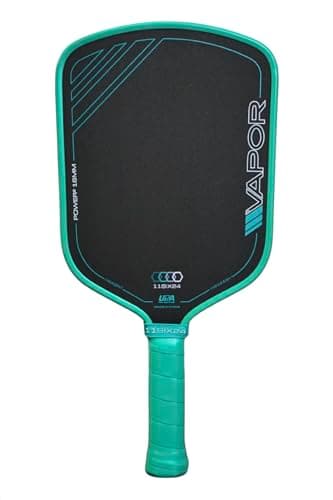
A serious power paddle from a brand that has earned the benefit of the doubt - but it is now priced against the biggest names in the sport, and it has to be judged there.
- Best for
- Aggressive players who already drive and finish, and who want a Gen 4 build
- Price context
- Premium tier
11SIX24 is one of the few paddle brands that grew almost entirely on word of mouth. No pro signature deal to launch on, no retail wall presence — just paddles that showed up in club bags because someone's partner had one and it was good. The Vapor Power 2 is the company's current power flagship, built on what it calls Gen 4 technology, and it is the first 11SIX24 paddle I have looked at that costs as much as a JOOLA Perseus.
That change in price changes the review. A $120 paddle only has to be good for the money; a $210 paddle has to be good against the best paddles in the sport. This is a research-plus-play review — the construction and certification details are verified against 11SIX24's listing and the UPA-A approval, and the on-court notes draw on time with 11SIX24's previous-generation paddles and the current crop of thermoformed power paddles generally. Where I extrapolate, I say so.
Who 11SIX24 actually is
11SIX24 is a direct-focused pickleball brand named after a Bible verse, best known among club players for the Pegasus and Jelly Bean control paddles and for pricing that historically undercut the majors. Its reputation is specifically for consistency — paddles that come out of the box matching their stated weight and playing the way the last one did, which is less common in this industry than it should be.
That reputation is why the Vapor Power 2 is worth taking seriously rather than dismissing as a boutique paddle. It is also why the price rise deserves scrutiny: value was a core part of the proposition, and the Vapor Power 2 no longer competes on it.
What 'Gen 4' means here
Paddle "generations" are an industry shorthand, not a standard. Roughly: Gen 1 is a cold-pressed face glued to a honeycomb core; Gen 2 adds thermoforming and a unibody frame; Gen 3 injects foam into the perimeter or replaces the core with foam entirely; Gen 4 is the current wave, refining foam placement and frame stiffness rather than reinventing them. Our thermoformed vs cold-pressed guide and best Gen 3 paddles roundup unpack the sequence.
What that means practically for a power paddle: a stiffer perimeter, so the outer face returns more of the ball's energy instead of flexing and losing it. Off-center drives keep more speed, and the sweet spot behaves as though it were larger than the physical face suggests.
UPA-A approval and why it is on the box
The Vapor Power 2 is UPA-A approved. That is a separate certification from USA Pickleball's, run by the pro tour's governing body, and it exists largely because of paddles like this one. As foam-core and thermoformed construction pushed ball speeds up, the tour introduced a power ceiling — the PBCoR test — and paddles that exceed it are not legal in tour-sanctioned events.
For a paddle whose entire identity is power, carrying that approval is the meaningful claim on the box. It says the paddle sits under the ceiling rather than dancing around it. If you play sanctioned events of any kind, check what your event requires; our paddle approval guide explains how the two certification regimes differ.
How it plays
The Vapor line is 11SIX24's power family, and the paddle behaves like it. Drives leave the face fast, put-aways are genuinely put away, and the stiffer Gen 4 perimeter means a ball caught slightly wide still travels. If your game is built on third-shot drives and finishing from mid-court, that is the whole argument.
The cost is the same one every power paddle pays: the soft game asks more of you. A stiffer, faster face returns more energy on a reset too, so keeping a ball down in the kitchen off a hard drive requires softer hands and a shorter swing than a control paddle demands. That is a skill you can build, but it is not free, and it is the reason I would not put this paddle in the hands of a 3.0 player.
On feel: thermoformed Gen 3 and Gen 4 paddles are firmer than the polymer-core paddles many players are coming from, and that firmness reaches your arm. If you have elbow history, read our best paddles for tennis elbow page before buying anything from the power tier.
The price is the review
At its current price the Vapor Power 2 sits in the same bracket as the JOOLA Perseus Pro IV and the CRBN TruFoam Genesis. Those are paddles with deep distribution, long warranty histories and enormous installed bases, and if something goes wrong you are one of thousands of people with the same problem rather than one of hundreds.
That is not an argument against buying it. It is an argument for buying it on purpose. 11SIX24 earned its reputation on paddles that were obviously good value; this one has to be chosen because you want thispaddle, not because it is the smart-money option. If value is what drew you to the brand, the Jelly Bean sits at roughly half the price and 11SIX24's control paddles are where the value reputation actually came from.
Who it's for (and who should skip it)
Buy it ifyou are a 4.0-plus player whose points end with a drive or an overhead, you want current-generation construction, and you compete somewhere that requires UPA-A approval. It does the job it advertises and 11SIX24's build consistency is genuinely a differentiator.
Skip it ifyou are still developing a soft game, if your elbow is a consideration, or if you came to 11SIX24 for value. Skip it too if you want the deepest possible support network behind a $200 purchase — that is what the majors offer, and it is a legitimate thing to want.
How it compares
| Paddle | Character | Construction | Best for |
|---|---|---|---|
| 11SIX24 Vapor Power 2 | Power-biased | Gen 4 | Drivers who want a boutique build |
| JOOLA Perseus Pro IV | Power, elongated | Propulsion core | Reach plus pace |
| CRBN TruFoam Genesis | Stable, premium | Full foam core | Off-center stability above all |
| Gearbox GX2 Hyper | Raw ball speed | Solid carbon core | Finishing points, healthy arm |
All four sit in our best power paddles and best paddles for advanced players roundups, where the trade-offs are laid out side by side.
Verdict
The Vapor Power 2 is a good paddle from a brand that has earned trust the slow way, and Gen 4 construction plus UPA-A approval is a real spec sheet rather than a marketing exercise. What it is not, any more, is the value play — it now competes on equal price terms with the biggest names in the sport, and it wins that comparison on feel and consistency rather than on any obvious advantage. If you drive the ball, want current construction, and like backing the smaller company, it is a defensible buy. If you want the most paddle per dollar, 11SIX24's own control line and our best paddles under $100 roundup are where to look.
What we liked
- Genuine Gen 4 construction rather than a rebadged previous generation
- UPA-A approval, so it is legal under the pro tour's power ceiling
- 11SIX24's build quality has a real track record with club players
- The power line does what it says — this is not a soft paddle with a power sticker
What gave us pause
- Priced against JOOLA and Selkirk flagships, where brand support is deeper
- Power bias means the soft game asks more of you
- Published spec detail is thinner than the majors publish
Frequently asked questions
Is 11SIX24 a good pickleball paddle brand?
Yes, with a specific reputation: build consistency. 11SIX24 grew through word of mouth rather than pro signature deals, and club players rate it for paddles that match their stated weight out of the box and play the same way from one unit to the next. Its historical strength was value, particularly in the control line, which is worth knowing given where the Vapor Power 2 is now priced.
What does Gen 4 mean on a pickleball paddle?
It is industry shorthand, not a standard. Roughly, Gen 1 is a face glued to a honeycomb core, Gen 2 adds thermoforming and a unibody frame, Gen 3 injects foam into the perimeter or replaces the core with foam, and Gen 4 refines foam placement and frame stiffness rather than reinventing them. Because no governing body defines the terms, judge the construction itself rather than the number.
Is the 11SIX24 Vapor Power 2 legal for tournaments?
It carries UPA-A approval, the certification used by the pro tour, which includes the PBCoR power ceiling. Different events require different certifications — some run under USA Pickleball's approved list, others under UPA-A — so check what your specific event requires and confirm the model against the current list before you compete.
Is the Vapor Power 2 good for beginners?
No. It is a power-biased paddle with a stiff Gen 4 build, which means it returns energy readily on resets as well as on drives — so keeping the ball down at the kitchen takes soft hands and a developed short swing. A 16mm control paddle will teach you the soft game far faster and costs much less.
Vapor Power 2 or Hurache-X Power 2?
They are siblings from the same generation in different shape families, so the choice is about shape rather than technology. Decide based on whether you want the reach and leverage of a longer head or the forgiveness of a shorter, wider one — our paddle shapes guide covers that trade-off in full, and it matters more than the model name.
Sources
Keep reading
Upgrading your paddle or gearing up to play?
See how we pick, then dig into the paddle roundups and buying guides — honest picks from someone who actually plays, with no inventory to move.