Buying Guide
Do Pickleball Paddles Make a Difference?
Yes - but far less than the marketing says, and in a different place than most buyers look. Four specs genuinely change how you play. Everything else on the spec sheet is noise you are being charged for.
The short answer
Yes, pickleball paddles make a difference — a large one at the bottom of the market and a small one at the top. Moving from a wood or bargain-bin composite paddle to a carbon-faced paddle with a modern core is the single biggest equipment change available in the sport, and most players feel it within one session. Moving from a good $90 paddle to a $250 flagship changes very little about your results and a fair amount about how the paddle feels.
The practical answer for most people: the face material and the core thickness are the two specs that change how you play, and grip circumference and swing weight are the two that change whether the paddle fits you. Those four are the whole story. Everything else on a spec sheet is either a consequence of those four or a brand name attached to them.
The four specs that genuinely change your game
1. Face material, and whether it is raw.This is the biggest one. A raw carbon fiber face has a microscopically rough surface that grips the ball and lets you brush up the back of it, which is how topspin happens. A sprayed or peel-coated texture grips less and smooths out faster. Fiberglass grips least and is livelier, which means more free power and less shot-shaping. If you cannot make the ball curve, the face is usually why — not your technique. Our carbon vs fiberglass guide covers the trade-off in full.
2. Core thickness.A 16mm core compresses more on contact, holding the ball a fraction longer. That gives you dwell time to shape the shot, better resets when someone drives at you, and a larger effective sweet spot. A 14mm core returns more energy, which means more pop and a faster launch but harder resets. This single spec changes how a paddle plays more than the brand does — see 14mm vs 16mm, best 16mm paddles and best 14mm paddles.
3. Grip circumference. A grip that is too small forces you to squeeze to stop the paddle twisting, and a tight grip is the main cause of floated resets and sore forearms. This one is nearly free to fix: one overgrip adds about a sixteenth of an inch, so grip size should rarely rule a paddle out. Read grip size.
4. Swing weight.Not the number on the box — how heavy the paddle feels in motion, which depends on where the mass sits. It decides whether you win hands battles at the kitchen line and how your arm feels in hour two. It is also adjustable with a few grams of tape, which is why it is the cheapest meaningful upgrade to a paddle you already own. See swing weight, explained.
Notice that two of the four are fit rather than performance, and both are adjustable after purchase. That is the most useful thing on this page: a lot of what people blame on the wrong paddle is a grip and a few grams of tape away from being fixed.
What does not make a difference
The brand, on its own.Brand decides warranty, support, unit consistency and resale value — all real, none of them performance. Two paddles with the same face material, core thickness, shape and weight will play nearly identically regardless of the logo. Our best paddle brands page is explicit about what you are actually buying with a name.
Colorways and pro endorsements. A signature model is a spec sheet with a name on it. Sometimes the spec sheet is excellent. The name contributes nothing, and what the pros use is a worse guide to what you should buy than your own playstyle is.
Marketing words for ordinary construction."Aerodynamic throat", "charged" this, "propulsion" that. Some describe real engineering; most describe a shape or a resin. The useful test: can the claim be stated as a number or a material? If not, assume it is positioning.
"Foam" without a qualifier. Most paddles advertising foam are honeycomb cores with foam-injected perimeter walls, which is a far smaller change than a genuinely solid foam core. Both exist and they play differently; the word alone does not tell you which you are buying.
How much of the difference is the paddle?
An honest estimate from watching a lot of recreational pickleball: at 3.0 to 3.5, the paddle is worth a handful of points a match at most, and almost all of that comes from the face material letting you spin the ball and the core thickness letting you reset. Shot selection, patience in the kitchen and consistent contact are worth many times more.
The paddle matters more as you get better, not less — which is the opposite of what most people assume. At 4.0 and above, rallies are long enough and fast enough that small advantages compound: an extra few hundred RPM of spin, a slightly larger sweet spot, a paddle that is quicker through a hands battle. That is why a flagship is a reasonable purchase for an advanced player and usually a waste for a new one.
There is one case where equipment is decisive at any level: shoes. A court shoe changes whether you can push off laterally without rolling an ankle, which no paddle affects. If you are choosing between upgrading a paddle and buying proper pickleball shoes, buy the shoes.
The wood paddle test
Here is a cheap experiment that settles the question for most people. Play one game with a wood paddle from a cheap starter set, then play the next game with a carbon-faced paddle. The difference is enormous and immediate: the wood paddle has no sweet spot worth the name, returns almost no energy, and cannot grip the ball at all.
Now do the same test between a $90 carbon paddle and a $250 one. Most players, honestly reported, cannot reliably tell which is which from behind a blindfold on dinks and drops. They can tell on drives, where the flagship's stiffer face and heavier swing weight show up.
That is the shape of the answer. The paddle makes a large difference up to the point where it has a decent face, a sensible core and the right fit — and a small, real, diminishing difference after that.
What to buy at three price points
Three paddles that illustrate the curve, all carried on this site with live prices. The gap between the first and the second is much bigger than the gap between the second and the third, and that is the whole point of this page.
JOOLA Journey— who it is for: the player who wants to find out whether they like the game, or who needs a light paddle with a small grip. A fiberglass composite face over a thin polymer core at about 7.8 oz on a 4-inch grip. It is a real paddle from a real brand rather than a wood plank, and it is honest about being an entry product: it will not spin, and the thin core transmits vibration.
| Surface | Fiberglass composite |
|---|---|
| Core | Thin polymer honeycomb (about 10mm) |
| Shape | Widebody |
| Weight | About 7.8 oz |
| Grip | About 4 in (thin) |
| Best for | Finding out if you like pickleball |
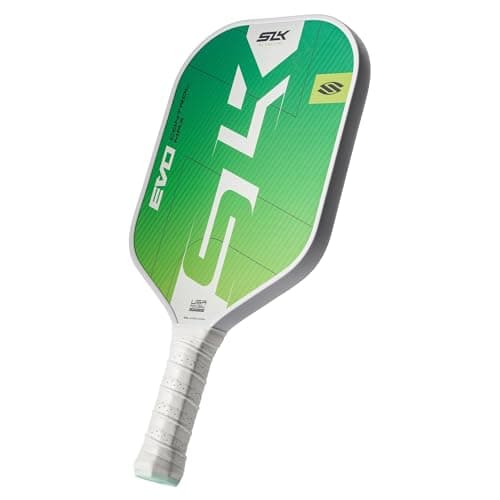
Selkirk SLK Evo Control Max— who it is for: almost everybody. This is the point on the curve where the difference stops being large: a carbon fiber face, a control-tuned 16mm polymer core, Selkirk's widest outline and a real warranty, under $100. If you own a wood or fiberglass paddle, this is the upgrade you will actually feel.
| Surface | Carbon fiber |
|---|---|
| Core | Control-tuned polymer |
| Shape | Widebody (Max) |
| Line | Selkirk SLK (sub-$100 tier) |
| Best for | The upgrade that actually changes your game |
JOOLA Perseus 16mm CAS— who it is for: the 3.5-plus player who wants most of a flagship. A high-grit Charged Carbon Abrasion Surface over a 16mm polypropylene core in JOOLA's hybrid Aero Curve shape. It is the honest demonstration of diminishing returns: it is a better paddle than the Selkirk, and it is not a better paddle by as much as the price gap suggests.
| Surface | Charged carbon (CAS), grippy |
|---|---|
| Core | 16mm polypropylene honeycomb |
| Shape | Hybrid / Aero Curve |
| Grip | Feel-Tec Pure grip |
| Best for | All-court players who want spin and control |
| Paddle | Face | Core | What the step up buys |
|---|---|---|---|
| JOOLA Journey | Fiberglass composite | About 10mm polymer | A real paddle instead of wood |
| Selkirk SLK Evo Control Max | Carbon fiber | 16mm control-tuned polymer | Spin, resets, a bigger sweet spot - the big jump |
| JOOLA Perseus 16mm CAS | Charged carbon, high grit | 16mm polypropylene | More spin and a firmer feel - the small jump |
The bottom line
Paddles make a difference. Face material and core thickness change how you play; grip circumference and swing weight change whether the paddle fits you, and both of those are adjustable for a few dollars after you buy. Brand, colorway and signature names change nothing about performance.
So the practical advice is narrow: get to a carbon-faced paddle with a core thickness that matches your game and a grip that fits your hand, which costs around $75 to $100 today. Then stop, and spend the next hundred dollars on shoes, balls and court time instead. If you want the shortlist, start at best paddles under $100 or work through how to choose a pickleball paddle.
Frequently asked questions
Do pickleball paddles make a difference?
Yes, but unevenly. The jump from a wood or bargain composite paddle to a carbon-faced paddle with a modern core is the biggest equipment change in the sport and most players feel it in one session. The jump from a good $90 paddle to a $250 flagship changes how the paddle feels much more than it changes your results. Four specs matter: face material, core thickness, grip circumference and swing weight.
Does a better paddle actually improve your game?
It removes limits rather than adding skill. A raw carbon face lets you spin the ball, which a fiberglass face largely cannot; a 16mm core lets you reset a hard drive that a thin core would pop up. If your technique is already producing those shots, a better paddle lets them happen. If it is not, the paddle cannot create them for you.
How much of pickleball is the paddle and how much is the player?
At 3.0 to 3.5, overwhelmingly the player - the paddle is worth a handful of points a match, almost all of it from spin and reset ability. The paddle matters more as you improve, not less, because longer and faster rallies let small advantages compound. That is why a flagship is sensible for a 4.5 and usually wasted on a beginner.
Is it worth upgrading from a starter paddle?
Almost always, yes, and it is the one upgrade with an obvious payoff. Moving from a set paddle to a carbon-faced paddle with a 16mm core typically costs $75 to $100 and changes what shots are available to you. Upgrading again beyond that is a comfort and preference purchase rather than a performance one.
Do all pickleball paddles feel the same?
No, and the differences are mostly explainable. Two paddles with the same face material, core thickness, shape and swing weight will feel very similar whatever the brand. Change any one of those four and the paddle feels different - which is why you should shop on the specs rather than the name on the face.
What matters more, the paddle or the shoes?
The shoes, if you only buy one. Court shoes change whether you can move laterally on a hard surface without rolling an ankle, and no paddle affects that. A paddle changes which shots are available to you; shoes change whether you are playing next month. Buy proper court shoes first, then the paddle.
Sources
Keep reading
Upgrading your paddle or gearing up to play?
See how we pick, then dig into the paddle roundups and buying guides — honest picks from someone who actually plays, with no inventory to move.