Paddle Roundup
The Best Pickleball Paddles for Singles
Singles is a different game and it wants a different paddle: reach over hand speed, drive over reset, spin over everything. These are the six that suit it, and the one spec that matters most.
The short answer
Quick picks
| # | Product | Best for | Score | Price |
|---|---|---|---|---|
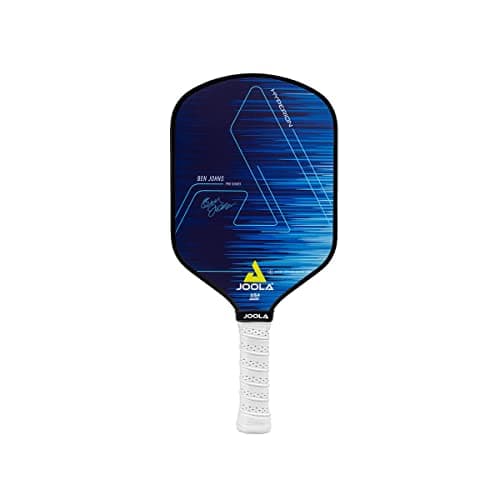
| 01 | JOOLA Ben Johns Hyperion CAS 16 An 8.3 oz elongated frame with the highest-grit legal face - reach, weight and spin together. | Best overall for singles | 4.7/5 | $119.95Amazon |
| 02 | 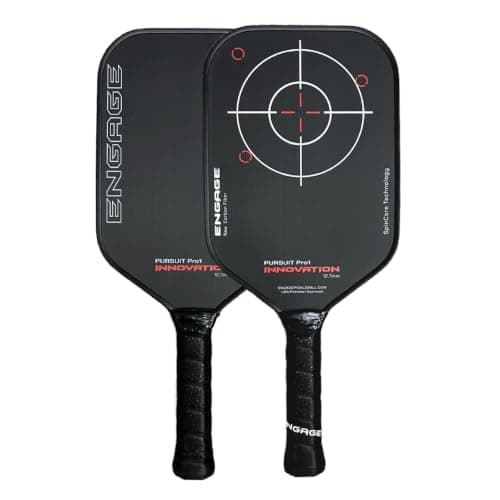 Engage Pursuit Pro1 A 12.7mm core and a high-grit raw carbon face - the most aggressive paddle here. | Best for power and spin | 4.5/5 | $129.99Amazon |
| 03 | 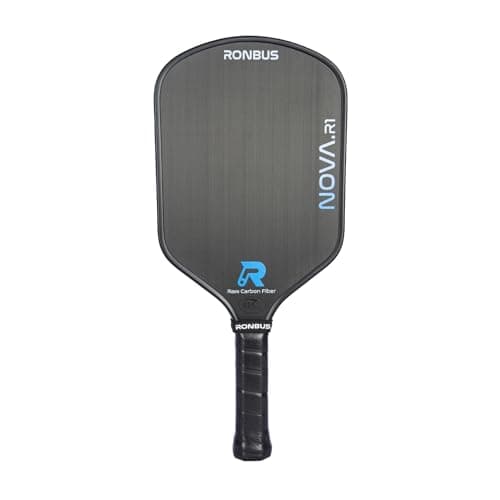 Ronbus R1.16 Nova The cheapest thermoformed raw-carbon elongated paddle we rank, by a wide margin. | Budget pick | 4.4/5 | $79.99Amazon |
| 04 | 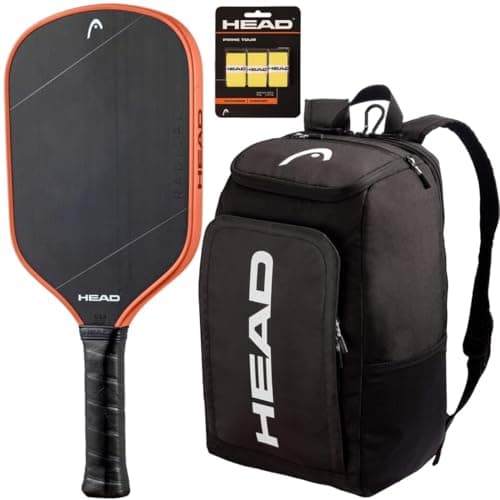 HEAD Radical Tour EX Raw A raw carbon tournament paddle at 8.1 oz with a slim 4 1/8 in grip. | Best value power | 4.3/5 | $124.95Amazon |
| 05 | 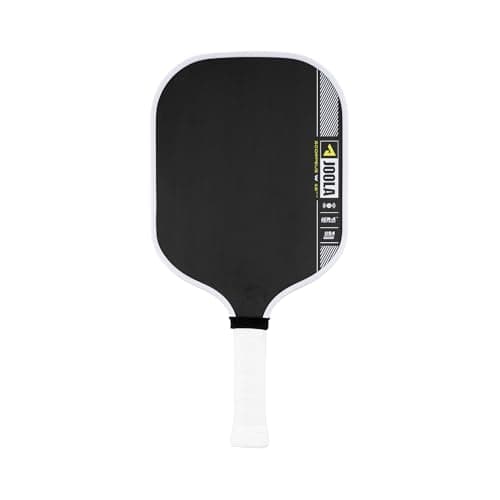 JOOLA Collin Johns Scorpeus Pro IV Elongated reach with a touch-and-counter bias rather than pure drive. | Best for counters | 4.4/5 | $149.95Amazon |
| 06 | 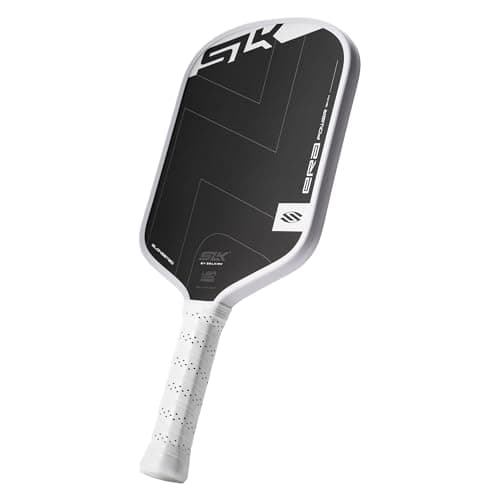 Selkirk SLK ERA Power (Elongated) A drive-first elongated Selkirk for baseline-heavy, aggressive play. | Best premium power | 4.3/5 | $199.99Amazon |
#ad · Live prices from Amazon as of November 14, 2026; where we have no verified live price we show none. We may earn a commission — see our affiliate disclosure.
The verdict, up front: buy the JOOLA Ben Johns Hyperion CAS 16. It is the paddle for the singles player who covers a whole court alone — an elongated frame for reach, an 8.3-ounce average for plow-through on a passing shot, and the highest-grit legal face on the market for the topspin that keeps a drive in. The budget pick is the Ronbus R1.16 Nova, the cheapest thermoformed raw-carbon elongated paddle we rank anywhere and a genuinely good singles paddle rather than a compromise. If you want maximum aggression instead, the Engage Pursuit Pro1 at 12.7mm is the most violent paddle here.
Most paddle advice is written for doubles, because most pickleball is doubles. Singles inverts several of its assumptions, and if you play a lot of it the paddle that wins you doubles games may be actively costing you singles games. Our best paddles for doubles page is the other half of this argument.
What singles asks of a paddle
Reach stops being optional. In doubles your partner covers half the court and the game lives at the kitchen line. In singles you cover all of it, and the shots that decide points are the ones you only just get to. An elongated paddle buys roughly an inch of reach over a standard one, which in singles is the difference between a stretch volley and a winner against you.
The third shot is a drive, not a drop. Dropping into an empty court invites the opponent forward on their own terms. Singles rewards driving the third shot deep and following it, which asks for a paddle with mass and pop rather than touch. Our third shot drop guide explains why the doubles orthodoxy does not transfer.
Hand speed matters less.Four-player firefights at the net are a doubles phenomenon. In singles there is nobody three feet away hitting at your hip, so the swing weight you would never accept in doubles becomes affordable — and that extra mass is what makes a passing shot heavy. See swing weight explained.
Spin becomes the margin.A singles court has far more open space, so you can hit with more pace if the ball comes down. Topspin is what brings it down, and that is a function of face grit. Everything on this page has a raw or high-grit carbon face — spin ratings explained covers how that works and what the limits are.
The spec that matters most
Shape, then weight, then face. Elongatedis close to non-negotiable — every paddle below is elongated, and a widebody shape that is excellent in doubles gives up the reach that decides singles points. Then weight: around 8.0 to 8.3 ounces is where a singles paddle wants to be, because the ball arrives from further away with less of your own momentum behind it. Then face grit, which converts that pace into something that lands.
At a glance
The six side by side. Specs come from each manufacturer's listing; every row price-checks on the spot.
| Paddle | Face | Core | Shape | Best for | Price |
|---|---|---|---|---|---|
| JOOLA Hyperion CAS 16 | Carbon Abrasion Surface, high grit | 16mm polypropylene honeycomb | Elongated | Overall | Check price |
| Engage Pursuit Pro1 | Raw carbon fiber (high grit) | 12.7mm | Elongated | Power + spin | Check price |
| Ronbus R1.16 Nova | Raw Toray T700 carbon | 16mm thermoformed | Elongated with edge grid | Spending the least | Check price |
| HEAD Radical Tour EX Raw | Raw carbon fiber | Tournament build | Elongated | Value power | Check price |
| JOOLA Scorpeus Pro IV | Tech Flex Power carbon | 16mm Propulsion Core | Elongated | Counters and touch | Check price |
| Selkirk SLK ERA Power | Carbon fiber | Power / drive-first | Elongated | Premium power | Check price |
#ad· Prices and availability change frequently — each button opens the live listing. We may earn a commission at no extra cost to you; see our affiliate disclosure.
Best overall for singles: JOOLA Ben Johns Hyperion CAS 16
Who it is for: the singles player who wants the complete package and will pay for it.
The Hyperion is the paddle most closely associated with the best player in the sport, and the specification reads like a singles brief: an elongated outline for reach, a 16mm polypropylene honeycomb core for enough dwell time to shape a ball, an 8.3 oz average for plow-through, and a Carbon Abrasion Surface face that sits at the high-grit end of what is legal.
| Surface | Carbon Abrasion Surface (CAS), high grit |
|---|---|
| Core | 16mm polypropylene honeycomb |
| Shape | Elongated |
| Weight | 8.3 oz average |
| Certification | USA Pickleball approved |
What I like: reach, mass and grip on the ball at once, which is exactly the combination a singles court rewards and the one most paddles make you choose between. What gives me pause: at 8.3 oz it is the heaviest paddle here and the slowest in a hands exchange, so it is the worst doubles paddle on the page as well as the best singles one — and the price is flagship. Full detail in our JOOLA Hyperion CAS 16 review.
Best for power and spin: Engage Pursuit Pro1
Who it is for: the aggressive singles player who banks on driving and spinning opponents off the court.
A 12.7mm coreis thin by current standards, and thin means pop: less compression, more of the ball's energy returned. Put that under a high-grit raw carbon face on an elongated frame and you have the most aggressive paddle on this page. In singles, where there is court to hit into, that combination is more usable than it would be in doubles.
| Surface | Raw carbon fiber (high grit) |
|---|---|
| Core | 12.7mm (thinner = more pop) |
| Shape | Elongated |
| Best for | Aggressive players who bang and spin |
What I like: the clearest power-and-spin paddle we carry, and an elongated frame to deliver it from. What gives me pause: a thin core is harsh through the arm and much harder to reset with — if you have any elbow history, this is the wrong direction entirely and best paddles for tennis elbow is the right page. A 12.7mm core also punishes imperfect contact. More context in best power paddles.
Budget pick: Ronbus R1.16 Nova
Who it is for: anyone who wants a real singles paddle without flagship money.
This is the cheapest thermoformed raw-carbon elongated paddle we rank, by a wide margin, and nothing about the specification is a concession: a raw Toray T700 carbon face over a 16mm thermoformed polypropylene honeycomb core, in an elongated frame with an edge grid, USA Pickleball approved. It is the paddle we point people to when they want a first serious paddle on a budget.
| Surface | Raw Toray T700 carbon fiber |
|---|---|
| Core | 16mm polypropylene honeycomb, thermoformed |
| Shape | Elongated with edge grid |
| Certification | USA Pickleball approved |
| Best for | First real paddle on a budget |
What I like: elongated reach, a raw carbon face and a thermoformed 16mm core at a price the major brands do not come close to. What gives me pause: Ronbus is a direct-to-consumer brand, so popular configurations sell out and the support footprint is thinner than a major's; and it is lighter than the Hyperion, so you get less plow-through on a passing shot. Our Ronbus R1.16 Nova review has the full picture.
Best value power: HEAD Radical Tour EX Raw
Who it is for: the singles player who wants a brand-name tournament paddle in the middle of the price range, especially with smaller hands.
HEAD has been making racquets since 1950, and the Radical Tour EX Raw is the top of its current pickleball range: a raw carbon face on a tournament build at 8.1 oz with a 4 1/8-inch grip circumference. The weight is in the singles sweet spot and the slim grip is the detail that most often goes unmentioned — it leaves room for an overgrip if you want more.
| Surface | Raw carbon fiber |
|---|---|
| Weight | 8.1 oz |
| Grip circumference | 4 1/8 in |
| Category | Tournament paddle |
| Brand | HEAD |
What I like: genuine spin from a raw carbon face at a mid-tier price, a manageable 8.1 oz, and a grip that suits smaller hands and can still be built up. What gives me pause: HEAD publishes less construction detail than the specialist brands, and the paddle does not have the thermoformed or foam-walled build that the newer value brands offer at lower prices. Our full HEAD Radical Tour EX Raw review and best HEAD paddles cover the range.
Best for counters: JOOLA Collin Johns Scorpeus Pro IV
Who it is for: the singles player who wins by absorbing pace and redirecting it rather than out-hitting people.
Not every singles game is a slugfest. Collin Johns is the touch half of the most successful partnership in the sport, and his signature paddle is built accordingly: an elongated frame for reach, a 16mm Propulsion Core, a Tech Flex Power carbon face, and a deliberate bias toward touch and counter-punching. UPA-A certified.
| Surface | Tech Flex Power carbon |
|---|---|
| Core | 16mm Propulsion Core |
| Shape | Elongated (reach) |
| Bias | Touch and counter-punching |
| Certification | UPA-A certified |
What I like: it is the one paddle here that gives you singles reach without committing you to a drive-first game, and the UPA-A certification matters if you play sanctioned events. What gives me pause: a touch bias is the wrong bias for most singles players, who need to hurt the ball to open a court — and it is priced near the Hyperion without the Hyperion's mass or face grit. See also best elongated paddles.
Best premium: Selkirk SLK ERA Power (Elongated)
Who it is for: the baseline-heavy singles player who wants a Selkirk and wants it to hit hard.
Selkirk is normally the control brand, and the SLK ERA Poweris the exception — a carbon fiber, elongated, power and drive-first paddle aimed squarely at players who live behind the baseline and come forward on their own terms. That is a reasonable description of a singles game plan.
| Line | Selkirk SLK ERA Power |
|---|---|
| Surface | Carbon fiber |
| Shape | Elongated |
| Character | Power / drive-first |
| Best for | Baseline-heavy, aggressive players |
What I like: a drive-first paddle from the brand with the deepest warranty position in the sport — Selkirk publishes a limited lifetime warranty on manufacturing defects, conditional on registration. What gives me pause: it is the most expensive paddle on this page and Selkirk publishes less granular construction detail on the ERA line than JOOLA or Engage do. The rest of the range is in best Selkirk paddles, and the alternatives in Selkirk alternatives.
The bottom line
A singles player who can spend freely should buy the JOOLA Hyperion CAS 16: reach, mass and the grittiest legal face in one paddle. Playing a bang-and-spin game? The Engage Pursuit Pro1. Spending the least for a genuine singles paddle? The Ronbus R1.16 Nova, which is the value of the group by a distance. Want a brand name in the middle? The HEAD Radical Tour EX Raw. Counter-punching rather than hitting through people? The JOOLA Scorpeus Pro IV. Baseline-heavy and brand-loyal? The Selkirk SLK ERA Power. And if your week is mostly doubles with the odd singles game, read best paddles for doubles instead and do not buy twice.
Frequently asked questions
What kind of pickleball paddle is best for singles?
An elongated paddle, around 8.0 to 8.3 ounces, with a raw or high-grit carbon face. Singles asks you to cover a whole court alone, so reach matters far more than it does in doubles; the ball arrives from further away with less of your own momentum behind it, so mass helps; and there is enough open court to hit with pace, which makes topspin — and therefore face grit — the margin between a winner and a ball sailing long.
Should I use a different paddle for singles and doubles?
Only if you genuinely play a lot of both. The specs pull in opposite directions: an elongated 8.3-ounce paddle is excellent for singles reach and drive, and noticeably slow in a four-player firefight at the net. If one format dominates your week, buy for that format. If it is genuinely split, buy an all-court paddle and accept a compromise at each end rather than owning two paddles you never fully adapt to.
Is a heavier paddle better for singles?
Within reason, yes. Extra mass gives you plow-through on a passing shot and on a deep third-shot drive, and the main cost of mass — slower hands at the net — is largely a doubles problem, because in singles nobody is standing three feet away hitting at your hip. Around 8.3 ounces is roughly the practical ceiling before swing weight starts costing you recovery speed on a wide ball.
Do I need to drive the third shot in singles?
More often than in doubles, yes. A drop into a largely empty court invites your opponent forward on their own terms, whereas a deep drive pins them back and buys you the time to advance. That is why the paddles on this page bias toward pop and spin rather than touch — though a counter-punching singles game is a legitimate alternative, and the Scorpeus Pro IV pick exists for it.
Can a beginner use a singles paddle?
It is not the place to start. Elongated frames are less forgiving off-centre than widebody shapes, and extra mass makes imperfect contact more punishing, both of which slow down learning. Start with a forgiving paddle from our best beginner paddles page, get your contact clean, and then buy for your format — the singles paddle will do more for you once you can hit the middle of the face reliably.
Sources
- Manufacturer and retailer product listings for the six paddles above (face, core, shape, weight and certification as published)
- USA Pickleball — equipment standards & approved paddle list
Keep reading
Upgrading your paddle or gearing up to play?
See how we pick, then dig into the paddle roundups and buying guides — honest picks from someone who actually plays, with no inventory to move.