Paddle Roundup
The Best Franklin Pickleball Paddles in 2026
Franklin makes the official ball of USA Pickleball and also the paddle hanging in the supermarket aisle. Both of those facts are true, and the range splits almost perfectly between them. Here is which Franklin to buy, and the price band where you should buy something else.
The short answer
Quick picks
| # | Product | Best for | Score | Price |
|---|---|---|---|---|
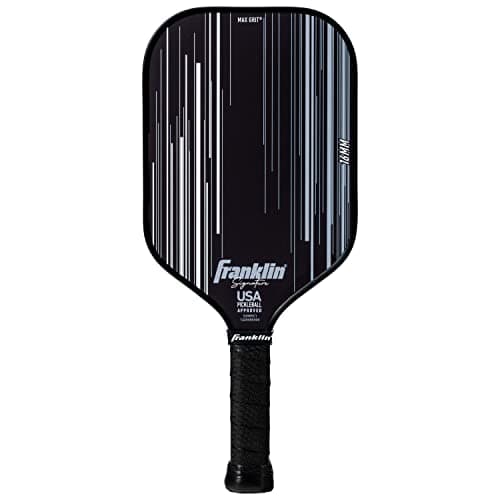
| 01 | Franklin Signature Series Pro 16mm A MaxGrit fiberglass face over a 16mm polypropylene core, USAP approved, around sixty dollars. | Best Franklin overall | 4.2/5 | $63.46Amazon |
| 02 | 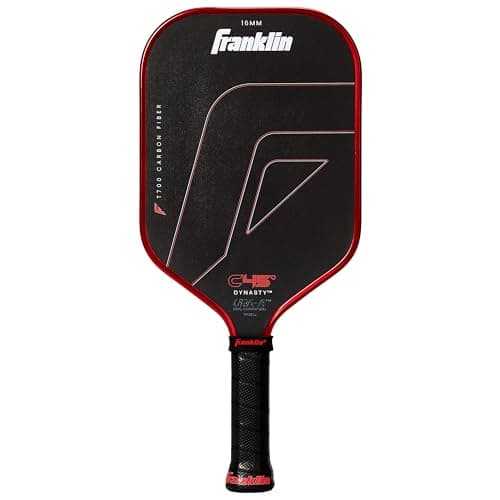 Franklin C45 Dynasty Pro 16mm Double-thermoformed T700 carbon over Franklin's foam-layered PowerFlex core. | Best premium Franklin | 4.4/5 | $229.24Amazon |
| 03 | 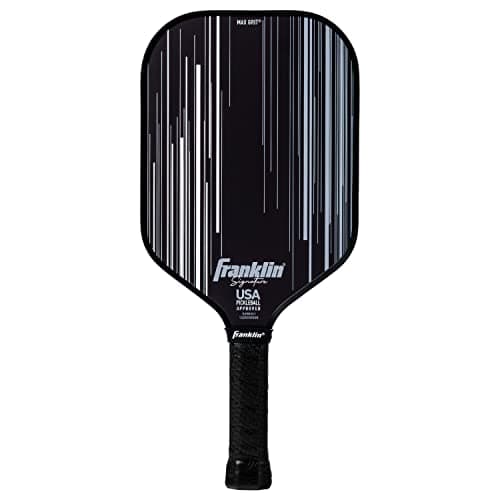 Franklin Signature Series Pro 13mm The same paddle in a thinner core - quicker off the face, less forgiving at the kitchen. | Best Franklin for pop | 4.0/5 | $63.99Amazon |
| 04 | 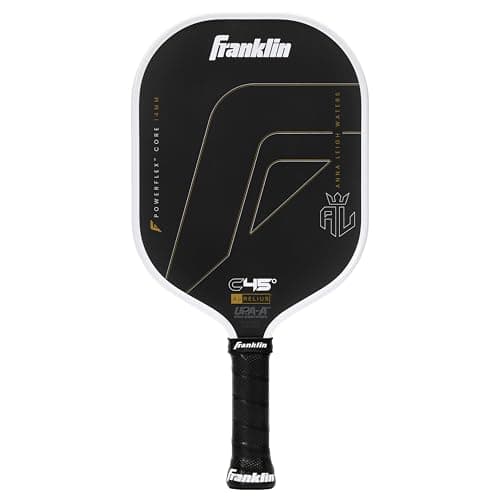 Franklin C45 Aurelius 14mm USAP and UPA approved, in the shape Franklin builds for Anna Leigh Waters. | Best Franklin for tournament play | 4.3/5 | $229.99Amazon |
| 05 | 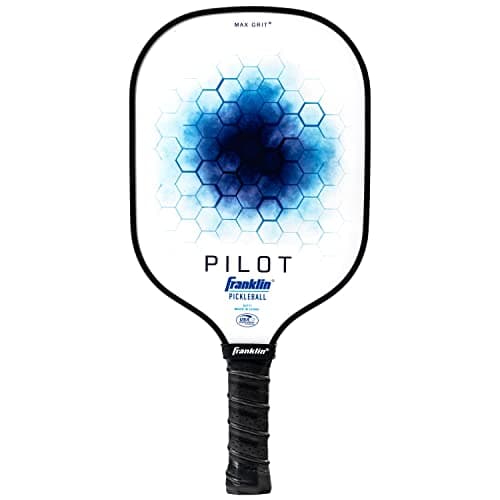 Franklin Pilot A USAPA-approved honeycomb polypropylene paddle for about thirty-five dollars. | Cheapest Franklin worth owning | 3.7/5 | $34.99Amazon |
| 06 | 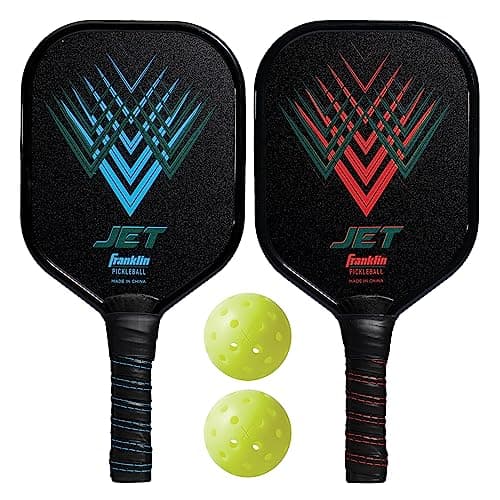 Franklin Jet 2-Player Paddle and Ball Set Two aluminum paddles and balls for twenty dollars - a loaner set, not a playing paddle. | Best Franklin set for the driveway | 3.2/5 | $19.99Amazon |
#ad · Live prices from Amazon as of October 20, 2026; where we have no verified live price we show none. We may earn a commission — see our affiliate disclosure.
The short answer
For almost everyone, the Franklin to buy is the Signature Series Pro 16mm. It has a genuinely textured MaxGrit face over a 16mm polypropylene honeycomb core, it is USAP approved for sanctioned play, and it sells for around sixty dollars. It is the paddle I hand to people who have decided they like this sport but have not decided to spend real money on it yet.
If you have already passed that point and want Franklin's actual performance product, the C45 Dynasty Pro 16mm is a double-thermoformed carbon paddle at flagship pricing. And if you just need something in the garage for visiting relatives, the Jet two-player set costs twenty dollars and nobody has to touch your good paddle.
The thing worth knowing before you shop: Franklin's range has a hole in it between about seventy and two hundred dollars, which happens to be where most of the best paddles in the sport live. More on that below.
There are two Franklins
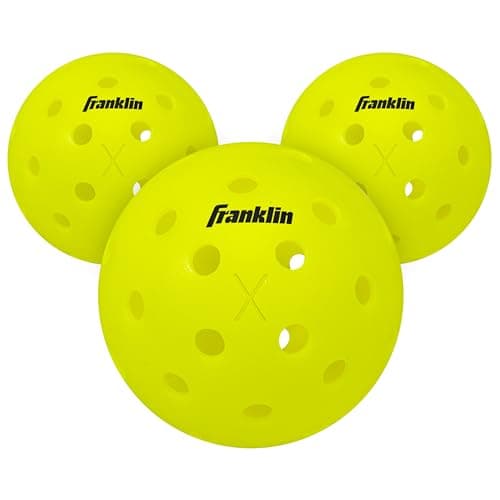
Franklin Sports has an odd standing in pickleball. On one hand it is the company behind the X-40, the official ball of USA Pickleball — a piece of equipment serious players argue about and tournaments are decided on. We have a full Franklin X-40 review and a head-to-head with its main rival in Franklin X-40 vs Dura Fast 40. On the other hand, Franklin is the brand whose paddles hang on a peg in a big-box sporting goods aisle next to the foam footballs.
Both are real, and the paddle range splits along exactly that line. At the bottom are aluminum and composite paddles built to a retail price point. In the middle sits the Signature Series Pro, a fiberglass-faced performance paddle that is genuinely good for its money. At the top is the C45 Carbon Fiber Series, which is a different kind of product altogether: double-thermoformed, Toray T700 carbon, foam-layered core, approved by both USA Pickleball and the United Pickleball Association, and built in the shapes Franklin's sponsored pros actually compete with.
Nothing about the supermarket end of the range tells you anything about the top end, and the reverse is also true. Shopping Franklin well means knowing which shelf you are on.
How we picked
Three inclusion rules, applied before anything was written.
It had to be a live, in-stock Franklin listing. Every paddle on this page was checked against Amazon on the day of publication and had a real price and real availability. Franklin has a long tail of discontinued and team-branded paddles still floating around; none of them are here.
It had to earn its slot rather than repeat one. Six paddles across roughly twenty to two hundred and thirty dollars, covering the two core thicknesses Franklin sells its performance paddle in, the two C45 shapes currently stocked, and the genuinely cheap end of the range. No two picks here are the same paddle in a different color.
Specs come from Franklin or from the listing, never from us.The C45 construction detail and the published Dynasty 16mm dimensions are Franklin's own figures from its C45 series page. The Signature Series Pro specs are reused from our Signature Pro review. Where Franklin publishes no figure — and for several of these paddles it does not — this page says so rather than filling the gap. We have not put these paddles through instrumented testing; our method is on how we review.
At a glance
| Paddle | Core | Surface | Approval | Best for |
|---|---|---|---|---|
| Signature Series Pro 16mm | 16mm polypropylene honeycomb | MaxGrit textured fiberglass | USAP approved | Overall, soft game |
| C45 Dynasty Pro 16mm | 16mm PowerFlex, inner foam layer | T700 carbon, 45-degree peel ply | USAP + UPA approved | Premium, control |
| Signature Series Pro 13mm | 13mm polypropylene honeycomb | MaxGrit textured fiberglass | USAP approved | Pop, quicker hands |
| C45 Aurelius 14mm | 14mm PowerFlex polymer | T700 carbon, 45-degree peel ply | USAP + UPA approved | Tournament play |
| Franklin Pilot | Polypropylene honeycomb | MaxGrit spin surface | USAPA approved | Cheapest real paddle |
| Jet 2-player set | Aluminum paddle construction | Composite | USAPA approved | Driveway, loaners |
Best Franklin overall: Signature Series Pro 16mm
Who it is for: the player who has committed to pickleball but not to a two-hundred-dollar paddle, and who wants the soft game to work.
The Signature Series Pro is the paddle that makes the rest of this page make sense. It is a MaxGrit textured face over a 16mm polypropylene honeycomb core, USAP approved for sanctioned play, usually sold around sixty dollars. The listing identifies the face as fiberglass, which matters and which we will come back to: this is not a carbon paddle, and it does not behave like one.
The 16mm core is the reason it belongs at the top of this list. Thicker cores dwell longer, which is what makes a dink land short instead of popping up — the whole argument is in 14mm vs 16mm paddles. At this price, most competitors are still selling 13mm composite paddles because they are cheaper to tool.
| Surface | MaxGrit textured fiberglass face |
|---|---|
| Core | 16mm polypropylene honeycomb |
| Certification | USAPA / USAP tournament approved |
| Construction | Conventional (not thermoformed) |
| Weight | Franklin publishes no figure for this listing |
What I like: the face is genuinely grippy rather than cosmetically textured, the thicker core gives you a real soft game, and Franklin's distribution means returns and replacements are painless in a category full of brands that vanish. Our full write-up is in the Franklin Signature Pro review.
What gives me pause: it is conventionally built, so the sweet spot is smaller than a thermoformed paddle at the same price — several of the picks in best thermoformed paddles cost less and are structurally more modern. Fiberglass texture also wears faster than raw carbon, and you will outgrow this paddle if you improve quickly. Stock on individual colorways moves fast; on the day of publication the black 16mm listing was down to a handful of units.
Best premium Franklin: C45 Dynasty Pro 16mm
Who it is for: the 4.0-plus player who wants a current-generation carbon paddle and specifically wants it from Franklin.
This is the paddle that proves Franklin can build at the top of the market. The C45 Dynasty is double thermoformed, faced in Toray T700 carbon applied as a peel ply at 45 degrees, and built on the PowerFlex core with its inner foam layer. Franklin publishes the Dynasty 16mm as an elongated 16.4 by 7.6 inch frame with a 5.6 inch handle, 7.6 to 8.0 oz, swing weight 116 and twist weight 6.3 — which is an unusual amount of disclosure for this brand and worth crediting.
| Surface | Toray T700 carbon fiber, 45-degree peel ply texture |
|---|---|
| Core | 16mm PowerFlex polymer with inner foam layer |
| Construction | Double thermoformed unibody |
| Shape | Elongated - 16.4" x 7.6" (Franklin's published Dynasty 16mm figures) |
| Handle | 5.6" length, 4.3" circumference |
| Weight | 7.6 - 8.0 oz |
| Measured specs | Swing weight 116, twist weight 6.3 (Franklin's figures) |
| Certification | USAP + UPA approved |
A twist weight of 6.3 on Franklin's own scale is not comparable to the numbers other brands and testing sites publish — the scales do not convert into each other, which is the whole problem explained in paddle twist weight. Treat it as a figure to compare against other Franklin paddles and nothing else.
What I like: the construction is real rather than marketing, the published spec sheet is more honest than most of the category manages, and the 16mm version is the control-biased one of the two core thicknesses. The Amazon listing is a specific colorway, which means price and stock on it move independently of the rest of the line.
What gives me pause: it is two hundred and thirty dollars, and at that price it is competing with CRBN, JOOLA and Selkirk flagships that have far more player data behind them. Franklin's paddle reputation does not yet match its ball reputation, and resale value on a Franklin flagship is weaker than on a Selkirk or a JOOLA. There is also no published USAP-listed weight tolerance on the Amazon listing itself, only on Franklin's site.
Best Franklin for pop: Signature Series Pro 13mm
Who it is for: the player who finds 16mm paddles mushy and wants the ball to leave the face faster.
Same paddle, thinner core. The 13mm Signature Series Pro has the identical MaxGrit fiberglass face and the same USAP approval, over a 13mm polypropylene honeycomb core. A thinner core compresses less, returns the ball quicker, and gives you more pop on drives and punch volleys at the cost of dwell time and forgiveness.
| Surface | MaxGrit textured fiberglass face |
|---|---|
| Core | 13mm polypropylene honeycomb |
| Certification | USAPA / USAP tournament approved |
| Character | Faster off the face, less dwell than the 16mm |
What I like: it is the cheapest honest way to find out which core thickness suits you, because the only variable between this and the pick above is the core. Most brands change three things at once between models and leave you guessing.
What gives me pause: 13mm is a thin core by 2026 standards and it punishes you at the kitchen line, where most points are actually lost. If you are a beginner reading this because thinner sounds faster, buy the 16mm instead — best paddles for beginners explains why. The fiberglass face wears at the same rate as the 16mm, which is to say faster than carbon.
Best Franklin for tournament play: C45 Aurelius 14mm
Who it is for: the competitive player who needs a paddle legal under both sanctioning bodies and wants a faster, thinner build than the Dynasty.
The Aurelius is the C45 shape Franklin builds for Anna Leigh Waters, which the listing states directly. It is USAP and UPA approved— the second of those matters if you play UPA-sanctioned events, where the governing body polices what a face and core may do together, and a paddle on only one list can leave you unable to compete. The 14mm core sits between the Dynasty 16mm and the thinner builds in the range.
| Surface | Toray T700 carbon fiber, 45-degree peel ply texture |
|---|---|
| Core | 14mm PowerFlex polymer (Franklin also sells 12.7mm and 16mm) |
| Construction | Double thermoformed unibody |
| Shape | Aurelius - the shape Franklin builds for Anna Leigh Waters |
| Certification | USAP + UPA approved |
| Dimensions | Franklin publishes no dimensional figures for this model |
What I like: dual approval is a genuine, checkable advantage rather than a feel claim, and a 14mm version of a foam-layered core is the combination most tournament players actually want. If approval status is new to you, read are paddles USA Pickleball approved before you spend.
What gives me pause: Franklin does not publish the Aurelius dimensions, handle length or weight range the way it does for the Dynasty, so you are buying a shape you cannot check against your current paddle — a real problem if handle length matters to you, which it should. See paddle handle length. A pro's shape is also not automatically your shape, and at this price the pro-signature premium is doing some of the work.
Cheapest Franklin worth owning: Franklin Pilot
Who it is for: someone buying their first paddle who is not yet sure they will keep playing.
The Pilot is about thirty-five dollars and it is, per the listing, a honeycomb polypropylene core with a MaxGrit spin surface and USAPA approval. That specification — a polymer core and a textured face, legal for sanctioned play — is the floor below which a paddle stops being a paddle and starts being a souvenir. The Pilot clears it.
| Surface | MaxGrit spin surface |
|---|---|
| Core | Honeycomb polypropylene |
| Certification | USAPA approved |
| Core thickness | Not published by Franklin for this model |
What I like: it costs less than a month of court time and it will not hold a new player back for the first few months. Franklin does not publish the core thickness, and at this price that is normal rather than suspicious.
What gives me pause: twenty-five dollars more buys the Signature Series Pro, which is a meaningfully better paddle, and that is a small enough step that most people should take it. Buy the Pilot only if the thirty-five dollar ceiling is real. There is a better landscape at this money from other brands too — see best paddles under $50.
Best Franklin set for the driveway: Jet 2-player paddle and ball set
Who it is for:the household that wants spare paddles for guests, kids and the beach — not a playing paddle.
Twenty dollars, two aluminum paddles and balls, USAPA approved. I am including it because it is the honest answer to a real question, not because it is a good paddle. Aluminum paddle construction is the oldest and cheapest approach in the sport, and nobody who plays regularly uses one.
| Contents | 2 paddles plus balls (2-player set) |
|---|---|
| Paddle construction | Aluminum |
| Certification | USAPA approved |
| Realistic use | Loaners, holidays, teaching a child the rules |
What I like: it keeps visitors off your good paddle, it survives a car boot, and twenty dollars is less than replacing a face you let someone scrape on concrete.
What gives me pause: everything else. There is no soft game in an aluminum paddle, the texture is minimal, and if the people you are buying for turn out to like pickleball, you will be buying again within a month. If that outcome seems likely, a proper beginner starter set is the better twenty dollars more.
The gap in the middle of the range
Here is the thing that should change how you shop Franklin, and it is against our commercial interest to say it plainly: the range jumps from about sixty-five dollars to about two hundred and thirty, with very little in between that is reliably in stock.
That gap is a problem because the hundred-to-hundred-and-fifty band is the most competitive price bracket in pickleball. It is where thermoformed unibody construction, foam-filled perimeters and raw carbon faces became affordable, and it is where most players who have outgrown a sixty-dollar paddle should be shopping. Franklin currently does not really compete there.
So the honest advice is: buy the Signature Series Pro if sixty dollars is the budget, buy a C45 if two hundred and thirty is, and if your budget is the hundred dollars in between, shop somebody else. Start with best paddles under $100 or best Vatic Pro paddles, both of which cover that band properly. We would rather you bought the right paddle than the Franklin-shaped one.
The colorway trap
Franklin sells each paddle colorway as a separate Amazon listing, and those listings are priced independently. On the day this page was written, the Signature Series Pro 16mm ranged across more than thirty dollars depending on which color you clicked, and several colorways were down to single-digit stock while others were fully available.
Two practical consequences. First, check the neighboring colorways before you buy— it is the same paddle, and the cheapest one in stock is the one to get. Second, a price you remember from last week is probably attached to a listing that has since sold out, not to a price change. This is the known weakness of buying Franklin through a marketplace, and it is the same problem that affects shoe listings, described in best pickleball shoes.
The bottom line
Franklin is a better pickleball company than its supermarket presence suggests and a less proven paddle company than its ball business suggests. Buy the Signature Series Pro 16mm if you want the best Franklin paddle for sensible money, the C45 Dynasty Pro 16mm if you want the genuine flagship and have already decided on the brand, the C45 Aurelius 14mm if you compete under UPA rules, and the Pilot if thirty-five dollars is the ceiling.
And if you are standing in the hundred-dollar band with a Franklin in your hand, put it back. That is the one place in this range where the brand is not the right answer.
Frequently asked questions
Are Franklin pickleball paddles any good?
Yes, at two specific price points. The Signature Series Pro around sixty dollars is a genuinely good budget paddle - a MaxGrit textured fiberglass face over a 16mm polypropylene core, USAP approved. The C45 Carbon Fiber line at around two hundred and thirty dollars is a real flagship: double thermoformed, Toray T700 carbon, foam-layered PowerFlex core, approved by both USA Pickleball and the UPA. Between those two prices Franklin has very little, and other brands are stronger there.
What is the best Franklin pickleball paddle?
The Signature Series Pro 16mm for most players. It is USAP approved, has a textured MaxGrit face and a 16mm polypropylene honeycomb core that keeps the soft game viable, and it usually sells for around sixty dollars. The best Franklin paddle outright is the C45 Dynasty Pro 16mm, but it costs roughly four times as much and is only worth it if you are already a 4.0-plus player committed to the brand.
What does C45 mean on a Franklin paddle?
It refers to how Franklin applies the carbon. The T700 carbon fiber is laid on the face as a peel ply texture at a 45-degree angle, which Franklin says produces consistent grit across the whole face. C45 paddles are also double thermoformed and use Franklin's PowerFlex core, which carries an inner foam layer. Franklin sells the C45 series in several shapes, including the Dynasty and the Aurelius.
Are Franklin paddles USA Pickleball approved?
The paddles on this page are. The Signature Series Pro and the Pilot carry USAPA approval, and the C45 Carbon Fiber paddles are approved by both USA Pickleball and the United Pickleball Association, which matters for UPA-sanctioned events. Franklin also sells recreational paddles outside these lines, so check the specific listing rather than assuming it applies to everything the brand makes.
Is the Franklin Signature Series Pro carbon fiber?
No. The listing identifies the face as fiberglass with Franklin's MaxGrit texturing. It is a genuinely grippy surface and the paddle is good value, but it is not a carbon paddle and it will not hold texture as long as a raw carbon face. Franklin's carbon paddles are the C45 Carbon Fiber Series, which start around two hundred and thirty dollars.
Why do Franklin paddle prices vary so much on the same model?
Each colorway is sold as a separate listing and priced independently, so the same paddle in black, blue and pink can differ by thirty dollars or more at the same moment, and individual colorways sell out at different rates. Always check the neighboring colorways of the model you want before buying - it is the identical paddle, and the cheapest in-stock color is the one to get.
Sources
Keep reading
Upgrading your paddle or gearing up to play?
See how we pick, then dig into the paddle roundups and buying guides — honest picks from someone who actually plays, with no inventory to move.